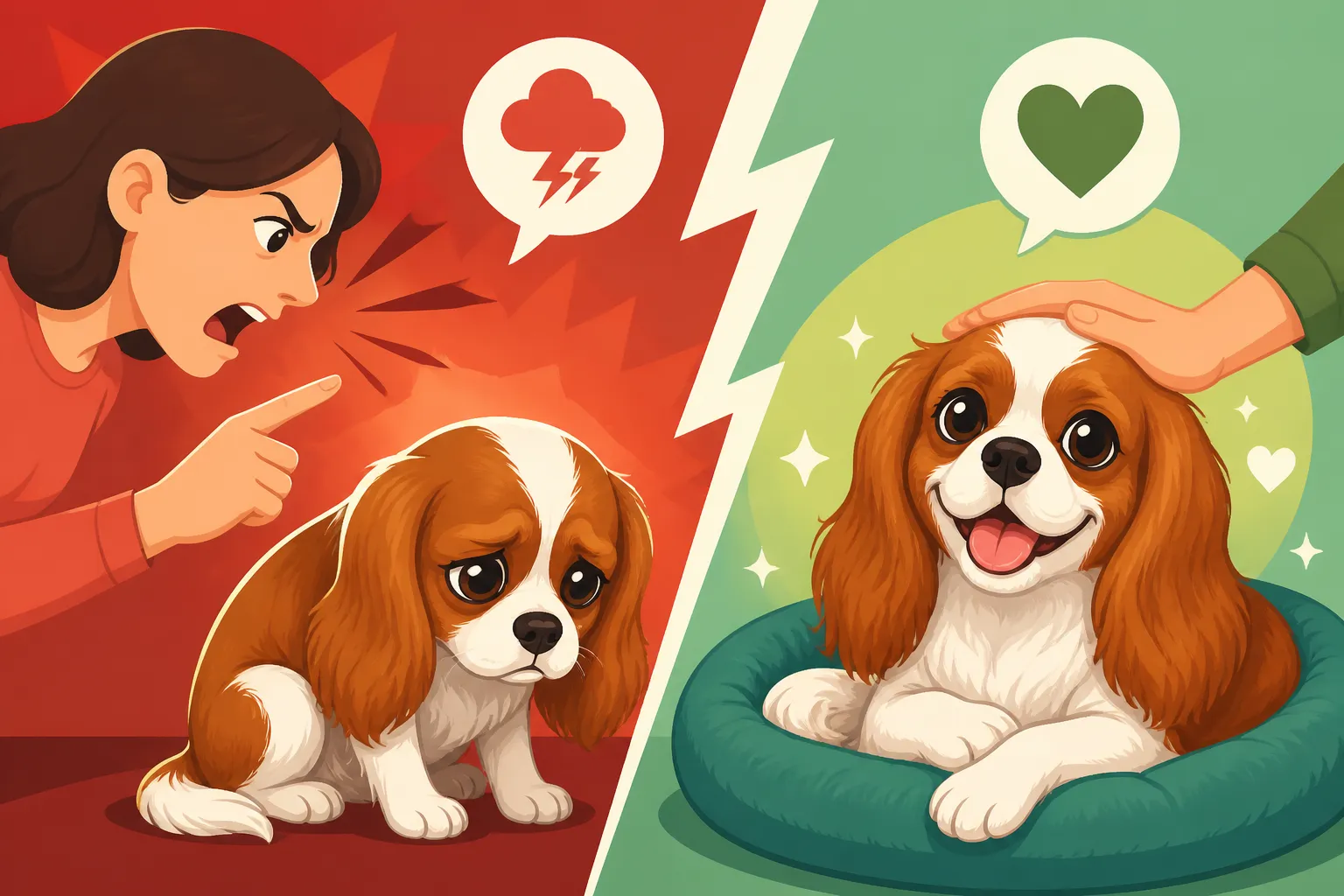
Why Harsh Corrections Break a Cavalier
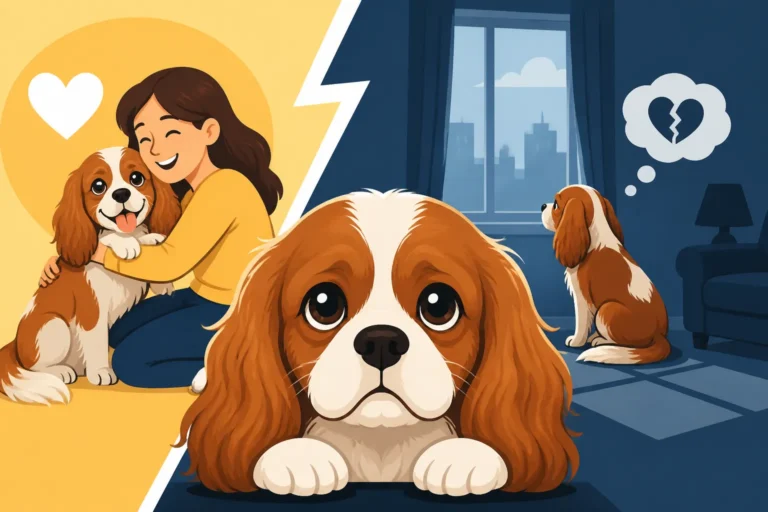
It’s incredibly frustrating when your sweet Cavalier seems to ignore you or struggles with basic manners, and it can be tempting to try firmer tactics to get through to them. But for a breed as inherently gentle and sensitive as the Cavalier King Charles Spaniel, harsh corrections don't just fail; they can actually "break" their spirit and damage your precious bond. This guide will delve into why a soft approach is not just kinder but vastly more effective, and how to build a confident, happy Cavalier through positive methods.
The Cavalier's Gentle Nature and Why It Matters
Cavalier King Charles Spaniels aren't built for tough love, and understanding their historical role and innate temperament is crucial to successful training. They are not working dogs in the traditional sense, bred for rigorous tasks or independent decision-making under pressure. Their entire purpose has always been companionship, and that deeply ingrained desire to be close to their people informs every aspect of their behavior and how they respond to the world.
A History of Companionship, Not Hardness
Think about the Cavalier's lineage – these are true lap dogs, bred to sit by royalty, warm laps, and offer unwavering affection. Their ancestors weren't herding sheep, guarding estates, or flushing game in dense undergrowth. Instead, they were cherished members of aristocratic families, valued for their sweet disposition and ability to comfort. This means they inherited a genetic predisposition for close human connection and a deep sensitivity to human emotions and reactions. They thrive on warmth and approval, not challenge or dominance. When you try to use harsh methods, you're going against centuries of selective breeding that has created a dog whose very essence is to be a loving, gentle companion.
Their Innate Sensitivity and Desire to Please
Cavaliers are renowned for their "melt your heart" expressions and their eagerness to please. They genuinely want to make you happy, but their small size and soft nature mean they are easily overwhelmed. A sharp word, a stern look, or a physical correction that might barely register with a more robust breed can be profoundly upsetting to a Cavalier. They perceive your displeasure deeply. This isn't weakness; it's a testament to their strong emotional intelligence and their dedication to their human companions. When they don't understand what you want, or if they're struggling with a task, their default response isn't defiance, but often confusion or anxiety. They're trying their best, and harshness can shut down that desire to connect and learn. You might find it helpful to consider Training a Cavalier With Praise Rather Than Pressure.
The "Velcro Dog" Tendency and Emotional Reliance
Cavaliers are famously known as "Velcro dogs" for a reason – they adore being with their people and will follow you from room to room, seeking closeness and comfort. This intense attachment means they are highly attuned to your moods and reactions. While this makes them wonderful, devoted companions, it also makes them particularly vulnerable to the negative impacts of harsh training. Their emotional well-being is intrinsically linked to yours. If they feel you are angry, disappointed, or worse, threatening, it can cause significant emotional distress, leading to anxiety, fear, or withdrawal. This reliance means that maintaining a positive, trust-based relationship is paramount for their mental health. Understanding Why a Cavalier Follows You Room to Room can shed more light on this endearing trait and its implications for training.
What Defines a "Harsh Correction" in Training
When we talk about harsh corrections, it's not always about outright abuse. Often, well-meaning owners, desperate for a solution, might employ methods they believe are effective, unaware of the profound negative impact they have on a sensitive breed like the Cavalier. It's crucial to understand what these methods entail so we can avoid them entirely.
Physical Punishments and Aversive Tools
Any method that inflicts pain or discomfort on your Cavalier to stop a behavior falls under physical punishment. This includes things like hitting, kicking, or grabbing. Beyond these obvious abuses, there are also "aversive tools" that inflict discomfort. These might include choke chains, prong collars, or electronic shock collars. Even a quick jerk on a leash with a regular collar can cause pain and create fear, especially around the neck where many Cavaliers have sensitive areas or conditions like syringomyelia. The goal of these tools and actions is to create an unpleasant sensation that the dog associates with their unwanted behavior. However, for a Cavalier, this association is often generalized, leading them to fear the situation, the environment, or even you, rather than truly understanding what you want them to do.
Verbal Reprimands and Intimidation
While not physically painful, harsh verbal reprimands can be equally damaging to a Cavalier's delicate psyche. Shouting, yelling, or using an angry, threatening tone of voice can instill fear and anxiety. For a dog that thrives on harmony and connection, a raised voice from their beloved human can be deeply unsettling. They might cower, withdraw, or even attempt to appease you, not because they understand the "lesson," but because they are trying to de-escalate your anger. This type of correction can quickly erode trust and make your Cavalier hesitant to interact with you, fearing they might unknowingly trigger your displeasure. Remember, their desire to please is strong, and a calm, clear voice is far more effective than a loud, angry one.
Ignoring or Isolating as Punishment
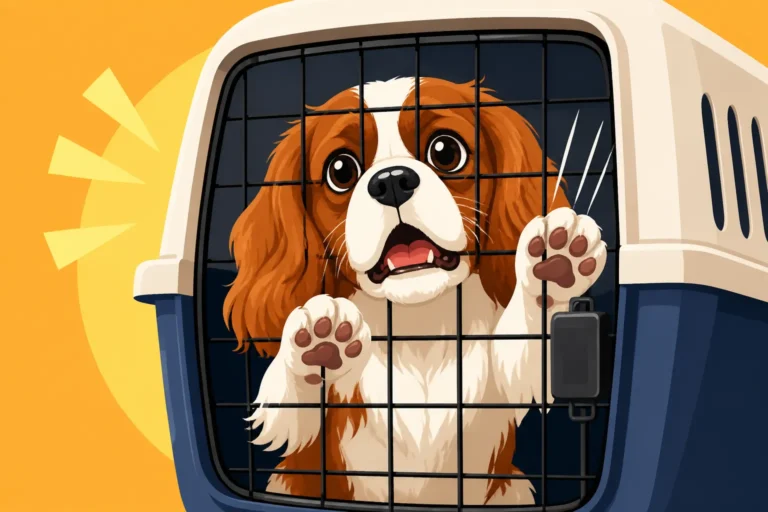
Sometimes, people think that ignoring a dog or isolating them (like putting them in "time out" in a separate room) is a "gentle" form of punishment. However, for a Cavalier, who thrives on connection and is deeply attached to their family, being ignored or isolated can be incredibly distressing. If you have a Cavalier who struggles with separation anxiety, for instance, isolating them for an unwanted behavior could inadvertently exacerbate their anxiety, making them even more fearful of being alone rather than teaching them anything productive. While a brief "time out" might be used with a puppy to interrupt over-aroused play, it needs to be done carefully and rarely, and never for an extended period that causes distress. For an adult Cavalier, especially one prone to Living With a Cavalier That Panics When Alone, isolation can be counterproductive and emotionally harmful.
The Far-Reaching Damage of Forceful Methods
The impact of harsh corrections extends far beyond the moment of the correction itself. For a Cavalier, these methods can leave lasting emotional scars, fundamentally altering their personality and the quality of their life. What might seem like a quick fix can lead to a host of complex behavioral issues that are far harder to address.
Eroding Trust and Damaging the Bond
Your relationship with your Cavalier is built on trust, love, and mutual respect. When you use harsh corrections, you betray that trust. Instead of seeing you as a benevolent leader and a source of comfort and security, your Cavalier may begin to view you as unpredictable or even threatening. Imagine being corrected with pain or fear by the person you love and rely on most; it's disorienting and terrifying. This erosion of trust can manifest in subtle ways, like a hesitant approach, a lowered head, or a lack of eye contact. It fundamentally changes the dynamic from one of joyful cooperation to one of cautious obedience driven by fear of consequence. Building this bond back is a long and challenging road, often requiring immense patience and consistent positive reinforcement.
Creating Fear, Anxiety, and Behavioral Issues
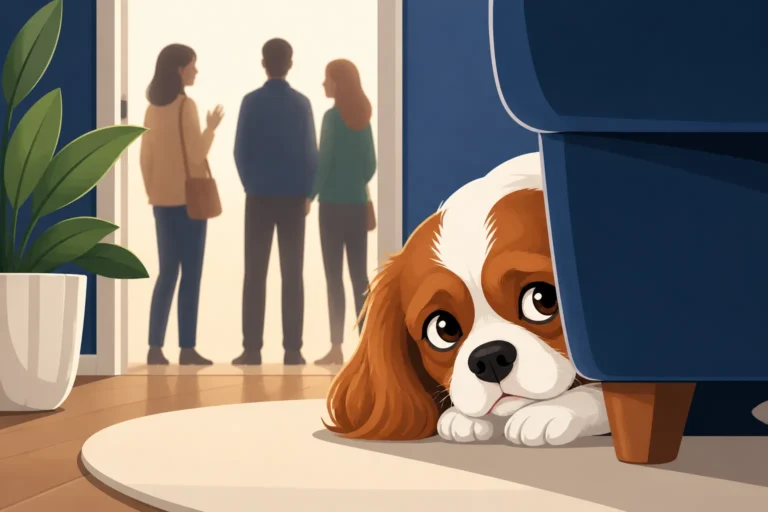
One of the most insidious effects of harsh training is the creation or exacerbation of fear and anxiety. A Cavalier subjected to such methods might become generally fearful, not just of the specific training situation, but of new people, places, or even everyday objects. This anxiety can then lead to a range of undesirable behaviors, completely counteracting the initial goal of the training. For example, a Cavalier who is physically corrected for barking at the doorbell might become fearful of visitors, leading to lunging, growling, or even nipping out of terror, rather than learning to be quiet. They might start to display displacement behaviors like excessive licking, yawning, or A Cavalier That Rolls Over and Freezes when stressed. This isn't learned politeness; it's a dog in distress, struggling to cope with an unpredictable environment.
Suppressing Natural Instincts Versus Teaching Alternatives
Harsh corrections primarily focus on stopping a behavior, but they rarely teach a desired alternative. A Cavalier might stop jumping on guests because they fear punishment, but they haven't learned how to greet politely. This often leads to suppressed behaviors, meaning the dog simply stops performing the action in your presence, but might still do it when you're not around or if the perceived threat of punishment is gone. Furthermore, these methods can suppress natural, healthy dog behaviors. For instance, a Cavalier who is punished for exploring a scent on a walk might become hesitant to engage with their environment, diminishing their quality of life. Positive reinforcement, in contrast, teaches your Cavalier what to do, empowering them with choices and confidence, rather than simply instilling fear of what not to do.
The Power of Positive Reinforcement for Cavaliers
If harsh corrections are so damaging, what's the alternative? The answer, unequivocally, is positive reinforcement. This method focuses on rewarding desired behaviors, strengthening the bond between you and your Cavalier, and fostering a happy, confident, and eager-to-learn companion. For a Cavalier, this approach aligns perfectly with their natural inclination to please and their sensitivity.
Rewarding Desired Behaviors
At its core, positive reinforcement means that when your Cavalier does something you like, you reward them. This makes it more likely they will repeat that behavior. Whether it’s a tiny piece of their favorite cheese, a squeaky toy, or enthusiastic verbal praise, the reward tells them, "Yes! That's exactly what I want!" For example, if your Cavalier sits when asked, you immediately give them a treat and tell them "Good sit!" This clear, immediate feedback is far more effective than waiting until they do something "wrong" to correct them. Cavaliers respond beautifully to this clarity and positive attention. They thrive on approval, and seeing your happy reaction is often a reward in itself. Reward-Based Training With a Cavalier is not just effective; it's truly enjoyable for both of you.
Building Confidence and a Love for Learning
When training is a positive experience, your Cavalier grows in confidence. They learn that trying new things and offering behaviors can lead to good outcomes. This isn't just about obedience; it's about building a dog who is resilient, self-assured, and enjoys engaging with the world. Think about a young Cavalier puppy; if every interaction with you is positive, they’ll approach new commands and situations with curiosity and enthusiasm. This builds a strong foundation for a lifetime of joyful learning. If your Cavalier already has some anxieties, positive reinforcement is particularly vital. It helps them associate new experiences and challenges with good feelings, gradually lessening their apprehension. You're creating an environment where they feel safe to explore and experiment, knowing that you'll guide them kindly.
Clear Communication Without Coercion
Positive reinforcement training teaches you to communicate with your Cavalier in a way they can easily understand. Instead of relying on force, you learn to set up situations for success, guide them towards the right action, and then mark and reward it. This clarity removes the guesswork and fear from the learning process. For example, if you want your Cavalier to stop jumping on visitors, instead of kneeing them or pushing them off (coercion), you might teach them to sit politely when someone comes to the door. When they offer that sit, even for a second, they get a reward. Over time, they learn that sitting is the way to get attention and treats, not jumping. This method empowers your Cavalier to choose the right behavior because it's rewarding, rather than simply avoiding the wrong one out of fear.
Practical, Gentle Training Techniques for Your Cavalier
Now that we understand why positive reinforcement is the best path, let's look at some practical techniques you can implement right away. These methods are designed to be kind, clear, and highly effective for your sensitive Cavalier.
Lure and Reward: Guiding Your Cavalier to Success
Luring is a fantastic way to teach new behaviors to your Cavalier. It involves using a treat to guide your dog into the desired position or action. For example, to teach "sit," you can hold a treat near their nose and slowly move it back over their head. As their nose follows the treat, their rear end will naturally lower into a sit. The moment their bottom touches the ground, say "Yes!" or "Good!" and give them the treat. Repeat this a few times, then start adding the verbal cue "Sit" just as you begin the lure. Eventually, you can fade the lure and your Cavalier will sit on the verbal cue alone. This method sets them up for success from the start, making them feel smart and confident rather than confused or pressured. Online resources like BAXTER & Bella offer structured puppy training programs that often utilize these luring techniques effectively.
Management and Prevention of Undesired Behaviors
Sometimes, the best training is prevention. Management means setting up your Cavalier's environment so they can't practice unwanted behaviors. For instance, if your Cavalier tends to counter-surf, instead of constantly correcting them for getting on the counter, simply don't leave food out where they can reach it. This removes the opportunity for them to rehearse the "wrong" behavior. If your puppy is chewing on furniture, confine them to a puppy-proofed area or offer appropriate chew toys. Using a long line in a secure area can also help practice recall without the risk of them bolting after a squirrel, as discussed in Long Line Practice for a Cavalier. Management isn't a substitute for training, but it’s a crucial step that allows you to train the desired behavior in a controlled, successful way without constant conflict.
Consistency and Patience: The Cavalier Way
Cavaliers thrive on routine and consistency. When you and everyone in your household use the same cues and rewards for the same behaviors, your Cavalier learns much faster. Inconsistency, on the other hand, is confusing and frustrating for them. Imagine if sometimes "sit" meant put your bottom down, and other times it meant roll over! It would be a nightmare. Be patient. Your Cavalier is doing their best to understand your human world. Some concepts take longer than others, and every dog learns at their own pace. Short, fun training sessions (5-10 minutes a few times a day) are far more effective than long, drawn-out sessions that can lead to boredom or frustration. Remember, positive reinforcement is about building a relationship, and that takes time, understanding, and unwavering kindness.
Healing the Scars: Rebuilding Trust and Confidence
If you've previously used harsh methods, or if you've adopted a Cavalier who shows signs of fear or anxiety from past experiences, don't despair. It is absolutely possible to rebuild trust and help your Cavalier regain their confidence. It requires dedication, but the reward of seeing your Cavalier flourish is immeasurable.
Recognizing the Signs of a Stressed Cavalier
The first step in healing is to understand your Cavalier's body language. They communicate constantly, and learning to read their signals of stress or fear is vital. Signs might include a tucked tail, flattened ears, yawning (when not tired), lip licking, averted gaze, stiffness in their body, or even "phantom scratching" as seen in Phantom Scratching in a Cavalier. A Cavalier might also become withdrawn, hide, or try to avoid interaction. If you notice these signs, it's a clear indicator that your Cavalier is uncomfortable, and whatever is happening needs to stop or be modified immediately. Never punish these warning signs; they are your Cavalier's way of saying, "I'm not okay." Instead, use them as information to adjust your approach.
A Gentle Approach to Desensitization and Counter-Conditioning
For Cavaliers who have developed fears or anxieties, desensitization and counter-conditioning are powerful tools. Desensitization means gradually exposing your Cavalier to the scary thing at such a low intensity that it doesn't cause a fearful reaction. Counter-conditioning means changing your Cavalier's emotional response to that scary thing from negative to positive. For example, if your Cavalier is afraid of men, you might start by having a calm man stand far away, out of sight, while you give your Cavalier their absolute favorite treats. Slowly, over days or weeks, the man moves closer, but only if your Cavalier remains relaxed and happy, associating the man's presence with wonderful things. This process is slow and requires immense patience, always working at your Cavalier's comfort level. You can find many products to help with managing anxiety, such as calming treats or puzzle toys, on platforms like Amazon.
Seeking Professional, Positive-Reinforcement Help
Sometimes, the challenges are too complex to tackle alone, especially if your Cavalier has deep-seated fears or has experienced significant trauma. This is where a qualified, certified professional dog trainer or veterinary behaviorist specializing in positive reinforcement comes in. Look for trainers who are force-free and fear-free. They can help you accurately assess your Cavalier's behavior, create a tailored training plan, and guide you through the process of rebuilding confidence and trust. They can teach you nuances of timing, body language, and how to effectively apply the techniques mentioned above. Don't be afraid to ask about their methods and certifications; a good trainer will be transparent and only use humane, science-based approaches. This investment can be life-changing for both you and your Cavalier.
Table: Harsh Corrections vs. Positive Reinforcement for Cavaliers
To summarize the stark differences and why one method is so much more beneficial for your Cavalier, here’s a quick comparison:
| Feature | Harsh Corrections (Aversive) | Positive Reinforcement (Force-Free) |
|---|---|---|
| Primary Goal | Stop unwanted behavior (through fear) | Encourage desired behavior (through reward) |
| Motivation | Avoid punishment, pain, or discomfort | Earn rewards, please owner, enjoy learning |
| Emotional Impact | Fear, anxiety, stress, withdrawal, aggression | Confidence, joy, eagerness, secure attachment |
| Relationship Impact | Erodes trust, creates apprehension | Builds strong bond, mutual respect, cooperation |
| Learning Outcome | Suppresses behavior, minimal understanding | Teaches alternative behaviors, deep understanding |
| Long-Term Effects | Potential for new behavioral problems | Enhanced well-being, resilient, adaptable dog |
| Cavalier Suitability | Highly detrimental, causes emotional harm | Ideal, aligns with their sensitive nature |
This article is for general informational purposes only and does not constitute professional advice. Laws, prices and regulations vary by location and change over time. Consult a qualified professional for guidance on your specific situation.