Whether a Cavalier Puppy’s Knees Can Take Jumping
It's completely natural to watch your adorable Cavalier puppy bound around, full of boundless energy, and then immediately feel a pang of worry about their little joints. Those sweet, clumsy puppy stages are a joy, but as Cavalier owners, we're keenly aware of the breed's predispositions to certain health issues, particularly concerning their knees and hips. This guide is here to help you navigate the playful, sometimes precarious, world of puppyhood, understanding the risks associated with jumping and how to encourage safe, healthy growth without stifling your little one's zest for life.
Understanding the Cavalier's Delicate Structure
Cavalier King Charles Spaniels are undeniably charming, but their small size doesn't exempt them from significant orthopedic vulnerabilities. Unlike some larger breeds, where hip and elbow issues are often top of mind, Cavaliers frequently contend with patellar luxation, a condition where the kneecap dislocates. This inherent structural predisposition means that how your puppy moves and exerts itself during its formative months can have a lasting impact.
The Prevalence of Patellar Luxation in Cavaliers
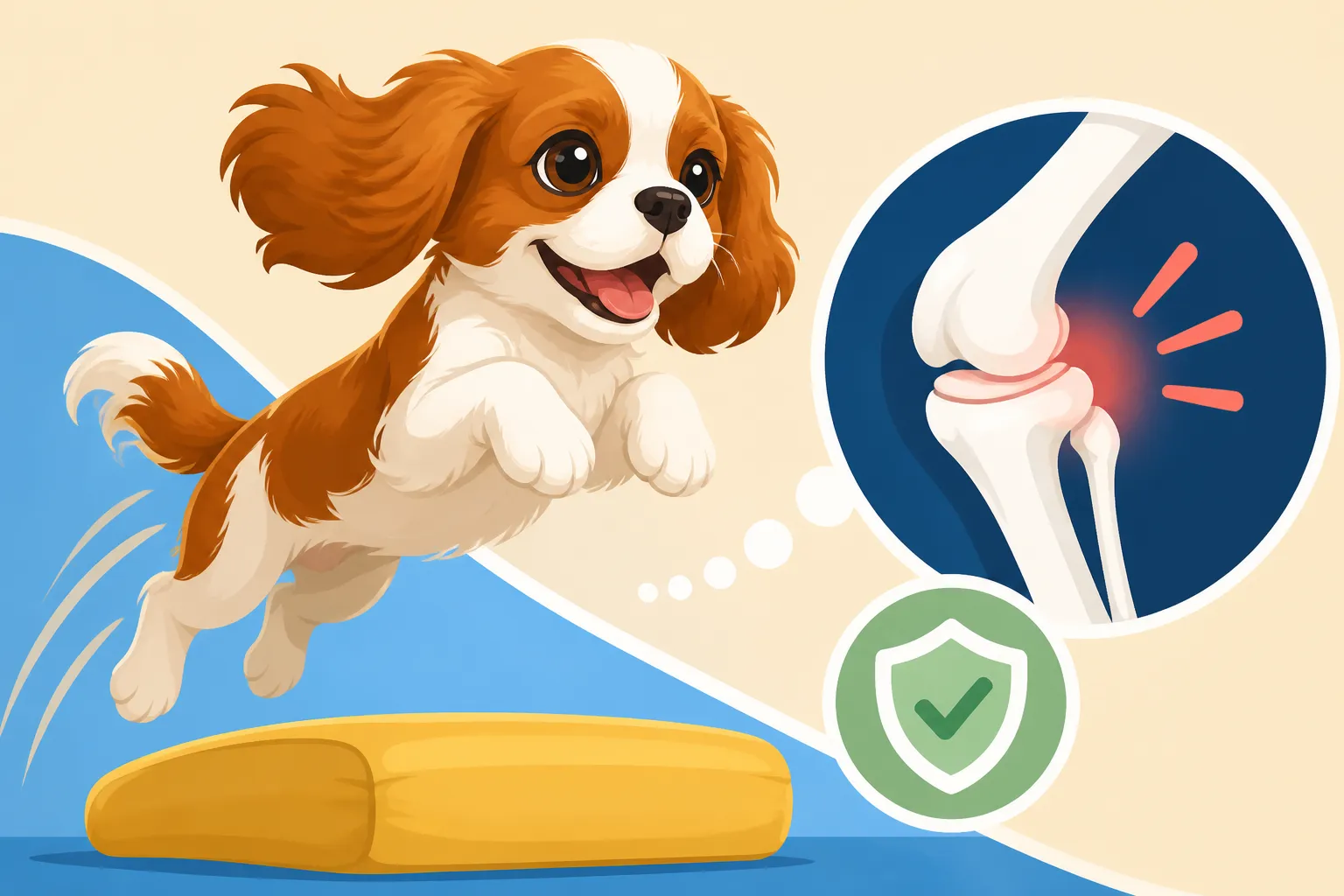
Patellar luxation is regrettably common in our beloved Cavaliers. It occurs when the patella, or kneecap, slips out of its normal groove in the femur (thigh bone). This can happen either to the inside (medial) or outside (lateral) of the leg. When a puppy is growing, their bones and connective tissues are still soft and developing. Repeated stress, awkward landings, or sudden twists from jumping can exacerbate any existing laxity in the joint or even contribute to the formation of the shallow groove that allows the kneecap to slip. You might see your puppy "skipping" on one back leg or holding it up for a few steps before returning to normal – that's often a tell-tale sign of a luxating patella. Early intervention and careful management of their activity are absolutely crucial to minimize discomfort and potentially delay or avoid surgical correction down the line. We dive deeper into this topic in Loose Kneecaps in a Thirteen-Pound Cavalier.
Growth Plates and Their Vulnerability
Puppies aren't just miniature adult dogs; their bones are actively growing. At the ends of their long bones, they have areas of cartilage called growth plates (or epiphyseal plates). These plates are responsible for the longitudinal growth of the bones. They remain open and vulnerable until the puppy reaches skeletal maturity, which for a Cavalier typically happens between 10 to 12 months of age, though it can vary. While these plates are open, they are softer and weaker than the surrounding bone and are more susceptible to injury. A hard landing from a jump, a fall, or a twisting motion can easily cause damage to these growth plates. Injuries to growth plates can disrupt normal bone development, leading to deformities or uneven limb length, which can then cause lifelong lameness or discomfort. Protecting these areas during puppyhood is paramount to ensuring proper skeletal development.
The Link to Hip Dysplasia
While patellar luxation often grabs the spotlight for Cavaliers, it's also important to remember that hip dysplasia can occur, though less commonly than in some giant breeds. Hip dysplasia is a condition where the hip joint doesn't form properly, leading to a loose joint and eventual arthritis. While genetics play a significant role, environmental factors during growth, such as excessive or improper exercise and impact, can influence the severity of the condition. Repeated high-impact activities like jumping off tall furniture or excessive running on hard surfaces can put undue stress on developing hip joints. It’s a complex interplay, but ensuring your puppy's joints are treated with care during their growth phase is a foundational step in promoting long-term joint health. For more on general joint health, consider reading Cavalier Knees, Hips and Joint Problems.
The Risks of Jumping and Impact on Growing Joints
Observing your Cavalier puppy launch themselves off the sofa or enthusiastically leap off a bed might seem adorable and energetic, but it's a behavior fraught with potential risks for their still-developing musculoskeletal system. The seemingly innocuous bounces and dives can exert significant force on fragile joints and growth plates, potentially leading to immediate injury or contributing to chronic problems later in life.
Acute Injuries from High Impact
Imagine a small, lightweight puppy landing awkwardly from a jump that, to them, feels like a significant drop. The impact force on their tiny legs, especially on hard surfaces, can be considerable. Acute injuries can range from sprains and strains to more serious fractures of growth plates or even bone. A common scenario is a puppy launching themselves off a bed or chair and landing badly, twisting a knee or ankle. You might not see a visible break, but the immediate result could be sudden yelping, lameness, or a reluctance to put weight on the affected limb. Such incidents often require immediate veterinary attention, and while most puppies recover, a severe injury can necessitate splinting, casting, or even surgery, alongside weeks of restricted activity. This not only causes pain for your puppy but can also be quite distressing and costly for you as an owner. A Cavalier Limping After Play offers more insight into recognizing these signs.
Long-Term Wear and Tear
Even if no immediate, dramatic injury occurs from a single jump, repeated high-impact activities can contribute to long-term wear and tear on your Cavalier's joints. Think of it like constant micro-trauma. Each jump, especially from height, sends a shockwave through the joint cartilage and surrounding ligaments. Over time, this constant stress can accelerate the degeneration of cartilage, weaken ligaments, and inflame the joint capsule. For a breed already prone to conditions like patellar luxation, this continuous stress can make the existing structural weaknesses worse or even bring on symptoms earlier than they might otherwise appear. This progressive damage can lead to the premature development of osteoarthritis, a painful and irreversible condition that significantly impacts a dog's mobility and quality of life as they age. Preventing this kind of cumulative damage in puppyhood is a proactive step towards a more comfortable senior life for your Cavalier.
Aggravating Existing Conditions
The biggest concern with jumping and high-impact activities for Cavalier puppies is how they can aggravate pre-existing or underlying conditions. A puppy might have a mild, asymptomatic patellar luxation that's only detected on a veterinary exam. A series of jumps, especially from furniture, could turn that mild luxation into a more frequent and painful event, causing noticeable lameness and discomfort. Similarly, if there's any degree of hip laxity, even mild, repetitive jarring movements could worsen the instability and accelerate the development of hip dysplasia and subsequent arthritis. It's not just about what might cause a problem, but what might unmask or intensify an existing one. For this reason, many vets advise minimizing jumping for Cavalier puppies as a preventative measure, even if they show no current signs of joint issues.
Safe Play and Exercise for Your Cavalier Puppy
The goal isn't to wrap your Cavalier puppy in cotton wool and prevent them from ever having fun. It's about smart, mindful management of their environment and activity levels during these critical growth months. You want to encourage healthy movement, build strong muscles, and satisfy their natural play drive, all while protecting their developing joints.
Managing Stairs and Furniture Access
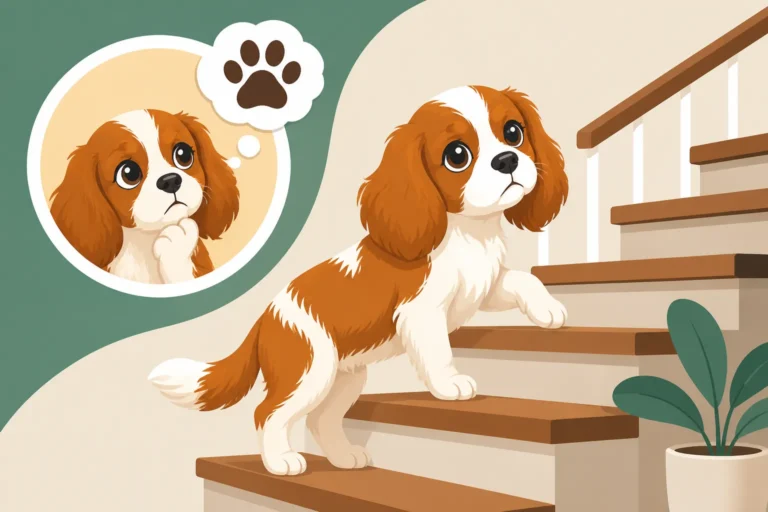
One of the most immediate and impactful things you can do is control access to stairs and furniture. For a young Cavalier puppy, climbing and descending stairs can put significant strain on their elbows, shoulders, hips, and knees. Jumping off furniture, as we've discussed, is a prime culprit for impact injuries.
Here's how to manage it:
- Puppy Gates: Install baby gates at the bottom and top of stairs to prevent unsupervised access. This is particularly important during the early months.
- Ramps and Steps: For beloved spots on the sofa or bed, consider investing in dog ramps or pet steps. Brands available on platforms like Amazon or Chewy offer a variety of options that can blend into your home decor and provide a safe alternative for your puppy to get on and off furniture without jumping. Teach your puppy to use these from a young age with positive reinforcement and treats. This also comes in handy as they get older and might struggle with mobility.
- Supervised Access: When your puppy is on the sofa or bed with you, always supervise them and gently lift them down rather than allowing them to jump. Make it a habit from day one. It might seem tedious, but it sets a lifelong precedent for joint safety.
Appropriate Play Surfaces and Activities
The surface your Cavalier puppy plays on matters. Hard, unforgiving surfaces like concrete, tile, or hardwood can increase the impact on joints during running, stopping, and jumping.
Consider these alternatives and activities:
- Soft Surfaces: Encourage play on softer, more forgiving surfaces like grass, carpet, or rubber mats. If your home has a lot of hard flooring, consider laying down rugs or runners, especially in high-traffic play areas. This also helps with traction, reducing slips and falls.
- Controlled Play: Engage in gentle, controlled play sessions. Instead of encouraging wild, high-speed chases and sudden stops, focus on games like fetch (on soft ground), gentle tug-of-war (at their level, not pulling up), and hide-and-seek indoors. Keep sessions short and frequent, rather than one long, exhausting burst of activity.
- Avoid High-Impact Games: Try to discourage games that involve excessive twisting, pivoting, or high jumps, especially on hard ground. Save those for when they are fully grown and have much stronger joint support, and even then, in moderation. For example, if you're throwing a ball, roll it along the ground rather than tossing it high into the air.
- Mental Stimulation: Don't forget that mental exercise is just as tiring and valuable as physical exercise. Puzzle toys, scent games, and short training sessions are excellent ways to burn energy without stressing joints. A balanced diet from brands like Ollie can also support overall health and development, giving them the right building blocks for strong bones and muscles.
A small table comparing ideal play scenarios might be helpful:
| Activity / Surface | Joint Impact Level | Recommendation |
|---|---|---|
| Jumping off high furniture | High | Avoid entirely. Use ramps/steps. |
| Running on concrete | Moderate to High | Limit duration, especially during puppyhood. |
| Fetch on grass | Low to Moderate | Excellent, especially if ball is rolled. |
| Tug-of-war (gentle) | Low | Good for bonding and strength, ensure safe technique. |
| Puppy Obedience classes | Low | Excellent for mental stimulation and controlled movement. |
| Slippery tile floors | High risk of slips | Cover with rugs/mats, especially for active play. |
The Importance of Controlled Exercise
It's easy to think a puppy needs to run and play constantly, but for Cavaliers, controlled exercise is key. Over-exercising a puppy can be just as detrimental as inappropriate exercise.
- Age-Appropriate Walks: A general rule of thumb for walking puppies is five minutes of exercise per month of age, twice a day. So, a four-month-old Cavalier puppy would get two 20-minute walks per day. These should be leashed walks on varied, but not overly strenuous, terrain. Avoid forced long hikes or runs until their growth plates have closed. We talk more about this in Walk Length for a Cavalier With a Murmur.
- Short, Frequent Bursts of Play: Instead of one long play session, opt for several shorter ones throughout the day. This prevents exhaustion and allows their joints to rest.
- Listen to Your Puppy: Pay attention to signs of fatigue or discomfort. If your puppy starts lagging, limping, or showing reluctance to play, it's time for a break. Never force them to continue.
- Weight Management: Keeping your Cavalier puppy at a healthy weight is absolutely crucial. Extra weight puts additional strain on developing joints, making them more susceptible to injury and accelerating joint degradation. Regular weighing and consulting your vet on appropriate feeding amounts are essential.
When to Seek Veterinary Advice
As much as we try to prevent issues, sometimes problems arise despite our best efforts. Knowing when to consult your veterinarian is paramount for early diagnosis and intervention, which can significantly impact your Cavalier puppy's long-term health and comfort. Trust your instincts; if something feels off, it probably is.
Recognizing Limping or Hopping
One of the most obvious signs that your Cavalier puppy's knees or other joints might be in trouble is a change in their gait. This can manifest in several ways:
- Intermittent Limping: You might notice your puppy limping only occasionally, perhaps after a specific activity or when getting up from a rest. It might even disappear with movement, making you wonder if you imagined it. This "on-again, off-again" limp is characteristic of patellar luxation.
- "Skipping": This is a classic sign of patellar luxation where your puppy will lift one back leg for a few steps, run on three legs, and then suddenly put the fourth leg back down as if nothing happened. This happens when the kneecap slips out and then pops back into place.
- Consistent Lameness: If your puppy is consistently favoring a limb, refusing to put weight on it, or showing obvious pain when walking, it’s a clear indication of a problem that needs immediate veterinary attention.
- Difficulty Rising or Lying Down: A puppy that struggles to get up from a lying position or seems stiff after rest could be experiencing joint pain.
Don't dismiss these signs, even if they seem minor or intermittent. Early veterinary assessment is critical to prevent a small issue from becoming a larger, more chronic problem. Early Arthritis in a Cavalier's Elbows discusses similar issues in older dogs, but the principle of early detection holds true for puppies.
Changes in Gait or Activity Level
Beyond obvious limping, more subtle changes in your puppy's movement or overall activity can signal joint discomfort or an underlying issue. You know your puppy's normal energy levels and antics best, so pay close attention to any deviations.
- Reluctance to Play or Jump: If your usually boisterous puppy suddenly seems less enthusiastic about playing, less willing to jump (even if you've been encouraging them not to), or avoids certain movements, it could be due to pain.
- Stiffness: Observing stiffness, particularly after rest or in the morning, is a common indicator of joint discomfort or early arthritis. They might move a bit "gingerly" at first.
- Altered Posture: A puppy might adopt an unusual stance to compensate for pain in a limb or joint, such as holding a leg at an odd angle or shifting their weight differently.
- Vocalization: While less common for chronic joint pain, an acute injury from a jump might elicit a yelp, whimper, or cry of pain. Even more subtle signs, like excessive licking at a joint, can indicate discomfort.
If you observe any of these changes, even if they seem fleeting, it's always best to err on the side of caution and consult your veterinarian. They can conduct a thorough physical examination to pinpoint the source of discomfort.
Pre-emptive Screening and Consultations
For Cavalier owners, being proactive about joint health is part of responsible ownership. Even if your puppy shows no signs of limping or discomfort, discuss joint health with your veterinarian during routine check-ups.
- Puppy Exams: During your puppy's vaccination visits, your vet will perform a general orthopedic exam, checking for any obvious signs of patellar luxation or hip issues. They will manipulate the joints and feel for any instability. This is an opportune time to ask specific questions about joint care.
- Breed Predisposition Discussion: Remind your vet about the Cavalier's breed-specific predispositions. They can advise you on the best practices for exercise, nutrition, and supplements (if appropriate, always consult your vet before giving supplements) to support healthy joint development.
- Specialist Referrals: If your general veterinarian detects any significant joint laxity or a suspected luxating patella, they might recommend a referral to a veterinary orthopedic specialist. These specialists have advanced training and diagnostic tools to accurately assess the severity of the condition and discuss potential management strategies, which could range from conservative care to surgical options if necessary. Understanding The Four Grades of Cavalier Patellar Luxation can also help inform your discussions with your vet.
By being observant and maintaining open communication with your veterinary team, you can provide the best possible care for your Cavalier puppy, protecting their delicate joints as they grow into happy, healthy adult dogs.
Disclaimer
This article is for general informational purposes only and does not constitute professional advice. Laws, prices and regulations vary by location and change over time. Consult a qualified professional for guidance on your specific situation.