Cavaliers Living With Rabbits and Birds
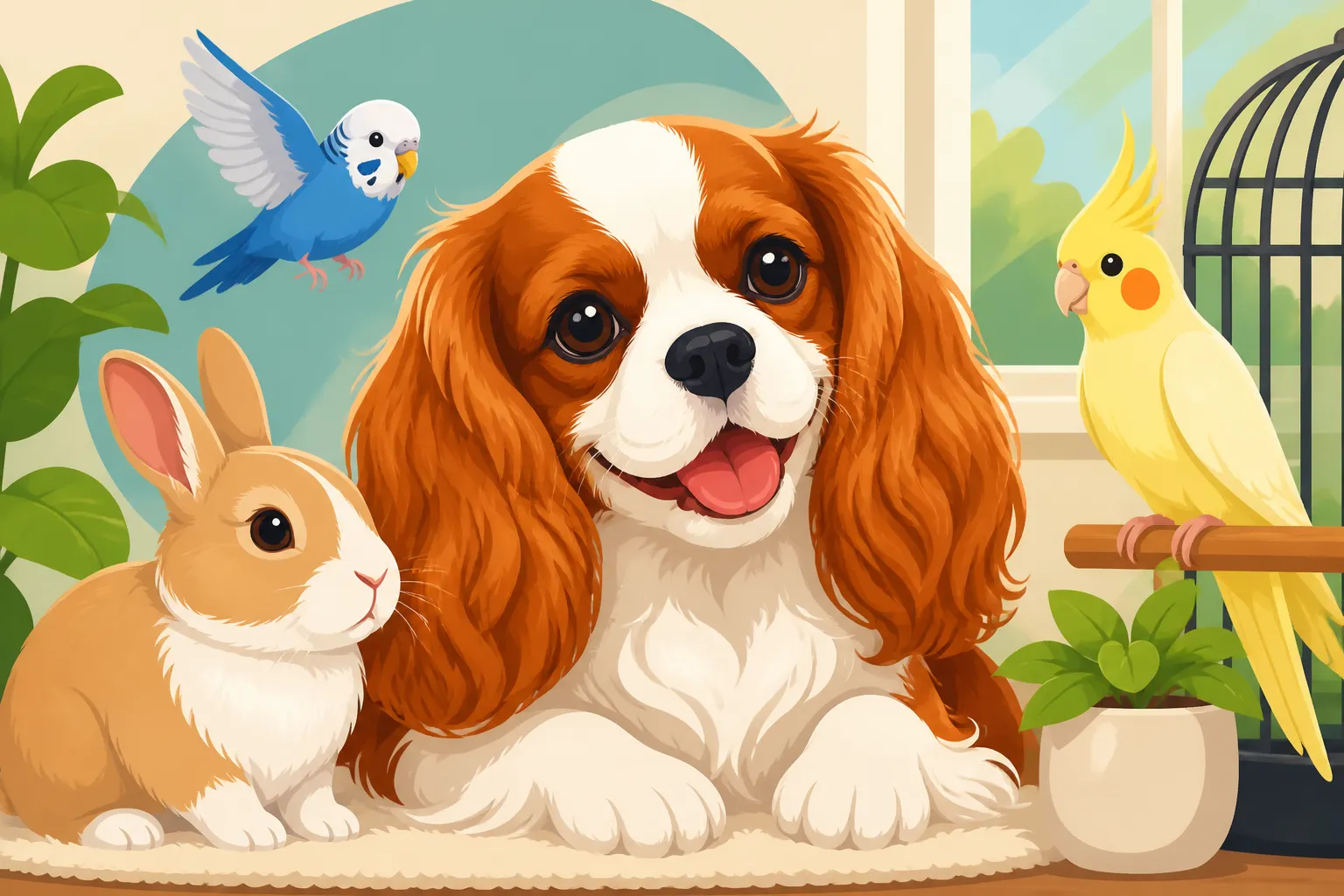
Bringing a Cavalier King Charles Spaniel into a home that already has small, vulnerable pets like rabbits or birds can feel like navigating a minefield. You adore your sweet, gentle Cavalier, but deep down, you worry about those natural instincts inherited from their spaniel ancestors. It's a common dilemma, and this guide aims to walk you through the realities, risks, and proactive steps you can take to foster a harmonious, and most importantly, safe, multi-species household.
Understanding the Cavalier's Instincts: Why Small Pets Can Be a Challenge
It’s easy to look at our beloved Cavaliers, with their soft eyes and cuddly nature, and forget that they are, at their core, dogs. And dogs, by and large, possess a prey drive – a natural instinct to chase, capture, and sometimes kill smaller animals. While the Cavalier King Charles Spaniel has been bred for centuries as a companion dog, that ancestral hunting instinct still whispers through their DNA, and it's something we simply cannot ignore when living with small, vulnerable creatures.
The Hunting Heritage of a Companion Breed
Many people are surprised to hear that the Cavalier, despite its current role as a lapdog extraordinaire, comes from a long line of spaniels bred to flush out birds and small game for hunters. Their larger cousins, like Cocker Spaniels or Springer Spaniels, still actively perform these tasks. While centuries of selective breeding have softened this drive in Cavaliers, it hasn't vanished entirely. It’s a subtle but persistent undercurrent in their behavior, manifesting as a sudden interest in a scurrying mouse, a darting bird, or yes, even a fluffy rabbit.
Think about it: even in play, a Cavalier will often chase a tossed toy with enthusiasm, pounce on it, and shake it. These are all behaviors rooted in the predatory sequence. It's not malice; it's instinct. Ignoring this instinct can put your smaller pets in grave danger, even if your Cavalier has never shown overt aggression. A quick, playful swat from a paw could be fatal for a delicate bird, and a "game" of chase could result in serious injury or worse for a rabbit.
This isn't to say your Cavalier is a bloodthirsty hunter waiting to strike. Far from it! Most Cavaliers are incredibly sweet-natured. But understanding this inherent genetic predisposition is the first step in setting up a safe environment. It means you must take responsibility for managing situations, rather than simply hoping for the best because your Cavalier is "nice."
The Cavalier's Prey Drive and What It Looks Like
A Cavalier's prey drive can show up in many ways. It might be a sudden stiffening of the body, eyes locked on a bird outside the window. It could be a low, focused bark directed at your rabbit in its hutch. Some Cavaliers will "point" with intense concentration, much like a gundog. Others might develop an obsessive interest, following the small pet's movements with unwavering attention, even if they aren't physically able to reach it.
For instance, consider little Penny, a beautiful Blenheim Cavalier. Her owners also had a beloved pet rabbit, Thumper. Penny adored her family, but anytime Thumper moved in his pen, Penny would fixate, her tail wagging furiously, a low whine sometimes escaping her. Her owners initially thought she just wanted to play. One day, during what they thought was supervised playtime, Thumper made a sudden dash, and Penny, without a second's thought, instinctively gave chase, nipping him. Thankfully, Thumper only sustained a minor wound, but it was a stark reminder that instinct can override learned behavior in an instant. This kind of event can happen in a flash, and it highlights why vigilant supervision is paramount.
Even if your Cavalier seems friendly or curious, any sudden movement from a small prey animal can trigger an immediate, instinctual response. This isn't a reflection of your Cavalier's personality; it's simply biology. You might find your Cavalier Why a Cavalier Chases Birds Into the Road during walks, demonstrating this very instinct in a different context.
The Misconception of a "Gentle" Breed
The Cavalier King Charles Spaniel is undeniably a gentle, affectionate, and adaptable breed. They thrive on human companionship and are known for their sweet disposition. This reputation is well-earned and one of the many reasons we love them so much. However, this very gentleness can lead owners to underestimate their innate drives, especially when it comes to smaller animals. It’s a dangerous misconception to believe that because your Cavalier is "gentle" with people, or even with larger dogs, they will automatically be gentle with a rabbit or a parakeet.
A Cavalier’s gentle nature primarily applies to how they interact with their human family and often, other dogs of similar size. It doesn't magically erase the instincts of a canid. They are not naturally equipped with the discernment to understand that the small, fluffy, fast-moving creature isn't prey. Their instinctual response is not governed by their usual loving temperament, but by ancient programming.
Owners might also confuse curiosity for friendliness. A Cavalier might sniff at a rabbit's hutch with a wagging tail, seemingly inviting interaction. But if that rabbit suddenly moves, the Cavalier's brain might switch from "curiosity" to "chase" in a fraction of a second. This is why it’s never safe to assume and always crucial to manage.
Rabbits and Cavaliers: A Delicate Balance
Introducing a Cavalier to a rabbit requires an immense amount of caution, planning, and unwavering commitment to safety. Rabbits are extremely fragile creatures, and even a "playful" interaction from a dog can cause severe injury or death. Their bones are delicate, and they can easily go into shock from stress.
Assessing the Risk: Supervision is Non-Negotiable
The risk of a Cavalier injuring a rabbit is high, and therefore, direct, unsupervised interaction should never be allowed. Even if your Cavalier seems completely indifferent to your rabbit, that moment you turn your back, or leave the room "just for a second," could be the moment disaster strikes. It only takes one swift lunge, one quick snap, or one excited pawing motion for a rabbit to be critically injured.
Consider this scenario: You’ve got your Cavalier, Buster, on a leash, and your rabbit, Clover, is in her secure enclosure in the living room. Buster seems calm, perhaps lying down a few feet away. You get up to grab a drink from the kitchen, assuming Buster will stay put. But Clover suddenly thumps her back leg, a classic sign of alarm, and Buster, startled, lunges at the enclosure, barking frantically. Clover, terrified, might injure herself trying to escape, or Buster might cause damage to the enclosure, potentially creating an opening.
This isn't fear-mongering; it's realistic pet ownership. Many successful multi-species households rely on strict management protocols. This isn't just about preventing physical harm; the stress of being constantly perceived as prey can also negatively impact a rabbit's health and lifespan. They are inherently fearful creatures.
Creating Separate Safe Zones
The cornerstone of a safe home with both a Cavalier and a rabbit is the establishment of completely separate, secure zones for each animal. This means that when you are not actively supervising, your rabbit must be in an enclosure that your Cavalier cannot access or breach. Ideally, this enclosure should be in a room that the Cavalier is not allowed into, or at least one with a sturdy baby gate preventing access.
Rabbit enclosures should be robust – solid metal exercise pens or multi-level cages made of thick wire, not flimsy plastic or wood that a determined Cavalier could chew through. The bars should be close enough that a Cavalier cannot stick its head through. For example, a heavy-duty pen available from a retailer like Amazon could provide a good barrier. Think about the height too; a Cavalier can jump surprisingly high when motivated.
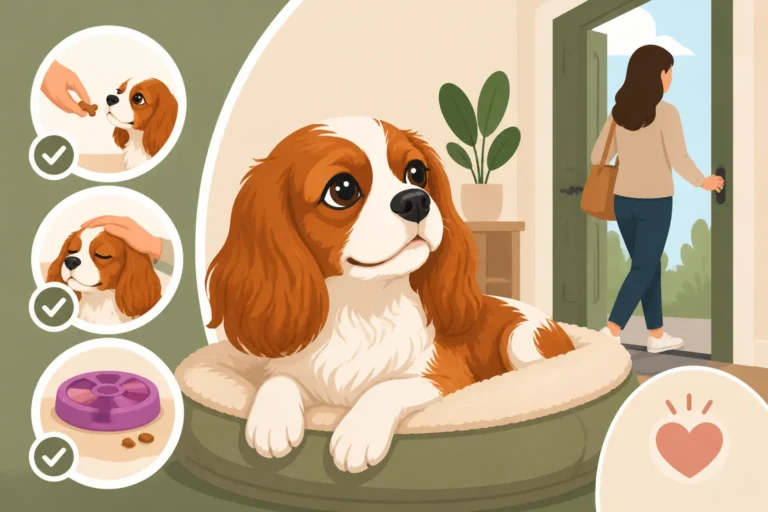
Furthermore, your Cavalier needs its own secure space where it can relax without being constantly aware of the rabbit. This might be a crate, a dog bed in a separate room, or a fenced-off area. The goal is to reduce constant stress for both animals. If your Cavalier tends to be overly clingy, managing their anxiety around being separated from you can be helped by practicing Building a Cavalier's Tolerance for Being Left.
Training for Calmness Around Rabbits
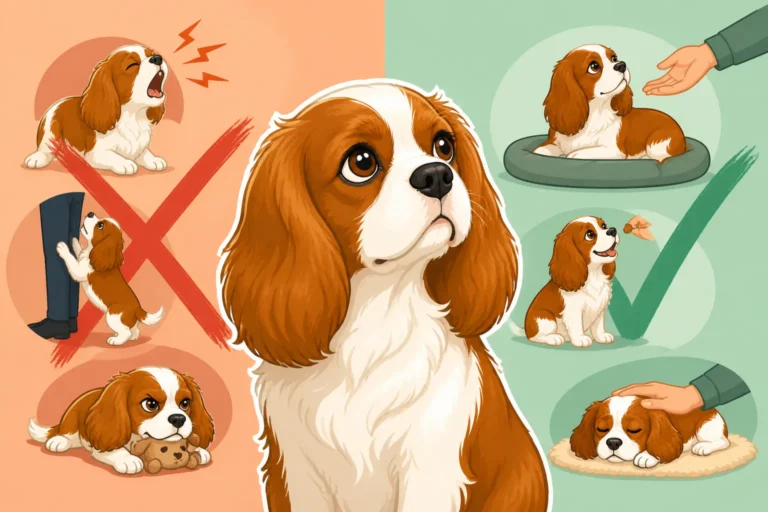
While physical barriers are the first line of defense, training your Cavalier is also crucial for building good habits and fostering a calmer environment. The key here is not to "train away" prey drive, which is impossible, but to teach your Cavalier to ignore the rabbit and focus on you instead. This is where positive reinforcement training really shines.
Start by teaching a strong "leave it" command. Practice this with high-value treats and distractions, eventually working your way up to having the rabbit in its secure enclosure as the distraction. Reward your Cavalier heavily for looking at you instead of the rabbit. Another valuable command is "settle" or "place," where your Cavalier learns to go to a designated spot and remain calm, even when other activities are happening. You can find excellent online resources and courses, such as those offered by BAXTER & Bella, that can guide you through these fundamental obedience skills, emphasizing positive reinforcement.
It's also beneficial to teach your Cavalier to associate the rabbit's presence (from a distance, within its enclosure) with calm, rewarding activities. This could involve giving your Cavalier a favorite chew toy or engaging in a short, quiet training session with treats while the rabbit is visible but inaccessible. The goal is to shift their emotional response from excitement or fixation to relaxed indifference. Remember, consistency is key; short, frequent training sessions are far more effective than long, infrequent ones.
Birds and Cavaliers: Feathers and Fangs
Living with both a Cavalier and pet birds presents an even higher level of risk than with rabbits. Birds are incredibly delicate, often vocal, and their quick, darting movements are highly stimulating to a dog's prey drive. The consequences of a Cavalier getting hold of a bird are almost always fatal.
The Allure of Movement and Sound
Birds, with their vibrant colors, fluttery movements, and cheerful chirps, are like living, breathing toys to a dog with a prey drive. The sudden flapping of wings, the quick hops within a cage, and the high-pitched sounds are all irresistible triggers for a Cavalier. They might perceive these actions as an invitation to chase, or simply as an exciting challenge to investigate.
Imagine a cockatiel fluttering from perch to perch inside its cage. To a human, it's a lovely sight. To a Cavalier, it can ignite a primal spark. The dog's natural instinct is to pursue. This isn't aggression in the human sense, but pure, unadulterated predatory behavior. Even the smallest "toy" breed can inflict serious damage on a bird. A Cavalier's mouth, designed for carrying small game, can easily crush a bird's fragile bones.
This is why managing the environment and never relying on your Cavalier's "good behavior" alone is absolutely critical. You are the protector of both animals, and you must put safeguards in place that are stronger than instinct.
Secure Enclosures: The First Line of Defense
For homes with birds and Cavaliers, secure enclosures are not just recommended, they are non-negotiable lifelines. Birdcages must be exceptionally sturdy, made of thick metal, and have bars that are too narrow for a Cavalier's muzzle to fit through. The latch mechanisms should be dog-proof, not just bird-proof. A curious or persistent Cavalier can learn to open simple latches over time.
Ideally, birdcages should be placed in a room where the Cavalier is never allowed, or at least a room that can be securely closed off or protected by a high, sturdy baby gate. If the cage must be in a shared space, consider placing it on a very tall, stable stand or hanging it from the ceiling, out of reach of even a jumping Cavalier. However, remember that if the cage falls, or if the bird somehow escapes, the consequences are immediate and dire.
A solid cage cover can also be beneficial, especially when you are not directly supervising. This reduces visual stimulation for your Cavalier and can help the bird feel more secure. When purchasing such items, always prioritize safety and durability over aesthetics, perhaps looking at highly-rated options on platforms like Amazon known for pet supplies.
Managing Cavalier Excitement Around Birds
Beyond physical barriers, managing your Cavalier's excitement levels around birds is key. This means preventing frantic barking, jumping, or sustained staring at the birdcage. These behaviors are not only stressful for the bird, but they also reinforce the Cavalier's fixation.
If your Cavalier becomes overly excited by the birds, calmly redirect their attention. Lead them away from the cage, engage them in a different activity in another part of the room, or even take them to a separate room for a short "reset." Use positive reinforcement to reward calm behavior when they are in the same room as the birds. For example, if your Cavalier is lying quietly on their bed while the bird chirps, quietly offer a treat and praise.
It's also important to provide your Cavalier with plenty of mental and physical exercise to burn off energy. A tired Cavalier is often a calmer Cavalier, less prone to overstimulation. Daily walks, engaging play sessions, and puzzle toys can all contribute to a more relaxed demeanor, making them less likely to react impulsively to your feathered friends. Don't forget that Cavaliers need consistent engagement, as noted in articles about Whether a Cavalier Copes on Two Short Walks.
Strategies for Successful Multi-Species Households
Creating a peaceful home for both your Cavalier and your small prey pets is an ongoing commitment, not a one-time fix. It requires vigilance, consistent training, and smart environmental management. The goal isn't to make them best friends, but to ensure they can coexist safely without stress or danger.
Early Introduction and Desensitization
If you're bringing a new pet into your home, whether it's a puppy Cavalier or a new bird, controlled early introductions can set a positive tone. For a Cavalier puppy, gently exposing them to the sight and sound of the other pet from a very young age, always through a secure barrier and with positive associations, can be beneficial. Never allow direct access.
The process of desensitization involves gradually increasing your Cavalier's exposure to the presence of the rabbit or bird, always ensuring safety and rewarding calm responses. For instance, start by having the birdcage in a room where the Cavalier is only present for very short, supervised periods, rewarded for calm behavior. Slowly increase the duration of exposure as long as the Cavalier remains relaxed. If any signs of prey drive emerge (fixation, whining, barking, stiff body), immediately increase the distance or add a more robust barrier, and then try again more gradually.
Remember, the aim isn't necessarily for them to interact, but for your Cavalier to learn that the smaller pet's presence is normal, safe (for the smaller pet), and not a trigger for excitement. This is a slow, methodical process that requires patience and a good understanding of your Cavalier's responses. Consistent positive reinforcement, perhaps building on lessons learned from Reward-Based Training With a Cavalier, will be crucial.
Consistent Training and Management
Training is a lifelong endeavor, especially when managing strong instincts. Continue to reinforce crucial commands like "leave it," "stay," "off," and "come." These aren't just parlor tricks; they are safety commands that can prevent a dangerous situation from escalating. Make sure your Cavalier responds reliably to these commands even when there are distractions present.
Management strategies must be consistent. This means:
- Never leaving the animals unsupervised. If you have to leave the room, even for a moment, ensure the small pet is in a secure, inaccessible location, or your Cavalier is crated or in a separate room.
- Using leashes indoors for controlled interactions. When your small pet is out of its enclosure for exercise, your Cavalier should be on a leash, held by you, ready to redirect or remove if necessary.
- Secure enclosures at all times. Double-check latches, cage integrity, and positioning daily.
- Creating a routine. Both animals benefit from predictability. Scheduled times for the rabbit's exercise, the bird's out-of-cage time, and the Cavalier's play and training sessions can help reduce anxiety and increase stability.
It’s worth investing in high-quality training resources. Online platforms, like those offered by BAXTER & Bella, can provide structured training programs that help solidify obedience cues and manage behavioral challenges in a positive way.
Here’s a summary of key safety strategies:
| Strategy | Description | Applies Best To | Risk Reduction Level | Effort Level |
|---|---|---|---|---|
| Complete Separation | Housing small pets in a room inaccessible to the Cavalier. | Rabbits & Birds | Very High | High |
| Secure Enclosures | Robust, dog-proof cages/pens, elevated if possible. | Rabbits & Birds | High | Medium |
| Constant Supervision | Never leaving pets together unsupervised, even for a moment. | Rabbits & Birds | High | High |
| "Leave It" Training | Teaching the Cavalier to ignore the smaller pet and focus on you. | Rabbits & Birds | Medium | Medium |
| "Place/Settle" Training | Teaching the Cavalier to go to a designated spot and stay calm. | Rabbits & Birds | Medium | Medium |
| Leash Control Indoors | Keeping the Cavalier on a leash when small pets are out of enclosure. | Rabbits & Birds | High | Medium |
| Enrichment for Cavalier | Providing ample physical and mental exercise to reduce excess energy and boredom. | Rabbits & Birds | Low-Medium | Medium |
| Environmental Control | Minimizing visual/auditory triggers for the Cavalier (e.g., cage covers, opaque barriers). | Birds | Medium | Low |
Enrichment for Both Species
A bored Cavalier is a mischievous Cavalier. Providing plenty of appropriate enrichment for your dog can significantly reduce their inclination to focus on the smaller, more tempting pets. This means regular walks, engaging playtime, chew toys, and puzzle feeders. A mentally stimulated Cavalier is a happier, calmer Cavalier. Consider varied walking routes, perhaps in safe, enclosed areas, to give them plenty of sniffing opportunities. For a new Cavalier puppy, Socializing a Cavalier Puppy Gently in varied environments can also build confidence, making them less reactive in general.
Likewise, ensure your rabbits and birds have enriching environments that cater to their needs. This includes plenty of space, appropriate toys, foraging opportunities, and hiding spots. A stressed or bored small pet is more likely to exhibit behaviors that might inadvertently trigger your Cavalier's prey drive. For example, a bird that frantically flies around its cage due to lack of stimulation might be more enticing to a curious Cavalier than a bird calmly perched and preening. Providing a stimulating, stress-free environment for all your pets is a holistic approach to multi-species harmony.
Living with Cavaliers, rabbits, and birds can be a joy, but it's a responsibility that requires careful planning and constant vigilance. Your Cavalier's sweet nature doesn't override ancient instincts, so it's up to us, as responsible pet parents, to create a management plan that keeps everyone safe and happy.
Disclaimer
This article is for general informational purposes only and does not constitute professional advice. Laws, prices and regulations vary by location and change over time. Consult a qualified professional for guidance on your specific situation.