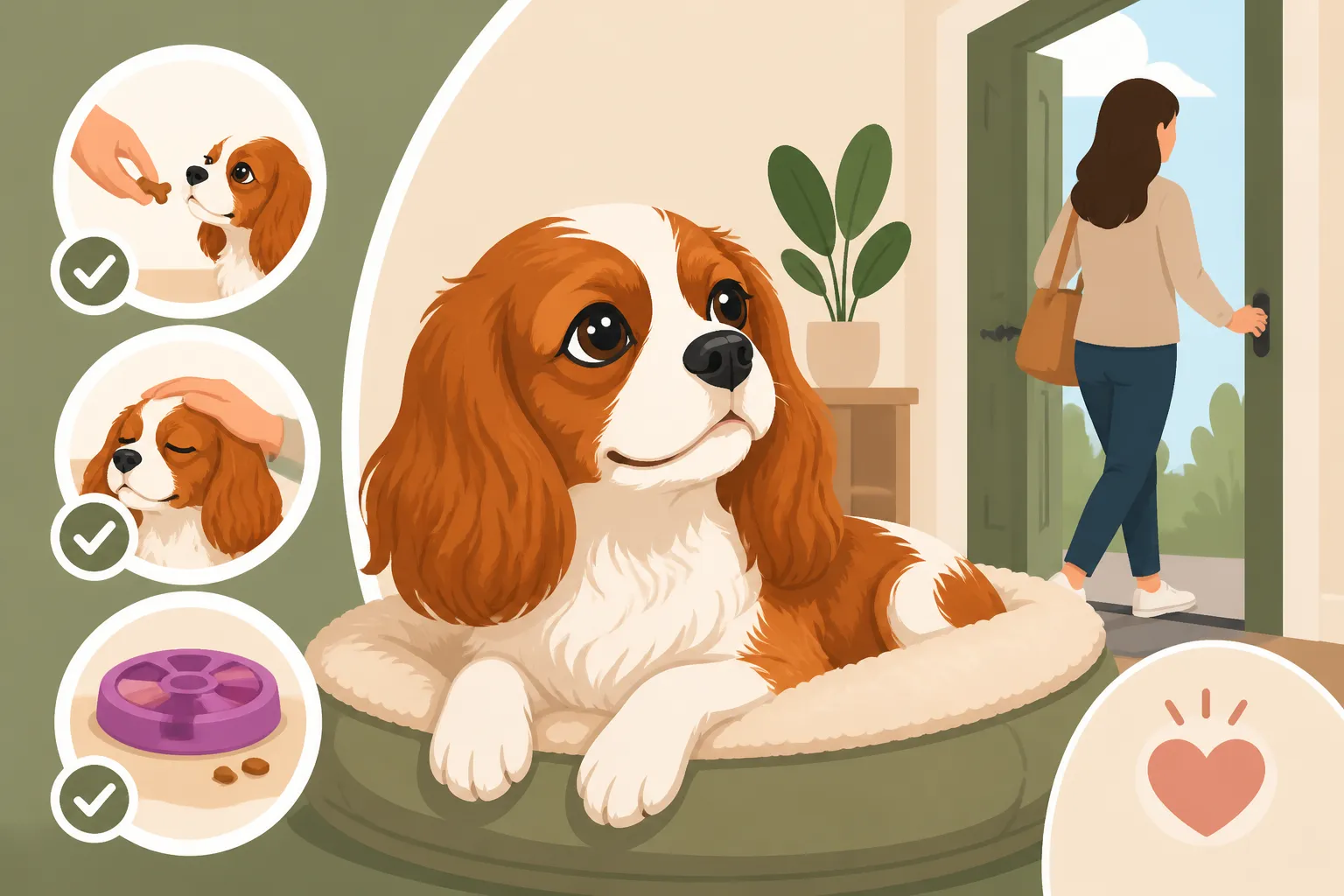
Departure Routines That Calm a Cavalier
It’s a heart-wrenching moment for any Cavalier owner: the sound of jingling keys, the grab for your coat, and then that little shadow springs to life, eyes wide with panic. Cavaliers are renowned for their affectionate, "Velcro" nature, which, while endearing, often means they struggle immensely when left alone. This guide will walk you through creating effective departure routines that can help ease your Cavalier’s anxiety, making your exits (and their time alone) far less stressful for everyone involved.
Understanding Your Cavalier's Separation Anxiety
Before we can even talk about departure routines, we need to really dig into why your sweet Cavalier melts down when you head for the door. It's not about being "naughty" or "stubborn"; it's genuine distress, and understanding that is the first step toward compassion and effective management.
The "Velcro Dog" Tendency
Cavalier King Charles Spaniels were quite literally bred to be companions. They were lap warmers and confidantes to royalty, always by their human's side. This deep-seated need for connection is what makes them such wonderful, loving dogs, but it also means they can bond incredibly strongly and struggle to understand why you would ever choose to leave them. They're often called "Velcro dogs" for a reason – they stick to you like glue! When you’re home, they’re often right there, following you from room to room, even to the bathroom. This constant proximity sets up a natural dependency. When that presence is suddenly removed, it can trigger a primal fear of abandonment. For more on this, check out Why a Cavalier Follows You Room to Room.
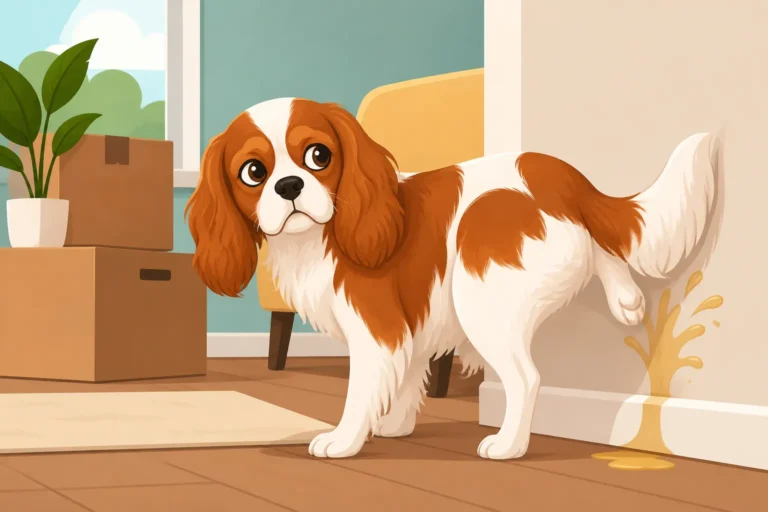
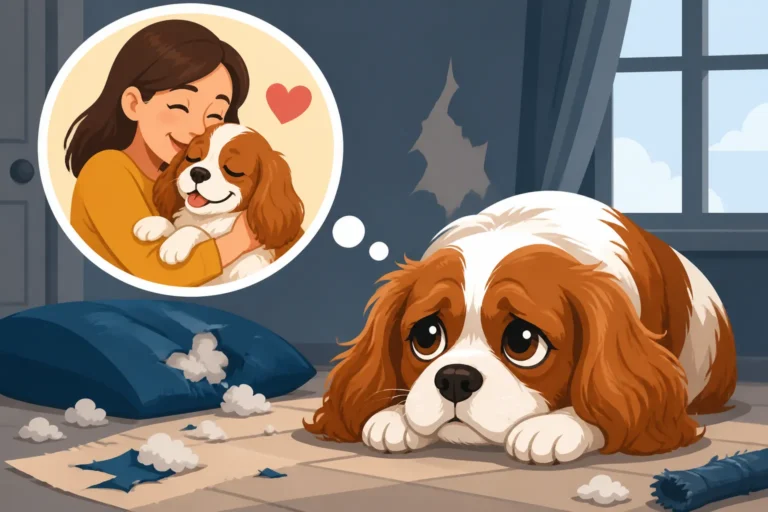
This isn't a flaw in their character; it's simply who they are, a product of centuries of selective breeding. They thrive on companionship, and isolation goes against their very nature. Imagine being a tiny, loving creature who relies entirely on one person for everything – comfort, food, safety, affection – and then that person suddenly vanishes. It's terrifying! Their reactions, whether it's howling, destructive chewing, or inappropriate urination, aren't acts of spite, but desperate attempts to cope with overwhelming anxiety.
Triggers for Anxiety Before You Even Leave
The panic often starts long before you open the door. Cavaliers are incredibly perceptive and pick up on our subtle cues. Think about your usual routine: Do you always put on your shoes in the same spot? Grab your keys from a specific hook? Pick up your purse or backpack? These seemingly innocent actions become "pre-departure cues" for your Cavalier, signaling that the dreaded moment is approaching.
Once your Cavalier starts to associate these routine actions with your departure, their anxiety can begin to build immediately. You might notice them start to pace, pant, whine, or even try to block your path as you go through these steps. This anticipatory anxiety is a huge part of the problem. If we can break the association between these cues and your departure, we can prevent the anxiety from spiraling before you’ve even had a chance to say goodbye (or, more accurately, not say goodbye, which we'll get to!). Addressing this pre-departure build-up is crucial for any successful calming strategy.
Crafting a Peaceful Pre-Departure Routine
The goal here isn't to trick your Cavalier, but to create a new, calm normal around your leaving. It's about predictability and positive association, turning stressful signals into neutral, or even pleasant, ones.
The Power of Predictability and Timing
One of the most powerful tools you have is predictability. Dogs thrive on routine, and knowing what to expect can significantly reduce stress. Your new departure routine should be consistent every single time you leave, even if it's just for five minutes to get the mail.
Start by varying your pre-departure cues. Pick up your keys, then put them back down and sit on the sofa. Put on your coat, then take it off and make a cup of tea. Do this throughout the day, completely unconnected to leaving, until your Cavalier stops reacting to these actions with heightened anxiety. This desensitizes them to the triggers. Then, introduce a new, clear routine for when you are leaving. Maybe it’s a specific phrase you say, or a treat you give, but it needs to happen in the exact same order every time. This helps your Cavalier understand, "Okay, these specific steps mean mom/dad is leaving, but then this good thing happens, and they always come back." Consistency is absolutely key here.
| Step Number | Routine Element | Purpose |
|---|---|---|
| 1 | Exercise/Potty Break | Drains energy, ensures comfort |
| 2 | Calming Aid (Optional) | Helps reduce underlying anxiety |
| 3 | Prepare Safe Space | Provides comfort and security |
| 4 | Distraction Toy/Chew | Occupies mind, positive association |
| 5 | Grab Keys/Wallet/Coat | Normalizes departure cues |
| 6 | Quiet Exit | Avoids dramatic goodbyes |
Strategic Exercise and Potty Breaks
A tired Cavalier is often a calmer Cavalier. Before any planned departure, make sure your dog has had ample opportunity to exercise and relieve themselves. A good, brisk walk, a spirited game of fetch in the yard, or even some mentally stimulating puzzle games can help expend excess energy. This isn't about exhausting them, but about getting them to a point where they are naturally ready to settle down.
A long sniffy walk around the neighborhood an hour or so before you need to leave can be incredibly effective. Sniffing is mentally engaging for dogs and can be very calming. Make sure they’ve had a chance to empty their bladder and bowels fully. No dog wants to hold it for hours, and the discomfort can exacerbate anxiety. A quick potty break right before you leave is always a good idea. This helps ensure they're physically comfortable, reducing one potential source of stress while you're away.
Calming Aids and Distractions
This is where you can introduce some positive associations and physical aids. Many Cavaliers benefit from calming supplements, which you can find readily on platforms like Amazon. Products containing L-Theanine, L-Tryptophan, or a blend of calming herbs can help take the edge off their anxiety. Always discuss any supplements with your vet first to ensure they're appropriate for your Cavalier's individual health needs, especially if your dog is on other medications for conditions like heart disease. Calming Supplements for an Anxious Cavalier offers more in-depth information.
Beyond supplements, consider a special long-lasting chew or puzzle toy only given when you leave. A Kong stuffed with frozen peanut butter or cream cheese can keep a Cavalier occupied for a good chunk of time. This distraction associates your departure with something highly rewarding and positive. You might also want to try playing calming music or white noise. There are specific dog-calming playlists available on streaming services that can help mask outside noises that might otherwise trigger barking or alert behaviors. Some owners swear by a diffuser with calming pheromones, which can be placed near your Cavalier's safe space.
The Art of a Low-Key Departure
This is arguably the most critical part of the routine. Your exit needs to be as unremarkable as possible. No fuss, no drama, just a quiet transition.
Making Your Exit a Non-Event
I know, it’s hard. Every fiber of your being wants to crouch down, give them a big hug, and reassure them with sweet words. But for a Cavalier already prone to separation anxiety, this dramatic goodbye actually reinforces their anxiety. It tells them, "Yes, this is a big, emotional event! You should be worried!" Instead, aim for a "non-event" departure.
A few minutes before you actually walk out the door, ignore your Cavalier. Don't make eye contact, don't talk to them, don't pet them. Simply go about your final preparations – grab your bag, put on your shoes – as if they aren't even there. The idea is to disassociate your presence from your departure. When it's time to leave, just walk out the door. No "goodbye, sweetie!" No lingering glances. It feels counterintuitive, almost cruel, but it teaches them that your leaving is not a cause for alarm or a highly emotional moment. This low-key approach gradually helps them understand that your departure is just part of the daily rhythm, not an emergency.
Utilizing Crate Training and Safe Spaces
Many Cavaliers find comfort and security in a well-introduced crate or a designated safe space. The key word here is "well-introduced." A crate should never be used as punishment or simply shoved at them when you leave. It needs to be a positive, cozy den where they choose to relax. If your Cavalier isn't crate trained, start slowly, making it a wonderful place with soft bedding, favorite toys, and high-value treats. You can find excellent crates and comfortable beds on Amazon that fit the small size of a Cavalier perfectly. Choosing a Crate a Cavalier Will Rest In provides more guidance on making a crate a positive place.
If crating isn't an option, create another "safe zone." This could be a dog-proofed room, a large playpen, or even a section of the living room gated off. Equip it with their bed, water, a favorite scent-soaked blanket (maybe one that smells like you!), and their special long-lasting chew toy. This designated space gives them a sense of control and security in your absence, minimizing their opportunities for destructive behaviors that stem from panic, like chewing doorframes or furniture. Ensure this space is free from hazards and anything they might chew or ingest out of anxiety.
Maintaining Calm While You're Gone
What happens once you've left? This is where monitoring and consistency come into play to reinforce the new routine.
Monitoring and Adjusting Your Strategy
You can't fix what you can't see! Investing in a pet camera is invaluable for understanding what your Cavalier does when you’re not there. Brands like Furbo or Wyze offer excellent pet cameras that allow you to observe their behavior in real-time, often with two-way audio so you can even speak to them (though for severe anxiety, this can sometimes make things worse if it creates more anticipation). Seeing how they react after you leave will tell you if your routine is working or if adjustments are needed. Are they pacing right away? Howling within minutes? Or do they settle down with their chew toy for a while before getting restless?
Filming them allows you to gather data. You might discover that the first 10 minutes are the worst, and then they settle, or that they only start barking when the mailman comes. This information is crucial for tailoring your strategy. If they're still deeply distressed despite your efforts, it might be time to consider professional help. A certified professional dog trainer or a veterinary behaviorist can provide personalized guidance and may even recommend Medication for Cavalier Separation Anxiety in more severe cases. Don't be afraid to seek expert advice; sometimes, anxiety requires a multi-faceted approach. We have a lot more on what to look for in Filming a Cavalier While You Are Out.
The Importance of a Calm Return
Just as your departure should be low-key, your return should be equally calm. When you walk back in the door, resist the urge to immediately greet your ecstatic Cavalier with over-the-top affection. Again, this only reinforces the idea that your absence was a huge, dramatic event and your return is an equally big deal.
Instead, come in, put down your keys and bag, and ignore your dog for the first few minutes. Go to the bathroom, unpack groceries, or do something mundane. Once your Cavalier has settled down and isn't jumping or whining, then you can offer a calm greeting and some gentle pets. This teaches them that your arrival is also a normal, quiet part of the day, not a massive celebration of your return from the abyss. The goal is to lower the emotional temperature around both your coming and going. This neutral approach helps normalize the entire experience of you being away and coming back.
What NOT to Do: Common Mistakes to Avoid
In our eagerness to help our anxious Cavaliers, we can sometimes fall into traps that inadvertently make the problem worse. It's important to recognize these pitfalls and steer clear.
Emotional Farewells and Reunions
We've touched on this, but it bears repeating: emotional goodbyes and over-the-top greetings are detrimental to reducing separation anxiety. When you fuss over your Cavalier, give them extensive cuddles, or shower them with tearful goodbyes, you're inadvertently telling them that your departure is a big, scary event worthy of distress. You're confirming their fears, rather than helping them overcome them. It might feel loving in the moment, but it's not helpful in the long run.
Similarly, an overly enthusiastic reunion can contribute to the cycle of anxiety. If your return is met with a flurry of excited barks, jumps, and frantic tail wags, and you respond by mirroring that excitement, you're reinforcing the idea that your absence was a terrible ordeal. Your Cavalier learns that they need to endure this terrible separation, and then they'll be rewarded with immense joy and attention when you finally come back. Instead, aim for a calm, quiet presence upon returning, only engaging once your Cavalier has settled down. This helps create a more balanced emotional state around your comings and goings.
Punishing Anxiety Behaviors
It's incredibly frustrating to come home to chewed furniture, potty accidents, or neighbor complaints about constant barking. Your first instinct might be to scold or punish your Cavalier. However, punishing your dog for separation-related behaviors is one of the worst things you can do. Remember, these behaviors aren't acts of defiance or spite; they are manifestations of intense panic and distress.
Punishment, whether it’s yelling, rubbing their nose in an accident, or any other harsh correction, will only increase their fear and anxiety. It teaches them that their human is unpredictable and sometimes scary, which can worsen their separation anxiety and damage your bond. They don't connect the punishment to what they did hours ago; they only know that you're angry. Instead of solving the problem, it often exacerbates it. If you discover messes or damage, clean them up without comment or interaction with your dog. Focus on preventing these behaviors by implementing the calming routines and training strategies discussed, rather than reacting to them negatively. If your Cavalier is showing severe signs, you might need to build their tolerance very gradually, as discussed in Building a Cavalier's Tolerance for Being Left. Sometimes, starting with just thirty seconds of alone time and slowly increasing it is the only way forward. Also, consider enrolling in an online training program like BAXTER & Bella, which often has resources and community support for common issues like separation anxiety.
Disclaimer
This article is for general informational purposes only and does not constitute professional advice. Laws, prices and regulations vary by location and change over time. Consult a qualified professional for guidance on your specific situation.