Filming a Cavalier While You Are Out
Leaving your beloved Cavalier King Charles Spaniel home alone can stir up a cocktail of emotions – worry, curiosity, and sometimes, a creeping suspicion that they might not be as calm as you hope. You might return to a chewed slipper, an unexpected potty accident, or just an overwhelming feeling that your sweet dog is utterly devastated the moment the door closes. This guide will walk you through the practical steps of filming your Cavalier while you're out, helping you uncover the truth about their solo hours and gather the crucial insights you need to support them.
Why Filming Your Cavalier While You're Out Is So Important
It’s easy to imagine our Cavaliers curled up peacefully on the sofa, dreaming sweet dreams of squeaky toys and belly rubs when we’re not around. The reality, however, can be quite different for many dogs, especially a breed as companion-oriented as the Cavalier King Charles Spaniel. Filming their time alone isn't about catching them "being bad"; it's about genuinely understanding their emotional state and behavior, which is a vital first step in addressing any issues, or simply confirming that they're happy and relaxed.
Understanding Separation Anxiety Signals
One of the most common and heartbreaking reasons to film your Cavalier is to investigate potential separation anxiety. This isn't just about a dog being a little clingy; true separation anxiety is a panic attack for your dog, triggered by your absence. You might suspect it if you come home to destruction, inappropriate urination or defecation, or hear reports of incessant barking or howling from neighbors. However, these visible signs are just the tip of the iceberg, and a video can reveal the subtle, early warnings.
For instance, you might think your Cavalier is fine because they haven't chewed anything, but a video might show them pacing frantically, panting excessively, or drooling puddles on the floor for the entire duration you're gone. These are classic signs of distress that aren't apparent when you walk back through the door. Without visual evidence, diagnosing and treating conditions like separation anxiety is largely guesswork. Observing their body language – tucked tails, wide eyes, lip licking, yawning – can paint a clear picture of their stress levels, helping you understand Signs a Cavalier Is Distressed When Alone.
Gaining Insight into Their Daily Routine
Beyond anxiety, filming offers a fascinating peek into your Cavalier’s secret life. What do they actually do all day? Do they nap in their bed, patrol the windows, or settle down quickly? For many Cavalier owners, the mystery of their dog's solo hours is just plain curiosity. You might wonder if they engage with the puzzle toy you left, or if they truly spend most of their time napping as you hope. This insight can be incredibly valuable for enriching their environment and ensuring their well-being.
Perhaps you find your Cavalier sleeps soundly for the first hour, then spends the next three hours staring intently at the door. This isn't necessarily anxiety, but it tells you they're not fully relaxed. Or maybe you discover they only touch the chew toy you left for a few minutes before losing interest, suggesting you need to explore different enrichment options. This firsthand knowledge allows you to tailor their environment and routine more effectively, moving beyond assumptions to data-driven choices about their comfort and engagement.
Gathering Evidence for Your Vet or Trainer
If you suspect your Cavalier is struggling when left alone, bringing video footage to your veterinarian or a certified professional dog trainer is absolutely critical. Describing behaviors verbally can be vague and prone to misinterpretation. Is "a bit of barking" truly a few barks, or is it an hour-long vocalization session? Is "some chewing" an enthusiastic session with a KONG, or a panicked attempt to escape a crate?
A video provides undeniable proof and allows professionals to see the specific context and intensity of the behaviors. They can analyze body language, vocalizations, and destructive patterns far more accurately than relying on your recollections or neighbor reports. This visual evidence empowers your vet to differentiate between behavioral issues, potential medical conditions (such as discomfort leading to increased pacing), or even cognitive decline in older Cavaliers. A trainer, too, can use this footage to develop a targeted, effective training plan, rather than a generic approach that might not address your Cavalier's unique needs. It helps them see the situation through your dog's eyes, literally.
Choosing the Right Camera and Setup for Your Cavalier
Once you've decided to pull back the curtain on your Cavalier's alone time, the next step is choosing the right equipment and setting it up strategically. You don't necessarily need a fancy, expensive system; often, something simple you already own can do the trick. The key is clear footage and reliable recording.
Types of Cameras
You have a range of options when it comes to filming your Cavalier. The simplest method might be using an old smartphone or tablet. Many phones have decent cameras and can record for hours, especially if plugged in and placed where they won't overheat. The downside is that they typically lack features like night vision or two-way audio, and you can't usually monitor them live. A dedicated webcam plugged into a computer is another step up, offering longer recording times and potentially better quality, but still might lack advanced pet-specific features.
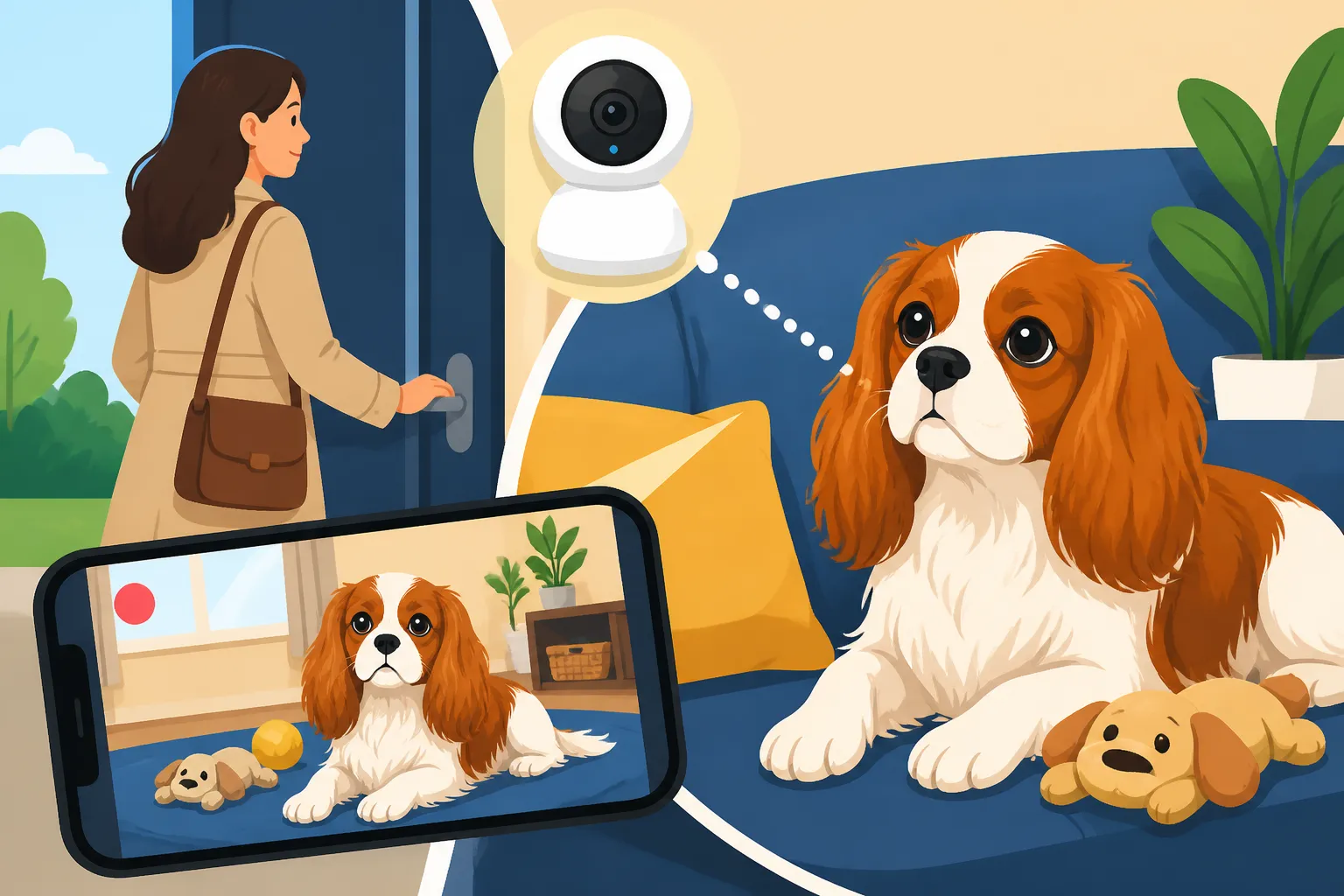
For more advanced monitoring, smart pet cameras are an excellent choice. Many readily available options on Amazon, like Wyze Cam or Eufy Security cameras, offer features specifically designed for pet owners. These often include wide-angle lenses, motion detection (so you only record when something happens), night vision, two-way audio, and even treat dispensers. Some higher-end models can pan and tilt, allowing you to follow your Cavalier around the room. Consider what features are most important to you – live viewing, automatic recording, or interaction – when making your selection.
| Camera Type | Pros | Cons | Best For |
|---|---|---|---|
| Old Smartphone/Tablet | Inexpensive, easy to set up | No live viewing, limited storage, no night vision | Quick, occasional checks; initial curiosity about general behavior |
| Webcam (with computer) | Longer recording, better quality | Requires computer, no live viewing without software, often no night vision | Extended observation; if you already have a spare webcam and computer |
| Pet Camera (e.g., Wyze, Eufy) | Live viewing, motion alerts, night vision, 2-way audio, apps | Requires Wi-Fi, initial cost, subscription fees for some features | Comprehensive monitoring, long-term use, identifying specific issues |
Strategic Camera Placement
Where you place the camera can make all the difference in the usefulness of your footage. Think about your Cavalier’s typical habits and hangouts when you're home. Do they usually curl up on a specific dog bed? Do they pace by the front door or stare out a certain window? You want to capture a wide view of their primary activity areas. Positioning the camera at your Cavalier's eye level (or slightly above) can give you a more accurate perspective of their behavior and interactions with their environment. Avoid placing it somewhere it could be easily knocked over, or worse, chewed.
Consider setting up multiple cameras if you have a larger space or if your Cavalier moves between rooms. For example, one camera focused on the entry/exit point and another on their primary resting spot can provide a comprehensive view. If your Cavalier is crate-trained and you want to observe their behavior inside the crate, position the camera to have a clear view without being too close or intrusive. Ensure the camera is stable and out of reach of curious paws or tails. A high shelf or a tripod secured to a piece of furniture can work wonders.
Considerations for Sound and Night Vision
While visual cues are paramount, sound provides another critical layer of information. Your Cavalier might not be visibly destructive, but if they are howling or barking for extended periods, it indicates significant distress. Many pet cameras come with microphones, allowing you to hear their vocalizations, which can be just as telling as their body language. The absence of sound – or hearing them softly snore – can be a huge relief, while constant whining or barking flags a clear issue. Pay attention to the quality of the audio; clear sound is essential for accurate interpretation.
Night vision is another invaluable feature, particularly if you're leaving your Cavalier alone in a dimly lit room or during evening hours. Behavior doesn't stop just because the lights are out, and distress can manifest differently in the dark. A dog who paces during the day might sit frozen at night, or vice-versa. Night vision allows you to see these behaviors clearly, providing a complete picture regardless of the ambient lighting. Without it, you might miss crucial nocturnal distress signals, especially if you're observing A Cavalier That Howls the Moment You Leave or A Cavalier That Chews Doorframes When Alone during evening absences.
What to Look For in the Footage (and How to Interpret It)
Once you've started filming, it can be a little overwhelming to sift through hours of footage. The key is to know what specific behaviors to watch for and how to interpret them in the context of your Cavalier's overall well-being. This isn't just about identifying problems; it's about understanding the nuances of their alone time.
Identifying Key Behaviors
When reviewing the footage, look for a range of behaviors that might indicate distress. Pacing is a big one: walking back and forth, unable to settle. Excessive panting, even when the room isn't hot, is another sign of anxiety. Vocalizations like barking, howling, or continuous whining are clear indicators of distress. Destructive chewing, especially on exit points (doors, window frames) or personal items, points strongly towards separation-related issues. Inappropriate urination or defecation indoors, particularly if your Cavalier is otherwise house-trained, can also be a panic response.
Also, pay attention to subtle cues. Are their ears pinned back? Is their tail tucked? Are they wide-eyed, or constantly scanning the room? Do they appear frozen in one spot, hyper-vigilant? Conversely, look for positive signs: calm sleeping, playing with toys, relaxed body posture, or simply lying down without tension. Many online training platforms, including those from BAXTER & Bella, highlight these visual cues as crucial for understanding a dog's emotional state. Filming a Cavalier While You Are Out will often reveal far more than you ever expected.
Tracking the Timeline
The timing of these behaviors is just as important as the behaviors themselves. Do the distress signals begin the moment you close the door, or do they build up over time? A Cavalier who starts pacing and whining within minutes of your departure is likely experiencing significant separation anxiety. If they settle for an hour, then start pacing, it might indicate a different level of tolerance or a trigger later in your absence.
Keep a log or use timestamps to note when specific behaviors start and stop. For example, "0:05-0:15: Intense barking at door," "0:30-1:00: Pacing with panting," "1:30-2:00: Destructive chewing on rug." This timeline helps you understand the duration and intensity of their distress. It also helps identify any potential triggers, such as a mail delivery or a specific sound outside. This detailed information is gold for a trainer, helping them pinpoint the exact moments your Cavalier struggles and tailor interventions accordingly. You might find that Building From Thirty Seconds With a Cavalier becomes a key part of your training plan once you see the timeline.
Differentiating Boredom from Anxiety
It’s easy to confuse boredom with anxiety, but the distinction is crucial for effective intervention. A bored Cavalier might casually chew a toy, explore the house, or even nap for long stretches. They might look a bit restless or give a few "demand" barks, but their overall demeanor isn't frantic. Their body language will typically remain relaxed, and they'll show curiosity rather than panic. They might engage with a puzzle toy for a while, then wander off.
An anxious Cavalier, however, will exhibit behaviors driven by panic. Their chewing will often be frantic and directed at escape routes or items associated with you (like your shoes). Their pacing will be relentless, their panting heavy, and their vocalizations continuous and distressed, not just "asking" for attention. The underlying emotion is fear and panic, not just a lack of something to do. While an enrichment toy might alleviate boredom, it won't resolve true separation anxiety. Observing the intensity and context of the behavior in your video footage is key to making this differentiation. For example, A Cavalier That Refuses Food Until You Return is a strong indicator of anxiety, not just boredom.
Using the Footage to Help Your Cavalier
Now that you have your video evidence, it's time to put it to good use. This footage isn't just for curiosity; it's a powerful tool for making informed decisions about your Cavalier's care, training, and overall happiness when left alone.
Informing Training Decisions
The video footage provides an objective starting point for any training plan. If your Cavalier exhibits severe distress from the moment you leave, a graduated desensitization program focused on departure cues will be essential. This involves working in tiny increments, literally building from thirty seconds of alone time and gradually increasing it as your Cavalier shows comfort. If the footage reveals that the distress peaks after an hour, your training might focus more on increasing their endurance for longer periods, perhaps with high-value, long-lasting chews or interactive toys.
Online training programs often emphasize the importance of observation. A program like BAXTER & Bella's online puppy school, for instance, encourages owners to understand their dog's learning style and emotional state, which video monitoring greatly facilitates. You can see what truly calms them and what doesn't, guiding your choice of enrichment, calming aids, or even medication discussions with your vet. The video might also show that your current departure routine is inadvertently creating anxiety, prompting you to adjust Departure Routines That Calm a Cavalier.
Discussing Findings with Professionals
When you visit your veterinarian or a certified professional dog trainer, bring the most representative segments of your video footage. Don't just show the worst bits; include moments where your Cavalier is calm, too, to give a complete picture. Be prepared to discuss the timeline you tracked, noting when behaviors started, their intensity, and how long they lasted. Your vet might rule out underlying medical conditions that could be contributing to anxiety or discomfort, such as pain from Syringomyelia and Chiari Malformation in Cavaliers or even early signs of Mitral Valve Disease in the Cavalier King Charles Spaniel that might cause restlessness.
If a behavioral issue like separation anxiety is diagnosed, the trainer can use the footage to craft a tailored behavior modification plan. This might involve specific exercises to build your Cavalier's confidence when alone, counter-conditioning to change their emotional response to your departures, and environmental management strategies. The accuracy of their recommendations will be vastly improved by the visual evidence you provide, rather than relying on second-hand descriptions.
Adjusting Your Routines and Environment
The insights gained from filming can lead to practical adjustments in your daily routine and home environment. If your Cavalier barks excessively at external noises, consider playing calming music or white noise to muffle sounds. If they destroy items, ensure all tempting objects are out of reach or offer appropriate, durable chew toys. If they struggle in a crate, the video might show they need a different size, a softer bed, or even a pen instead of a crate. Choosing a Crate a Cavalier Will Rest In is a common challenge that video can help solve.
Perhaps the footage reveals your Cavalier is most distressed when you leave them for more than two hours. This knowledge might prompt you to arrange for a dog walker or friend to visit during longer absences, or explore options like doggy daycare (though Whether Daycare Suits an Anxious Cavalier is something to carefully consider). Understanding their coping mechanisms and triggers allows you to proactively create a more comfortable and secure environment, ultimately reducing their stress and improving their quality of life when you're not there. This proactive approach can make a world of difference for your sensitive Cavalier.
Disclaimer
This article is for general informational purposes only and does not constitute professional advice. Laws, prices and regulations vary by location and change over time. Consult a qualified professional for guidance on your specific situation.