A Cavalier Marking Indoors After a Move
Moving house is a huge upheaval for us humans, and honestly, it's often ten times worse for our beloved Cavalier King Charles Spaniels. You've gone through the chaos of packing, unpacking, and settling into a new space, only to find that your previously perfectly house-trained Cavalier has started marking indoors. It's incredibly frustrating and disheartening when your sweet, well-behaved companion suddenly seems to forget their manners, leaving little surprises on your new rug or furniture. This guide is here to help you understand why this might be happening and, more importantly, what actionable steps you can take to stop it and get your Cavalier feeling secure and clean in their new home.
Understanding Why a House-Trained Cavalier Might Start Marking After a Move
It's easy to jump to conclusions when your Cavalier starts marking indoors – "Are they mad at me?" "Are they being defiant?" But the reality is far more complex and usually rooted in stress, insecurity, and instinct rather than spite. Moving isn't just a change of scenery for your dog; it's a complete shift in their world, and their way of coping might manifest as marking.
The Stress and Anxiety of Relocation for a Cavalier
Cavaliers are incredibly sensitive souls. They thrive on routine, predictability, and the comforting familiarity of their home environment and the people within it. A move, even if it's just across town, shatters that sense of stability. Imagine suddenly being plucked from everything you know and dropped into a completely foreign place where all the smells, sounds, and even the layout are new and disorienting. That's what your Cavalier experiences.
This immense change can induce significant stress and anxiety. Your Cavalier might exhibit other signs of anxiety like increased clinginess, A Cavalier That Panics When Alone, or even a refusal to eat normally. Marking in this context isn't a deliberate act of disobedience, but often a self-soothing behavior or a desperate attempt to create a sense of familiarity and control in a world that suddenly feels out of whack. They are simply trying to make their new space feel like theirs, in the only way they know how.
Scent Overload and Territorial Instincts in a New Environment
Dogs perceive the world primarily through their noses. When you move into a new house, your Cavalier is bombarded with a symphony of unfamiliar scents. There might be residual smells from previous occupants (human or animal), new cleaning products, or the unique scent signature of a different neighborhood. For a Cavalier, their old home was saturated with their scent, making it feel safe and familiar. The new home feels "empty" of their personal markers, or worse, full of competing ones.
Marking is a powerful territorial behavior. By leaving their urine scent, your Cavalier is essentially saying, "I live here now. This is my space." It's an instinctive way to assert ownership and try to establish a comfort zone. While it's perfectly normal for them to do this outdoors, when they're feeling insecure or overwhelmed indoors, these territorial instincts can kick in where you least want them to. They're trying to communicate, even if it's in a way that creates a huge headache for you.
Changes in Routine and Unfamiliarity
Even if you try your best to maintain some semblance of routine during a move, it's rarely seamless. Potty breaks might be less frequent or less structured due to the chaos of unpacking. The new yard or designated outdoor potty area might not feel as safe or familiar to your Cavalier, causing them to hesitate to relieve themselves fully outside. They might not immediately understand the "rules" of the new space.
Perhaps in your old home, there was a specific door they went to, or a certain patch of grass that was "their spot." In the new home, those cues are gone. If you're delayed in taking them out, or if they don't feel comfortable going to the new spot, they might resort to marking indoors as a last resort, or simply because their internal clock is off. This isn't a malicious act; it's a breakdown in their learned association between the urge to go and the appropriate outdoor location. It's like going Accidents in a House-Trained Cavalier, but with an added layer of psychological context.
Identifying the Difference Between Marking and House-Soiling Accidents
It's crucial to understand whether your Cavalier is truly "marking" or having a genuine house-soiling accident. While both involve inappropriate urination indoors, the reasons and, therefore, the solutions can be quite different. A genuine accident might indicate a need for more frequent potty breaks or a medical issue, whereas marking points more towards behavioral and environmental factors.
How to Tell if it's Marking or a True Accident
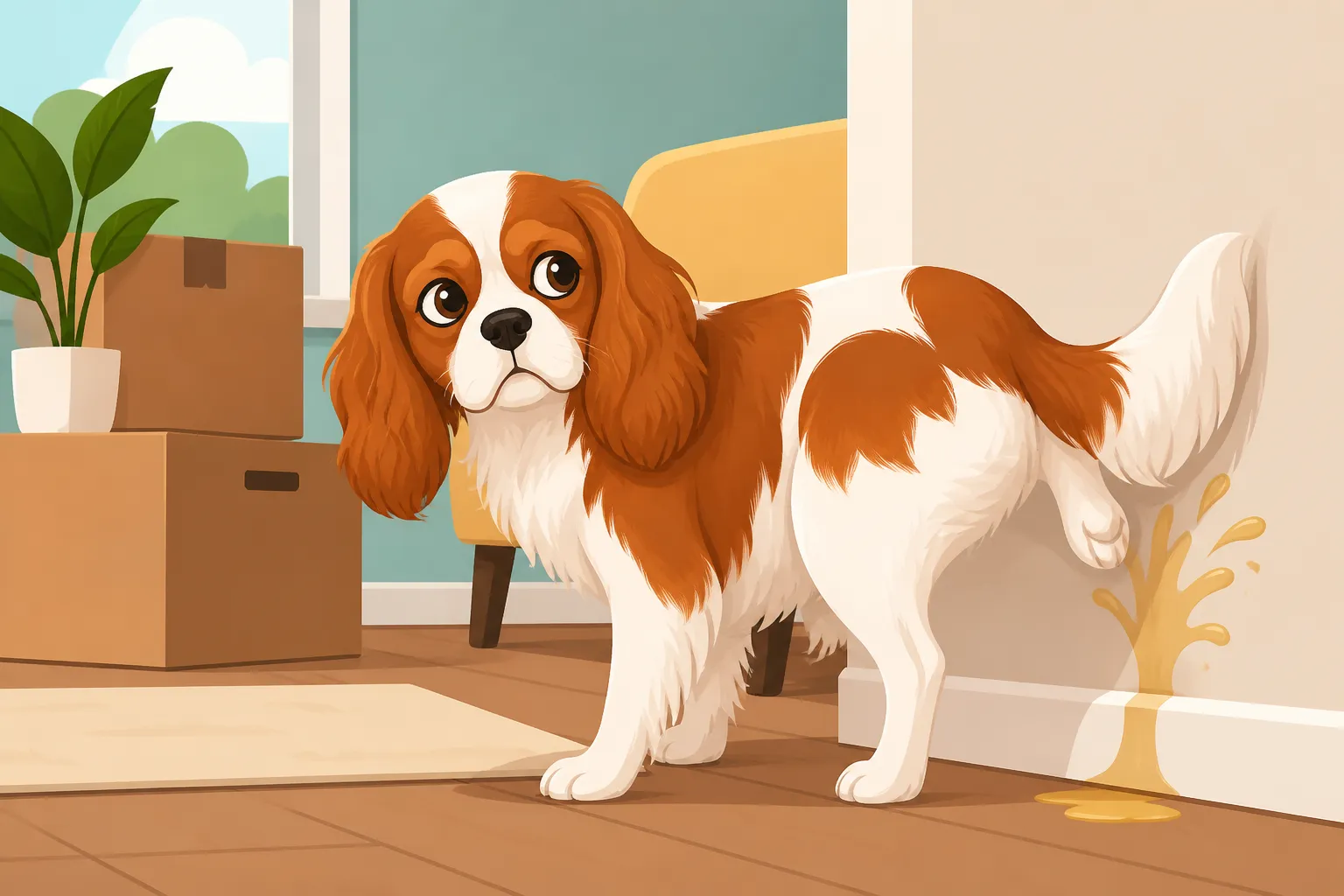
When your Cavalier urinates indoors, take a moment to observe the specifics of the incident. This detective work can provide invaluable clues. Marking typically involves small amounts of urine, often sprayed on vertical surfaces. Think furniture legs, walls, curtains, or even the side of a box. The dog might lift a leg (though some female Cavaliers will also mark by squatting in a slightly different posture than a full urination). These events often occur when you're home, or shortly after you've been home, and the dog seems otherwise engaged and not urgently seeking to go outside. It's less about emptying the bladder and more about depositing a scent message.
A true house-soiling accident, on the other hand, usually involves a larger volume of urine, indicating a full bladder release. These spots are typically found on horizontal surfaces like carpets, rugs, or the floor. Accidents often happen when the dog has been left alone for an extended period, when they couldn't hold it any longer, or if they were denied access to their usual outdoor potty spot. The dog might appear distressed before or after, and it's driven by a physiological need rather than a communicative one. Sometimes, if a Cavalier is under stress, even a full accident might occur, but the quantity and location are key differentiators.
Common Locations for Marking Versus Accidents
The location of the urination can also tell you a lot. As mentioned, marking is commonly found on vertical surfaces. You might find a small wet spot on the leg of your brand-new sofa, the corner of an area rug, or even a door frame. These are often high-traffic areas or places where other scents might linger from previous residents or even new furniture. Your Cavalier is essentially "tagging" these spots.
True accidents, particularly if your Cavalier is normally very well house-trained, tend to occur in less strategic locations. They might be in a hallway, behind a chair, or right in the middle of a room, wherever the urge simply became too strong to hold. If your Cavalier is showing signs like suddenly refusing to jump on the sofa or yelping when picked up, suggesting discomfort, then an accident might be happening because moving to their outdoor spot is painful. Sometimes, an elderly Cavalier might have accidents due to age-related incontinence rather than marking, often found in their sleeping area.
| Feature | Marking | House-Soiling Accident |
|---|---|---|
| Volume | Small amounts | Larger puddles, full bladder release |
| Location | Often vertical surfaces (legs, walls) | Typically horizontal surfaces (floor, rug) |
| Motivation | Territorial, anxiety, communication | Physiological need, inability to hold it |
| Context | Often when owners are present/recently | Often after being left alone, urgent need |
| Appearance | Dog might lift leg (males), targeted | May squat fully, less targeted |
| Frequency | Can be multiple small spots throughout day | Less frequent, more about timing of relief |
The Impact of Medical Issues on Inappropriate Urination
Before you assume any indoor urination is purely behavioral, it is absolutely essential to rule out medical causes. Changes in a dog's elimination habits, especially if they were previously reliably house-trained, can be a red flag for underlying health problems. A urinary tract infection (UTI) is a common culprit, causing increased frequency, urgency, and sometimes pain during urination, leading to accidents or what appears to be marking. Bladder stones can also cause similar symptoms.
Other medical conditions to consider include kidney disease, diabetes (which increases thirst and urination), or even neurological issues that affect bladder control. Pain, such as from arthritis in an older Cavalier or conditions like Syringomyelia and Chiari Malformation in Cavaliers which can cause chronic neck pain, might make it uncomfortable for your dog to posture properly outside or hold their urine. This discomfort could lead to them relieving themselves indoors. Always consult your veterinarian first to get a clean bill of health before focusing solely on behavioral interventions. They might recommend tests like a urinalysis or blood work to check for these issues.
Practical Strategies to Stop Indoor Marking After a Move
Once you've ruled out any medical reasons for your Cavalier's indoor marking, it's time to implement a strategic plan to address the behavioral and environmental factors at play. The key here is consistency, patience, and a multi-pronged approach that tackles both the physical act of marking and the underlying anxiety or insecurity driving it.
Deep Cleaning and Scent Removal
This is arguably the most critical first step. Dogs are drawn back to areas where they've previously eliminated due to the lingering scent, even if you can't smell it. Regular household cleaners simply aren't enough to break down the enzymes in dog urine that attract them. You need a high-quality enzymatic cleaner. You can find many effective options on platforms like Amazon.
To properly clean:
- Blot, don't rub: Absorb as much urine as possible with paper towels or an old cloth.
- Soak the area: Apply a generous amount of the enzymatic cleaner to the stained area, ensuring it soaks deep into carpets, padding, or wood cracks where urine might have penetrated. Read the product instructions carefully regarding dwell time.
- Allow to air dry: Resist the urge to scrub or wipe immediately. The enzymes need time to break down the urine at a molecular level.
- Repeat if necessary: For older or stubborn stains, you might need multiple applications. Consider renting a black light (also readily available online) to find hidden spots you might be missing, as dogs can detect these even if you can't. Without thorough scent removal, your Cavalier will continue to be drawn back to those "marked" spots.
Re-establishing a Solid Potty Routine
Even if your Cavalier was perfectly house-trained before, a move often means going back to basics, almost like you're toilet training a puppy again. This provides structure and predictability, which helps reduce anxiety and clarifies expectations.
Here's how to re-establish a solid routine:
- Frequent, supervised potty breaks: Take your Cavalier out much more often than you think they need to go, especially in the first few weeks. Aim for every 2-3 hours initially, immediately after waking up, after eating or drinking, and before bedtime.
- Leashed outings: Even if you have a fenced yard, keep your Cavalier on a leash for potty breaks. This ensures they focus on the task at hand and aren't distracted by exploring the new environment, potentially "saving" their marking for indoors. Walk them to a specific spot and wait patiently.
- Reward success: When your Cavalier eliminates outdoors, praise them enthusiastically and immediately offer a high-value treat. This positive reinforcement strongly links going outside with a reward.
- Constant supervision indoors: When your Cavalier is inside, keep a close eye on them. Consider tethering them to you with a leash, or keeping them in the same room. If you can't actively supervise, use a crate or a confined, easily cleanable space. This prevents opportunities for marking. Many resources, including online training programs like those from BAXTER & Bella, offer excellent guidance on managing a puppy-like routine for older dogs.
- Crate training refresher: If your Cavalier is crate trained, use their crate as a safe, clean space when you can't supervise. Most dogs won't soil their sleeping area.
Managing Anxiety and Providing Security
Addressing the underlying anxiety and insecurity is paramount to stopping the marking behavior. A secure and confident Cavalier is less likely to feel the need to mark their territory indoors.
- Create a safe haven: Set up a comfortable, familiar space for your Cavalier in your new home, such as their crate with their favorite bed and blankets, or a quiet corner with their dog bed. Ensure this spot is away from high-traffic areas and has a familiar scent.
- Stick to routines: Beyond potty breaks, try to establish a consistent feeding schedule, walk times, and play sessions as quickly as possible. Predictability is a powerful stress reducer for Cavaliers. Departure Routines That Calm a Cavalier can also be useful if anxiety escalates when you leave.
- Increase exercise and mental stimulation: A tired dog is a good dog. Ensure your Cavalier gets adequate physical exercise and mental enrichment. Short, frequent walks, puzzle toys, and short training sessions can help burn off nervous energy and redirect their focus.
- Calming aids: Consider using calming pheromone diffusers or sprays, such as Adaptil, which mimic natural canine pheromones and can help reduce anxiety. Some owners find Calming Supplements for an Anxious Cavalier helpful, but always discuss these with your vet first.
- Quality time and reassurance: Spend extra quality time with your Cavalier, offering gentle reassurance and affection. Play their favorite games, cuddle on the sofa, and just be present. This strengthens your bond and helps them feel safe and loved in their new environment.
When to Seek Professional Help and Veterinary Consultation
While many cases of post-move marking can be resolved with consistent application of the strategies above, there are times when the situation warrants external intervention. Knowing when to reach out to professionals can save you a lot of frustration and ensure your Cavalier gets the most effective help.
Persistent Marking Despite Interventions
If you've diligently implemented deep cleaning, re-established a strict potty routine, and focused on managing your Cavalier's anxiety for several weeks (give it at least 2-4 weeks for consistent effort), yet the indoor marking persists, it's a clear sign that you might need a different approach. This isn't a failure on your part, but an indication that the underlying issues might be more deeply rooted or complex than can be solved with general advice.
Persistent marking, especially if it seems to be worsening or if your Cavalier is showing other worrying behavioral changes, suggests that the problem might not simply be about stress from the move. It could point to a more ingrained behavioral problem, an undiagnosed medical condition that's being missed, or a level of anxiety that requires more targeted intervention. Don't feel discouraged; professional help is there to guide both you and your Cavalier through this.
The Role of a Veterinarian in Ruling Out Medical Causes
Even if you had a vet visit initially, if marking persists, a follow-up with your veterinarian is crucial. Sometimes, subtle medical conditions might not be immediately apparent, or a new issue could have developed. Your vet can perform a thorough physical examination and recommend diagnostic tests specific to your Cavalier's symptoms and history.
These tests might include:
- Urinalysis with culture: To check for urinary tract infections, crystals, or other bladder abnormalities that might have been missed or have developed.
- Blood work: To evaluate kidney function, glucose levels (for diabetes), and overall health, as metabolic diseases can affect urination.
- Imaging (X-rays or ultrasound): If bladder stones, kidney issues, or other internal abnormalities are suspected.
- Neurological assessment: In rare cases, nerve damage or a neurological condition could impact bladder control, especially in a breed prone to issues like Syringomyelia and Chiari Malformation in Cavaliers. Your vet can help rule out these possibilities, ensuring that any treatment plan is tailored to your Cavalier's actual needs.
Consulting a Certified Professional Dog Trainer or Behaviorist
Once medical causes have been definitively ruled out by your veterinarian, the next step for persistent marking is often to consult with a certified professional dog trainer or a veterinary behaviorist. These experts specialize in canine behavior and can offer personalized strategies that go beyond general advice.
A professional will:
- Conduct a thorough assessment: They will observe your Cavalier, ask detailed questions about the marking incidents, your routine, and your dog's overall behavior and history.
- Identify triggers: They can help pinpoint specific triggers for the marking behavior that you might be overlooking.
- Develop a tailored plan: Based on their assessment, they will create a customized behavior modification plan that addresses the root cause of the marking, whether it's anxiety, territoriality, or a learned habit. This might include advanced desensitization techniques, counter-conditioning, or more specific management strategies.
- Teach effective communication: A behaviorist can help you better understand your Cavalier's body language and how to communicate more effectively with them, building their confidence and reducing their need to mark.
- Medication for severe anxiety: In some cases of severe anxiety, particularly when Medication for Cavalier Separation Anxiety is considered, a veterinary behaviorist can prescribe medication to help manage the anxiety in conjunction with behavioral therapy. This isn't a quick fix but can be a valuable tool to help your Cavalier respond better to training. Look for trainers certified by organizations that emphasize positive, force-free methods, as harsh corrections can worsen anxiety and marking in sensitive breeds like Cavaliers.
Disclaimer
This article is for general informational purposes only and does not constitute professional advice. Laws, prices and regulations vary by location and change over time. Consult a qualified professional for guidance on your specific situation.