Ruby and Black Cavalier Coats Compared
Many Cavalier King Charles Spaniel owners adore their dogs' luxurious coats, but when it comes to the rich, solid ruby or the striking black and tan, people often have questions about how these beautiful colors truly compare in terms of appearance, genetics, and even daily care. This guide will meticulously explore the unique characteristics of both ruby and black and tan Cavalier coats, diving deep into what makes each distinct and what you, as an owner, can expect in terms of their upkeep and common traits.
The Rich Allure of the Ruby Cavalier Coat
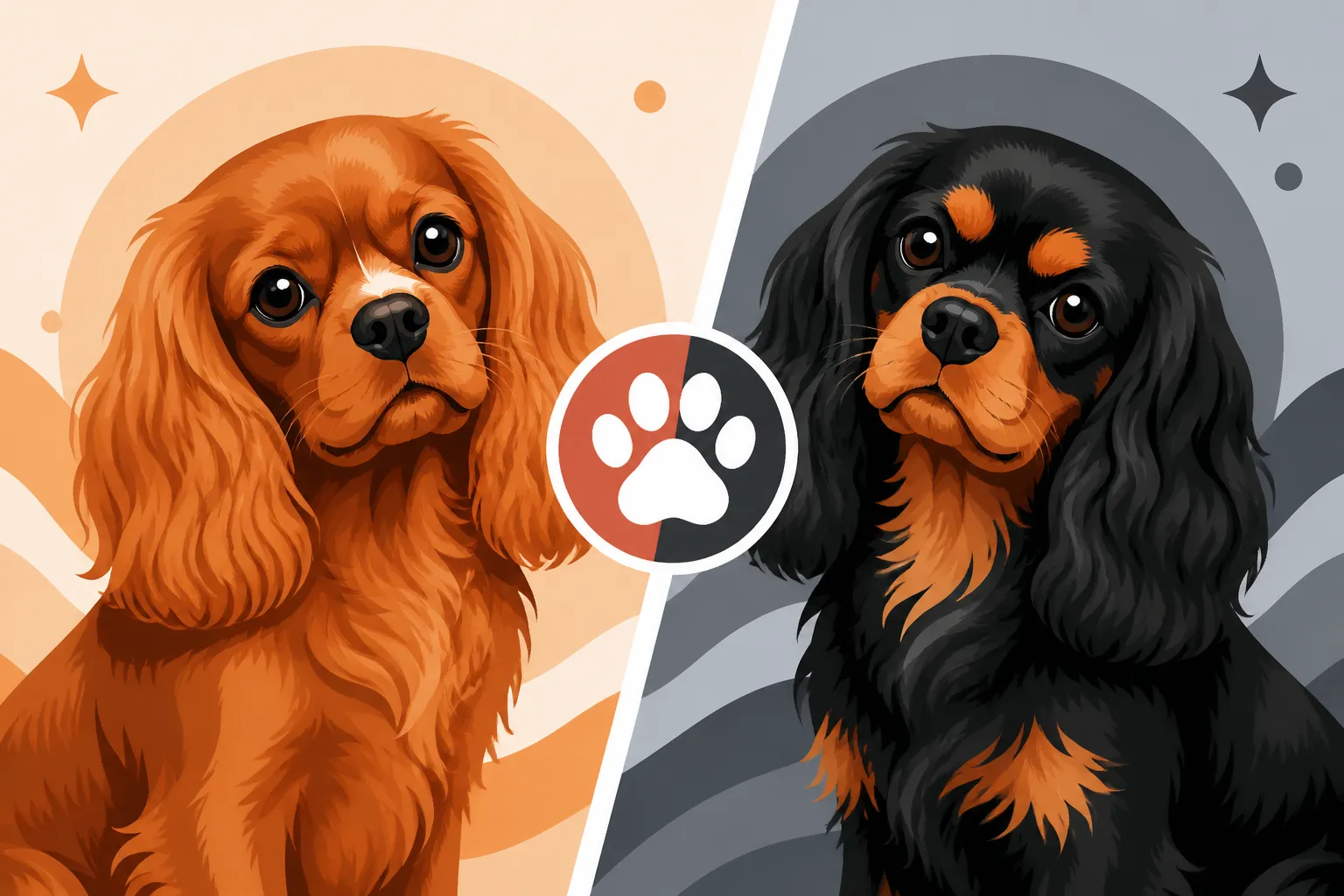
The ruby Cavalier is a breathtaking sight, known for its solid, unblemished rich red or chestnut coat. There's no white anywhere on a properly marked ruby, giving it a depth of color that truly stands out. This absence of other colors is what makes the ruby so distinct and often, quite rare to find in its purest form.
Defining the Ruby Standard
When we talk about a true ruby Cavalier, we're looking for a coat that is uniformly rich red, from head to tail, with no white markings, no black hairs, and no 'smutty' grey areas. The color itself can range from a lighter, almost golden chestnut to a deep, mahogany red. The intensity can sometimes darken with age, particularly after the puppy coat sheds and the adult coat comes in. This solid coloration is genetically recessive, meaning both parents must carry the gene for a ruby puppy to be born. It's not uncommon to see a ruby Cavalier with a slightly lighter feathering, particularly on their ears, chest, and tail, which can give a lovely dimensional look without straying from the solid ruby standard. You might also notice a slight sun-fading over time, especially if your Cavalier spends a lot of time outdoors.
Grooming a Ruby Coat for Shine and Health
The texture of a ruby Cavalier's coat is typically silky and soft, just like other Cavaliers. It's a single coat, meaning there's no dense undercoat, which contributes to its elegant drape. While they don't have an undercoat, ruby Cavaliers do shed, and regular brushing is absolutely essential to manage this and prevent mats. Aim for at least Brushing a Cavalier's Feathering Three Times a Week to keep their coat in prime condition. Their feathering, particularly on the ears, chest, and tail, is prone to tangles and mats, especially in the armpits and behind the ears.
To maintain that beautiful ruby shine, regular bathing with a good quality dog shampoo and conditioner is important. After bathing, make sure to dry the coat thoroughly, gently brushing it out to prevent tangles from setting in. Products like detangling sprays, readily available from retailers like Chewy or Amazon, can be a lifesaver for working through knots without causing discomfort to your dog. For those deeper, richer rubies, some owners find that certain supplements or diets can enhance coat health, though always consult your vet before introducing new dietary elements.
The Nuance of White Markings in Ruby Coats
It's a common observation that some Cavaliers advertised as "ruby" might have a tiny speck of white on their chest or a few white hairs on their chin. While a true show-quality ruby should be entirely free of white, a small, discreet white marking doesn't diminish the dog's beauty or loving temperament. Genetically, a tiny splash of white can sometimes appear even in otherwise solid-colored dogs, a remnant of older genetic lines. For those interested in the genetics, understanding Why Ruby Cavaliers Sometimes Show White can be quite fascinating. These markings are usually very small and often go unnoticed by anyone other than a keen observer or a show judge. As companion animals, these minor variations are purely cosmetic and should not detract from the dog's overall charm.
The Striking Contrast of the Black and Tan Cavalier Coat
The black and tan Cavalier presents a dramatically different visual, a sophisticated tapestry of deep black accented with rich, well-defined tan markings. This striking contrast is a hallmark of the breed and often evokes a sense of classic elegance.
Understanding the Black and Tan Pattern
A black and tan Cavalier boasts a lustrous, raven-black coat with specific tan markings. These tan points are typically found above the eyes (giving them a "four-eyed" look), on the cheeks, inside the ears, on the chest, on all four legs and feet, and underneath the tail. The quality of a black and tan coat is often judged by the crispness and clarity of these tan markings – they should be distinct and not "smudged" or intermingled with the black. The black should be a deep, true black, not fading to grey or brown.
Just like the ruby, the black and tan pattern is genetically determined. Sometimes, you might encounter a "tri-color" Cavalier which is similar but also includes white markings. For a pure black and tan, the absence of white is key. The tan markings themselves should be a rich, warm color, ranging from a deep mahogany to a lighter, almost golden tan. These dogs have a distinctive appearance, often described as having a very earnest and sweet expression, enhanced by those expressive tan eyebrows.
Care and Maintenance for Black and Tan Coats
The grooming needs of a black and tan Cavalier are very similar to those of a ruby, or any other Cavalier coat color for that matter. Their silky, flowing hair requires regular attention to prevent matting, especially in areas of friction like behind the ears, under the collar, and in the armpits. A good The Brush and Comb a Cavalier Coat Needs is indispensable, along with a reliable detangling spray. Daily or every-other-day brushing will make a world of difference in keeping their coat healthy and tangle-free.
Due to the deep black pigment, some black and tan Cavaliers can experience a phenomenon known as "rusting" or "browning" in their black coat, particularly with sun exposure or certain nutritional deficiencies. The tan points can also fade slightly with age or sun. Using color-enhancing shampoos designed for black coats, or simply keeping sun exposure in mind during peak hours, can help maintain the richness of their black. While the specific shade of a Cavalier's feathering might differ slightly between colors, Whether Feathering Differs Between Cavalier Colors is often a matter of pigment density rather than fundamental texture.
Comparing Ruby and Black and Tan: Key Differences and Similarities
While both ruby and black and tan Cavaliers share the same charming temperament and physical conformation, their coats offer distinct visual characteristics and some minor differences in how their color might evolve over time.
Visual Distinction and Aesthetic Appeal
The most obvious difference lies in their appearance. The ruby Cavalier is a single, continuous wash of warm red, exuding a classic, gentle aura. It's often likened to a cuddly teddy bear with its uniform, inviting color. The black and tan, on the other hand, is a study in elegant contrast. The sharp delineation between the deep black and the vibrant tan points gives it a more "dressed-up" or sophisticated look. Many people find the tan points above the eyes incredibly expressive, adding to the dog's personality. Neither is inherently "better" or more beautiful; it purely comes down to personal aesthetic preference.
When you're looking at a group of Cavaliers, the ruby will often blend in a little more subtly with its uniform color, whereas the black and tan often draws the eye with its bold pattern. Think of the ruby as a beautifully solid, rich gemstone, while the black and tan is a meticulously crafted, two-toned piece of art.
Grooming Considerations Beyond Basic Brushing
While the fundamental grooming for both types remains consistent (regular brushing, bathing, ear care), there are subtle nuances. For rubies, protecting against sun fading is a common concern if you want to preserve that vibrant red. This might involve using dog-safe sunscreens on exposed areas during prolonged outdoor adventures or simply limiting direct, intense sun exposure. For black and tans, maintaining the deep black pigment and preventing "rusting" is sometimes a focus. This could involve specific shampoos or ensuring their diet is rich in nutrients that support healthy skin and coat.
Both coat types benefit immensely from a routine. How Often a Cavalier Needs Brushing really depends on the individual dog's coat length and activity level, but aiming for every other day, or daily during shedding seasons, is a great goal. Investing in quality grooming tools from retailers like Chewy or Amazon will make this task much easier and more effective.
Genetic Quirks and Color Stability
Genetically, both ruby and black and tan are recognized colors in the Cavalier King Charles Spaniel breed. The solid ruby coat can sometimes have very faint "smudges" of black hairs, especially around the ears, which are usually considered undesirable in show rings but don't impact the dog's health or charm. Similarly, black and tans can sometimes have tan "bleeding" into the black, or the tan points might not be as vivid as desired.
It's also worth noting that both colors can sometimes change slightly over time. Rubies can lighten or darken, and their feathering might become paler. Black and tans can "rust" in the sun, turning a brownish hue, or their tan points might fade. These changes are usually natural and part of the aging process or environmental factors, rather than a sign of poor health.
Understanding Cavalier Coat Genetics
Delving into the genetics behind Cavalier coat colors can provide a clearer picture of why ruby and black and tan coats appear as they do, and what to expect when considering a puppy. It's a fascinating subject that explains the beautiful variety within the breed.
The Role of Genes in Coat Color
Cavalier King Charles Spaniel coat colors are determined by a combination of genes at various loci (locations on the chromosome). For ruby and black and tan, the primary genes at play dictate the presence of red pigment (phaeomelanin) and black/brown pigment (eumelanin), and how these pigments are distributed on the dog's body.
- Ruby (Solid Red): This color occurs when a Cavalier inherits two copies of the recessive 'e' allele at the Extension locus (E locus). This 'e/e' genotype effectively "masks" any black pigment production, resulting in an all-red or tan dog. The intensity of the red can then be influenced by other modifying genes, leading to the variations from lighter chestnut to deep mahogany.
- Black and Tan: This pattern is the result of the dominant 'at' allele at the Agouti locus (A locus) combined with at least one dominant 'E' allele at the Extension locus. The 'at' allele creates the "tan points" pattern, where black pigment is restricted to certain areas (the main body), and tan pigment appears in others (eyebrows, muzzle, chest, legs, etc.). The 'E' allele allows for the expression of black pigment. If a Cavalier is 'E/E' or 'E/e' and 'at/at' or 'at/a' (where 'a' is a recessive allele for solid black, which is very rare in Cavaliers), you get the classic black and tan.
Breeders often use genetic testing to confirm the color genes carried by their dogs, especially when aiming for specific color outcomes in litters. This helps ensure predictable and desired coat colors while maintaining breed standards.
How Genes Influence Pigment and Hair Texture
Beyond color, genetics also play a role in the texture and quality of a Cavalier's coat. While all Cavaliers are known for their silky, flowing single coats, there can be subtle variations. Some individuals might have slightly thicker or wavier hair, while others might have finer, straighter locks. These differences are often polygenic, meaning multiple genes contribute to the overall coat characteristics.
For example, a Cavalier’s coat texture can influence how prone it is to matting. A finer, softer coat might tangle more easily than a slightly coarser one. Regardless of these minor variations, all Cavalier coats require diligent care. Regular grooming, as mentioned earlier, is paramount. Brands like Chewy and Amazon offer a wide array of specialized brushes, combs, and conditioning sprays designed to keep even the most challenging Cavalier coats looking their best. Some owners also believe that a high-quality diet, perhaps like those offered by services such as Ollie, can significantly improve coat health and sheen, providing essential fatty acids and nutrients for luscious locks.
What Color Genetics Means for Owners
For the average Cavalier owner, understanding the precise genetic pathways isn't strictly necessary, but it does help appreciate the beauty and science behind their dog's coat. It explains why certain color combinations appear in litters and clarifies why a "true" ruby doesn't have white, or why a black and tan is so distinctly marked. It also sheds light on why a specific color might be more or less common.
Knowing the genetic background can also help set expectations for potential color changes. For instance, while a ruby puppy might be a lighter red, its genetic makeup means it will remain a variant of red, rather than suddenly developing tan points. Similarly, a black and tan will always maintain its black and tan pattern, even if the pigments fade or rust over time. It reinforces that the core identity of the coat color is set from birth.
Final Thoughts on Cavalier Coat Colors
Whether your heart is captured by the deep, uniform warmth of a ruby Cavalier or the striking, elegant contrast of a black and tan, both offer the same delightful personality and companionable nature that the breed is famous for. Ultimately, the choice between these two beautiful coat colors comes down to personal preference.
The specific shade of red in a ruby can vary, and so can the richness of the tan points and depth of black in a black and tan. Each dog is an individual, and these variations only add to their unique charm. Regardless of color, every Cavalier King Charles Spaniel deserves a loving home and consistent care, particularly when it comes to their glorious coats. Consistent brushing, appropriate bathing, and a healthy diet are universal requirements for all Cavaliers. By understanding the nuances of their coats, you can provide the best possible care, ensuring your Cavalier not only looks stunning but also feels comfortable and healthy.
| Feature | Ruby Cavalier | Black and Tan Cavalier |
|---|---|---|
| Primary Color | Solid red/chestnut | Solid black |
| Secondary Markings | None (should be entirely red) | Tan points above eyes, on cheeks, chest, legs, under tail |
| Overall Appearance | Uniform, warm, often described as teddy-bear like | Striking contrast, elegant, sophisticated |
| Sun Fading Potential | Red can lighten or become brassy | Black can "rust" to brown, tan points may fade |
| Genetic Basis | Recessive 'e/e' at Extension locus | Dominant 'at' at Agouti locus (with 'E' at Extension) |
| Grooming Focus | Maintaining red vibrancy, preventing mats | Maintaining black depth, preventing rust, preventing mats |
| Key Characteristic | Uniformity of color | Distinct, clear tan markings |
Disclaimer
This article is for general informational purposes only and does not constitute professional advice. Laws, prices and regulations vary by location and change over time. Consult a qualified professional for guidance on your specific situation.