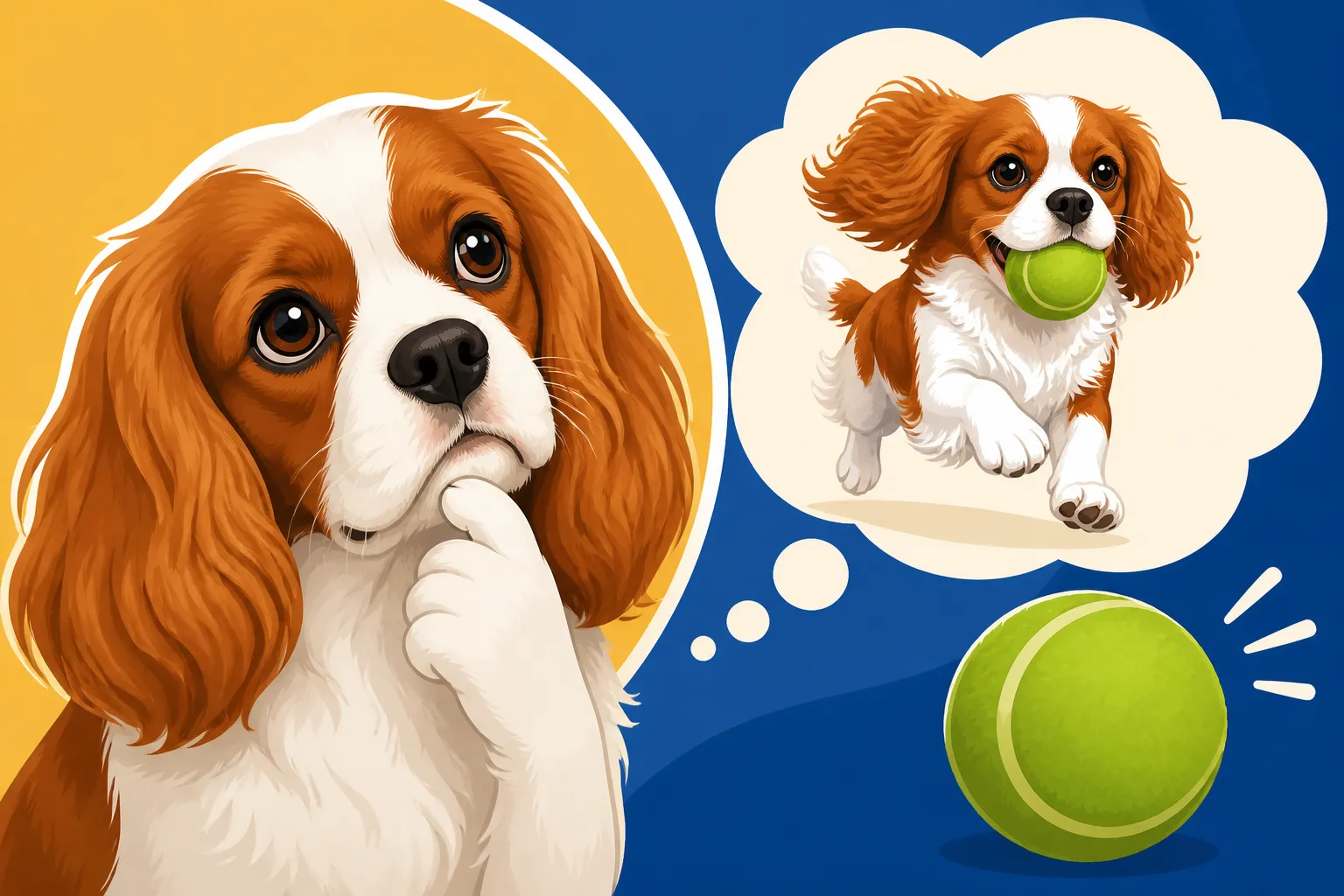
Whether a Cavalier Would Retrieve
It's a common question for Cavalier King Charles Spaniel owners, especially those new to the breed: do these sweet, cuddly companions have any of that classic spaniel retrieving drive? You might picture them bounding across a field, eager to bring back a thrown ball, much like their larger spaniel cousins. The truth is a little more nuanced than a simple yes or no, and many owners find themselves a bit surprised by their Cavalier's unique approach to games of fetch. This guide will help you understand their instincts and how to best engage your Cavalier in playful retrieving, even if it's not quite what you expected.
The Echoes of the Past: Cavalier Ancestors and Their Retrieving Role
When you hear "spaniel," your mind probably jumps to images of dogs working in the field, flushing birds and, yes, retrieving fallen game. It's a fundamental part of the spaniel identity, and Cavaliers, despite their compact size and lapdog reputation, absolutely carry this lineage. They are, after all, King Charles Spaniels by name.
A Look at Their Sporting Heritage
Centuries ago, the ancestors of the Cavalier King Charles Spaniel were quite different from the regal companions we know today. These were active, smaller sporting dogs, employed by nobility to help flush small game and sometimes, to retrieve it. They had to be quick, alert, and keen to please their human partners. This is where the instinctual drive to chase, catch, and bring things back originated. Imagine a blenheim spaniel darting through undergrowth to find a bird, then proudly returning it to its master. That drive, that historical blueprint, is still woven into the genetic fabric of every Cavalier. You might observe it when your Cavalier enthusiastically chases a leaf blown by the wind or perhaps dashes after a squirrel in the park. It’s a flicker of that ancient hunting dog, a reminder of what they once were. For more on this, you can delve into The Spaniel Instincts Left in a Cavalier.
The Evolution from Field Dog to Lap Companion
Over time, however, the role of these small spaniels shifted dramatically. They transitioned from working dogs to cherished companions, valued more for their affectionate nature and ability to warm laps than their hunting prowess. This wasn't a sudden change but a gradual process influenced by royal courts and changing societal preferences. The emphasis in breeding moved away from field utility and towards specific aesthetic traits and a docile temperament perfect for indoor living. While the genetic code for retrieving might still be present, generations of breeding for companionship rather than hunting have, in many cases, softened that once-strong instinct. They weren't being asked to retrieve for their supper anymore; they were being asked to cuddle on the sofa. This fundamental shift explains why a modern Cavalier might look at a thrown ball with a puzzled expression rather than an eager glint in their eye.
Modern Cavalier Temperament: More Lapdog Than Labrador?
So, while the blueprint for retrieving exists, the reality for many Cavalier owners is that their dog simply doesn't demonstrate a strong, innate desire to fetch. They are, by and large, bred to be the ultimate companion dogs, and that comes with a very specific set of priorities.
The Charm of the "Velcro Dog"
Cavaliers are famously known as "Velcro dogs" – they want to be wherever you are, preferably touching you. Their primary joy often comes from interaction and proximity to their human family. This intense desire for connection can sometimes overshadow traditional doggy games. When you throw a ball, a Cavalier might run after it with enthusiasm, but instead of bringing it back, they might just pick it up, prance around, and then drop it a few feet away, expecting you to come and get it. Or, perhaps even more commonly, they'll chase it, sniff it, and then look back at you as if to say, "Okay, now what?" This isn't a lack of intelligence or engagement; it's just a different interpretation of play. Their game isn't always about the object; it's about the shared activity with you. It’s about the chase, the attention, and the joy of being together. Their true happiness often lies in the warmth of your lap or a gentle ear scratch, rather than an endless game of fetch. This is part of the Cavalier Temperament and the Sporting Spaniel Beneath It.
Individual Differences and Varied Motivations
It's crucial to remember that every Cavalier is an individual. Just like people, they have unique personalities, quirks, and preferences. You'll find some Cavaliers who absolutely adore retrieving and will happily chase a tennis ball until their legs give out. These dogs might have a stronger genetic lean towards their ancestral instincts or simply developed a love for the game through early positive experiences. Others might be completely indifferent, preferring a good chew toy or a vigorous game of tug-of-war. Still others might enjoy the chase but have no interest in bringing the item back – turning every game of fetch into a game of "keep away" or "you chase me!"
Their motivation often plays a huge role. While a Labrador might retrieve simply for the joy of it, many Cavaliers need a little more incentive. For some, it's the thrill of the chase itself. For others, it's a high-value treat offered upon return, or enthusiastic praise and a scratch behind the ears. This means that while some Cavaliers might naturally retrieve, many will need some gentle encouragement and positive reinforcement to develop the habit. Understanding your individual Cavalier's unique personality and what truly motivates them is key to successful play and training.
Retrieving Drive: Ancestry vs. Modern Reality
| Aspect | Ancestral Spaniel | Modern Cavalier King Charles Spaniel |
|---|---|---|
| Primary Role | Flushing and retrieving game for hunters | Affectionate companion, lap warmer |
| Natural Drive | High prey drive, strong desire to fetch and carry | Varies greatly; can be low to moderate |
| Focus in Play | Task-oriented, bringing item back consistently | Often more interested in interaction, chase, or keep-away |
| Motivation | Innate desire to please, reward of the 'find' | Often food, praise, or sheer joy of a quick chase |
| Typical Stamina | Bred for sustained activity in the field | Bred for shorter bursts of play and ample rest |
Encouraging the Retrieve: Gentle Training for Your Cavalier
If you're hoping your Cavalier will join you for a game of fetch, don't despair! While they might not be natural-born retrievers like some breeds, you can absolutely encourage and teach them to enjoy bringing things back. It just requires a patient, positive approach tailored to their sensitive nature.
Starting with Positive Reinforcement
The key to teaching a Cavalier anything, including retrieving, is positive reinforcement. These dogs thrive on praise, affection, and tasty rewards. Harsh corrections or frustration will only make them shut down. Start in a quiet, distraction-free environment. Throw a small, enticing toy a very short distance – just a foot or two away. When your Cavalier goes to it, even just sniffing it, praise them enthusiastically. If they pick it up, even better! Lure them back to you with a treat or more praise. When they get close, offer the treat and gently take the toy. Repeat, gradually increasing the distance. Remember, it's about making the entire process fun and rewarding. You want them to associate bringing the toy back to you with good things happening. This ties in perfectly with Training a Cavalier With Praise Rather Than Pressure.
Consider using toys that are easy for their mouths to pick up and carry, like a soft plush toy or a smaller tennis ball. Many Cavaliers enjoy softer toys they can "worry" a bit before bringing back. For a wide selection of suitable toys and treats, you can always browse online retailers like Chewy, which offers options specifically for small breeds.
Choosing the Right Motivation and Toys
Not all treats or toys are created equal in the eyes of a Cavalier! To really get them engaged, you need to find their "high-value" motivators. For some, this might be a squeaky toy that ignites their playful chase instinct. For others, it could be a particular soft, fuzzy toy they love to mouth. And almost universally, a really delicious, tiny training treat will be a game-changer. Think bits of cooked chicken or cheese rather than dry kibble. The more excited your Cavalier is about the reward, the more likely they are to participate wholeheartedly.
When selecting toys, consider their size and mouth comfort. A toy that's too big or too hard might be uncomfortable for them to carry. Many Cavaliers prefer softer, lighter toys. Brands available on Chewy offer numerous small dog toys perfect for a Cavalier's delicate mouth. Experiment with different textures and sounds. Some Cavaliers are drawn to crinkly toys, others to soft plushies, and some to small, bouncy balls. Finding what truly excites them is half the battle. If you're looking for durable options, check out Toys That Last With a Cavalier.
Managing Expectations and Making it Fun
It's important to adjust your expectations. Your Cavalier might never be the kind of dog who will play fetch for an hour straight. They might do a few retrieves and then decide it's time for a cuddle break. That's perfectly normal for the breed! Celebrate every small success. If they bring the toy almost back, but not quite, consider it a win and reward them. The goal is to build a positive association with the game, not to create a champion retriever.
Focus on short, frequent play sessions, especially when they are young and full of puppy energy. For older Cavaliers, or those with underlying health issues like Mitral Valve Disease in the Cavalier King Charles Spaniel or joint problems, short, gentle sessions are even more crucial. Always prioritize their comfort and health. If they seem to tire easily, or if you notice coughing after play, it’s always best to consult your vet. A Cavalier's stamina is often lower than larger sporting breeds, and their true joy comes from the shared experience with you, whether it's a brisk walk, a cuddle on the sofa, or a short, sweet game of fetch. Remember that even small successes are worth celebrating, and every interaction with your Cavalier should be a source of joy for both of you. For ideas on powerful motivators, look into Treats a Cavalier Will Trade Anything For.
Ultimately, whether your Cavalier retrieves or not is less important than the bond you share. If they prefer to chase, prance, and then drop the toy at your feet rather than directly in your hand, embrace it! That's just their unique Cavalier charm. Every moment of shared play, regardless of how "perfect" the retrieve, strengthens the loving connection that makes these dogs so incredibly special.
Disclaimer
This article is for general informational purposes only and does not constitute professional advice. Laws, prices and regulations vary by location and change over time. Consult a qualified professional for guidance on your specific situation.