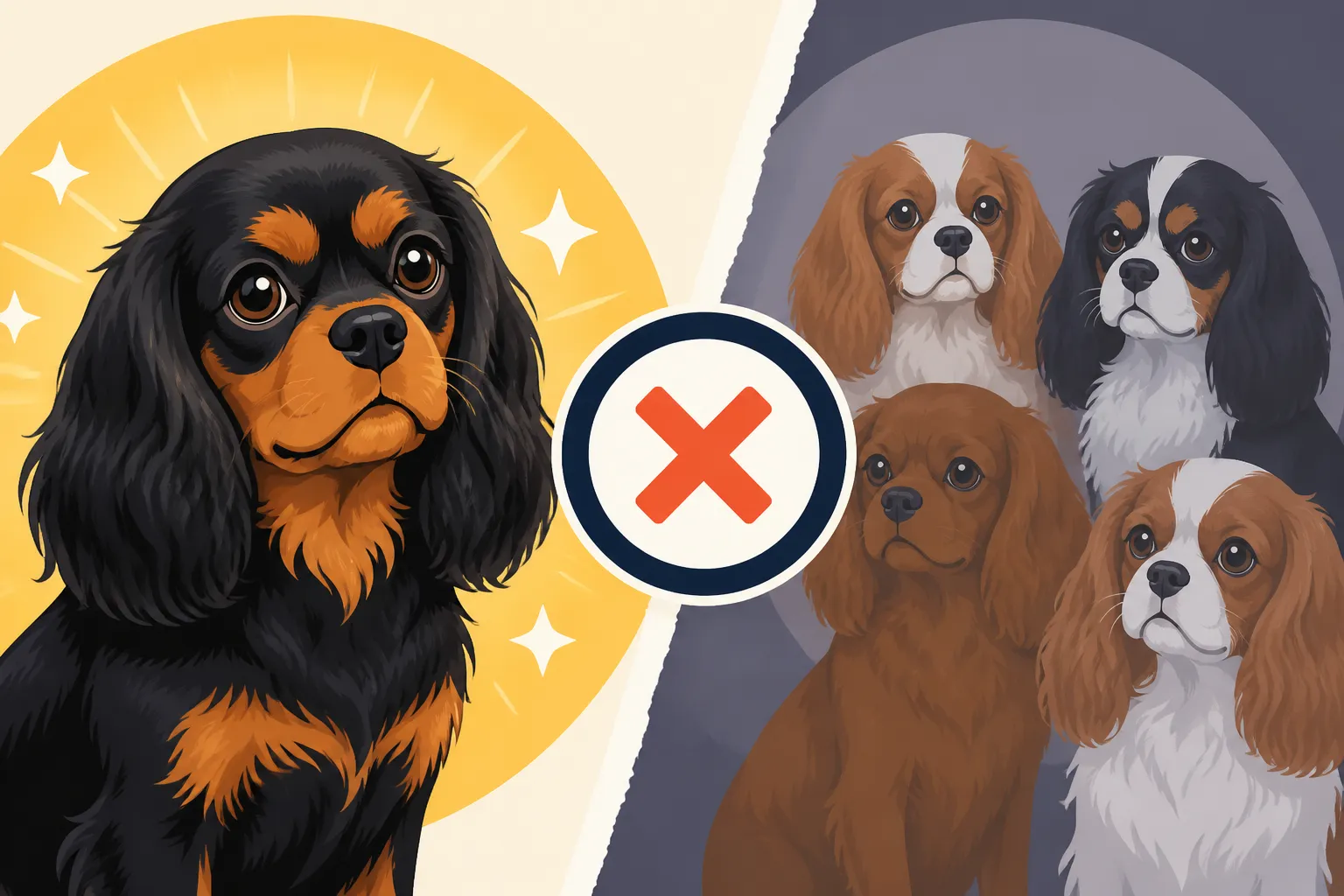
Whether Black and Tan Cavaliers Are Less Popular
It’s a natural question to wonder about the popularity of different coat colors when you’re falling in love with the Cavalier King Charles Spaniel. Many prospective owners find themselves curious if the striking Black and Tan Cavalier holds the same widespread appeal as, say, the classic Blenheim, or if it's considered less common. This guide dives deep into the nuances of Cavalier coat colors, explores the perceived popularity of the Black and Tan, and helps you understand what truly matters when welcoming one of these sweet dogs into your life.
The Beautiful Tapestry of Cavalier Colors
The Cavalier King Charles Spaniel is renowned for its luscious coat and expressive eyes, and part of their charm lies in the beautiful variety of their officially recognized colors. These aren't just superficial differences; each color combination tells a story and contributes to the breed's rich heritage. There are four distinct colors that the American Kennel Club (AKC) and other major kennel clubs recognize, each with its own devoted following.
The Four Recognized Cavalier Coat Colors
When you see a Cavalier, it will almost certainly fall into one of these four categories. It's fascinating how different they can look while still being unmistakably Cavaliers. Understanding these variations is the first step in appreciating the breed's full spectrum.
- Blenheim: This is arguably the most iconic and widely recognized Cavalier color. It features rich chestnut markings on a pearly white background. Often, a distinct chestnut spot, known as the "Blenheim Spot" or "Kissing Spot," is found on the top of the head between the ears. This spot is steeped in breed lore, said to be where the Duchess of Marlborough pressed her thumb into a pregnant Cavalier's head while awaiting news from the Battle of Blenheim. It’s a classic look that many people immediately associate with the breed. You can learn more about The Blenheim Cavalier and Its Lozenge.
- Tricolor: As the name suggests, Tricolor Cavaliers display three colors: black, white, and tan. They have black patches on a white background, similar to a Blenheim but with black instead of chestnut, and distinct tan markings over the eyes, on the cheeks, inside the ears, and sometimes under the tail. The contrast in a well-marked Tricolor is truly stunning, giving them a very elegant and defined appearance.
- Ruby: A whole-colored Cavalier, Ruby dogs are a rich, solid red or chestnut all over, without any white markings. This deep, warm color is absolutely gorgeous and often gives them a regal air. Finding a truly unblemished Ruby can be a delight for those who prefer a solid coat. You might be interested in What Makes a Ruby Cavalier a Whole Color.
- Black and Tan: Like the Ruby, the Black and Tan Cavalier is also a whole-colored dog, meaning it predominantly features one main body color. In this case, it's a glossy black, with vibrant tan markings. These tan points are typically found over the eyes, on the cheeks, inside the ears, on the chest, legs, and under the tail. The contrast between the jet black and the rich tan creates a sophisticated and striking look. If you’re curious to visualize this more, you can explore What a Black and Tan Cavalier Looks Like.
Each of these colors contributes to the overall beauty of the breed, and breeders work diligently to produce dogs that meet the ideal standards for markings and richness of color, as outlined in The AKC Standard for the Cavalier King Charles Spaniel. When considering any Cavalier, regardless of color, you’ll likely find grooming essentials like brushes and combs on a site like Chewy, perfect for maintaining their silky coats.
The Perceived Popularity of Black and Tan Cavaliers
The question of whether Black and Tan Cavaliers are "less popular" is a common one, and it often stems from anecdotal observation. You might notice fewer Black and Tan Cavaliers at the dog park or in online photos compared to Blenheims, for instance. Let's delve into why this perception might exist and what it actually means for the breed.
Are They Less Frequently Seen?
It's true that the Blenheim is often cited as the most common and arguably the most popular Cavalier color, largely due to historical preference and its association with the breed's origins at Blenheim Palace. This doesn't mean other colors are unpopular; it just means they might not be as numerically dominant.
Think about walking through your local park on a busy Saturday. You might spot several Blenheims, perhaps a couple of Tricolors, and then every so often, you’ll see a stunning Ruby or a sleek Black and Tan. This observation can certainly lead to the impression that Black and Tans are less common, and thus, perhaps less popular. This perceived scarcity doesn't necessarily mean there's a lack of love for them; it could simply be a reflection of breeding statistics or historical trends. Some breeders might focus more on producing Blenheims or Tricolors due to higher demand or simply because those colors are more prevalent in their breeding lines.
Breeder Availability and Color Distribution
The availability of different color puppies can fluctuate. A responsible breeder focuses on health, temperament, and adherence to the breed standard across all colors. However, genetics play a huge role in what colors a litter will produce. A mating between two Blenheim Cavaliers will only ever produce Blenheim puppies. A mating involving a Black and Tan parent might produce Black and Tan, Ruby, or Tricolor, depending on the genetic makeup of both parents. Understanding Predicting Cavalier Colors From the Parents can shed more light on this.
Because certain color combinations are genetically dominant or recessive, or because some lines might carry specific color genes more prominently, some colors might naturally appear less frequently in the overall breeding population. This isn't a statement on popularity, but rather on genetic distribution. If a breeder has a waiting list for all their puppies, regardless of color, it's clear that all Cavalier colors are cherished. Online pet supply retailers like Chewy often have sections dedicated to specific breed accessories; while they don't differentiate by color, it highlights the general popularity of the breed as a whole.
Factors Influencing a Cavalier's Popularity Beyond Color
While color might catch your eye first, it's really just one small piece of the puzzle when it comes to a Cavalier's overall appeal. What makes these dogs so beloved goes far beyond the hue of their coat. When we talk about "popularity" in a companion animal, we're usually talking about what makes them a good fit for a home.
Temperament and Personality
The quintessential Cavalier temperament is arguably the biggest driver of their widespread adoration. They are famously sweet, gentle, affectionate, and eager to please. Their loving nature, combined with their adaptability, makes them wonderful companions for a wide range of households. This is why Cavalier Temperament and the Sporting Spaniel Beneath It is such a crucial read for any prospective owner.
A Black and Tan Cavalier is just as likely to possess this delightful disposition as a Blenheim or Ruby. Color has no bearing on personality. Owners fall in love with the soulful eyes, the wagging tail, the desire to cuddle, and the playful spirit, not just the markings on their fur. A dog's ability to be a calm presence, a playful companion, or a comforting lap dog is what truly makes them popular, not whether they have black or chestnut patches. You won't find a difference in personality based on color when browsing for quality food or toys on Chewy; all Cavaliers deserve the best.
Health and Longevity Concerns
For truly responsible owners, health is paramount. The popularity of a breed, and indeed, individual dogs within that breed, should always hinge on their health status and the ethical breeding practices behind them. Cavaliers, unfortunately, are prone to several hereditary health conditions, particularly Mitral Valve Disease in the Cavalier King Charles Spaniel and Syringomyelia and Chiari Malformation in Cavaliers.
A truly "popular" Cavalier is one that comes from parents who have undergone rigorous health testing. A reputable breeder prioritizes these health clearances above all else, ensuring that they are doing everything possible to produce healthy puppies, regardless of their color. The color of a Cavalier has absolutely no correlation with its inherent health risks. This is why learning about The Health Debate Around Breeding Cavaliers and understanding Buying a Cavalier From a Health-Testing Breeder are far more important than any superficial preference for a coat color. No one wants to face a heartbreaking diagnosis simply because they chose a dog based on color rather than sound health practices.
The Influence of Media and Show Rings
Sometimes, the perceived popularity of a certain color can be influenced by what we see in media, advertisements, or in the show ring. If a particular color combination wins Best in Show at a prestigious event, it might temporarily elevate that color's profile. Similarly, if a famous personality owns a Cavalier of a specific color, it could inadvertently boost that color's public recognition.
However, these trends are often fleeting and don't reflect the deep, personal connection owners form with their dogs. While show standards may highlight specific aesthetic preferences, a Cavalier's job as a companion is to be a loving family member, not a ribbon winner. All four recognized colors are equally capable of achieving success in the show ring, and more importantly, in the hearts of their families.
Does Popularity Even Matter for a Companion Dog?
At the end of the day, when you’re looking to add a new member to your family, does a color's perceived popularity truly matter? For a companion dog, the answer is almost universally no. Your connection with your dog, their health, and their personality will far outweigh any trend or preference for a particular coat color.
The Joy of Unconditional Love
Every Cavalier, regardless of whether they are Blenheim, Tricolor, Ruby, or Black and Tan, offers the same incredible gift of unconditional love and companionship. The particular shade or pattern of their fur will quickly become secondary to their unique quirks, their comforting presence, and the joy they bring into your life. The way they greet you at the door, snuggle on the sofa, or gently nudge your hand for attention—these are the moments that truly define your relationship, not their coat color.
Choosing a Cavalier is a deeply personal decision, and focusing too much on popularity can distract from what’s truly important: finding a healthy dog with a suitable temperament that fits your lifestyle. If you connect with a Black and Tan puppy, or an adult rescue dog of that color, that connection is far more valuable than any "popularity contest."
Focus on Health and Temperament First
My strongest advice to anyone looking for a Cavalier is to prioritize health testing and temperament above all else. Work with ethical breeders who are transparent about their health clearances and genuinely care about the well-being of their dogs, or consider adopting from a reputable Cavalier rescue. The color of the dog is merely the beautiful wrapping paper; what's inside—a healthy, happy, loving Cavalier—is the real treasure.
| Cavalier Color | Primary Characteristics | Common Perception (Anecdotal) |
|---|---|---|
| Blenheim | Pearly white with chestnut markings, often with a "lozenge" | Most common, classic Cavalier look |
| Tricolor | White with black patches and tan points (eyebrows, cheeks) | Very popular, striking contrast |
| Ruby | Solid rich red/chestnut, no white markings | Less common than Blenheim/Tricolor |
| Black and Tan | Solid glossy black with tan points (eyebrows, cheeks) | Often seen as less common |
Ultimately, all Cavaliers are celebrated for their affectionate nature and stunning good looks. Whether a Black and Tan is "less popular" is subjective and often simply a matter of statistical distribution rather than desirability. If you’re looking for Whether a Cavalier Is the Right Dog for You, focusing on their inherent qualities will lead you to the perfect companion.
Disclaimer
This article is for general informational purposes only and does not constitute professional advice. Laws, prices and regulations vary by location and change over time. Consult a qualified professional for guidance on your specific situation.