Starting Heart Medication Before a Cavalier Coughs
One of the most heartbreaking realities for Cavalier King Charles Spaniel owners is the near certainty of heart disease. It's a truth that casts a long shadow, and often, by the time our beloved little companions start showing obvious signs like a persistent cough, the disease has already progressed significantly. This guide is dedicated to helping you understand why starting heart medication before your Cavalier begins coughing can be a game-changer, potentially extending their quality of life and slowing the progression of this challenging condition.
Understanding Cavalier Heart Disease Progression
For many Cavalier owners, the phrase "Mitral Valve Disease" (MVD) becomes an unwelcome part of their vocabulary far too soon. This condition is tragically prevalent in our breed, with an alarming number of Cavaliers developing a heart murmur by a young age. It's not just a statistic; it's a deeply personal journey for so many of us watching our furry family members face this.
The Insidious Nature of MVD
Mitral Valve Disease in the Cavalier King Charles Spaniel isn't like a broken leg where the problem is immediately obvious. It's an insidious, slowly progressive condition. The mitral valve, which separates the left atrium and left ventricle of the heart, gradually thickens and degenerates. Instead of closing tightly, it becomes leaky, allowing blood to flow backward into the atrium with each heartbeat. This backward flow, called regurgitation, creates turbulence – and that turbulence is what your vet hears as a heart murmur.
Initially, this regurgitation might be mild, and your Cavalier shows no outward symptoms at all. They're still playing, eating, and cuddling just as they always have. This makes it incredibly easy to overlook the problem, especially if you're not getting regular veterinary check-ups that include careful auscultation (listening to the heart). The heart tries to compensate for the inefficiency, often by enlarging over time, which puts extra strain on it. This is why understanding How Cavalier Heart Disease Progresses Stage by Stage is so crucial.
What a Heart Murmur Really Means
When your vet first mentions a "heart murmur," it can feel like a punch to the gut. It’s important to remember that a heart murmur is a sound, not a disease diagnosis in itself. It simply indicates abnormal blood flow. In Cavaliers, however, a murmur is almost always a strong indicator of MVD. The intensity of the murmur is often graded on a scale, typically from 1 to 6, with 1 being very faint and 6 being very loud.
A higher grade murmur, like a Grade III or IV, usually means more blood is leaking backward, and therefore, the underlying disease is more significant. But here's the kicker: the grade of the murmur doesn't always directly correlate with the severity of the clinical signs or the timing of heart failure. Some Cavaliers can have a loud murmur for years with no symptoms, while others might progress faster. This is why simply listening with a stethoscope isn't enough to make critical treatment decisions. For a deeper dive, you can learn more about What a Heart Murmur Grade Means in a Cavalier.
The Crucial Role of Early Diagnosis and Staging
Given the silent nature of early MVD, regular, thorough cardiac evaluations are paramount for Cavaliers. This isn't just about catching a murmur; it's about understanding the internal architecture of the heart and its function before your dog ever feels sick. Many owners lament that they wish they had known sooner, which is why proactive testing is so vital.
Why Staging is So Important
Veterinary cardiologists use a staging system developed by the American College of Veterinary Internal Medicine (ACVIM) to classify MVD. This system is the backbone of treatment decisions and helps us predict progression.
- Stage A: At risk, but no structural changes yet. All Cavaliers fall into this category inherently due to breed predisposition.
- Stage B1: Heart murmur present, but no evidence of heart enlargement on imaging (like an X-ray or echocardiogram). No clinical signs.
- Stage B2: Heart murmur present, and the heart has started to enlarge significantly due to the leaky valve. Still no clinical signs (no cough, no fatigue). This is the critical stage we're talking about when considering early medication.
- Stage C: Heart murmur and enlargement, and clinical signs of heart failure are present or have been present (e.g., coughing, difficulty breathing, exercise intolerance).
- Stage D: End-stage heart failure, where symptoms are refractory to standard treatments.
As you can see, Stage B2 is the sweet spot for intervention before the dreaded cough appears. Many vets recommend Annual Cardiologist Exams for a Cavalier to catch these changes early.
The Power of the Echocardiogram
While your regular veterinarian can detect a murmur with a stethoscope, only a veterinary cardiologist can properly stage MVD using an echocardiogram. An echo is essentially an ultrasound of the heart. It provides real-time images of the heart's chambers, valves, and blood flow.
An echocardiogram can measure:
- The size of the heart chambers, especially the left atrium and ventricle.
- The thickness and movement of the mitral valve leaflets.
- The velocity and volume of blood regurgitation.
- The strength of the heart muscle contractions.
This information is invaluable. It’s the only way to definitively determine if heart enlargement (Stage B2) has occurred, which is the green light for starting early medication. Without an echo, you’re just guessing, and that’s not a risk any Cavalier owner wants to take with their pet’s heart. Understanding What a Cavalier Echocardiogram Shows can help you feel more informed about this crucial diagnostic tool.
When to Start Medication: Before the Cough
For years, the conventional wisdom was to wait until a dog showed clinical signs of heart failure – like a cough, exercise intolerance, or fluid retention – before starting heart medication. However, groundbreaking research has completely shifted this paradigm for MVD, particularly in breeds like Cavaliers that are predisposed to it.
The Science Behind Early Pimobendan
The pivotal research, known as the EPIC study (Evidence of Pimobendan In Cardiomegaly), demonstrated unequivocally that starting a specific heart medication called Pimobendan in dogs with Stage B2 MVD (meaning they have a murmur and heart enlargement, but no clinical signs) significantly delayed the onset of clinical heart failure and extended their lifespan. This was a monumental finding, as it meant we no longer had to wait for our dogs to become visibly sick to start treatment.
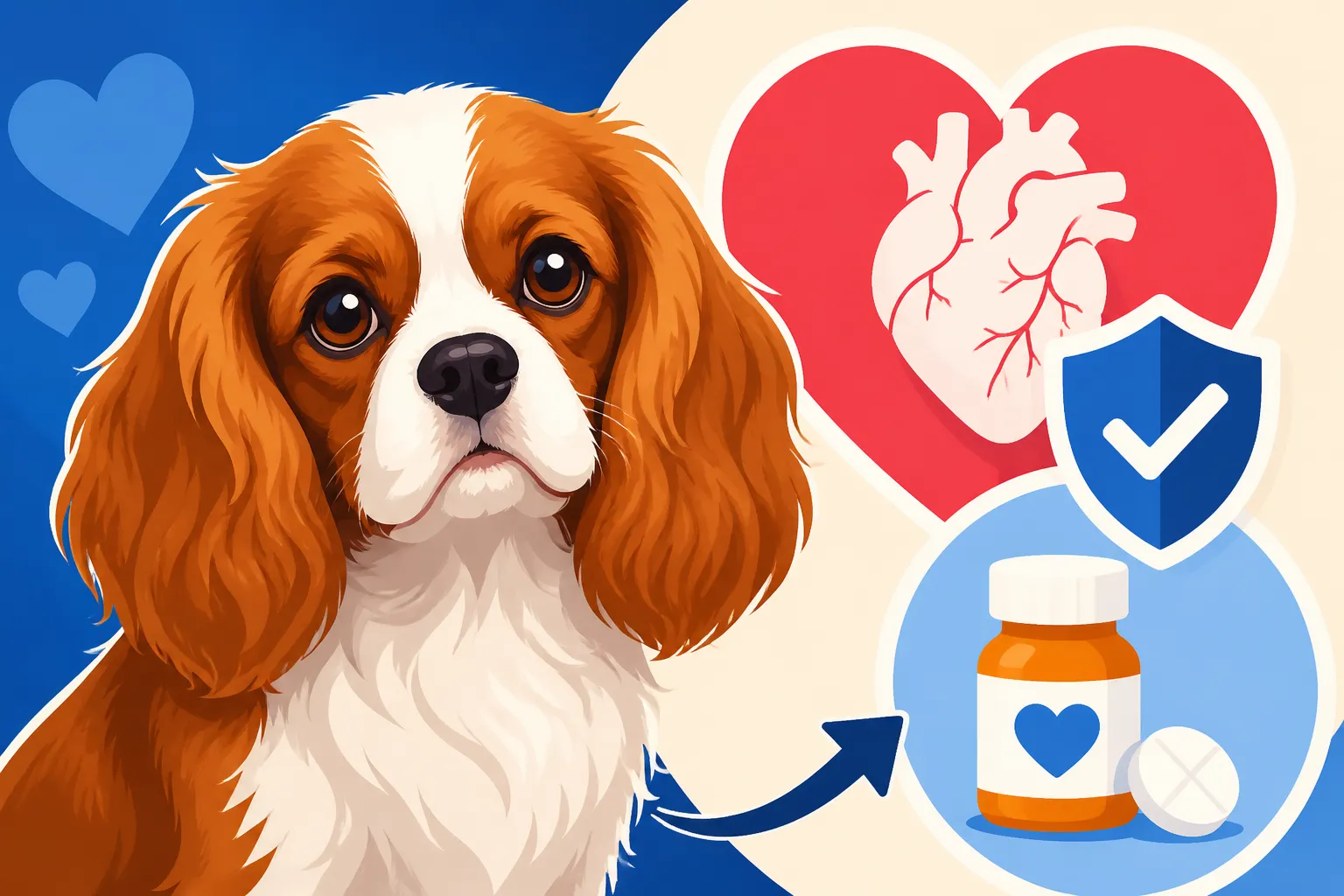
Pimobendan works in a couple of ways. It's a positive inotrope, meaning it helps the heart muscle contract more strongly, and it's also a vasodilator, which opens up blood vessels, reducing the workload on the heart. By initiating Pimobendan at Stage B2, we're essentially giving the heart a helping hand before it gets too overwhelmed. It's like reinforcing a leaky dam before it bursts. This proactive approach can buy your Cavalier precious months, or even years, of good quality life before they ever experience a cough or other debilitating symptoms of heart failure. For those looking for more detail, Pimobendan for a Cavalier With an Enlarged Heart provides an excellent overview.
Recognizing Signs That Aren't a Cough
Even before a full-blown "cardiac cough" begins, there can be subtle shifts in your Cavalier's behavior or routine that, in hindsight, might indicate their heart disease is progressing. These aren't necessarily reasons to start medication without a cardiologist's diagnosis, but they are absolutely reasons to get your dog checked out.
Keep an eye out for changes such as:
- Reduced stamina: Are they tiring faster on walks? Do they want to play less? Perhaps they used to bound up the stairs but now take them more slowly, or even refuse them.
- Restlessness at night: They might seem unable to settle, changing positions frequently.
- Increased sleeping: Are they sleeping more than usual, even during the day?
- Slight decrease in appetite: Perhaps they're not finishing their meals as eagerly.
- Changes in breathing patterns: While not a cough, you might notice their resting respiratory rate is slightly elevated. Counting your Cavalier's resting breaths can be a simple, at-home monitoring tool.
These subtle signs are easy to dismiss as "just getting older" or a temporary off day. But for a Cavalier, especially one with a known murmur, they should always prompt a call to your vet, who may then recommend a referral to a cardiologist for an echocardiogram.
Navigating the Decision to Medicate
Deciding to start your Cavalier on lifelong heart medication is a significant step. It involves commitment, ongoing monitoring, and financial planning. It's perfectly normal to feel a mix of hope and apprehension.
Working with Your Vet and Cardiologist
The journey through MVD management is truly a team effort involving you, your primary care veterinarian, and a board-certified veterinary cardiologist. Your general vet is your first line of defense, monitoring for murmurs during routine check-ups and being there for acute issues. However, the cardiologist is the specialist who will perform the echocardiogram, accurately stage the disease, and recommend the precise timing and dosage for medications.
They will guide you through the process, explaining the rationale behind starting Pimobendan and what to expect. This partnership ensures your Cavalier receives the most up-to-date and effective care available. Don't hesitate to ask questions – a good veterinary team will take the time to ensure you understand every aspect of your dog's treatment plan. Knowing when to escalate to a specialist is key to comprehensive care for Medication for a Cavalier With Heart Disease.
The Financial Realities of Long-Term Care
Let's be realistic: treating chronic heart disease in a Cavalier can be expensive. The initial diagnostic echocardiogram, repeat cardiologist visits, and the ongoing cost of medication like Pimobendan can add up quickly. This is where pet insurance can be a true lifesaver. Companies like Healthy Paws offer coverage that can significantly offset these costs, especially if you enroll your Cavalier before a murmur is detected. Once a murmur or MVD is diagnosed, it often becomes a pre-existing condition, and many policies won't cover it.
It’s crucial to look into pet insurance early in your Cavalier’s life. Imagine the relief of knowing that you can afford the best possible care, including that early Pimobendan, without having to make agonizing financial decisions. Even if you don't have insurance, discussing payment plans with your vet, looking into generic alternatives for some medications (though Pimobendan generics aren't always available or equivalent), or setting up a dedicated savings fund for your Cavalier's health can help manage the financial burden. Being prepared for What Cavalier Heart Disease Costs to Treat can make a huge difference.
Here's a simplified breakdown of MVD stages and general treatment focus:
| ACVIM Stage | Description | Diagnostic Findings | Treatment Focus (Pre-Cough vs. Post-Cough) |
|---|---|---|---|
| A | High risk (Cavalier King Charles Spaniel) | No murmur, no structural heart changes | Monitor for murmur (yearly vet checks) |
| B1 | Murmur present, no heart enlargement, no clinical signs | Murmur, normal heart size on echo/X-ray | Monitor (6-12 month cardiologist re-checks), lifestyle considerations |
| B2 | Murmur present, significant heart enlargement, no clinical signs (NO COUGH!) | Murmur, enlarged heart on echo/X-ray | Start Pimobendan (to delay onset of heart failure), monitor |
| C | Murmur, heart enlargement, current or past clinical signs (COUGHING!) | Murmur, enlarged heart, fluid in lungs (on X-ray) | Pimobendan, Diuretics, ACE Inhibitors (to manage symptoms & fluid buildup) |
| D | End-stage heart failure, refractory to conventional treatment | Severe heart enlargement, significant fluid, severe clinical signs despite meds | Aggressive medication adjustments, advanced therapies, quality of life focus |
Starting heart medication for your Cavalier before they even start coughing is a proactive choice rooted in strong scientific evidence. It’s about intervening at a crucial point (Stage B2) to give them the best possible chance at a longer, more comfortable life, delaying the progression of MVD and the distressing symptoms of heart failure.
Disclaimer
This article is intended for informational purposes only and does not constitute medical advice. Always consult with a qualified veterinarian or veterinary cardiologist for any health concerns or before making any decisions about your Cavalier King Charles Spaniel's medical care.