The Combs That Reach Cavalier Feathering
Oh, the glorious, flowing feathering of a Cavalier King Charles Spaniel! It’s one of their most enchanting features, isn’t it? That soft, silky cascade of hair around their ears, on their chest, and down their legs is just beautiful. But any Cavalier parent knows that beauty comes with a price, and that price is often paid in tangled knots and frustrating mats. It can feel like you spend more time battling snarls than enjoying cuddles, leaving you wondering if you’re using the right tools or even the right technique. This comprehensive guide is here to untangle those frustrations, literally, by exploring the specific combs that are best suited for your Cavalier's unique coat and how to use them effectively to keep their feathering luscious and mat-free.
Understanding Your Cavalier's Feathering: A Unique Coat
Before we dive into the world of combs, let's take a moment to truly appreciate what makes your Cavalier's coat so special, and sometimes, so challenging. Understanding its characteristics is the first step toward mastering its care. It's not just "long hair"; there's a specific texture and growth pattern that sets it apart from many other breeds.
The Silky, Single Coat vs. Double Coats
Unlike many breeds that have a dense double coat with a soft undercoat and a coarser outer coat (think a Golden Retriever or a Siberian Husky), Cavaliers typically boast a beautiful single coat. This means they don't have that thick, woolly undercoat that other breeds often have. Their hair is generally soft, silky, and can be anywhere from medium to long in length, particularly in those areas we adore: the ears, chest, legs, and tail, which are collectively known as "feathering."
This single-coat characteristic is a double-edged sword. On one hand, it means less shedding than a heavily undercoated dog, which is a huge bonus for living indoors. On the other hand, the fine, silky texture of their feathering is incredibly prone to tangling and matting. Without a coarser outer guard coat to protect it, the individual strands of hair can easily weave together, especially when exposed to friction, moisture, or static. Think of it like your own fine hair – it's beautiful, but leave it down in a scarf on a windy day, and you'll know the struggle of knots! This delicate texture demands specific grooming tools and techniques to prevent damage and discomfort.
Where Mats Love to Hide
If you've spent any time grooming a Cavalier, you've probably discovered their favorite matting zones. These are the areas where friction is highest, or where the hair is naturally longer and finer, creating prime real estate for tangles. Knowing these hotspots allows you to be proactive and give them extra attention during your regular grooming sessions. It's much easier to prevent a mat than to remove a stubborn one!
One of the absolute worst culprits for matting is behind the ears. The hair here is often incredibly fine and silky, and it rubs against the ear leather and collar constantly. This area can go from perfectly smooth to a felted mat in what feels like mere hours, especially if your Cavalier loves a good ear scratch. The armpits and groin area are another common battleground. Again, this is where skin rubs against skin and hair against hair, creating constant friction. If you've ever tried to work a mat out of these sensitive spots, you know how uncomfortable it can be for your dog, making them understandably reluctant to cooperate next time. You'll often find Mats in a Cavalier's Armpits and Groin forming quickly. The long feathering on their legs, particularly the "pants" on their hind legs and the fringes on their front legs, can also mat easily, especially if they run through wet grass or get burrs caught in their coat. Don't forget the tail feathering either, as it can sweep along the ground and collect debris, leading to tangles.
The Essential Comb Arsenal for Cavalier Owners
Alright, now that we understand the enemy – those pesky tangles – it's time to arm ourselves with the right tools. You don't need a professional groomer's entire kit, but a few key combs will make a world of difference in keeping your Cavalier's coat pristine and comfortable. Having the right comb for the job is paramount, as using the wrong one can be ineffective at best and painful at worst.
The Wide-Toothed Comb: Your First Line of Defense
Every Cavalier owner's grooming kit should begin with a good quality wide-toothed comb. This isn't just a suggestion; it's a fundamental tool for daily or every-other-day coat maintenance. Think of it as your gentle opener, designed to glide through the coat without snagging on smaller tangles and causing discomfort.
The primary purpose of a wide-toothed comb is to gently separate the strands of hair, removing loose debris and working through minor tangles before they escalate into full-blown mats. It's ideal for a quick pass over the entire coat, especially the longer feathering, to check for new snags. When you start your grooming session, this is the comb you reach for first. Its wider spacing between the teeth means it won't pull on the coat as harshly as a fine-toothed comb might, making the experience more pleasant for your Cavalier. This is particularly important for areas that are sensitive or where the hair is very long and prone to catching. Always use it with a delicate touch, working from the ends of the hair inwards, slowly progressing towards the skin. It also helps to reveal any larger knots that you might need to address with a bit more patience and possibly a detangling spray. This comb is crucial for regular upkeep and an excellent way to perform Brushing a Cavalier's Feathering Three Times a Week.
The Fine-Toothed Comb: Tackling Tangles and Dirt
While the wide-toothed comb is fantastic for general maintenance, you'll inevitably encounter smaller, more stubborn tangles that require a more precise tool. Enter the fine-toothed comb, an indispensable ally for detail work and addressing those tricky spots.
This comb features teeth that are much closer together, allowing it to grab and pull apart fine knots that a wide-toothed comb would simply glide over. It's invaluable for working through the feathering on the ears, the delicate hair around the face, and those pesky mats that can form in the armpits. Beyond detangling, a fine-toothed comb is also excellent for removing loose hair, dirt, dust, and even tiny seeds or burrs that get embedded in the coat, especially after an outdoor adventure. However, due to its close-set teeth, it must be used with extreme caution and a very gentle hand. Never try to yank a fine-toothed comb through a large knot; it will pull on your Cavalier's skin, cause pain, and might even break the hair, leading to more frizz and damage. Instead, use it in very small sections, perhaps holding the hair at the base of the tangle to minimize pulling on the skin, and work the tangle out slowly, strand by strand. It's also great for checking for any fleas or flea dirt, even if your Cavalier is on preventative medication, giving it dual functionality.
The Combination Comb: Best of Both Worlds
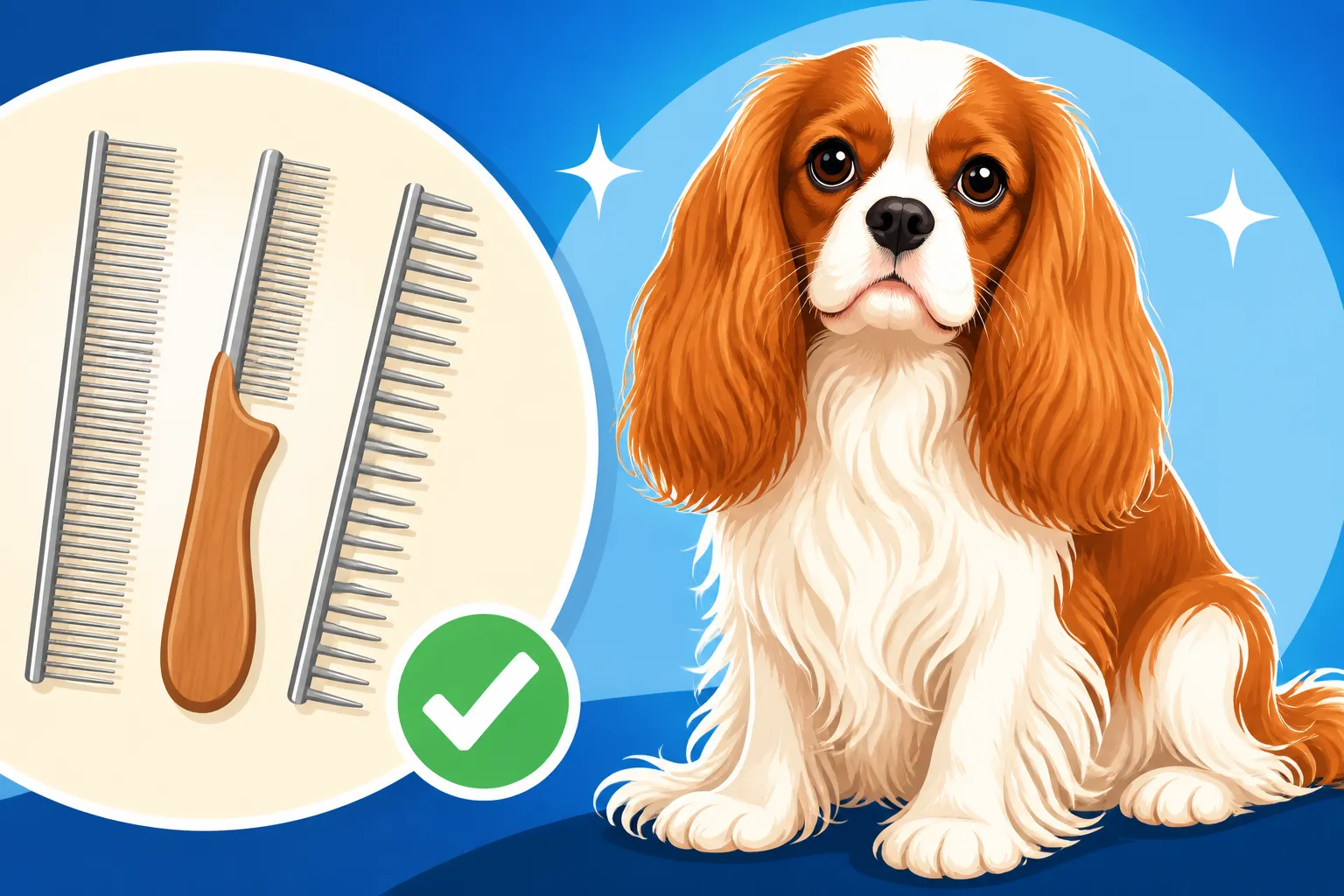
For many Cavalier owners, a combination comb proves to be an incredibly versatile and practical tool. As its name suggests, it offers both wide-set and fine-set teeth on a single comb, typically on opposite ends or on different sides. This design makes it a grooming powerhouse, reducing the need to switch between multiple tools during a session.
The beauty of a combination comb lies in its efficiency. You can start with the wide-toothed side to gently work through the bulk of the coat, identify any larger tangles, and smooth out the feathering. Once you've done the initial pass, you can flip the comb to the fine-toothed side to tackle those smaller knots, meticulously clean out debris, and ensure the coat is thoroughly combed from root to tip. This seamless transition saves time and makes the grooming process flow more smoothly, which can be a real blessing if your Cavalier has a shorter attention span. It's particularly useful when you're focusing on areas like the ears, where the top of the ear might have thicker hair requiring the wide teeth, but the delicate fringe needs the fine teeth. When considering Whether a Cavalier Needs a Metal Comb, many combination combs are made of metal, which offers durability and smooth gliding through the hair, reducing static. Always opt for a sturdy metal comb with rounded, polished teeth to prevent scratching the skin.
Specialty Combs for Specific Cavalier Needs
While your basic wide-toothed and fine-toothed combs will cover the majority of your Cavalier's grooming needs, there are a few specialty tools that can be incredibly helpful for particular situations. These aren't necessarily for daily use but are invaluable to have on hand for those challenging moments or specific tasks.
Dematting Combs and Rakes: When to Bring Out the Big Guns
Sometimes, despite your best efforts, a stubborn mat forms that seems impervious to your regular combs. This is where dematting combs or rakes come into play. These tools are designed with sharp, curved blades or strong, widely spaced teeth to safely cut or pull apart mats without necessarily having to cut off large sections of hair with scissors.
Dematting tools are a godsend for severe tangles, but they must be used with extreme caution. The blades are sharp and can easily cut your Cavalier's skin if you're not careful. Always use them on dry hair and never try to force them through a mat. Instead, work slowly, using a sawing motion with minimal pressure, and always hold the hair at the base of the mat to protect the skin from pulling. Their purpose is to break up the mat into smaller, more manageable sections, allowing you to then comb out the remaining tangle with a regular comb. They are particularly useful for dense mats found in the Mats in a Cavalier's Armpits and Groin or behind the ears. Remember, if a mat is too tight or too close to the skin, it's often safer and less painful for your Cavalier to have it professionally shaved out by a groomer or vet. Don't be a hero; pain-free is always the goal.
Flea Combs: Not Just for Fleas
The name "flea comb" might suggest its sole purpose is to hunt down tiny parasites, but this incredibly fine-toothed tool has a broader utility for Cavalier owners. Even if your dog is on year-round flea prevention, a flea comb can be a surprisingly effective grooming aid.
The teeth on a flea comb are extraordinarily close together, making them perfect for catching tiny bits of debris, flakes of dry skin, and even those pesky "eye boogers" that can accumulate around your Cavalier's prominent eyes. Gently running a flea comb through the feathering on their face and around their eyes can help keep these areas clean and prevent minor irritation. It's also fantastic for very fine detangling, especially in highly delicate areas where even a fine-toothed comb might struggle. Think of the super-fine hair on their cheeks or the delicate fringes of their ears. The flea comb can also be used to check for "flea dirt" (which looks like tiny black specks that turn reddish-brown when wet), offering an extra layer of vigilance in your pet's health monitoring. Just as with any fine-toothed tool, extreme gentleness is key to avoid pulling or scratching.
Greyhound Combs: A Professional's Favorite
The "Greyhound comb," despite its name, is not just for sighthounds; it's a staple in many professional grooming salons and for good reason. These combs are typically made of high-quality metal and feature a very specific tooth configuration that makes them incredibly effective on many coat types, including the Cavalier's silky feathering.
A classic Greyhound comb usually has two sections: one with wider-spaced teeth and another with more narrowly spaced teeth. This dual design, often wider than a standard combination comb, allows groomers to efficiently work through different areas of the coat without switching tools. The teeth are typically long enough to reach through dense feathering down to the skin, ensuring thoroughness. The metal construction not only makes them durable but also helps to reduce static electricity in the coat, which can be a real problem with fine, silky hair, especially in dry environments. They glide smoothly, helping to detangle and fluff the coat beautifully. For serious home groomers, investing in a good quality Greyhound comb can elevate your grooming routine. Brands like Chris Christensen often make excellent, durable metal combs that are a favorite among professionals. Ensure the comb you choose has smoothly finished, rounded teeth to prevent any discomfort or damage to the skin and coat.
| Comb Type | Primary Purpose | Best Use Cases | Pros | Cons |
|---|---|---|---|---|
| Wide-Toothed | Gentle initial detangling, debris removal | Entire body, long feathering, starting point | Prevents snagging, gentle, good for maintenance | May miss small tangles, not for deep mats |
| Fine-Toothed | Detailed detangling, removing small knots & dirt | Ears, face, armpits, intricate feathering | Excellent for precision, thorough cleaning, checking for parasites | Can pull painfully if forced, not for large mats, risk of hair breakage |
| Combination | Versatile general grooming, two-in-one efficiency | All coat areas, transitioning between coarse & fine hair | Convenient, covers most grooming needs, reduces tool changes | Quality varies by brand, some may find the size awkward for certain areas |
| Dematting Rake | Breaking apart tough, matted sections | Severe mats, dense feathering in problem areas | Saves coat from shaving, effective on stubborn knots | Very sharp, high risk of skin injury if not used carefully, not for routine use |
| Flea Comb | Removing tiny debris, eye boogers, flea detection | Face, delicate areas, entire coat for flea checks | Extremely fine detail work, good for checking skin health | Too fine for general detangling, can pull if forced |
| Greyhound Comb | Professional-grade detangling, smoothing, finishing | All coat areas, especially long, silky feathering | Durable, anti-static (metal), reaches skin, excellent for thoroughness | Can be pricier, may require more technique to use effectively |
How to Use Your Combs Effectively: Technique Matters
Having the right tools is only half the battle; knowing how to use them is where the magic happens. Proper combing technique isn't just about efficiency; it's about making the experience comfortable and positive for your Cavalier, ensuring their coat stays healthy, and preventing painful mats.
Preparing Your Cavalier for a Combing Session
Successful grooming starts before the comb even touches the fur. Creating a calm, positive environment is key, especially for a breed like the Cavalier, which thrives on positive reinforcement. A fearful or resistant dog will make grooming a battle, and nobody wants that.
Start by choosing a quiet time when both you and your Cavalier are relaxed. Lay out all your tools – your chosen comb, a slicker brush, detangling spray, and some delicious, small treats. Many Cavaliers do well being groomed on a non-slip surface, like a grooming table or even a sturdy kitchen counter covered with a bath mat, as this elevates them and saves your back. Introduce the tools slowly, allowing your Cavalier to sniff them. Offer treats and praise generously, even if they just stand still for a few seconds. If your Cavalier is particularly wiggly or nervous, keep initial sessions very short – literally a minute or two – and gradually increase the duration as they become more comfortable. This positive association, where grooming equals treats and praise, is crucial for long-term cooperation. It’s also wise to ensure they've had a potty break and a bit of exercise beforehand, so they're not restless. Consider playing some calming music or having a gentle conversation to make the experience more soothing. You want them to associate the grooming session with pleasant things, not with being restrained or hurt. You'll find great tips in Getting a Cavalier Used to Ear Cleaning, which can be applied to general grooming.
The Layer-by-Layer Combing Method
When it comes to combing out a Cavalier's feathering, simply running a comb over the top layer of hair isn't going to cut it. Mats form deep within the coat, close to the skin, and can easily be missed if you're not thorough. The "line brushing" or "layer-by-layer" method is the gold standard for truly mat-free results.
To employ this method, you'll need a slicker brush and your chosen comb (a wide-toothed or combination comb is usually best here). Start by parting the hair at the bottom of a section, for example, on a leg or the chest, and hold the upper layers of hair out of the way with your hand or a clip. You are now looking at a very thin "line" of hair, exposing the skin. First, use your slicker brush to gently brush this exposed section of hair, brushing outwards and downwards. Once you've brushed that section, follow immediately with your comb, making sure the comb's teeth reach all the way down to the skin. If the comb glides smoothly through, that section is mat-free. If you encounter resistance, stop and address the tangle. Once that thin line is brushed and combed, drop a little more hair from the clipped-up section and repeat the process, working your way up the body. This meticulous approach ensures that every single strand of hair is brushed and combed, preventing hidden mats from forming close to the skin, which are the hardest to find and most painful to remove. It takes time, but it's the most effective way to maintain that glorious feathering and avoid the dreaded When a Matted Cavalier Has to Be Shaved.
Gentle Detangling: Preventing Pain and Damage
Finding a mat is inevitable for a Cavalier owner, but how you tackle it makes all the difference for your dog's comfort and the health of their coat. Rough detangling can cause pain, skin irritation, and even hair breakage, leading to a poorer quality coat in the long run.
The first rule of detangling is: never pull. When you encounter a knot, stop immediately. Instead of yanking, try to gently separate the mat with your fingers first. You can also apply a generous amount of detangling spray (products available on Chewy, for example, often work wonderfully) directly onto the mat. Let it sit for a minute or two to help loosen the hair. Then, using your comb – a fine-toothed or the fine side of a combination comb is often best here – start at the very ends of the mat and work just a few strands at a time. Hold the hair at the base of the mat with your fingers between the mat and your dog's skin. This technique, called "line brushing from the outside in," isolates the mat and prevents the comb from pulling on the skin, which is what causes pain. Work very slowly, picking apart the mat a little bit at a time. If the mat is extremely tight or large, consider using a dematting comb with extreme caution, or, as mentioned before, it might be kinder to have a professional groomer carefully shave it out. Remember, the goal is to Working a Mat Out of Cavalier Feathering gently, keeping your Cavalier happy and cooperative for future grooming sessions.
Maintaining Your Combs and Your Cavalier's Coat
Proper grooming is an ongoing commitment, and it extends beyond just the act of combing. Taking care of your tools and adopting a holistic approach to your Cavalier's coat health will ensure their feathering remains beautiful and problem-free for years to come.
Cleaning and Storing Your Grooming Tools
Your grooming tools are an investment, and like any investment, they need care to perform their best and last a long time. Neglecting your combs can lead to dulling, rusting, or even bacterial buildup, which isn't good for your dog's coat or skin.
After each grooming session, take a moment to remove all the hair from your combs and brushes. A quick wipe-down with a clean cloth, perhaps slightly dampened, will get rid of any dirt or product residue. For a deeper clean, especially if you've used them on a particularly dirty coat, you can wash metal combs in warm, soapy water. Just be sure to rinse them thoroughly and dry them completely afterwards to prevent rust. Plastic combs can usually be washed with soap and water too. Store your clean, dry tools in a designated caddy or drawer, away from humidity and direct sunlight, to protect them. This not only extends the life of your tools but also ensures they are always hygienic and ready for your next grooming session. Good maintenance also keeps the teeth sharp and smooth, preventing unnecessary pulling or damage to your Cavalier's delicate coat.
When to Seek Professional Help
While home grooming is essential for Cavaliers, there are times when a professional groomer or veterinarian is the best, and sometimes only, option. Knowing your limits is part of being a responsible pet parent.
If you encounter a mat that is too large, too tight, too close to the skin, or your Cavalier is showing significant pain or aggression when you try to remove it, it's time to call in the professionals. Attempting to remove severe mats yourself can cause skin tearing, bruising, and a lasting negative association with grooming for your dog. Professional groomers have specialized tools, techniques, and experience to handle even the most challenging mats with minimal stress to your pet. They can often shave out tight mats safely without causing injury. Similarly, if you notice skin irritation, redness, sores, or any unusual bumps or growths under the matted hair, a visit to the vet is in order. These could be signs of underlying skin conditions that require medical attention. Don't feel guilty about seeking help; it's always better for your Cavalier's comfort and health to let the experts handle what you can't. They can also advise on how to Stretch a Cavalier's Groom to Ten Weeks or whether certain cuts would benefit your Cavalier's comfort.
Beyond Combing: A Holistic Approach to Coat Health
Combing is undeniably crucial for maintaining a Cavalier's coat, but it's just one piece of a larger puzzle. A truly healthy, beautiful coat is a reflection of overall well-being and a comprehensive care routine.
Regular bathing with a Shampoo for a Cavalier's Silky Coat is important, typically every 2-4 weeks, to remove dirt, oils, and dead skin cells that can contribute to matting and skin issues. Always follow up with a good conditioner to help keep the hair soft, smooth, and easier to comb. A slicker brush, used before combing, is excellent for removing loose hair and initial tangles. Brands like Ollie, known for their fresh dog food, demonstrate how diet plays a massive role in coat health. A high-quality diet rich in essential fatty acids (like Omega-3 and Omega-6) can significantly improve the luster, strength, and softness of your Cavalier's coat, making it less prone to dryness and breakage. Consider supplements like fish oil, under veterinary guidance, if your dog's diet isn't providing enough. Adequate hydration is also key. Lastly, don't underestimate the role of preventive veterinary care. Regular check-ups can catch underlying health issues that might manifest in a dull, dry, or unhealthy coat. If serious skin problems arise, having pet insurance like Healthy Paws can help cover unexpected veterinary costs, ensuring your Cavalier gets the care they need without financial stress. By combining diligent combing with good nutrition, regular bathing, and overall health vigilance, you'll ensure your Cavalier's feathering remains a magnificent testament to their breed.
Disclaimer
This article is for general informational purposes only and does not constitute professional advice. Laws, prices and regulations vary by location and change over time. Consult a qualified professional for guidance on your specific situation.