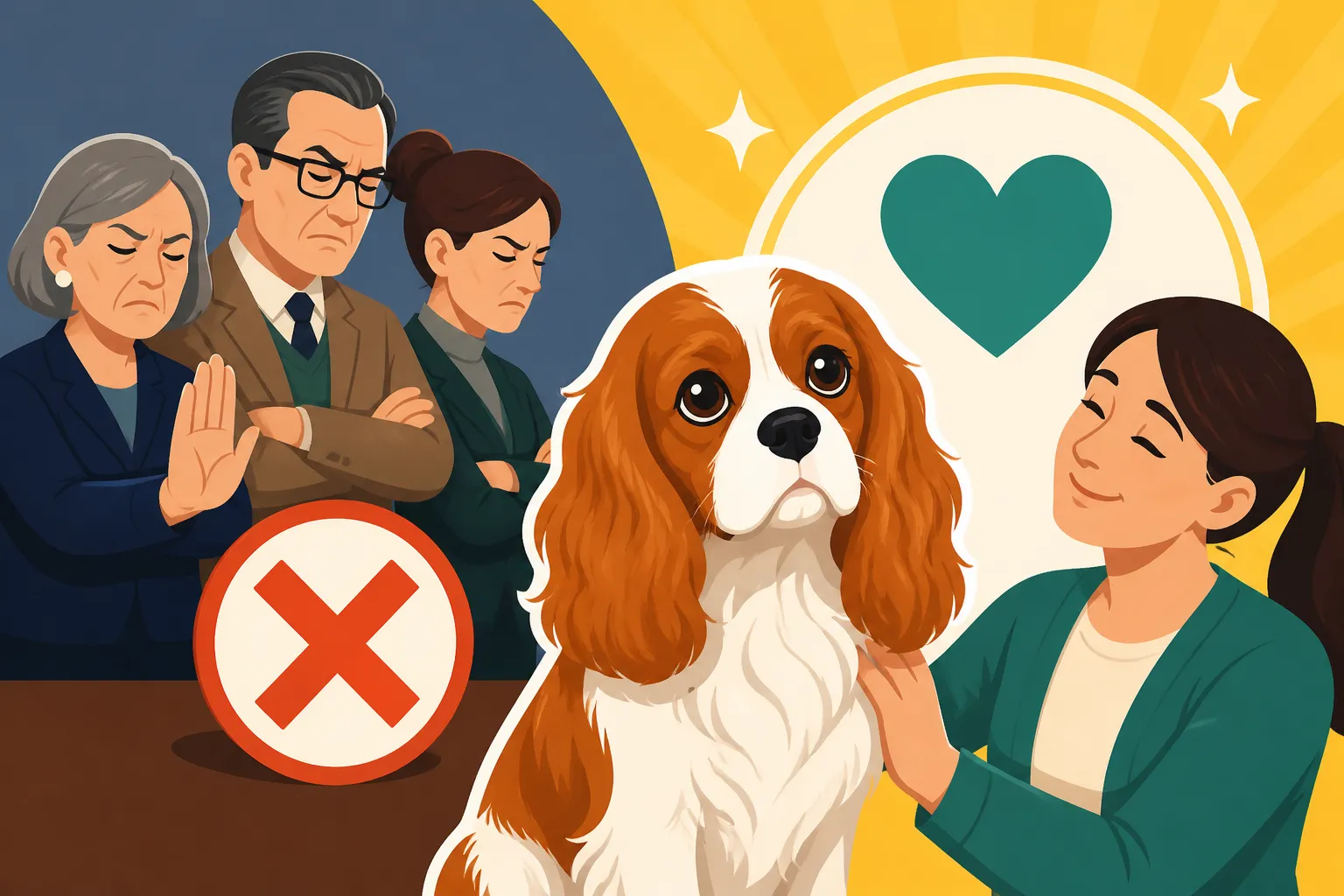
Why Breeders Ignored the Cavalier Revival at First
If you've ever delved into the fascinating history of the Cavalier King Charles Spaniel, you might have heard whispers about a period when the breed, as we know it today, was almost lost to time, and how some breeders initially dismissed the efforts to bring it back. It can be incredibly confusing to understand why anyone would resist restoring such a beloved dog, especially when we cherish their distinct look now. This guide will unearth the reasons behind that early reluctance, helping you understand the historical context and the genuine challenges faced by those who championed the Cavalier's revival.
The Historical Context: What Was the "Old Type" Cavalier?
To truly grasp why breeders initially ignored the Cavalier revival, we first need to understand what exactly was being revived. The dogs we know as Cavalier King Charles Spaniels today weren't always around in their current form. Their story is one of transformation, near-loss, and a determined effort to reclaim a classic look.
The Original Court Spaniels and Their Transformation
Imagine the courts of 16th, 17th, and 18th century European royalty. These palaces were often bustling with small, charming spaniels, adored by kings and queens alike. King Charles II, in particular, was famously devoted to these little dogs, giving them their royal moniker. These original "King Charles Spaniels" were, by and large, long-nosed, elegant little creatures, much closer in appearance to what we now call a Cavalier. They had a distinct muzzle, a relatively flat skull, and a lively, active nature, often seen trotting alongside their royal companions or warming laps. You can learn more about Cavalier Ancestors at the Court of Charles II.
However, as centuries passed, tastes changed. During the Victorian era, there was a growing fascination with brachycephalic, or flat-faced, breeds. Bulldogs, Pugs, and similar dogs became highly fashionable. Breeders, eager to meet this new demand and align with contemporary show standards, began selectively breeding the King Charles Spaniel for increasingly shorter muzzles, domed skulls, and larger, rounder eyes. Over generations, the original "old type" spaniel gradually transformed into the distinctive, flat-faced dog we now know as the English Toy Spaniel (or King Charles Spaniel outside the US). While still charming, this dog was a far cry from the original royal companions. The influence of The Pug Crosses That Shortened the Cavalier's Face was undeniable.
The Ideal That Was Lost
By the early 20th century, the long-nosed King Charles Spaniel was largely a memory, existing mostly in old paintings and historical accounts. This is where Roswell Eldridge enters the story. An American dog enthusiast, Eldridge was captivated by the elegant spaniels depicted in these antique artworks. He deeply admired their balanced proportions, their longer muzzles, and their gentler expressions, feeling that something truly special had been lost in the pursuit of the shorter-faced trend.
Eldridge didn't just lament the change; he decided to do something about it. His vision was to bring back that specific, classic look – the dog that truly resembled the spaniels of King Charles II. He envisioned a dog with a moderate muzzle, a defined stop, ears set lower, and a more athletic build than the contemporary King Charles Spaniel. This was the "old type" he yearned to revive, a living bridge to canine history. He detailed this ideal in the "Cavalier Description Eldridge Put in Print."
Roswell Eldridge's Bold Challenge and Its Immediate Reception
Roswell Eldridge was not content to simply dream of the old type Cavalier. He took concrete, dramatic steps to make his vision a reality, steps that initially met with considerable resistance.
The Catalyst: Eldridge's Challenge and Prize Money
The stage for Eldridge's audacious plan was the prestigious Crufts Dog Show in London, specifically in the year 1926. Crufts was, and remains, a pinnacle event in the dog world, drawing breeders and enthusiasts from across the globe. It was here that Eldridge made his presence felt, not by exhibiting a dog, but by placing a rather bold advertisement in the show catalog.
His advertisement wasn't subtle; it was a direct challenge. He offered a significant cash prize—twenty-five pounds sterling, which was a considerable sum in those days—to any breeder who could exhibit a King Charles Spaniel "of the old type." Crucially, he specified that this dog must have a "long face, no stop, flat skull, not inclined to be domed, and with the spot in the centre of the skull." This was a clear call to revert to the pre-Victorian look, a look that had, for all intents and purposes, been bred out of existence for decades.
This offer was revolutionary and, for many, utterly perplexing. It was an open critique of the direction the breed had taken and a plea for a return to a bygone era. Eldridge’s intent was clear: he wasn't just offering money; he was offering a reason to shift the entire breeding paradigm. He wanted to incentivize breeders to seek out and perpetuate the traits that were then considered "incorrect" by the prevailing show standards. This bold move, detailed in The 1926 Advertisement That Revived the Cavalier, was the spark that ignited the revival.
The "King Charles" Breeders' Perspective: Why They Resisted
While Eldridge's challenge aimed to inspire, it initially met with a lukewarm, if not outright hostile, reception from many established King Charles Spaniel breeders. From their point of view, his proposal was not a revival but an attack on their life's work and the breed they had carefully cultivated.
Firstly, these breeders had dedicated generations to developing and perfecting the flat-faced King Charles Spaniel, adhering to the very specific breed standard that was then in place. This standard prized the domed skull, the very short muzzle, and the prominent eyes – features that Eldridge was essentially asking them to discard. To them, their dogs were the King Charles Spaniel. Eldridge's "old type" would have been considered a throwback, a poorly bred specimen that didn't conform to the accepted ideals. Imagine being told that the very traits you've painstakingly bred for are suddenly undesirable. It was a perceived insult to their expertise and dedication.
Secondly, there was significant investment, both emotional and financial, in their existing lines. Breeding champion dogs takes immense effort, time, and resources. They had invested in particular pedigrees, celebrated their dogs' wins in the show ring, and built their reputations around the current standard. Eldridge's challenge, asking them to breed for a different type, would mean abandoning years of selective breeding, potentially undermining their established kennel lines, and starting from scratch with an unproven and unrecognised ideal. Why would they voluntarily risk their standing and their livelihood for an idea that contradicted everything they believed was correct?
Finally, many might have simply viewed Eldridge's initiative as a quirky, fleeting fancy – a passing fad from an American enthusiast who didn't truly understand the established British dog scene. They had a clear, defined breed, and this American was suggesting a "backward step" in their progress. There was no club, no official recognition for this "old type," only a personal preference backed by some prize money. In their eyes, there was little incentive to deviate from the established path for what might have seemed like a momentary whim.
The Slow Burn: Why It Took Time for Breeders to Adopt the Revival
Even with Eldridge's generous prize money, the "old type" didn't immediately take off. The revival was a slow burn, facing several significant hurdles before gaining widespread acceptance.
Loyalty to the Established Standard
One of the biggest obstacles was the unwavering loyalty of existing King Charles Spaniel breeders to their established breed standard. This wasn't just about personal preference; it was about the integrity of the breed as recognized by kennel clubs and judging panels. Breed standards are meticulously crafted documents that describe the ideal characteristics of a dog, from head shape to tail carriage, and they dictate what makes a champion. For decades, breeders had worked diligently to produce dogs that conformed to the flat-faced, domed-skull standard of the King Charles Spaniel.
To suddenly shift gears and start breeding for a longer muzzle and flatter skull would have been seen as a rejection of their own breed's history and current identity. Kennel clubs, which play a crucial role in maintaining breed purity and standards, would also have viewed such a departure with skepticism. Changing a breed standard is a lengthy and complex process, requiring widespread agreement and advocacy. Without official recognition or a dedicated club, Eldridge's "old type" was an outlier, making it a professional risk for breeders to pursue. They had built their reputations on their ability to produce dogs that exemplified the current standard, not some historical ideal.
The Challenge of Breeding Back
Beyond the cultural resistance, there was a very real biological challenge: how do you "breed back" traits that have been systematically bred out over many generations? Genetic change takes time, and reversing the effects of decades of selective breeding is incredibly difficult. Most of the King Charles Spaniels available at the time would have carried the genes for short muzzles and domed skulls. Finding individuals that naturally exhibited the "old type" characteristics would have been like searching for a needle in a haystack.
Even if a breeder found a dog with a slightly longer muzzle, successfully breeding that trait true and consistently across a litter would be a monumental task. The genetic pool for the longer-muzzled dogs was tiny, likely confined to a few accidental throwbacks or dogs from less-fashionable lines that hadn't been as intensely bred for the extreme short-faced look. This limited gene pool meant that any efforts to breed the "old type" were fraught with uncertainty, potentially leading to inconsistent results and frustrating setbacks. It wasn't as simple as just deciding to breed for a different look; it required careful selection, patience, and a deep understanding of genetics, often against prevailing genetic tendencies.
Skepticism and the "Novelty" Factor
Initially, many in the dog world likely viewed Eldridge's efforts as a passing novelty, an eccentric pursuit rather than a serious movement. The idea of resurrecting a lost breed type, especially one that went against the current fashion, seemed idealistic and perhaps even a bit foolish to some. Why invest time and effort in something that might just fade away?
There was no guarantee of success, no established market for these "old type" dogs. People had been conditioned to appreciate the short-nosed King Charles Spaniel. Would the public even embrace this new, yet old, look? Without a clear path to show ring success or public adoration, breeders would naturally be wary of dedicating their resources to such a speculative venture. It takes a certain kind of pioneering spirit, a deep passion, and a willingness to go against the grain to embrace such a challenge, especially when faced with the comfortable familiarity of the established order. This skepticism acted as a significant drag on the immediate adoption of Eldridge's vision. If you are looking for specific brushes to manage your Cavalier's coat after it has been properly grown, Chewy offers a selection.
The Turning Point: When the "Old Type" Gained Traction
Despite the initial resistance and challenges, Roswell Eldridge's vision for the "old type" Cavalier King Charles Spaniel eventually took root and flourished. This shift didn't happen overnight but was the result of persistent effort and a growing number of dedicated enthusiasts.
Persistence and the Emergence of Dedicated Enthusiasts
Eldridge's prize, though initially met with skepticism, did spark interest among a small, passionate group of breeders and enthusiasts. These individuals shared his appreciation for the spaniels of yesteryear and felt a similar longing for the return of the longer-nosed, more athletically built dog. They weren't deterred by the existing breed standards or the challenges of breeding back the lost traits. Instead, they took up the mantle, meticulously studying old paintings, seeking out any existing dogs that might carry the desired characteristics, and carefully planning their breeding programs.
These early pioneers were driven by a genuine love for the historical type and a conviction that it deserved to be recognized. They exhibited their "old type" King Charles Spaniels at Crufts, specifically for Eldridge's class, even if these dogs didn't conform to the general show standards of the day. This consistent presence, year after year, slowly started to build a community around the idea. The commitment of these few individuals, who were willing to go against the mainstream, was crucial. They demonstrated that Eldridge's vision wasn't just a fleeting idea but a viable and desirable breeding goal. You can read more about The First Dogs Shown as Old Type Cavaliers.
Formal Recognition and the Creation of a New Standard
The true turning point arrived when these dedicated enthusiasts decided to formalize their efforts. In 1928, just two years after Eldridge's initial challenge, a group gathered at Crufts and formed the first club dedicated to the "Cavalier King Charles Spaniel." This was a pivotal moment, as it signified a clear demarcation from the existing King Charles Spaniel. They weren't just trying to alter an old breed; they were effectively creating a new one, based on the historical ideal. This newly formed club then drafted its own breed standard, one that precisely described the "old type" spaniel that Eldridge had championed. This standard outlined the moderate muzzle, the flat skull, and the gentle expression that differentiated their dogs from the short-faced variety.
It still took time for this new breed to gain full recognition from major kennel clubs. Initially, the Cavalier King Charles Spaniel was often shown in "any variety" classes or simply as the "old type King Charles Spaniel." However, with a dedicated club, a clear standard, and a growing number of beautiful examples being exhibited, the breed steadily gained legitimacy. Eventually, the Kennel Club in the UK granted separate recognition to the Cavalier King Charles Spaniel, acknowledging its distinct identity and separating it definitively from the English Toy Spaniel. This official recognition was the validation that breeders needed, providing a clear path for exhibiting, breeding, and championing these delightful dogs, eventually leading to their incredible popularity today. For feeding your growing Cavalier, Chewy offers a range of appropriate small-breed puppy foods.
The journey from a forgotten historical ideal to one of the world's most beloved companion breeds was not a straight path. It was paved with resistance, persistence, and the unwavering dedication of a few who saw beauty in what others had overlooked.
| Feature | 19th Century King Charles Spaniel (English Toy Spaniel) | Roswell Eldridge's "Old Type" Cavalier |
|---|---|---|
| Muzzle Length | Very short, almost non-existent | Moderate, distinct muzzle |
| Skull Shape | Domed | Flat between the ears |
| Stop | Pronounced, deep indentation | Moderate stop |
| Eye Size/Shape | Large, prominent, round | Large, dark, round, but not prominent |
| Ear Set | Relatively high | Low set |
| Overall Impression | Compact, distinctive, "toy" appearance | Elegant, athletic, balanced |
Disclaimer
This article is for general informational purposes only and does not constitute professional advice. Laws, prices and regulations vary by location and change over time. Consult a qualified professional for guidance on your specific situation.