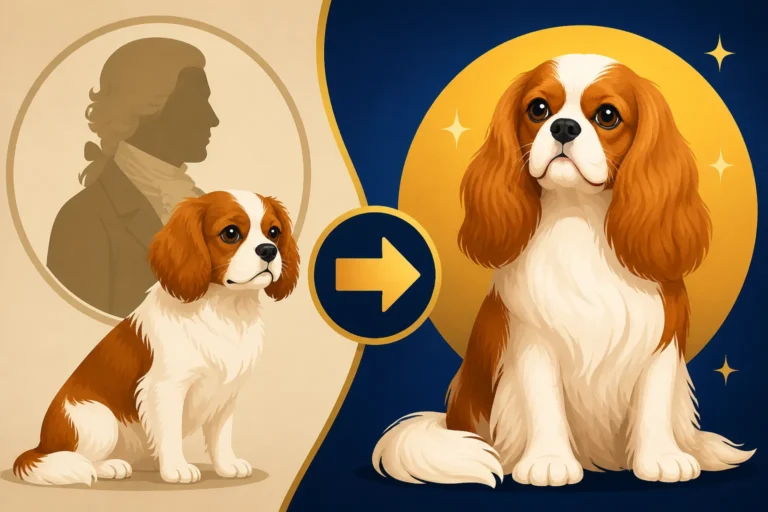
The Pug Crosses That Shortened the Cavalier’s Face
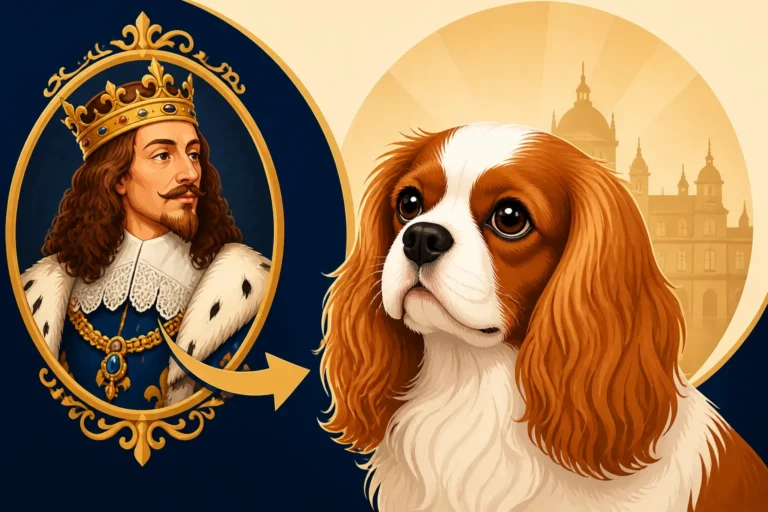
It’s a common moment for many Cavalier King Charles Spaniel owners: you’re looking at an old painting, perhaps of King Charles II, and there’s a little spaniel at his feet. You notice something striking – its face looks quite different from your furry friend curled up on the sofa! This guide will delve into the fascinating historical journey that led to the shortening of the Cavalier's face, specifically exploring the significant role of Pug crosses in shaping the breed's appearance.
The Original Look: The Long-Nosed Court Spaniels
Imagine the royal courts of 16th and 17th century Europe. Everywhere you looked, there were small, elegant spaniels, often draped across the laps of nobility or scampering through the palaces. These were the ancestors of our modern Cavaliers, and they had a distinctly different appearance. They possessed longer muzzles, flatter skulls, and a more pronounced stop (the indentation between the eyes). These were truly spaniel-type dogs, bred for companionship, but retaining some of the physical characteristics of their sporting cousins.
These dogs, often seen in portraits with their royal companions like King Charles II – after whom the breed eventually got its name – were characterized by their active, yet gentle nature. Their slightly longer muzzles were functional, allowing for better breathing and heat regulation, and their overall build was still quite athletic despite their role as pampered pets. They were an integral part of court life, always close by, sometimes even accompanying their masters into battle or formal gatherings. You can often find stunning examples of these early spaniels in historical artwork, showcasing their aristocratic charm and distinct features. For a deeper dive into their origins, you might enjoy reading about The Court Spaniels the Cavalier Descends From.
Life at Court and Their Appearance
These spaniels were truly "lap dogs" in every sense, cherished for their affectionate temperaments. Their longer muzzles allowed them a more functional bite, suitable for the occasional vermin control they might have performed in larger estates, even if their primary job was warming a lap. Their eyes, while large and expressive, were not as prominent as those we sometimes see today, tucked neatly within the contours of their longer snouts. Their skulls were generally flatter, with less dome, resembling miniature versions of a sporting spaniel more than a toy breed with exaggerated features. This natural look was the norm for centuries.
They were part of the fabric of daily life, sleeping in the royal chambers and even traveling with their owners. The practicalities of a dog that could breathe easily and see clearly were inherent in their design. There wasn't a deliberate breeding effort to alter their fundamental structure; rather, they were simply bred to be charming, gentle companions. This meant their physical form remained relatively consistent for a long time, celebrated in art and literature for their beauty and devotion.
The Shift Towards Shorter Faces in the 18th and 19th Centuries
As tastes and trends in dog breeding evolved, particularly during the 18th and 19th centuries, there began a noticeable shift in what was considered desirable for toy breeds. There was a growing fascination with more exotic or "oriental" looking dogs, often characterized by flatter faces, larger, rounder eyes, and domed skulls. This new aesthetic started to influence European breeders, leading them to introduce new bloodlines into their existing companion spaniels.
This period saw a deliberate move away from the longer-muzzled, flatter-skulled spaniels. Instead, the focus became on creating a more "pushed-in" face, often accompanied by a more pronounced domed head. This wasn't a sudden, overnight change, but a gradual process influenced by fashion and the desire to create distinctive, often exaggerated, features in toy breeds. Many breeders believed these new features added a unique charm and made the dogs appear more youthful and endearing, almost like perpetual puppies.
The Influence of Shorter-Nosed Breeds on European Dogs
The primary culprits in this transformation were breeds like the Pug and the Japanese Chin. These breeds, with their inherently brachycephalic (short-nosed) features, were imported into Europe and quickly gained popularity among the aristocracy. Their unique appearance – flat faces, wrinkled brows, and large, dark eyes – became a symbol of status and exoticism. It wasn't long before breeders of the traditional King Charles Spaniel (as it was known then) started to cross their dogs with these flatter-faced breeds.
The aim was clear: to incorporate those fashionable short-faced traits into their spaniel lines. This cross-breeding led to a significant change in the spaniel's head structure. Over generations, the muzzle progressively shortened, the skull became more domed, and the eyes grew larger and more prominent, giving them that characteristic "sweet" expression we often associate with toy breeds today. This shift was profound, effectively reshaping the appearance of these beloved companion dogs and creating a new "type" that became increasingly common. You can learn more about how the breed changed over time in How Cavalier Ancestors Changed Shape in the 1800s.
The Direct Impact of Pug Crosses
The Pug, in particular, played a pivotal role in changing the face of the King Charles Spaniel. Pugs were incredibly popular and readily available, making them a natural choice for breeders looking to introduce a shorter muzzle and a more compact head shape. The results of these crosses were quite dramatic, rapidly altering the look that had been stable for centuries.
When a Pug, with its distinctly flat face and broad skull, was bred to a King Charles Spaniel, the offspring inherited many of those brachycephalic traits. Over successive generations of selective breeding for these features, the characteristic long muzzle of the original spaniel receded, giving way to the much shorter, often almost flat, face. This created a dog that was undeniably charming to many, fitting the aesthetic preferences of the era perfectly. It was a deliberate, albeit impactful, change to the breed's conformation.
Facial Feature Changes and Their Implications
The most noticeable change, of course, was the muzzle. What was once a functional, medium-length snout became a significantly shortened structure. This had a cascade of other effects:
- Skull Shape: The skull often became more domed, accommodating the larger, rounder braincase that frequently accompanies shorter muzzles in brachycephalic breeds.
- Eye Prominence: With a flatter face, the eyes appeared much larger and often sat more prominently in their sockets. While this gave a soft, appealing expression, it also made the eyes more vulnerable to injury or issues like dry eye.
- Jaw Structure: The shortening of the muzzle also meant a more crowded jaw, leading to potential dental problems as teeth tried to fit into a smaller space. This is a challenge modern owners still face, often needing specialized dental care products, which you can find readily available from retailers like Chewy.
- Breathing: Perhaps the most significant impact was on respiration. A shorter muzzle means a more compressed airway, which can lead to breathing difficulties, especially in heat or during exercise.
This new "look" persisted and became the dominant type of King Charles Spaniel for many years, even leading to a split in the breed recognition between the "King Charles Spaniel" (the shorter-faced version) and the later "Cavalier King Charles Spaniel" (the revived longer-faced type). The difference between these two breeds is profound, as detailed in Why Cavalier and King Charles Spaniel Mean Two Dogs.
The Revival of the "Old Type" Cavalier
Thankfully, the story doesn't end with the permanent alteration of the breed. By the early 20th century, there was a growing movement among a dedicated group of enthusiasts who longed for the return of the original, longer-nosed spaniels seen in the old paintings. They believed that the breed had lost some of its historical charm and, importantly, some of its health and functionality due to the extreme shortening of the muzzle.
One prominent figure in this revival was Roswell Eldridge, an American who, in 1926, offered a monetary prize at Crufts dog show for the "best dog or bitch of the Blenheim variety, with long face, no stop, flat skull, not under 18 months." This prize was specifically aimed at encouraging breeders to revert to the older type of King Charles Spaniel, the type that predated the heavy Pug influence. He was quite clear in his ambition to bring back the dogs depicted in the paintings from the time of Charles II. This was a crucial turning point for the breed. If you're curious about this fascinating period, check out How Roswell Eldridge Brought Back the Cavalier.
Selective Breeding for Longer Muzzles
Eldridge's challenge ignited a spark, leading to a concerted effort by breeders to selectively breed dogs that exhibited the desired longer muzzles, flatter skulls, and less prominent eyes. This wasn't an easy task, as the shorter-faced type had been dominant for many generations. It required careful selection of breeding stock, focusing on those individuals that still carried traits of their distant ancestors, or those where the Pug influence was less pronounced.
Over time, through dedicated breeding programs and a clear vision, the "old type" spaniel began to re-emerge. These dogs, with their longer muzzles and more defined stops, were eventually recognized as a distinct breed: the Cavalier King Charles Spaniel. This new recognition served to differentiate them from their shorter-faced cousins, the King Charles Spaniel (known as the English Toy Spaniel in the United States). The goal was not just aesthetics, but also health and function, aiming for a dog that could breathe comfortably and live a robust life.
Comparing the Old and New Types
To truly understand the transformation, it's helpful to look at the distinct differences between the historical "old type" King Charles Spaniel, before the Pug crosses, and the "new type" that emerged after. This comparison highlights why the revivalists fought so hard to restore the original features.
| Feature | Pre-Pug Cross (Old Type) | Post-Pug Cross (New Type) | Cavalier King Charles Spaniel (Revived) |
|---|---|---|---|
| Muzzle Length | Medium to long, tapering slightly | Very short, almost flat ("dished-in") | Medium length, slightly tapering, pronounced stop |
| Skull Shape | Flatter, less domed | Domed or apple-domed | Flat between ears, moderate dome |
| Stop | Defined, but not abrupt | Very pronounced, almost a ninety-degree angle | Moderate stop, not dished or shallow |
| Eye Placement | Set well within the skull, less prominent | Large, round, prominent, sometimes bulging | Large, round, dark, well-separated, not prominent |
| Jaw/Bite | Scissor bite, functional | Often undershot, crowded teeth | Scissor bite, full dentition |
| Breathing | Generally unencumbered | Prone to brachycephalic airway issues | Generally clear, but still a concern for some |
This table clearly illustrates the physical changes that occurred and how the modern Cavalier King Charles Spaniel, while not an exact replica of the earliest spaniels, represents a successful effort to move away from the extreme brachycephalic features introduced by Pug crosses. Today, a responsible breeder will always prioritize health and functionality, alongside adhering to the breed standard which calls for a muzzle of a certain length. You can find out more about the desired appearance in The AKC Standard for the Cavalier King Charles Spaniel. Furthermore, understanding the contemporary health considerations is paramount, particularly related to breathing, as covered in Whether a Cavalier Is a Brachycephalic Breed. The journey of the Cavalier's face is a testament to the enduring passion of breed enthusiasts and the significant impact that selective breeding, for better or worse, can have on our beloved canine companions. To keep your Cavalier healthy, no matter their muzzle length, you can find a huge range of appropriate care products, from dental chews to comfortable harnesses, on websites like Chewy.
The Long-Term Health Perspective
While the visual transformation of the Cavalier's face due to Pug crosses is undeniable, the long-term health implications were equally significant. The drive for a shorter face introduced a host of issues that breeders today are still working to mitigate. A drastically shortened muzzle impacts more than just aesthetics; it affects the entire respiratory system.
Dogs breathe primarily through their noses, and a longer muzzle provides a greater surface area for warming, humidifying, and filtering air. When the muzzle is shortened, these functions are compromised. This leads to what veterinarians call Brachycephalic Obstructive Airway Syndrome (BOAS), a complex of conditions that can include narrowed nostrils, an elongated soft palate, and everted laryngeal saccules, all making breathing difficult. While modern Cavaliers have a longer muzzle than the 'new type' King Charles Spaniels, they still share some of this genetic legacy, making careful breeding and selection vital. For owners looking to ensure their dog's comfort, especially for dogs with more pronounced "stop," investing in good quality, breathable harnesses over collars, readily available on Chewy, can make a real difference, preventing pressure on the airway during walks.
Moreover, the prominent eyes associated with the shorter face are more exposed to trauma and can be more prone to conditions like dry eye or corneal ulcers. The crowded jaws frequently seen in short-faced breeds lead to dental disease because there isn't enough space for all the teeth, causing overcrowding and misalignment. These are all considerations that modern breeders committed to the breed's health are keenly aware of, striving to breed for a healthier, more moderate facial structure that honors the historical "old type" spaniel. The efforts of dedicated individuals like Roswell Eldridge were instrumental in steering the breed back towards a more sustainable and healthier conformation, highlighting that breed standards should always consider the dog's well-being above fleeting fashion trends.
Disclaimer
This article is for general informational purposes only and does not constitute professional advice. Laws, prices and regulations vary by location and change over time. Consult a qualified professional for guidance on your specific situation.