Whether a Cavalier’s Nose Must Be Black
It's incredibly common for Cavalier King Charles Spaniel owners, especially those new to the breed, to worry about their dog's nose color. You might have heard whispers or read online that a Cavalier must have a jet-black nose, and anything less is a fault, or worse, a sign of poor health. This concern is real, and it can be unsettling to see your beloved furry friend's nose showing hints of pink or brown when you expected it to be a deep, inky black. This guide will dive deep into what constitutes a correct Cavalier nose, why variations occur, and when—if ever—you actually need to be concerned.
The Cavalier King Charles Spaniel Breed Standard on Nose Color
When we talk about what a Cavalier should look like, we often refer to the breed standard. This is the blueprint written by breed clubs, like the American Kennel Club (AKC), that describes the ideal characteristics of a Cavalier King Charles Spaniel. These standards are primarily used for judging dogs in the show ring, but they also serve as a guide for breeders aiming to preserve the breed's distinctive traits. For the nose, the standard is quite specific.
What the AKC Standard Specifies
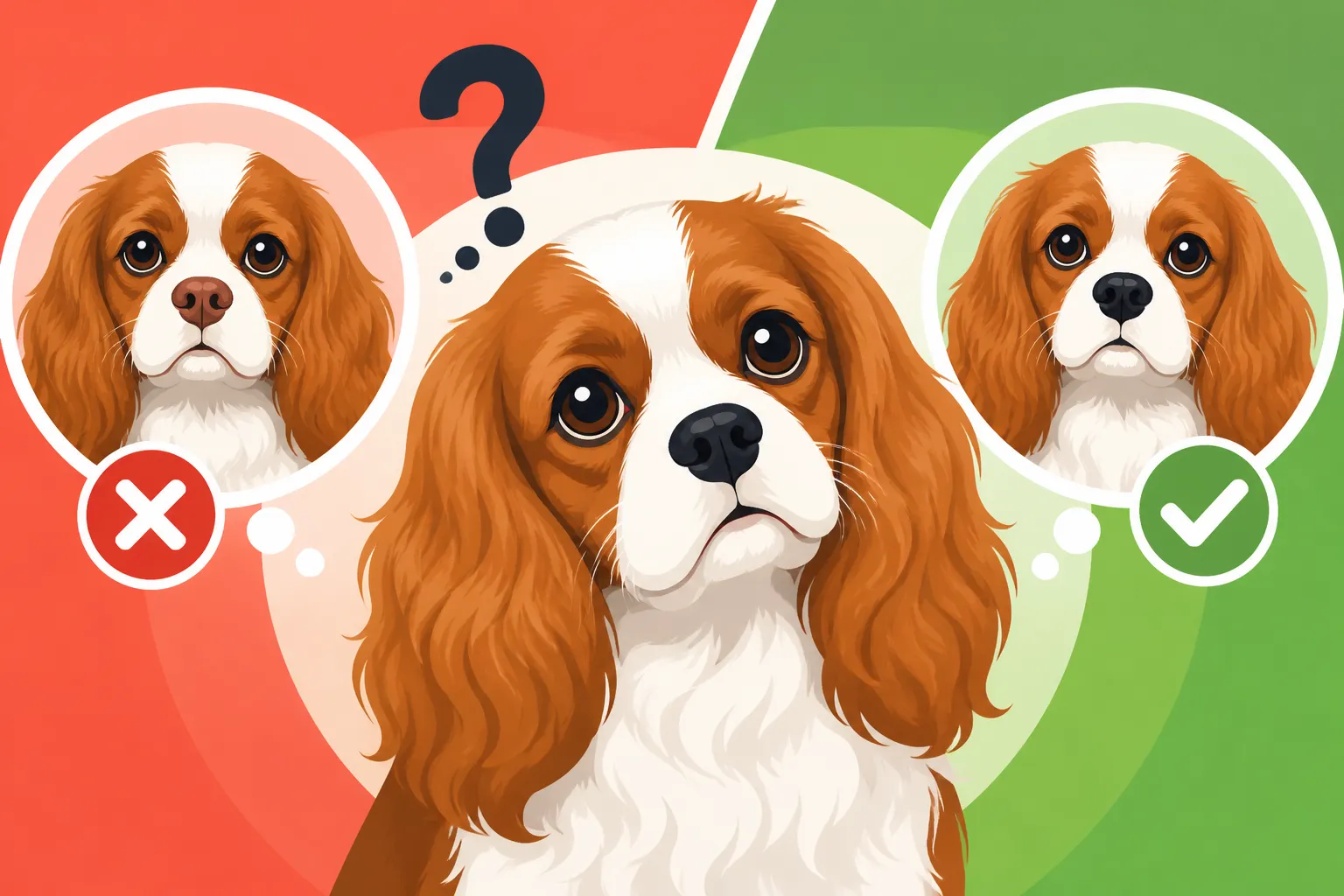
The AKC breed standard for the Cavalier King Charles Spaniel clearly states: "Nose black with well-developed nostrils, without flesh marks." This means that, ideally, a Cavalier's nose should be solid, deep black, with no pinkish or lighter spots. "Flesh marks" refers to any areas of lighter pigmentation that reveal the natural skin color beneath. This isn't just a casual suggestion; it's a definitive requirement for a Cavalier to be considered "standard-conforming" in the show ring. If a dog has a lighter nose, it would be considered a fault by show judges, potentially costing it points or even disqualifying it from winning. For breeders, maintaining this trait is part of preserving the breed's aesthetics and historical appearance.
Why the Standard Matters to Breeders and Owners
While the breed standard is paramount for those involved in showing and breeding, it's important for pet owners to understand its context. For a breeder striving to produce show champions, a consistently jet-black nose in their puppies is a mark of quality and adherence to type. They select breeding pairs carefully, often paying close attention to pigment. However, for the vast majority of Cavalier owners whose dogs are cherished family pets, a nose that isn't perfectly black doesn't diminish their dog's value, health, or personality one bit. Your Cavalier loves you just as much, whether their nose is midnight black or a charming shade of liver. It's truly an aesthetic concern rather than a health one in most cases. Understanding the standard helps you appreciate the breed's ideals, but it shouldn't lead to undue worry if your pet doesn't perfectly match every single descriptive point. When you're looking at The AKC Standard for the Cavalier King Charles Spaniel, you'll see many details that are about appearance, not health.
Common Reasons a Cavalier's Nose Might Not Be Jet Black
It's actually quite common to see Cavaliers with noses that aren't uniformly jet black. There are several perfectly normal and harmless reasons for this, ranging from natural aging processes to genetic predispositions. It's often not something to be concerned about at all.
The 'Snow Nose' Phenomenon and Seasonal Changes
One of the most frequent reasons for a lighter nose in a Cavalier is a condition affectionately known as "snow nose," or sometimes "winter nose." This is a harmless and often temporary depigmentation of the nose leather. You might notice that your Cavalier's nose, which was perfectly black in the summer, starts to develop pinkish or brownish patches during the colder, darker months of winter. As the seasons change and the dog gets more sunlight exposure, the pigment often returns, and the nose becomes black again by spring or summer.
The exact cause of snow nose isn't fully understood, but it's believed to be related to an enzyme called tyrosinase, which is involved in melanin production. This enzyme is less active in colder temperatures or with less sunlight, leading to a temporary reduction in pigment. It's a common trait in many breeds, not just Cavaliers, and is purely cosmetic. You don't need to do anything about it, and it poses no health risk to your dog.
Puppy Noses and Their Maturation
If you're bringing home a Cavalier puppy, you might notice that its nose isn't fully pigmented yet. Many puppies are born with pinkish or partially pigmented noses, especially in certain color varieties like Blenheims. This is completely normal and expected. Over the first few weeks and months of a puppy's life, the nose leather often darkens gradually, eventually reaching its mature, dark color.
Think of it like a baby's hair or eye color – it can change quite a bit as they grow. A breeder will usually be able to give you an idea of how much pigment a puppy's nose is likely to gain. If you're looking at Reading a Cavalier Puppy's Health Certificates, you might also ask the breeder about the parents' nose pigmentation history. It's rarely a cause for alarm unless the nose remains completely pink, with no signs of darkening, well into adulthood, and even then, it's usually just a cosmetic trait.
Genetic Factors and 'Dudley Noses'
Sometimes, a Cavalier's lighter nose is simply due to genetics and isn't related to seasonal changes or puppy maturation. A "Dudley nose" refers to a nose that is largely or entirely pink, lacking black pigment. While technically a fault in the show ring, a Dudley nose is usually just a genetic variation that doesn't impact the dog's health. It's more commonly seen in certain color patterns, particularly Blenheims, where lighter pigmentation elsewhere on the body is also present.
A "liver nose" or "brown nose" is another genetic variation, where the nose is consistently brown rather than black. This is more often associated with recessive genes that also produce lighter eye colors and coat colors (though not typically in Cavaliers, whose standard colors are black and tan, ruby, Blenheim, and tricolor). For instance, a very light ruby Cavalier might have a liver-colored nose. Again, from a pet owner's perspective, this is a cosmetic difference. If you're passionate about The Four Cavalier Colors and What They Are Called, you'll know that variations in pigment are part of the breed's beauty, even if the nose is traditionally black.
When to Worry: Health Implications of Nose Color Changes
While most instances of a non-black Cavalier nose are entirely harmless, there are a few rare circumstances where a change in nose pigmentation, or a nose that never darkens, could potentially indicate an underlying health issue. It's important to differentiate between natural variations and those that might signal a problem.
Depigmentation Associated with Autoimmune Conditions
In very rare cases, changes in nose color can be a symptom of certain autoimmune diseases. Conditions like vitiligo or discoid lupus erythematosus (DLE) can cause patches of depigmentation, not just on the nose, but also around the eyes, lips, and other areas of the body. With DLE, you might see more than just a color change; the nose leather could become crusty, ulcerated, or prone to bleeding. It's a much more severe and active process than the simple, smooth lightening of snow nose.
If your Cavalier's nose changes suddenly, becomes crusty, inflamed, or develops open sores, or if the depigmentation is accompanied by other signs of illness (lethargy, loss of appetite, skin lesions elsewhere), then it's definitely time for a visit to your veterinarian. They can conduct tests to determine if an autoimmune condition or another medical issue is at play. However, for a healthy, happy Cavalier with just a little pink on its nose, this is generally not a concern.
Injuries and Sunburn on a Light Nose
A pink or partially pigmented nose, while typically benign, can be more susceptible to certain environmental factors. Just like human skin, lighter pigmented skin is more prone to sunburn. If your Cavalier loves to sunbathe or spends a lot of time outdoors, a pink nose can get sunburnt, leading to discomfort, peeling, or even an increased risk of skin cancer over many years of exposure.
If your Cavalier has a lighter nose, you might consider applying a dog-safe sunblock to its nose when spending extended time in direct sunlight, especially during peak hours. You can find such products at pet stores or online retailers like Chewy. Additionally, any injury to the nose, such as a scrape or cut, can temporarily disrupt pigment production in that area, leading to a lighter spot as it heals. This is usually temporary and resolves as the tissue fully recovers.
Pigmentation and Overall Health
It's vital to remember that a dog's overall health is a far more reliable indicator of well-being than the color of its nose. A Cavalier with a perfect jet-black nose could still have underlying health issues, and a Cavalier with a charming snow nose could be the picture of perfect health. Focus on signs like a shiny coat, clear eyes, good energy levels, a healthy appetite, and regular bowel movements. These are the true indicators of a thriving dog.
The breed standard is an ideal, not a rigid health checklist. What truly matters is your Cavalier's quality of life. If you're noticing changes in their breathing, like a persistent Coughing at Night in a Cavalier, or signs of pain, such as A Cavalier That Yelps When Picked Up, those are the health markers that demand immediate attention, far more so than a change in nose pigment.
Nose Color and Choosing Your Cavalier Puppy
When you're embarking on the exciting journey of bringing a Cavalier puppy into your home, you'll undoubtedly have many questions for the breeder. Nose color might be one of them, particularly if you're concerned about adhering to the breed standard or simply curious about what to expect.
What to Ask a Breeder About Nose Pigmentation
A reputable Cavalier breeder will be completely transparent about the genetic traits within their lines, including nose pigmentation. Don't hesitate to ask them about the parents' nose colors, whether they've experienced "snow nose," and what their puppies' noses typically do as they mature. They should be able to show you pictures of previous litters or even the parents, illustrating their nose pigment.
If a puppy's nose is still quite pink when you view it, ask the breeder if they expect it to darken. Many breeders will confidently say yes, as this is a common developmental stage. A good breeder prioritizes health and temperament above all else, ensuring their puppies are free from serious genetic diseases and well-socialized. If you're looking for Buying a Cavalier From a Health-Testing Breeder, nose color will be a minor point compared to genetic health clearances for things like heart and eye conditions. They can also advise you on general puppy care, including what to feed and where to find quality products, perhaps even recommending a specific food you can purchase from Chewy.
Embracing Your Cavalier's Unique Features
Ultimately, whether your Cavalier's nose is perfectly jet black, a charming liver, or experiences a touch of "snow nose" in winter, it's just one tiny detail on a truly wonderful companion. These little quirks and individual traits are part of what makes your dog unique and special. Many owners find the seasonal changes of a "snow nose" to be quite endearing!
Focus on the love, companionship, and joy your Cavalier brings into your life. The vast majority of Cavaliers with non-black noses are perfectly healthy and lead long, happy lives. Don't let the breed standard, which is designed for a very specific purpose (showing), overshadow the incredible bond you share with your pet. Embrace their individual beauty, whatever shade their sweet nose happens to be.
Here's a quick overview of nose pigmentation variations:
| Nose Type | Description | Common Causes | Significance for Pet Owners |
|---|---|---|---|
| Jet Black | Solid, deep black, no flesh marks | Ideal pigment, genetically predisposed | Conforms to breed standard, no health concerns |
| Snow Nose / Winter Nose | Black with pinkish or brownish patches | Reduced tyrosinase activity in cold/low light | Harmless, often temporary, purely cosmetic |
| Puppy Nose (Pink) | Pink or partially pigmented in young puppies | Developmental stage, pigment matures over time | Normal, usually darkens within months |
| Dudley Nose | Mostly or entirely pink, lacks black pigment | Genetic predisposition | Harmless, cosmetic fault in show ring, more prone to sunburn |
| Liver Nose | Consistently brown pigmentation | Genetic trait, sometimes linked to lighter coats | Harmless, cosmetic fault in show ring |
| Disease-Related | Crusting, sores, sudden depigmentation | Autoimmune disease, injury, infection | Potentially serious, requires vet attention, rare |
Disclaimer
This article is for general informational purposes only and does not constitute professional advice. Laws, prices and regulations vary by location and change over time. Consult a qualified professional for guidance on your specific situation.