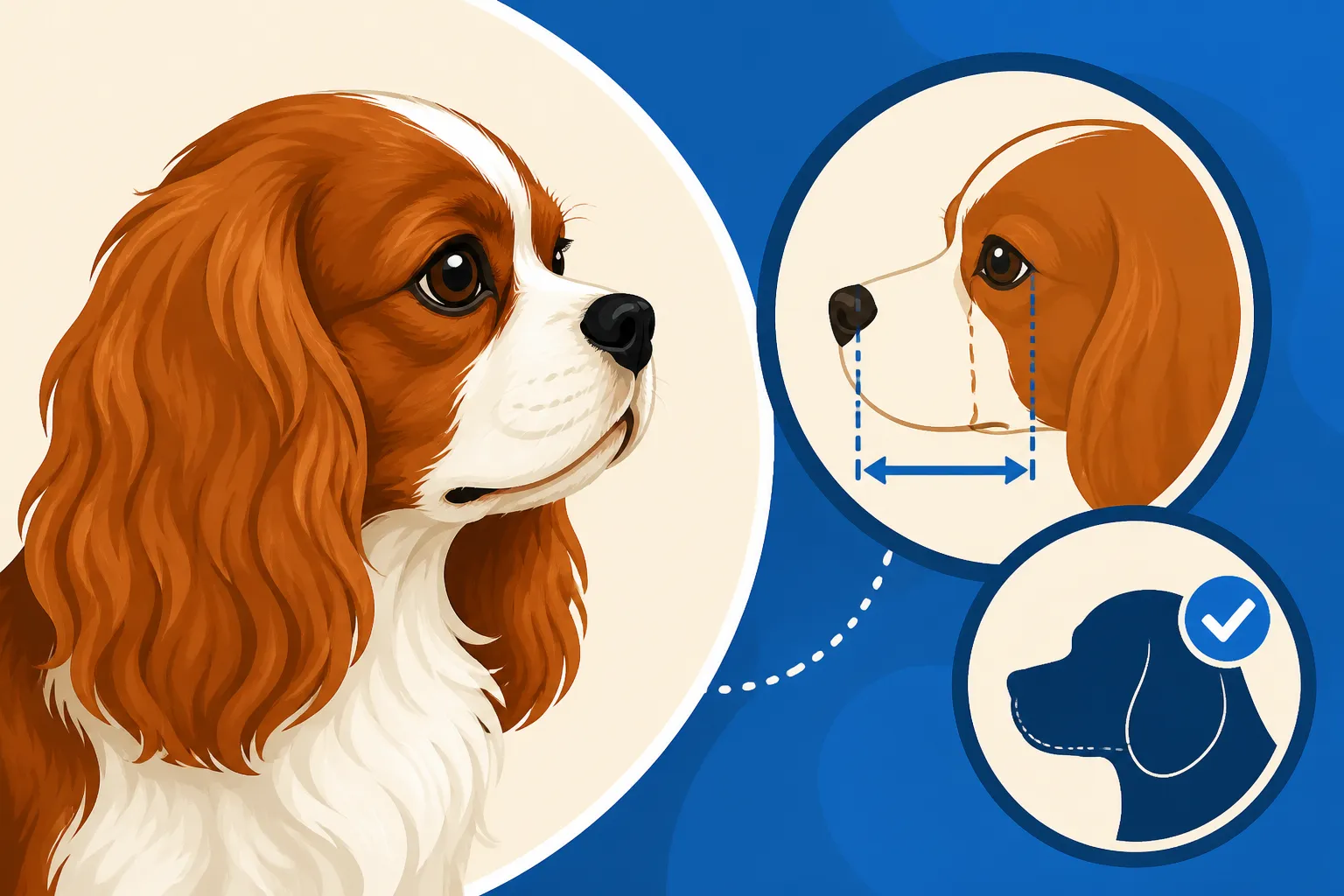
The Length of Muzzle a Cavalier Should Have
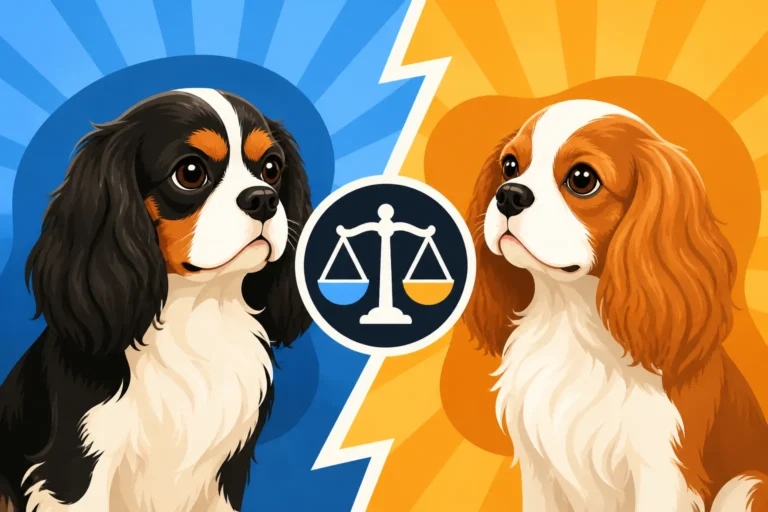
One of the most common points of confusion, and frankly, frustration, for many prospective and current Cavalier King Charles Spaniel owners revolves around their adorable faces. You see pictures of historical Cavaliers, then modern ones, and then you hear terms like "brachycephalic" thrown around, and it can leave you scratching your head, wondering what exactly a Cavalier's muzzle should look like. This guide will walk you through the journey of the Cavalier's muzzle, what the breed standard actually says, and why this seemingly small detail has such significant implications for your beloved companion's health and well-being.
The Historical Journey of the Cavalier's Muzzle: From Royal Lapdog to Modern Companion
It’s easy to look at old paintings featuring dogs that resemble Cavaliers and notice a distinct difference in their facial structure compared to some of the Cavaliers you might see today. The breed has indeed undergone significant changes throughout its history, particularly concerning its muzzle length. Understanding this evolution is key to appreciating why the current breed standard emphasizes a specific type of muzzle.
The Original Spaniel Face and Its Function
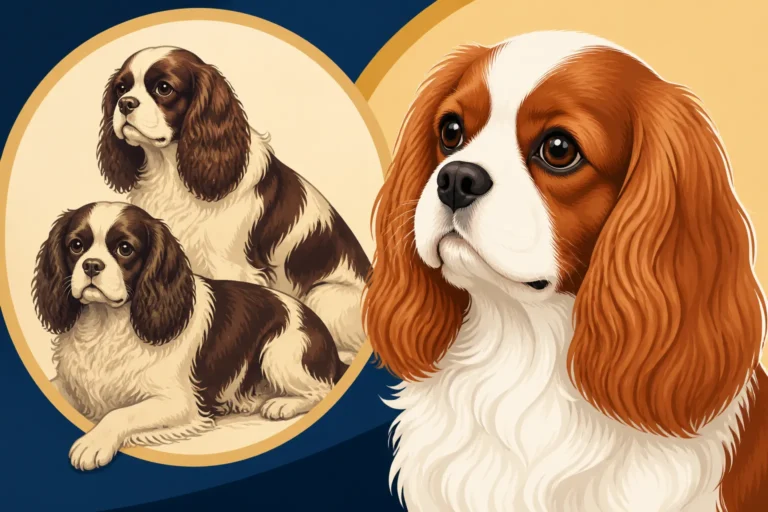
If you trace the Cavalier's lineage back to the toy spaniels beloved by royalty like King Charles II, you'll see dogs with quite pronounced muzzles. These were working little dogs, originally, even if their main job became warming laps in draughty castles. Their muzzles were proportionate to their skulls, allowing for efficient breathing, plenty of space for teeth, and good eyesight unhindered by excessive facial folds or extreme eye prominence. Imagine a small sporting spaniel – that's closer to the original blueprint. They had a functionality to their face that served them well, whether they were hunting tiny birds or simply enjoying a cuddle. The gentle slope from forehead to nose was natural, not a sudden, abrupt stop. This original conformation allowed them to live active, healthy lives without many of the respiratory issues that would later plague similar breeds with altered facial structures.
The Influence of Breeding Trends and the "Flat Face" Era
Fast forward to the 19th and early 20th centuries, and breeding trends took a significant turn for many toy breeds. The fashion leaned towards flatter faces, rounded skulls, and prominent eyes – traits often seen in breeds like the Pug or the Pekingese. In an attempt to achieve a more "toy-like" or "exotic" appearance, the ancestors of today’s Cavaliers, known then simply as King Charles Spaniels or English Toy Spaniels, were often outcrossed with these brachycephalic breeds. This resulted in a marked shortening of the muzzle, a more domed skull, and larger, rounder eyes.
This aesthetic shift, while appealing to some at the time, inadvertently introduced a host of health problems. The shortened muzzles meant less room for teeth, often leading to dental overcrowding and disease. The altered skull shape often left insufficient space for the brain, contributing to conditions like Syringomyelia and Chiari Malformation in Cavaliers. Breathing became more labored for some, and the prominent eyes were more vulnerable to injury and conditions like dry eye. It was a clear case of aesthetics trumping function and health, a frustration many breed enthusiasts grapple with when looking at the historical context of dog breeding.
Roswell Eldridge and the Movement to Restore the Longer Muzzle
Thankfully, not everyone was on board with the extreme shortening of the muzzle. An American named Roswell Eldridge, visiting England in the 1920s, was dismayed to find that the beautiful, longer-nosed toy spaniels depicted in historical paintings were virtually extinct. He saw a gap, a loss of the original form and function that he so admired. To address this, he offered prize money at Crufts dog show for the "old type" of King Charles Spaniel, specifically describing dogs with longer muzzles and flatter skulls, reminiscent of the dogs from the time of King Charles II.
This initiative sparked a movement, leading to the eventual formation of a separate breed club and the development of the Cavalier King Charles Spaniel we know today. The very creation of the breed was a deliberate attempt to move away from the extremely short-faced variety and restore some of the more moderate features of their ancestors. Eldridge's vision was instrumental in preserving the health and vitality of these dogs by emphasizing a more functional facial structure. This historical context is vital when considering The Cavalier's Longer Muzzle and Flatter Skull and understanding why breeders committed to the breed's health still strive for it.
Deciphering the Breed Standard: What "Moderately Short" Really Means
When you look at the official breed standard for the Cavalier King Charles Spaniel, you'll often encounter phrases like "moderately short muzzle." This isn't just a vague descriptor; it carries specific meaning and implications that set the Cavalier apart from other brachycephalic (short-nosed) breeds and underscore the breed's commitment to health and function. It can be confusing because "short" can be interpreted in many ways, but in the context of the Cavalier, it means a distinct middle ground.
Beyond Just a Measurement: Proportion and Balance
The key to understanding the Cavalier muzzle isn't just a number in inches, but rather the overall proportion and balance of the head. The standard emphasizes that the muzzle should be "moderately short," but also well-tapered and "without coarseness." What does that mean in practice? It means the muzzle should blend smoothly into the skull, not appear tacked on or squashed. It should be long enough to allow for good breathing, and the nostrils should be open and wide, not pinched.
Think of it this way: a healthy Cavalier's muzzle should be long enough that you can easily imagine its original spaniel purpose. It should never be so short that its nose leather touches its forehead or that its upper lip struggles to cover its teeth. There should be a distinct "stop"—the indentation where the muzzle meets the forehead—but it shouldn't be so deep or abrupt as to create a flat or pushed-in appearance. It's about elegance and functionality working together.
The Importance of a Defined Stop and Jaw Structure
A defined, but not exaggerated, stop is crucial. This refers to the indentation between the eyes, where the forehead meets the muzzle. In Cavaliers, this stop should be moderate, contributing to their soft, melting expression without being so dramatic that it squashes the nasal passages. You want to see a clear transition, but not a vertical wall.
Equally important is the jaw structure. The standard calls for a "perfect, regular and complete scissor bite," where the upper teeth closely overlap the lower teeth and are set square to the jaws. For this to happen, there needs to be enough bone and space in the muzzle. When a muzzle is too short, the teeth become crowded, rotated, or misaligned, which is a major red flag for health. You should be able to imagine a neat row of teeth, not a jumble. The jaw should be strong and capable of holding the tongue entirely within the mouth, without it lolling out.
Common Misconceptions About the Cavalier Muzzle
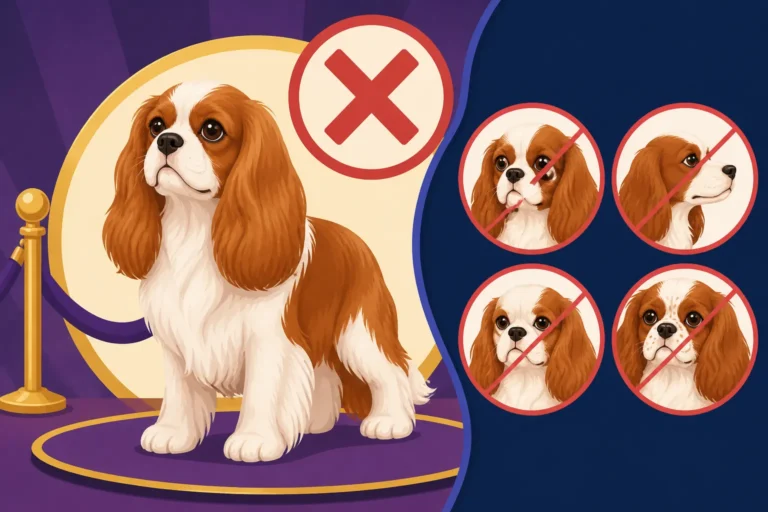
One of the biggest misconceptions is that a Cavalier should have a "flat face" or be extremely "brachycephalic" like a Pug or a French Bulldog. This is absolutely not the case. The Cavalier is not a brachycephalic breed in the same extreme sense as those breeds. While their muzzles are shorter than, say, a Cocker Spaniel, they are explicitly not meant to be flat-faced. The term "brachycephalic" refers to a range of skull shapes, and while Cavaliers technically fall into a mild form, they should never exhibit the severe respiratory or dental issues associated with extreme brachycephaly.
Another misconception is that any Cavalier with a slightly longer muzzle is somehow "incorrect." On the contrary, a slightly longer, proportionate muzzle is usually an indication of better health and adheres more closely to the spirit of the breed standard, which prioritizes balance and function. It's about finding that sweet spot of moderation that Eldridge fought so hard to re-establish. The standard is a guideline for an ideal healthy dog, not an instruction manual for creating extreme features.
| Feature | Ideal Cavalier Muzzle Description (per Breed Standard) | What it is NOT | Health Implication |
|---|---|---|---|
| Length | Moderately short, well-tapered | Flat, squashed, or absent | Breathing, dental health, eye protection |
| Stop | Moderate, defined | Abrupt, deep, or non-existent | Airflow, eye placement, brain space |
| Nostrils | Open, wide | Pinched, narrow, stenotic | Ability to breathe easily, especially in heat |
| Jaw/Teeth | Strong, scissor bite, teeth square to jaws | Crowded, misaligned, undershot/overshot | Dental disease, difficulty eating, pain |
| Overall | Balanced with skull, no coarseness | Heavy, snipy, or lacking definition | General health, breed type integrity |
Why Muzzle Length is More Than Just Aesthetics: Health Implications
It might seem like a small detail, but the length and structure of a Cavalier’s muzzle have profound implications for their overall health and quality of life. As a veteran lifestyle blogger for Cavaliers, I’ve seen firsthand the difference a healthy muzzle makes. It’s not just about looking pretty; it’s about allowing your dog to breathe, eat, and live comfortably.
Breathing and Respiratory Health in Cavaliers
One of the most critical aspects influenced by muzzle length is respiratory health. Dogs primarily regulate their body temperature through panting. A dog with a properly proportioned muzzle has adequate space in its nasal passages and trachea (windpipe), allowing for efficient air intake and cooling. This means they can manage exercise and warmer temperatures much better.
When a Cavalier has a muzzle that is too short, the internal structures of the nose and throat can be compressed. This can lead to Brachycephalic Obstructive Airway Syndrome (BOAS) symptoms, even if not as severe as in extremely flat-faced breeds. Symptoms might include snoring, snorting, reverse sneezing, coughing, and difficulty breathing, especially during exercise or in warm weather. Imagine trying to run a marathon while breathing through a straw – that’s what it can feel like for a dog with an overly shortened muzzle. This puts extra strain on their heart and can exacerbate other common Cavalier health issues like Mitral Valve Disease in the Cavalier King Charles Spaniel. Even minor restrictions can impact a Cavalier's ability to live a full, active life.
Dental Health and a Crowded Jaw
Another major concern with overly short muzzles is dental health. A dog has 42 teeth, and they all need space to grow in properly. When the jawbone is significantly shortened, but the number of teeth remains the same, severe overcrowding is almost inevitable. I’ve seen so many Cavaliers with rotated teeth, teeth growing into each other, or teeth that never fully emerged because there just wasn't enough room. This is a common frustration for Cavalier owners and vets alike.
This crowding creates pockets where food particles and bacteria can easily accumulate, leading to plaque, tartar buildup, gum disease, and ultimately, tooth loss. Dental disease is not just a cosmetic issue; it can lead to serious health problems like infections spreading to the heart, kidneys, and liver. Regular dental care, including brushing with appropriate dog toothbrushes and pastes (you can find great options on Chewy), is essential for all Cavaliers, but even more so for those with crowded mouths. In severe cases, extensive and costly extractions are often necessary, and let me tell you, Cavalier Dental Disease in a Crowded Jaw is no fun for anyone. A Cavalier with a proportionately longer muzzle usually has healthier, less crowded teeth from the start, making preventative care much more effective.
Eye Health and Tear Staining Considerations
The prominence of a Cavalier's eyes is also linked to its muzzle and skull structure. While Cavaliers are known for their large, expressive eyes, an overly shortened muzzle can contribute to eyes that are too prominent or "bug-eyed." This makes them more susceptible to injury, such as corneal abrasions, and conditions like dry eye or cherry eye. When the muzzle doesn't provide enough support or protection, the eyes are left more exposed.
Furthermore, tear staining, particularly noticeable on Blenheim and Ruby Cavaliers, can sometimes be linked to the facial structure. While environmental factors and diet play a role, anatomical issues such as shallow eye sockets or eyelids that don't sit correctly due to changes in skull shape can contribute to excessive tearing and the unsightly red-brown stains. A healthy muzzle helps create a more balanced facial structure, which can, in turn, reduce the likelihood of chronic tear staining and the underlying eye irritation that often accompanies it. Keeping the area around their eyes clean is vital, and products specifically designed for Tear Staining on a White Cavalier Face can be found at places like Chewy.
What to Look For: A Healthy Muzzle for a Happy Cavalier
So, how do you ensure you're looking at a Cavalier with a healthy, well-proportioned muzzle? For prospective owners, it's about being informed and asking the right questions. For current owners, it's about understanding what signs might indicate a problem.
Assessing a Cavalier's Muzzle for Health and Function
When you're looking at a Cavalier, either in person or in photos, take a moment to really observe their muzzle. Here's what to consider:
- Length and Proportion: Does the muzzle appear to be a distinct part of the face, or does it look squashed? It should be long enough to clearly distinguish the nose from the forehead. It shouldn't look as though the nose is directly attached to the skull without any bridge. The length should be roughly 1.5 inches for an adult Cavalier, but more importantly, it should be proportionate to the size of the dog's head. Think of it as having enough "reach."
- Open Nostrils: Are the nostrils wide and open, or do they look pinched and narrow? Pinched nostrils (stenotic nares) severely restrict airflow and are a sign of poor conformation. You should be able to clearly see light through both nostrils.
- Defined Stop: Is there a gentle, moderate indentation between the eyes? It shouldn't be too deep or too shallow.
- Correct Bite: Gently lift the lips to check the teeth. Do they meet in a neat scissor bite? Are they crowded or misaligned? You might not be able to do this with a stranger's dog, but it's something to ask a breeder about.
- Breathing Sounds: Listen to the dog's breathing. Is it quiet and effortless, even after a little activity? Or do you hear snorting, heavy panting, or noisy breaths? Some occasional snorts are normal for many dogs, but constant noisy breathing is not. Pay particular attention to how they sound when they are excited or when the weather is warmer.
- Tongue Position: Does the dog's tongue stay comfortably inside its mouth, or does it loll out frequently? An overly short muzzle can sometimes mean the tongue doesn't fit properly.
A healthy Cavalier should look well put together, with a face that clearly indicates it can breathe and eat without struggle. It’s all about balance and moderation, rather than extremes.
Discussing Muzzle Length with a Reputable Breeder
If you're in the market for a Cavalier puppy, don't be shy about discussing muzzle length with potential breeders. A reputable breeder who prioritizes health will be happy to talk about their breeding goals and how they select parents for good conformation, including muzzle structure. They should be able to show you not only the parents but also photos of previous offspring to demonstrate consistency in their lines.
Ask them how they interpret the breed standard regarding muzzle length. A good answer will focus on proportion, open nostrils, a correct bite, and robust respiratory health, rather than just aesthetics. They should also be able to explain how these traits contribute to the overall well-being of their dogs. Don't be afraid to ask to see Reading a Cavalier Puppy's Health Certificates and information on the parents' health clearances, including cardiac and eye exams, as these are all part of responsible breeding for a healthy dog from nose to tail. Finding a breeder who understands and actively breeds for a proper muzzle is one of the best steps you can take to ensure you bring home a healthy, happy Cavalier.
Disclaimer
This article is for general informational purposes only and does not constitute professional advice. Laws, prices and regulations vary by location and change over time. Consult a qualified professional for guidance on your specific situation.