What Disqualifies a Cavalier in the Show Ring
It’s a truly special experience to stand in the show ring with your beautiful Cavalier King Charles Spaniel, hoping to catch the judge’s eye. But for all the dreams of ribbons and recognition, there’s also the very real possibility of a disqualification. This can be heartbreaking if you've put in countless hours of training and grooming, but it's important to understand that disqualifications aren't arbitrary; they stem from deviations from the breed standard that are considered too significant to overlook. This guide will walk you through the various reasons a Cavalier might be disqualified in the show ring, helping you understand the stringent criteria judges are looking for.
Understanding the Cavalier King Charles Spaniel Standard
Before we dive into what can disqualify a Cavalier, it’s crucial to understand the foundation of all conformation showing: the breed standard. This isn't just a suggestion; it's the blueprint that dictates the ideal physical traits, temperament, and movement for every Cavalier King Charles Spaniel.
Why Standards Exist
Breed standards serve a vital purpose in the world of purebred dogs. Imagine a world where every breeder had their own idea of what a Cavalier should look like. You'd quickly end up with a hodgepodge of sizes, shapes, and temperaments, losing the very essence of what makes a Cavalier a Cavalier. Standards exist to preserve the breed's unique characteristics, ensuring that responsible breeders have a consistent goal to strive for. They are meticulously written documents, detailing everything from the shape of the skull to the set of the tail, the texture of the coat, and even the dog's demeanor. Without these guidelines, the breed would simply drift, losing its identity and potentially its health along the way. When a judge steps into the ring, their entire purpose is to evaluate how closely each dog matches this agreed-upon ideal.
The Role of the AKC Standard
In the United States, the primary authority for breed standards is the American Kennel Club (AKC). The AKC Standard for the Cavalier King Charles Spaniel is the definitive document that every judge, breeder, and serious exhibitor uses. This standard is incredibly detailed, painting a complete picture of the ideal Cavalier. It doesn't just list physical attributes; it also describes the quintessential Cavalier temperament: gay, friendly, non-aggressive, and sporting.
For instance, it will specify the desired head shape, noting a moderate stop and a full, rounded skull. It describes the eyes as large, dark, and round, not protruding. The muzzle should be well-cushioned and taper slightly, but never be snipey or too short. Even the gait is described, looking for a free-moving, elegant stride. Every part of the dog is covered because each element contributes to the overall picture of a healthy, typey Cavalier. Judges use this standard to assess each dog, looking for both minor deviations (faults) and severe departures (disqualifications) from the ideal.
Common Disqualifications in the Show Ring
When a judge is evaluating a Cavalier King Charles Spaniel, they are looking for adherence to the breed standard. Some deviations are considered minor faults that might cost a dog points, while others are so significant that they lead to immediate disqualification.
Size and Weight Deviations
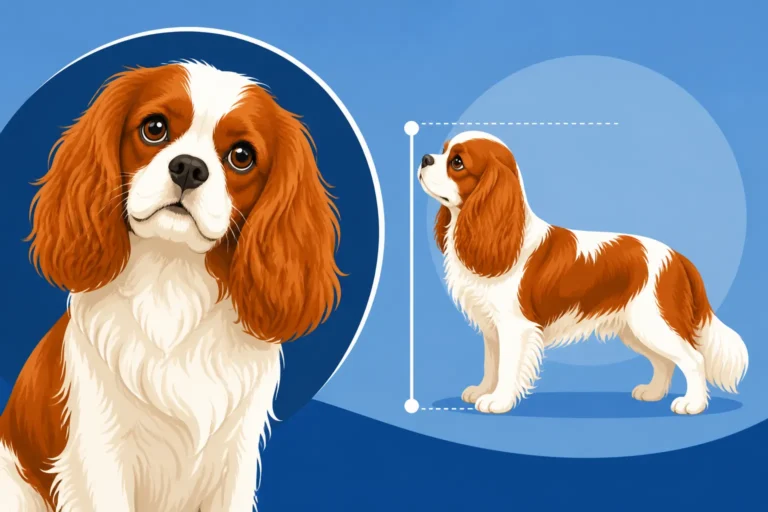
The Cavalier King Charles Spaniel standard specifies a weight range and height for the breed, and straying too far from these can be a serious issue. The ideal weight is typically between 13 and 18 pounds, and the height generally falls between 12 and 13 inches at the shoulder. While there's a little wiggle room, a dog that is significantly outside these parameters is usually disqualified.
Imagine presenting a Cavalier that weighs 25 pounds, or one that barely tips the scales at 8 pounds. These aren't just "big" or "small" dogs; they represent a fundamental departure from the breed's established size and build. A dog that is too large might lose the delicate, elegant qualities expected of a toy spaniel, while one that is significantly undersized could appear frail or lacking substance. The standard is very clear on these points because size impacts everything from the breed's ability to move comfortably to its overall proportion and type. You can learn more about specific measurements in our guide The Twelve to Thirteen Inch Cavalier Standard and What an Adult Cavalier Should Weigh. These guidelines are there to maintain the breed's integrity, ensuring that future generations continue to fit the established ideal.
Missing or Incorrect Dentition
A healthy mouth and correct bite are essential for a Cavalier. The breed standard calls for a scissors bite, where the outer side of the lower incisors just touches the inner side of the upper incisors. All teeth should be present and accounted for. While some minor dental issues might be considered a fault, a severe deviation is a disqualification.
This includes an undershot bite (where the lower jaw extends beyond the upper jaw) or a noticeably overshot bite (where the upper jaw extends significantly over the lower). Beyond bite alignment, missing teeth can also lead to disqualification. If a Cavalier is missing teeth other than those lost due to injury, age, or veterinary extraction, it can indicate a genetic issue that goes against the standard for a healthy, sound dog. Judges will meticulously check the mouth during examination, as dental health and structure are considered indicators of overall health and proper breed type.
Coat and Color Irregularities
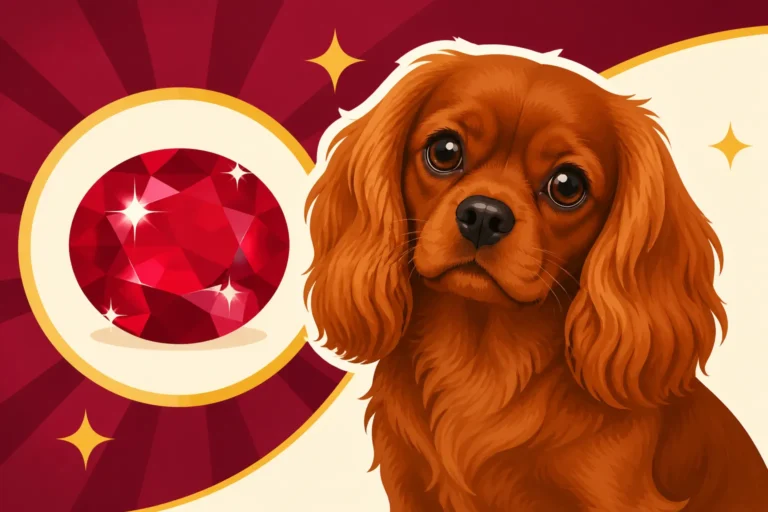
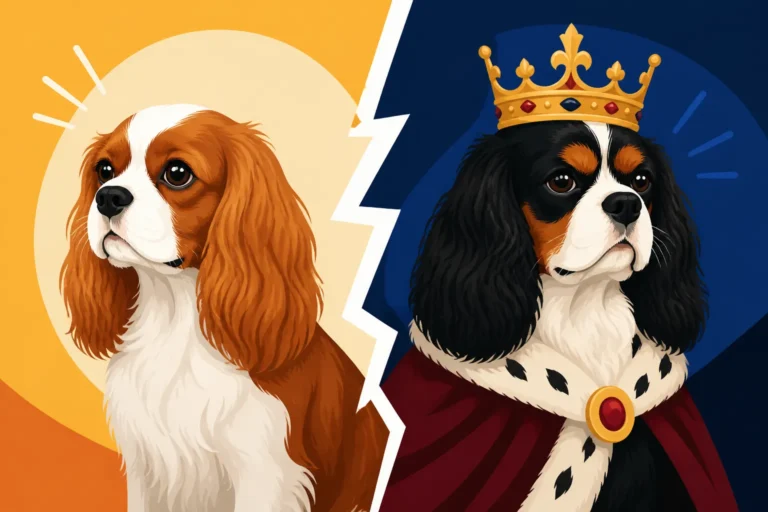
The Cavalier King Charles Spaniel is known for its beautiful, silky coat and its distinct, recognized colors. There are four official colors: Blenheim (chestnut markings on a white ground), Tricolor (black and white with tan markings), Ruby (whole-colored rich red), and Black and Tan (black with tan markings). The Four Cavalier Colors and What They Are Called describes these in detail. Any other color, or a significant deviation in markings, can lead to disqualification.
For example, a Cavalier with merle markings, or one that is solid white, would be immediately disqualified because these colors are not part of the breed's established genetic makeup. Furthermore, for the "whole color" varieties—Ruby and Black and Tan—any white markings are a serious fault, and often a disqualification. While a small white spot on the chest is sometimes allowed as a fault, anything more prominent would be grounds for dismissal. This focus on color purity ensures that breeders are selecting for true-to-type genetics and not introducing colors from other breeds. You can explore Cavalier Colors That Are Not Recognized for more context on unaccepted patterns. Judges are very strict on color, as it’s one of the most visible breed characteristics. The famous "Blenheim Spot" or "Lozenge" on the head of a Blenheim Cavalier is highly desirable but its absence is not a disqualification, thankfully!
Temperament and Behavior Issues
Perhaps one of the most endearing qualities of the Cavalier King Charles Spaniel is its wonderfully sweet, affectionate, and outgoing temperament. The breed standard emphasizes this crucial aspect, describing the ideal Cavalier as "gay, friendly, non-aggressive, and sporting in character." Any significant departure from this ideal in the show ring is taken very seriously, often resulting in disqualification.
Imagine a Cavalier that snaps or attempts to bite the judge during examination. This isn't just poor manners; it's a direct contradiction of the breed's gentle nature. Similarly, extreme shyness, fear, or timidity where the dog cowers or refuses to be examined can also lead to disqualification. While a little ring nervousness is understandable, a dog that cannot be safely and properly evaluated by the judge due to its temperament is considered unsound for exhibition. The show ring is a place for dogs to be assessed confidently and willingly. If a Cavalier exhibits aggressive behavior towards people or other dogs, or if it's so fearful it compromises the safety or flow of the judging process, a disqualification is the judge's responsibility. After all, a Cavalier's true beauty lies not just in its looks, but in its loving and amiable personality, as detailed in Cavalier Temperament and the Sporting Spaniel Beneath It.
Health-Related Disqualifications and Serious Faults
While the show ring primarily evaluates conformation and adherence to the breed standard, it's also a place where a dog's overall health and soundness are on display. Certain health-related issues, particularly those that impact structure, movement, or basic bodily functions, can be grounds for disqualification.
Structural Issues Affecting Movement
A Cavalier King Charles Spaniel should move with a free, elegant, and true gait. Any structural issue that significantly impairs a dog's movement, causing noticeable lameness or a severely abnormal gait, is a serious fault and often a disqualification. Judges watch dogs move around the ring not just for beauty, but for soundness.
For example, severe patellar luxation (slipping kneecaps) that causes obvious hopping or inability to bear weight, or pronounced hip dysplasia that leads to a painful, unnatural movement, would be problematic. While Cavalier Knees, Hips and Joint Problems covers these conditions in depth, in the context of the show ring, it's the visible manifestation of these issues that leads to a DQ. A dog must be able to move freely and soundly to demonstrate its fitness for function and breed type. Judges are trained to spot any signs of lameness, stiffness, or imbalance, as these indicate a departure from the ideal healthy structure. Surgeries to correct these issues, if visible or impacting natural gait, can also be a point of concern.
Ear and Eye Anomalies
The eyes and ears are critical features of the Cavalier King Charles Spaniel, contributing significantly to their soft, melting expression and overall breed type. Any serious anomaly or artificial alteration to these features can result in disqualification.
For the eyes, conditions like severe entropion (eyelids rolling inward) or ectropion (eyelids rolling outward) that significantly affect vision or cause constant irritation might be disqualifying, especially if surgically corrected in a way that is evident. Blindness, whether partial or complete, is also typically a disqualification. We cover many conditions in Cavalier Eye Disease From Dry Eye to Cataracts. Regarding ears, the standard calls for long, heavily feathered, high-set ears. Any surgical alteration of the ears (like cropping) is a definite disqualification, as it goes against the natural presentation of the breed. Judges will carefully examine these areas for any signs of disease, injury, or human intervention that alters the natural appearance and function as described by the standard.
Undescended Testicles in Males
This is a very common disqualification across many dog breeds, and the Cavalier King Charles Spaniel is no exception. For male dogs, the breed standard explicitly requires two apparently normal testicles fully descended into the scrotum. If one or both testicles are not present in the scrotum (a condition known as cryptorchidism or monorchidism), the dog will be disqualified from competition.
This is considered a serious genetic fault, as it can be hereditary and impact a dog's reproductive health. Judges will always perform a manual check to confirm the presence of both testicles during their examination. This isn't about fertility or breeding potential in the ring itself, but about adherence to the physiological standard of a healthy, intact male of the breed. It's a clear-cut rule with no room for interpretation, making it one of the most straightforward disqualifications a judge can make.
The Judge's Discretion and Fault vs. Disqualification
Navigating the nuances of a dog show can be tricky, especially understanding the difference between a "fault" and a "disqualification." It's not just about what is wrong with the dog, but how severely it deviates from the breed standard.
Understanding Faults
A "fault" is a deviation from the breed standard that affects a dog's placement in the ring but does not remove it from competition entirely. Faults are ranked in severity, from minor to major, and a judge will weigh these faults against a dog's virtues to determine its overall quality and how closely it embodies the ideal Cavalier.
For instance, a Cavalier might have ears that are slightly lower set than ideal, or a tail that is carried a bit too gaily over the back, rather than just above the topline. Perhaps its muzzle is a little too short, or its coat lacks the desired heavy feathering. These are all examples of faults that would cause a judge to place a dog lower in its class compared to a dog with fewer or less severe faults. It's a matter of degree. A Blenheim Cavalier might have a smaller, less distinct "lozenge" than another, which would be a fault, but not a disqualification. Our article Where a Show Cavalier Loses Points delves into specific faults judges look for. Judges are constantly balancing these imperfections with a dog's strengths, trying to find the one closest to perfection.
Judge's Role and Perspective
The judge's role is critical. They are experts in the breed standard, and they apply their knowledge and experience to evaluate each dog. While disqualifications are generally black and white – a dog either has two descended testicles or it doesn't, for example – faults require more interpretation. A judge must decide if a Cavalier's slightly rounder eye is a minor fault or a more serious one, based on their understanding of the standard and the context of the other dogs in the ring.
This is why different judges can place the same dog differently on different days. It's not about personal preference, but about how they interpret and prioritize aspects of the standard. Their perspective is honed through years of studying the breed, observing many examples, and understanding the function and aesthetics the standard strives for. They look at the dog holistically, but always with the breed standard as their unwavering guide.
Preparing for the Ring (Beyond Disqualifications)
Even if your Cavalier is perfectly sound and adheres to all the non-disqualifying aspects of the standard, success in the show ring requires significant preparation. It's not enough to simply have a well-bred dog; you must present it to its best advantage.
This means meticulous grooming, ensuring your Cavalier's silky coat is free of mats, clean, and shining. Tools like a good slicker brush and metal comb, perhaps from a selection you'd find on Chewy, are essential for maintaining that beautiful feathering. You'll want to pay close attention to the ears and paw feathering. Cavalier Grooming Costs Every Six to Eight Weeks highlights the investment in this area. Beyond grooming, ring training is paramount. Your Cavalier needs to learn to stand attentively for examination, gait gracefully at your side, and project confidence and happiness. A well-trained and well-presented Cavalier, even one with a few minor faults, will always make a better impression than a structurally perfect dog that is unruly or poorly kept. It's about showcasing the dog's inherent qualities with grace and professionalism, allowing the judge to appreciate its virtues without distraction.
| Disqualification Category | Example Reason for DQ |
|---|---|
| Size/Weight | Significantly over/under standard (e.g., 25 lbs or 8 lbs) |
| Dentition | Severely undershot/overshot bite, missing teeth (not due to injury/age) |
| Color/Markings | Unrecognized coat color (e.g., merle), white markings on whole colors |
| Temperament | Aggression towards judge/others, extreme shyness preventing examination |
| Structural/Movement | Obvious lameness, severe deformities, or surgical alterations |
| Eye/Ear | Blindness, severe entropion/ectropion (especially if surgically altered), cropped ears |
| Male Anatomy | One or both testicles not descended into scrotum |
Disclaimer
This article is for general informational purposes only and does not constitute professional advice. Laws, prices and regulations vary by location and change over time. Consult a qualified professional for guidance on your specific situation.