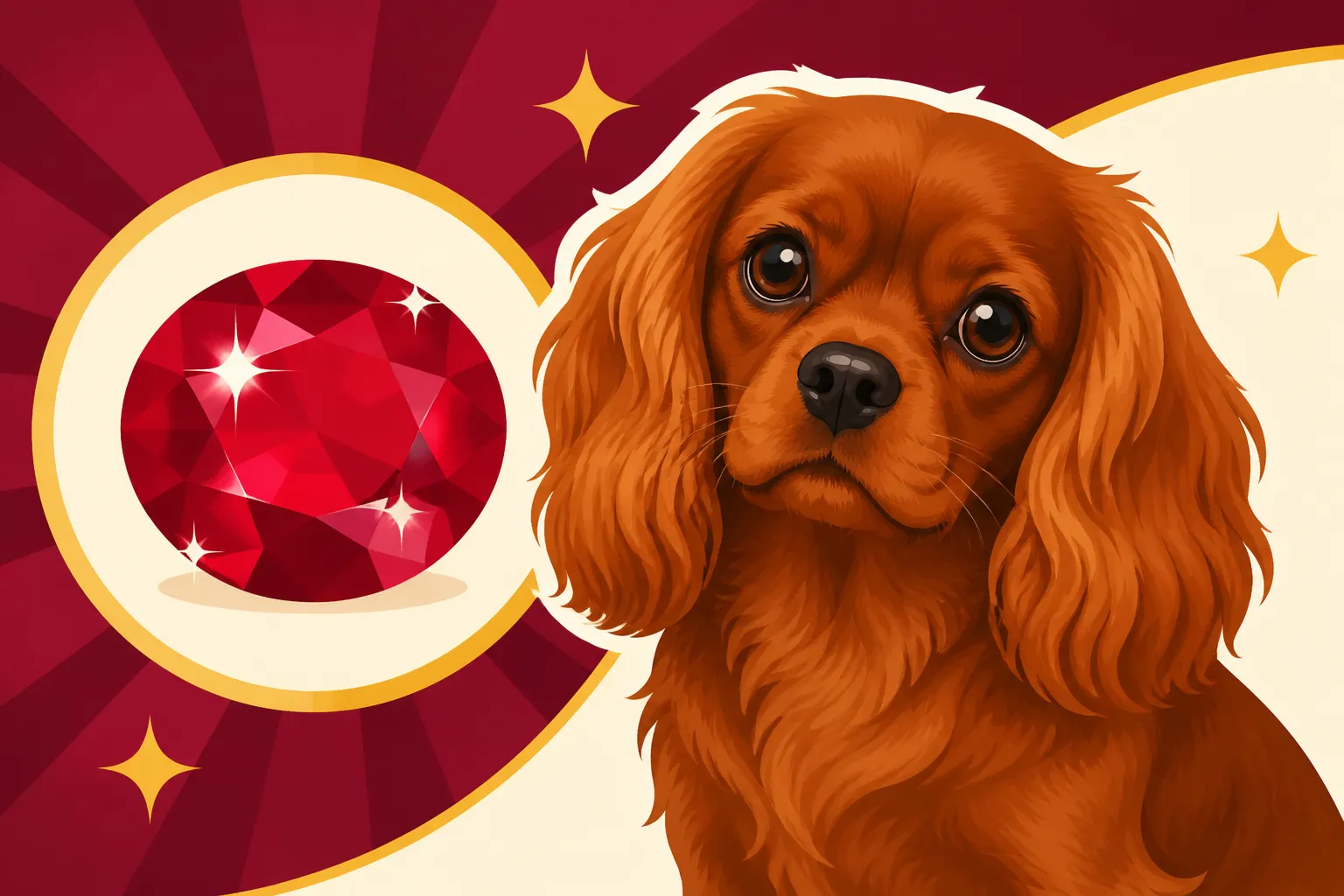
How Rare a Ruby Cavalier Is
When you set out to find your perfect Cavalier King Charles Spaniel, it's so easy to get fixated on a specific look or color. Many prospective owners, enchanted by their rich, solid red hue, find themselves wondering just how rare a Ruby Cavalier truly is. It can feel like you see countless Blenheims or Tricolors, but those striking Ruby coats seem to pop up less often, leading to the natural question of their availability and if that means they come with a higher price tag or a longer wait. This guide aims to demystify the perceived rarity of Ruby Cavaliers, shedding light on their place within the breed's color palette and what you should truly prioritize when searching for your new furry family member.
Understanding the Cavalier's Four Recognized Colors
Before we dive into the specifics of Ruby Cavaliers, it's really important to understand the full spectrum of colors recognized for our beloved Cavaliers. The breed standard, which guides reputable breeders and judges in conformation shows, clearly defines four distinct color varieties. These aren't just arbitrary preferences; they're an integral part of what makes a Cavalier a Cavalier, each with its own charm and history. When you're dreaming of bringing a Cavalier home, knowing these distinctions can really help you appreciate the beauty in each variation and understand why some might seem less common than others.
The Defined Cavalier Color Palette
The American Kennel Club (AKC) and other major kennel clubs worldwide recognize four official colors for the Cavalier King Charles Spaniel. These are Blenheim, Tricolor, Black and Tan, and Ruby. Each one has a specific description that breeders strive to meet, from the distribution of patches to the intensity of the base coat. It’s not just about what looks pretty; it's about adhering to the heritage and characteristics of the breed. If you've ever seen a Blenheim Cavalier with its distinctive chestnut markings, or a bold Tricolor with its black, white, and tan, you start to see how unique each palette is.
The most commonly seen color, Blenheim, is a beautiful pearly white with rich chestnut markings, often featuring the famous "Blenheim spot" or lozenge on the top of the head. Then there's the Tricolor, which has a black and white base coat with tan markings, usually over the eyes, on the cheeks, and under the tail. Black and Tan Cavaliers are elegant with a glossy black coat and tan markings in similar areas to the Tricolor. And finally, the Ruby, the focus of our discussion, is a solid, rich red color without any white markings. Knowing these categories is the first step in understanding The Four Cavalier Colors and What They Are Called and appreciating the subtle differences that make each one special.
What Makes a Ruby Cavalier a "Whole Color"?
The term "whole color" in the Cavalier world specifically refers to Ruby and Black and Tan Cavaliers. Unlike the Blenheim and Tricolor, which are "parti-colors" due to their distinct patches of color on a white background, whole colors are solid in their base hue. For a Ruby Cavalier, this means a completely solid, rich red coat. There should be no white patches, spots, or markings anywhere on their body. This solid coat is what truly defines What Makes a Ruby Cavalier a Whole Color and sets them apart visually from their parti-colored cousins.
Sometimes, a Ruby Cavalier might have a few stray white hairs on its chest or toes, which is generally not ideal in the show ring but perfectly normal for a beloved pet. However, a significant white blaze or chest patch would technically make them mis-marked for a true Ruby, pushing them outside the strict definition for showing. This emphasis on a solid coat is a genetic trait, and responsible breeders work to produce puppies that consistently adhere to these color standards. It’s not just about aesthetics; it’s about maintaining the distinct categories recognized for the breed.
The Perceived "Rarity" of Ruby Cavaliers
It's a common observation among Cavalier enthusiasts: you often see more Blenheims than Rubies. This can certainly give the impression that Ruby Cavaliers are rare, and in some respects, they are less common in terms of sheer numbers. However, "rarity" isn't always about genetic improbability; it's often more about breeding preferences, historical popularity, and even what captures the public eye. Let's unpack why Ruby Cavaliers might seem less prevalent and what that truly means for prospective owners.
Breeding and Population Dynamics
The perceived rarity of Ruby Cavaliers isn't because the gene for a solid red coat is inherently difficult to produce. Instead, it often comes down to breeding choices and the relative popularity of other colors. Historically, the Blenheim color has been closely associated with the breed's origins at Blenheim Palace and remains incredibly popular, sometimes dominating breeding programs. When breeders focus heavily on one color, the populations of other colors naturally become smaller. It's a matter of supply and demand, influenced by what potential puppy buyers are asking for and what breeders are actively aiming to produce.
Furthermore, some breeders might focus on multiple colors, but even within those programs, the genetic outcomes aren't always evenly distributed. Predicting Cavalier Colors From the Parents involves understanding the complex interplay of dominant and recessive genes. While a responsible breeder can make educated guesses about what colors a litter might produce, there's always an element of genetic lottery. If a breeder has a strong Blenheim line, they might simply produce more Blenheims, or if they have a line that produces all four colors, the numerical split in a given litter might just favor the parti-colors. This doesn't make Rubies 'rare' in a biological sense, but rather less numerous in the general population.
Demand, Visibility, and "Designer" Dog Perceptions
Another factor contributing to the perception of rarity is demand and visibility. Blenheim Cavaliers are frequently seen in media, advertisements, and are often the "poster dogs" for the breed. This high visibility can create a self-fulfilling prophecy, where more people seek out Blenheims, leading more breeders to focus on them, thus making other colors less visible. Ruby Cavaliers, while stunning, don't always get the same spotlight.
It's also worth noting that some individuals might mistakenly associate "rarity" with "designer" dog trends or assume it implies a healthier or more unique dog. In the world of purebred Cavaliers, all four colors are equally purebred and should be equally healthy if bred responsibly. The color of a Cavalier's coat has absolutely no bearing on its temperament, health predispositions, or intelligence. Whether Coat Color Changes a Cavalier's Price is a topic often influenced by perceived rarity, but reputable breeders will price puppies based on their health, conformation, and lineage, not just color. While a specific color might command a slightly longer waitlist due to fewer breeders focusing on it, the actual genetic rarity isn't why it feels harder to find.
Here's a quick comparison of the recognized Cavalier colors:
| Color | Description | Markings | Perceived Rarity (General Observation) |
|---|---|---|---|
| Blenheim | Pearly white with chestnut red patches | Clear patches, Blenheim spot | Most Common |
| Tricolor | Black and white with tan markings | Tan points over eyes, cheeks | Common |
| Black & Tan | Solid black with tan markings | Tan points over eyes, cheeks | Less Common |
| Ruby | Solid rich red | No white markings | Least Common |
Finding a Ruby Cavalier
So, if Ruby Cavaliers aren't "rare" in a genetic sense but are less commonly seen, what does that mean for you if your heart is set on one? It primarily means you might need to be more proactive in your search and prepared for a potentially longer wait. Finding a healthy, well-socialized Cavalier of any color should be your top priority, but with a specific color preference, a little extra planning goes a long way.
Connecting with Reputable Breeders
The absolute best way to find a Ruby Cavalier is to connect with reputable breeders who prioritize health, temperament, and adherence to the breed standard. Don't just look for "Ruby Cavalier puppies for sale" on any website; really dig into a breeder's practices. Ask them directly about their experience with Ruby lines and how often they produce Ruby puppies. Some breeders might specialize in whole colors, while others might produce all four. It's all about doing your homework.
When you're speaking with breeders, ask about their health testing protocols, especially for common Cavalier ailments like Mitral Valve Disease in the Cavalier King Charles Spaniel and Syringomyelia and Chiari Malformation in Cavaliers. A truly ethical breeder will be transparent about their dogs' health clearances, regardless of coat color. They should be able to provide documentation for their breeding dogs, including heart, eye, patella, and DNA clearances. This commitment to health is far more important than any specific color. You can often find great foundational information on puppy care and essential items for your new arrival on sites like Chewy, which can help prepare you, no matter the color of your pup.
The Importance of Patience and Flexibility
If a Ruby Cavalier is truly what you desire, patience is going to be your biggest asset. Reputable breeders often have waiting lists, and if you're looking for a specific color, that wait might be extended. Avoid any breeder who promises immediate availability of a specific color without proper health screening or who seems eager to sell without asking you questions about your home and lifestyle. These can be red flags. Remember that waiting a few extra months for a well-bred, healthy puppy is always worth it in the long run.
Sometimes, being a little flexible can also open up possibilities. While you might have your heart set on a Ruby, perhaps a Black and Tan might also appeal if they share that solid coat elegance. Keep an open mind, and remember that the personality and health of the individual puppy should always outweigh a specific aesthetic preference. After all, the joy of a Cavalier comes from their loving nature, not just their coat color.
Beyond Color: What Truly Matters
It's completely natural to have a color preference when you're dreaming of a new puppy. That rich, beautiful Ruby coat is undeniably captivating. However, as a veteran lifestyle blogger for Cavaliers, I cannot stress enough that focusing too much on color can distract from what truly makes a Cavalier a wonderful companion: their health, temperament, and how well they fit into your family.
Prioritizing Health and Temperament
The Cavalier King Charles Spaniel is a breed known for its loving, gentle nature, but also, unfortunately, for certain prevalent health conditions. Mitral Valve Disease (MVD) and Syringomyelia (SM) are significant concerns within the breed. A responsible breeder will prioritize breeding healthy dogs, regardless of their coat color. This means rigorous health testing for the parent dogs, including regular cardiac screenings by a board-certified cardiologist and MRI scans for Syringomyelia. You can read more about The Heart Testing a Cavalier Breeder Must Do and Getting a Cavalier Scanned for Syringomyelia to understand the depth of commitment required.
A healthy puppy from parents with clear health records is the best foundation for a long, happy life together. A beautiful Ruby coat won't make up for a dog suffering from chronic pain or severe heart issues. Similarly, temperament is crucial. You want a Cavalier with the sweet, outgoing, and affectionate nature the breed is famous for. Whether Cavalier Color Affects Temperament is a common question, and the answer is a resounding no – temperament is influenced by genetics, early socialization, and environment, not coat pigment. When you're looking for puppy food or treats for any Cavalier, even a beautiful Ruby, places like Chewy offer a fantastic selection, but the quality of the breeder always comes first.
The True Cost of a "Rare" or "Cheap" Cavalier
The concept of rarity can sometimes be manipulated by less scrupulous breeders or puppy mills to justify higher prices or push sales. Be wary of anyone claiming a particular color is "rare" and therefore significantly more expensive. While a slightly longer waiting list for a less common color like Ruby is understandable, an exorbitant price solely based on color is a red flag. On the flip side, be extremely cautious of "cheap" Cavaliers, especially if they are a specific color that seems hard to find. A low price often indicates that corners have been cut on health testing, proper nutrition, or socialization, leading to significant heartache and vet bills down the line.
The initial price of a puppy is just a fraction of the lifelong cost of owning a Cavalier. Investing in a puppy from a reputable, health-testing breeder means you're investing in a potentially healthier dog, which can save you immeasurable emotional and financial stress over the years. Remember that a truly dedicated breeder, regardless of the color they specialize in, will emphasize health testing for all their puppies, whether they're Blenheim, Tricolor, Black and Tan, or Ruby. You can often find great resources on puppy care and essential supplies, like durable chew toys or comfortable beds, on sites like Chewy, which can help prepare you for any color of Cavalier. For daily grooming needs, from brushes to ear cleaners, you'll find everything you need, perhaps even some special treats for your Ruby pup, at online retailers like Chewy.
Ultimately, while the striking solid red of a Ruby Cavalier is undeniably beautiful and might feel "rare" because you see fewer of them, their true value lies not in their coat color, but in their intrinsic Cavalier qualities: their sweet disposition, their affectionate nature, and the care taken by their breeder to ensure their health. Pursue your Ruby dream, but let health, temperament, and responsible breeding be your guiding stars.
Disclaimer
This article is for general informational purposes only and does not constitute professional advice. Laws, prices and regulations vary by location and change over time. Consult a qualified professional for guidance on your specific situation.