Getting a Cavalier Scanned for Syringomyelia
The moment you suspect something might be wrong with your beloved Cavalier, especially when you see those tell-tale signs of discomfort, it can be truly terrifying. The thought of a serious neurological condition like Syringomyelia is enough to send any devoted Cavalier parent into a spiral of worry and uncertainty. This guide is here to walk you through the often daunting process of getting your Cavalier scanned for Syringomyelia, shedding light on what to expect, how to prepare, and what the results might mean for your furry family member.
Understanding Syringomyelia in Cavaliers Before the Scan
Before diving into the specifics of an MRI, it's really helpful to grasp what Syringomyelia (SM) actually is and why it's such a common, heartbreaking concern for Cavalier King Charles Spaniel owners. It’s not just a fancy medical term; it’s a physical reality that can cause significant pain and impact your dog's quality of life.
What is Syringomyelia and Chiari-like Malformation?
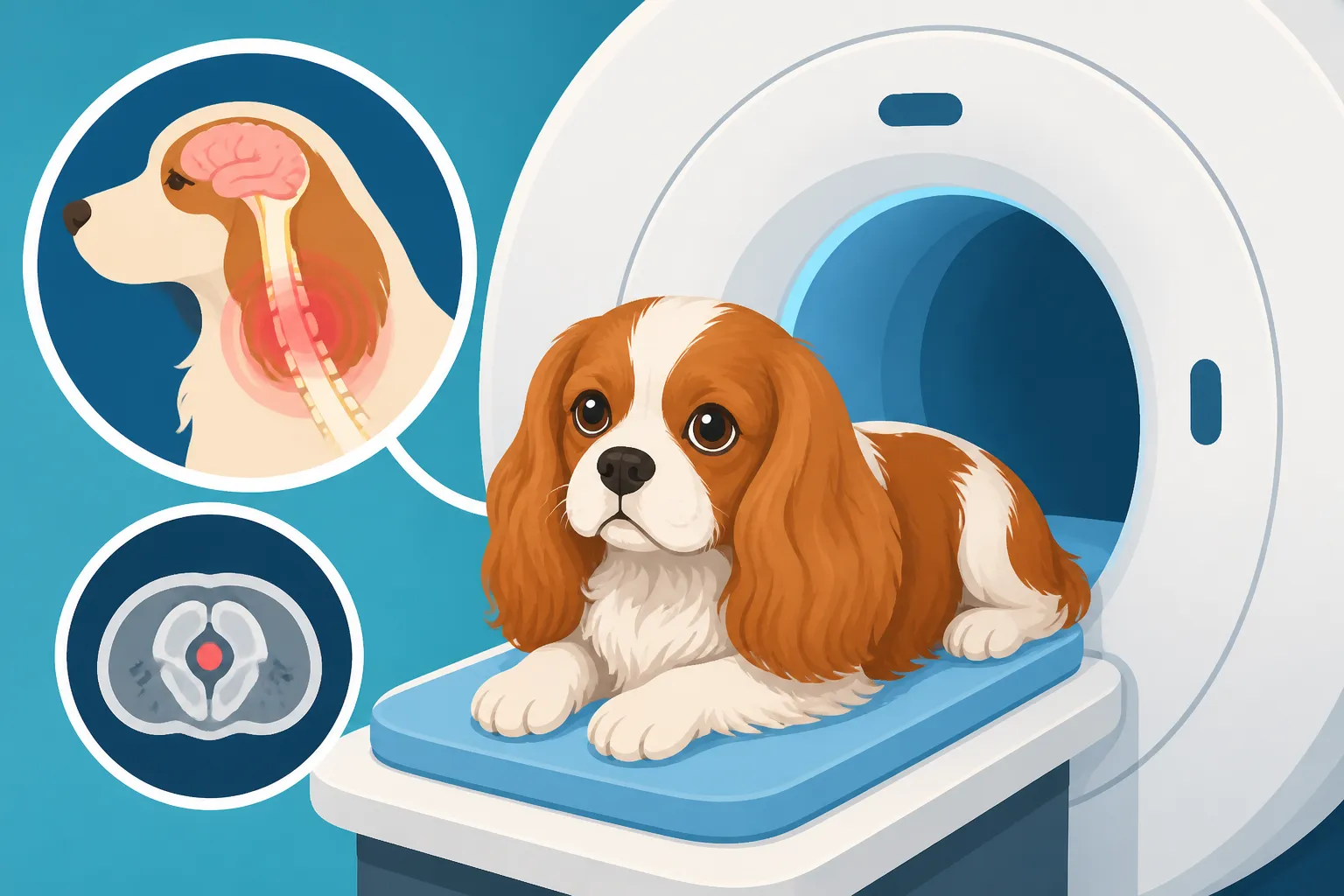
At its heart, Syringomyelia (SM) is a neurological condition where fluid-filled cavities, called syrinxes, form within the spinal cord. These syrinxes develop because of an underlying structural problem in most Cavaliers: Chiari-like Malformation (CM). Imagine your Cavalier's skull, designed for a different era, now struggling to contain a modern brain. In CM, the skull is often too small for the brain, causing the cerebellum (the back part of the brain) to push through the opening at the base of the skull, blocking the normal flow of cerebrospinal fluid (CSF). This blockage causes pressure changes, and over time, it can lead to the formation of those painful syrinxes in the spinal cord.
It's a lot to take in, isn't it? The condition is inherited, which is why it's so prevalent in our Cavaliers. It's not something you did wrong; it's a genetic predisposition that makes their unique skull shape a double-edged sword – charmingly cute, but sometimes functionally problematic. Many dogs have CM, but not all develop SM. The severity of the syrinx is what dictates the symptoms and pain level. If you want to really dig into the mechanics of it, our detailed guide on Syringomyelia and Chiari Malformation in Cavaliers is an excellent resource.
Recognizing the Warning Signs
Identifying SM can be tricky because the signs can vary so much, and sometimes they're subtle. The most classic symptom, and one that often sends owners scrambling for answers, is "phantom scratching" or "air scratching." This is when your Cavalier frantically scratches at their shoulder, neck, or ear area, but doesn't actually make contact with their skin. They might yelp, cry, or even fall over during these episodes. It's not an itch they can relieve, but a neurological sensation of pain or discomfort. It's a truly heartbreaking thing to witness, and often the first warning sign.
But it's not just scratching. Keep an eye out for other indicators of pain: a reluctance to be touched on the head or neck, yelping when picked up, sensitivity around the ears, or holding their head in an unusual position (like sleeping with their head raised). Some Cavaliers might become withdrawn, stop playing, or refuse to jump on furniture or use stairs. They might even develop scoliosis, a curvature of the spine, as the syrinxes grow. These subtle behavioral changes are often the first clues that something deeper is going on. Our article Air Scratching as a Cavalier's First Warning Sign delves deeper into these specific behaviors.
Why a Scan is the Definitive Diagnostic Tool
Given the varied and sometimes vague symptoms, how do you know for sure it's SM and not just an ear infection or allergies? This is where the MRI scan becomes absolutely essential. A physical exam, no matter how thorough, can only go so far. A vet can observe symptoms, check for pain responses, and rule out other common issues like ear mites or skin irritations. However, they cannot see inside the spinal cord. The syrinxes and the Chiari-like Malformation are invisible to the naked eye and traditional X-rays.
An MRI provides a detailed, cross-sectional view of the brain and spinal cord, allowing veterinary neurologists to visualize the specific anatomical abnormalities. It’s the gold standard for diagnosing SM because it clearly shows the presence, size, and location of any syrinxes, as well as the extent of the Chiari-like Malformation. Without this detailed imaging, you’re often left guessing, and guessing with something as serious as SM can delay crucial pain management and treatment. This diagnostic clarity is invaluable for forming an accurate treatment plan.
Preparing for Your Cavalier's MRI Scan
The idea of your beloved Cavalier undergoing an MRI can feel overwhelming. There are so many questions that pop up: How do I even start? What if they have other health issues? What should I ask the specialists? Let's break down the practical steps to make this process as smooth as possible for both you and your Cavalier.
The Referral Process: From Vet to Neurologist
The journey to an MRI usually begins with your primary care veterinarian. If you’ve noticed any of the concerning signs we discussed, your vet will likely perform a thorough physical and neurological exam. They might rule out common issues like ear infections or dental pain, but if their suspicions point towards a neurological problem, they will recommend a referral to a board-certified veterinary neurologist. This specialist has advanced training and equipment specifically for diagnosing and treating conditions of the brain and spinal cord.
Don't be shy about asking your vet for a referral if you feel it's necessary. It's your right to advocate for your dog's health. Once referred, the neurologist's office will typically contact you to schedule an initial consultation. During this visit, they'll review your Cavalier's history, perform their own specialized neurological exam, and discuss the probability of SM, outlining why an MRI is the next logical step. They'll also explain the costs involved, which can be significant, so don't hesitate to ask for a detailed estimate.
Pre-Scan Health Checks and Anesthesia Considerations
An MRI requires your Cavalier to be completely still, which means general anesthesia. This can be a major concern for many owners, especially if your Cavalier is older or has other health issues. Before any anesthesia, the veterinary team will perform a series of pre-anesthetic checks. This usually includes bloodwork to assess organ function (liver and kidneys), a urinalysis, and potentially chest X-rays or an electrocardiogram (ECG) to evaluate heart health. For Cavaliers, given their predisposition to heart disease, a thorough cardiac evaluation is especially important. Our article on Anesthesia Risk in a Cavalier With a Murmur offers more insights into this specific concern.
The veterinary neurologist and anesthesiologist (yes, many specialized centers have them!) will carefully tailor an anesthetic protocol specifically for your Cavalier, taking into account their age, weight, and any pre-existing conditions. Modern veterinary anesthesia is incredibly safe, with continuous monitoring by trained professionals during the entire procedure. They'll monitor heart rate, respiratory rate, blood pressure, oxygen saturation, and temperature. Don't hesitate to voice your concerns; a good vet team will be happy to explain every step and reassure you. This is also a good time to consider pet insurance, if you don't already have it. Companies like Healthy Paws can be a lifesaver when unexpected, costly diagnostics like an MRI come up.
What to Ask Your Vet and Neurologist
When facing a potentially serious diagnosis and a big procedure like an MRI, it's easy to feel overwhelmed and forget your questions. It helps to write them down beforehand. Here are some key questions you should consider asking your primary vet and the veterinary neurologist:
| Category | Questions to Ask |
|---|---|
| Diagnosis | What are the odds this is Syringomyelia? Are there other possibilities? |
| What is the success rate of the MRI in identifying SM? | |
| Procedure | What specific areas will the MRI scan cover (brain, full spine, etc.)? |
| What are the risks of anesthesia for my Cavalier, given their health? | |
| Who will be monitoring my Cavalier during anesthesia? | |
| How long will the procedure take, including recovery? | |
| Cost | Can I get a detailed estimate of all costs involved (scan, anesthesia, consultation, interpretation)? |
| Do you offer payment plans or work with pet insurance providers like Healthy Paws? | |
| Results | How long until we get the MRI results? |
| How will the results be communicated to me? | |
| What are the potential next steps or treatment options based on the results? | |
| Follow-up | What kind of post-scan care will my Cavalier need? |
| What should I watch for after they come home from anesthesia? |
Asking these questions empowers you with information and helps you feel more in control during a stressful time. A clear understanding of the process and potential outcomes can significantly reduce anxiety.
What Happens During a Cavalier Syringomyelia MRI
Knowing what actually happens inside that mysterious MRI machine can help demystify the process and ease some of your worries. It’s a very specialized procedure, and understanding the steps involved highlights why it’s the best tool for an SM diagnosis.
The Anesthesia Protocol and Monitoring
As mentioned, an MRI requires your Cavalier to be perfectly still, so general anesthesia is unavoidable. When your Cavalier arrives at the clinic for their scan, they will first undergo a final pre-anesthetic check by the veterinary team. They'll have an intravenous (IV) catheter placed, which is used for administering anesthetic drugs and IV fluids throughout the procedure to maintain hydration and blood pressure.
Once sedated, your Cavalier will be intubated (a tube placed in their windpipe) to ensure a clear airway and allow for the delivery of anesthetic gas and oxygen. Throughout the entire MRI scan, a dedicated veterinary technician or anesthesiologist will be monitoring your dog's vital signs continuously. This includes heart rate, respiratory rate, blood pressure, oxygen saturation, temperature, and even CO2 levels. They use specialized equipment to keep a close eye on these parameters, making adjustments to the anesthesia as needed to ensure your Cavalier's safety and comfort. This meticulous monitoring is standard practice for any animal undergoing anesthesia, especially for longer imaging procedures like an MRI.
The MRI Machine and Scan Process
The MRI (Magnetic Resonance Imaging) machine itself looks much like a human MRI – a large, tube-like structure. Unlike X-rays or CT scans, MRI uses a powerful magnetic field and radio waves to create incredibly detailed images of soft tissues, like the brain and spinal cord. It doesn't use radiation, which is another benefit. Your Cavalier will be carefully positioned on a specialized table, often with custom padding and restraints, to ensure they are comfortable and aligned correctly within the machine's bore.
The team will focus on imaging the specific areas of concern, primarily the brain (especially the hindbrain where CM occurs) and the cervical (neck) spinal cord, as this is where syrinxes most commonly form due to the obstruction of CSF flow. The machine will make various knocking and whirring sounds as it takes different sequences of images. Each sequence provides different information about tissue characteristics. This process can take anywhere from 30 minutes to an hour or more, depending on the number of areas scanned and the complexity of the case.
Imaging the Brain and Spinal Cord
During the MRI, the veterinary neurologist or radiologist is looking for very specific things. In the brain, they're assessing the degree of Chiari-like Malformation (CM). They're looking to see if the cerebellum is herniating (pushing) through the foramen magnum (the opening at the base of the skull) and if there's any compression of the brainstem. This is critical because CM is the primary driver of SM. Our article What Chiari Malformation Does to a Cavalier Skull provides a deep dive into this aspect.
In the spinal cord, the focus shifts to identifying syrinxes. These appear as bright, fluid-filled cavities within the spinal cord tissue. The images will show their exact location, their length, and crucially, their width. The width of a syrinx often correlates with the severity of a Cavalier's pain and neurological symptoms. The neurologist will also look for any other spinal cord anomalies or diseases that could be mimicking SM, ensuring a comprehensive diagnosis. The goal is to get a complete picture of your Cavalier's neurological health to guide the best possible treatment plan.
Deciphering the MRI Results and Next Steps
Once the scan is complete, the images are reviewed and interpreted by the veterinary radiologist or neurologist. This is often the most anxious wait for owners, but receiving clear answers is the first step towards relief and a treatment plan.
Understanding Syrinx Width and Location
The neurologist will explain the findings of the MRI, often showing you the images. The key things they’ll be highlighting are the presence, size, and location of any syrinxes. Syrinx width is often a significant indicator of potential pain levels and prognosis. A wider syrinx generally correlates with more severe symptoms, as it indicates greater pressure and damage to the spinal cord. Syrinxes are most commonly found in the cervical (neck) region, but they can extend further down the spinal cord.
It's important to remember that some Cavaliers can have small syrinxes and show no clinical signs, while others with seemingly modest syrinxes can be in significant pain. The neurologist will integrate the imaging findings with your Cavalier's clinical symptoms to determine the best course of action. This holistic view is essential. You might be interested in our article Syrinx Width and Cavalier Pain Levels to learn more about this correlation.
Discussing Chiari-like Malformation Severity
Alongside the syrinxes, the neurologist will also discuss the severity of the Chiari-like Malformation (CM). They’ll explain how much the cerebellum is herniating and whether there’s compression of the brainstem, which directly impacts the flow of cerebrospinal fluid. This understanding is crucial because it helps explain why the syrinxes have formed. The extent of the CM doesn't always directly correlate with the severity of SM symptoms; some Cavaliers with severe CM might have minimal syrinxes and discomfort, while others with less obvious CM might have painful syrinxes.
The good news is that understanding the CM and syrinx formation together gives the veterinary team a complete picture. This allows them to predict how certain treatments, especially surgical interventions aimed at relieving pressure, might help. Without the MRI, this foundational understanding of the root cause would be impossible.
The Initial Diagnosis and Treatment Options
Upon receiving the diagnosis of Syringomyelia, your neurologist will discuss the various treatment options available. The approach will depend entirely on the severity of the syrinxes, the presence and intensity of your Cavalier's pain, and any other neurological deficits.
Treatment typically starts conservatively with medication. The primary goal is pain management and reducing inflammation and fluid pressure. This often involves drugs like Gabapentin for nerve pain, anti-inflammatory medications, and sometimes diuretics to help reduce CSF production. Lifestyle modifications, such as avoiding neck collars in favor of harnesses, are also usually recommended to minimize pressure on the sensitive neck area. Our article Pain Relief for a Cavalier With Syringomyelia offers more detail on these medical approaches.
In more severe cases, or if medication is no longer effective in controlling pain and improving quality of life, surgery might be considered. This typically involves a foramen magnum decompression, which aims to create more space at the back of the skull and restore normal CSF flow. This is a complex surgery, and it's not without risks or significant cost. You can learn more about this option in Surgery for Cavalier Syringomyelia.
Living with a Cavalier Diagnosed with Syringomyelia
A diagnosis of Syringomyelia is a life-altering event for both you and your Cavalier. It changes how you approach their care, but it absolutely doesn't mean the end of a happy life. It simply means a new chapter of dedicated management and love.
Managing Pain and Quality of Life
The cornerstone of living with an SM-diagnosed Cavalier is effective pain management. Your neurologist will work closely with you to find the right combination and dosage of medications to keep your Cavalier comfortable. Gabapentin is a very common starting point for neuropathic pain, and many Cavaliers respond well to it. However, it's often a process of trial and error to find what works best. This might also involve non-steroidal anti-inflammatory drugs (NSAIDs) or even stronger pain medications if needed. You can read more about specific drugs in Gabapentin for a Cavalier With Neck Pain.
Beyond medication, lifestyle adjustments are crucial. This means using a harness instead of a neck collar to avoid pressure on the cervical spine, which can exacerbate pain. Consider a raised food and water bowl to prevent your dog from lowering their head excessively. Provide soft bedding and ensure they have a comfortable, quiet place to rest. Avoid activities that trigger pain, such as rough play, jumping, or long periods of standing. Sometimes, even small changes can make a world of difference in their daily comfort and overall quality of life. Our guide on Harnesses Instead of Collars for a Cavalier is particularly useful here.
Ongoing Monitoring and Support
Living with SM is an ongoing journey that requires regular check-ups with your neurologist. They will monitor your Cavalier's response to medication, adjust dosages as needed, and assess for any progression of the disease. Sometimes, repeat MRI scans are recommended, typically several months or a year after the initial diagnosis and treatment, to see if the syrinxes have changed in size or if the surgery (if performed) has been successful in alleviating pressure.
Finding support is also incredibly important. Online forums and Cavalier-specific social media groups are invaluable resources where you can connect with other owners managing SM. Sharing experiences, tips, and emotional support can make the journey feel less isolating. These communities often have a wealth of practical advice, from dietary considerations to comfortable bedding options, and can provide the understanding only another SM owner can truly offer.
Financial Considerations for SM Treatment
Let's be realistic: an SM diagnosis comes with significant financial implications. The initial MRI scan, as you’ve likely discovered, is a substantial expense. But that's just the beginning. Long-term medication, regular vet and neurologist visits, potential follow-up scans, and possibly surgery can all add up quickly. This is where pet insurance can be an absolute game-changer.
Companies like Healthy Paws, or similar providers, can help mitigate these costs significantly, but there's a catch: you usually need to have coverage in place before a diagnosis. Once a condition like SM is noted in your Cavalier's medical records, it becomes a pre-existing condition and typically won't be covered by new policies. If you have pet insurance already, make sure you understand your policy's coverage limits, deductibles, and reimbursement rates for chronic conditions and specialist care. Budgeting for these ongoing costs is essential, and many owners find that setting aside an "SM fund" or discussing payment plans with their veterinary office can help manage the financial strain.
The Broader Implications of Syringomyelia Scanning
While a scan is a deeply personal decision for your Cavalier, the practice of scanning also has broader implications for the Cavalier King Charles Spaniel breed as a whole, influencing everything from breeding practices to owner education.
The Role of Scans in Responsible Breeding
Responsible Cavalier breeders are acutely aware of the prevalence of Syringomyelia and Chiari-like Malformation in the breed. MRI scanning plays a critical role in ethical breeding practices. Breeders often scan their breeding dogs, usually around the age of two to three years and then again at five years, to assess their CM and SM status. The goal is to avoid breeding dogs with severe CM or SM, thereby reducing the likelihood of passing these conditions to their offspring.
While it's not a perfect science (as CM and SM are complex, polygenic traits), breeding protocols, such as those recommended by organizations like the Cavalier King Charles Spaniel Club, strongly advocate for MRI screening. This helps breeders make informed decisions to improve the health of future generations. If you're considering a Cavalier puppy, asking to see the MRI results of both parents is a non-negotiable step to ensure you're supporting a breeder who genuinely cares about the long-term health of their puppies. You might find our article The Cavalier MVD Breeding Protocol also covers important health testing in breeding Cavaliers.
Why Not Every Cavalier Needs a Scan
This might seem contradictory given everything we've discussed, but it's important to understand that not every Cavalier King Charles Spaniel necessarily needs an MRI scan. Scanning is a significant investment of time, money, and involves general anesthesia, which always carries some degree of risk.
So, when is it truly necessary? An MRI is strongly recommended when a Cavalier is showing clinical signs consistent with SM, such as phantom scratching, yelping when touched, neck pain, or changes in gait. It's also vital for breeding dogs to help inform breeding decisions. However, if your Cavalier is completely asymptomatic, living a happy, pain-free life, and not intended for breeding, the decision to scan is much less clear. Some owners opt for it for peace of mind, while others prefer to wait until symptoms appear. It's a discussion to have with your trusted vet and perhaps a neurologist, weighing the risks and benefits against the cost and your Cavalier's individual situation. Our guide Whether Every Cavalier Should Be Scanned provides a more in-depth exploration of this dilemma.
Advocating for Your Cavalier
Ultimately, as a Cavalier owner, you are your dog's primary advocate. The journey of getting a diagnosis for Syringomyelia, and then managing the condition, requires you to be informed, proactive, and persistent. Don't be afraid to ask questions, seek second opinions if you're not comfortable, and thoroughly research the condition. Equip yourself with knowledge about Cavalier-specific health issues, including Cavalier Eye Disease From Dry Eye to Cataracts or Cavalier Knees, Hips and Joint Problems, as Cavaliers are prone to a range of inherited health challenges.
Being an advocate also means being honest with your veterinary team about your observations, no matter how small they seem. You know your Cavalier best, and your insights are invaluable in piecing together the puzzle of their health. With the right diagnostic tools, a dedicated veterinary team, and your unwavering love and care, your Cavalier can live a full and comfortable life, even with a diagnosis like Syringomyelia.
Disclaimer
The information provided in this article is for general informational purposes only and is not a substitute for professional veterinary advice, diagnosis, or treatment. Always seek the advice of your veterinarian or other qualified animal health provider with any questions you may have regarding a medical condition.