Whether Cavalier Color Affects Temperament
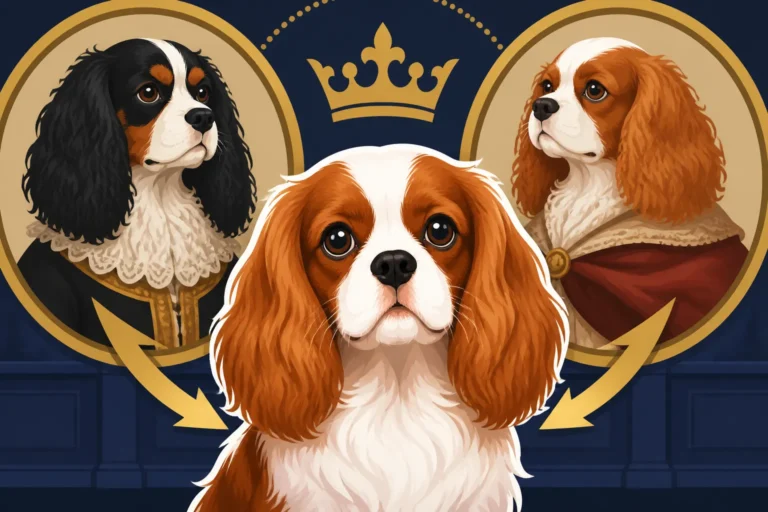
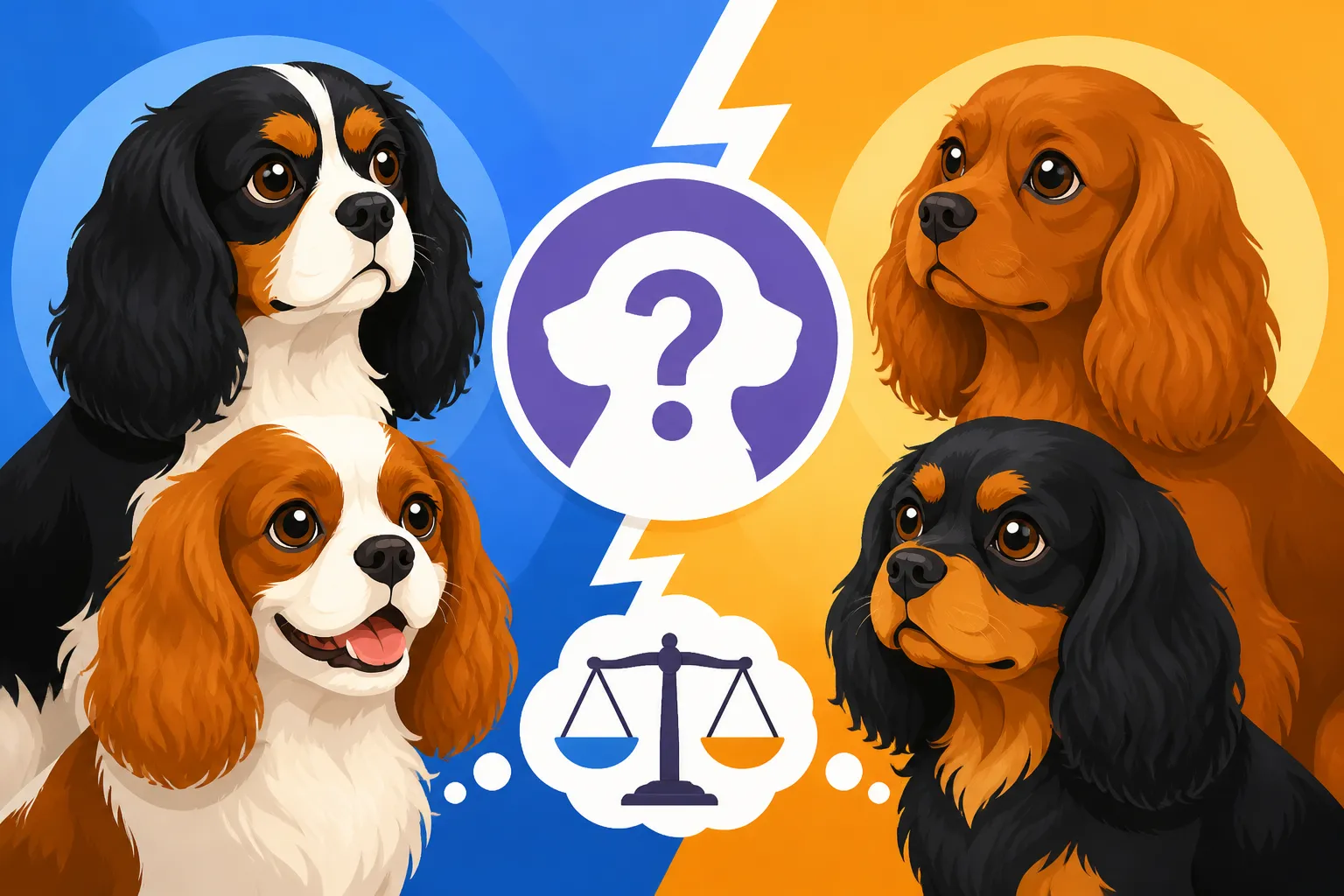
It’s a question many prospective Cavalier King Charles Spaniel owners ponder: does the coat color of these adorable dogs actually influence their personality or temperament? It’s a natural curiosity, especially when you see the distinct differences between a Blenheim, Tricolor, Ruby, or Black and Tan Cavalier. You might hear whispers from other owners or read anecdotal accounts suggesting that one color is calmer, another more mischievous, or yet another more prone to a particular trait. The idea that a dog's outward appearance could hint at its inner character is an intriguing one, and it's completely understandable why you'd want to dig deeper into whether there's any truth to it before welcoming a new furry family member. This guide will explore the reality behind these perceptions and help you understand what truly shapes a Cavalier’s cherished disposition.
Understanding Cavalier Temperament as a Whole
Before we even begin to dissect whether color plays a role, it’s vital to understand the foundational temperament of the Cavalier King Charles Spaniel as a breed. These dogs are celebrated for their affectionate, gentle, and eager-to-please nature, regardless of their beautiful markings. They were bred for centuries as companion animals, designed to be loving lap dogs, and those traits are deeply ingrained in their genetic makeup across all color variations.
The "Merry" and Adaptable Nature
Cavaliers are often described as "merry" dogs, a term that truly captures their joyful and friendly spirit. They greet most people and other animals with wagging tails and an open heart, making them wonderful additions to diverse households. This inherent friendliness is a hallmark of the breed, a consistent thread that runs through Blenheims, Tricolors, Rubies, and Black and Tans alike. They thrive on companionship and are known for their profound devotion to their families, often earning them the nickname Why Cavaliers Are Called Velcro Dogs. Their adaptable nature means they can be equally happy living in an apartment or a large house, as long as they are close to their human companions.
Their sweet disposition makes them generally patient with children and other pets, provided they've been properly socialized. A well-bred and well-raised Cavalier, regardless of its color, will typically exhibit this gentle and agreeable demeanor. It's this overarching breed standard for temperament that truly defines a Cavalier, far more than any superficial characteristic like coat hue.
Sporting Spaniel Roots and Instincts
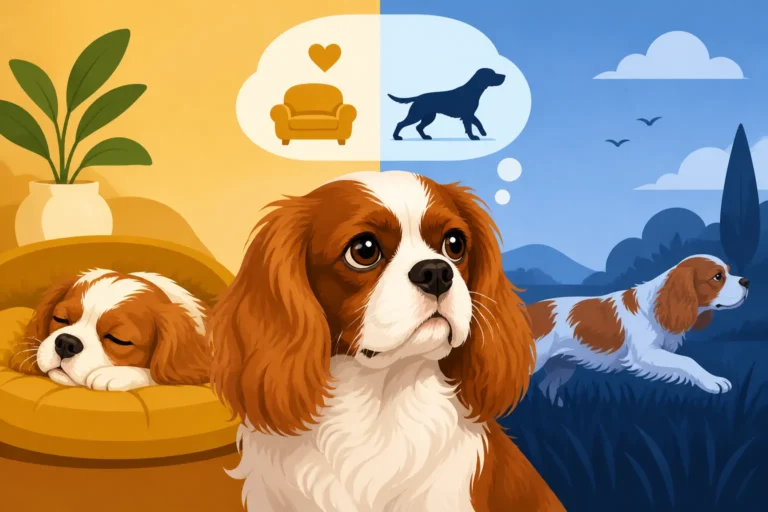
While modern Cavaliers are primarily companion dogs, it's important to remember their origins as sporting spaniels. This heritage means they still retain certain instincts from their ancestors, which can manifest as a love for chasing squirrels in the park or a keen interest in scents on a walk. This is part of Cavalier Temperament and the Sporting Spaniel Beneath It. These instincts are not tied to color but rather to their historical purpose as flushing birds for hunters.
You might notice your Cavalier, whether it's a rich Ruby or a classic Blenheim, suddenly fixating on a bird in the garden or showing surprising bursts of speed when a rabbit darts by. This isn't a personality quirk specific to a certain color; it's a shared genetic echo of their past. Even with their companionable nature, they enjoy moderate exercise and opportunities to explore with their noses, satisfying these ancient spaniel drives.
The Genetic Reality of Coat Color and Behavior
The scientific consensus is quite clear: in the vast majority of dog breeds, including the Cavalier King Charles Spaniel, coat color genes are distinct from temperament genes. While it's tempting to draw a connection, the evidence simply doesn't support the idea that a specific pigment directly controls personality traits.
Genes for Color vs. Genes for Temperament
Let’s talk a little bit about genetics without getting too bogged down in science jargon. Think of a dog’s DNA as a massive instruction manual. There are specific pages in that manual dedicated to eye color, ear set, leg length, and yes, coat color. Separately, there are other pages, often completely unrelated to those physical traits, that influence neurological development, brain chemistry, and behavioral predispositions – what we perceive as temperament.
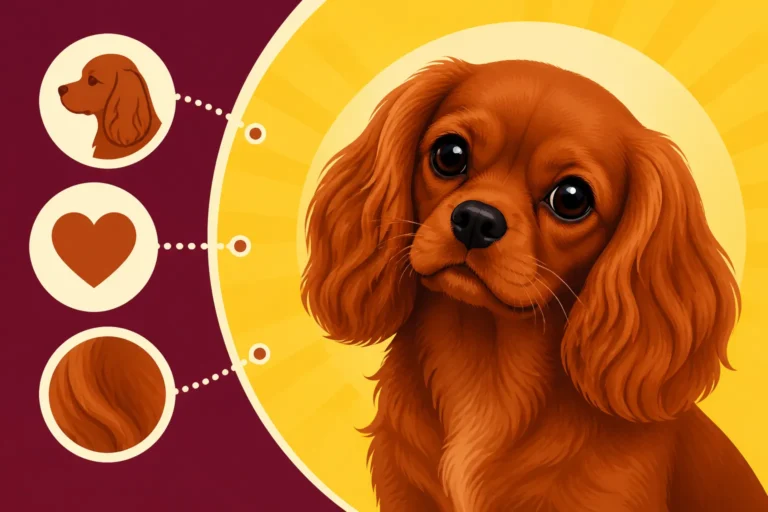
In Cavaliers, the genes that determine whether a puppy will be a Blenheim (chestnut and white), Tricolor (black, white, and tan), Ruby (solid red), or Black and Tan are simply about pigment distribution. They don't carry codes for "more timid" or "extra playful." While some studies in other species (like certain wild foxes or laboratory mice) have shown links between melanin production (which affects coat color) and neurotransmitters that influence behavior, these are rare and highly specific instances, and certainly not generally applicable to domestic dogs, especially in a breed as genetically diverse for color as the Cavalier. Whether a Cavalier Puppy's Color Changes relates to how the genes express themselves as they mature.
Why the Perception Exists
So, if there's no direct genetic link, why do people often have strong opinions or anecdotal experiences about certain Cavalier colors having different temperaments? There are several very plausible reasons for this widespread perception.
Firstly, selective breeding practices can inadvertently create these associations. A breeder might, for example, have a specific line of Blenheim Cavaliers that happens to be exceptionally calm. If they consistently breed from this line, future Blenheims from their kennel might indeed exhibit calmer traits, but it's due to the temperament selection of the parent dogs, not their color. Another breeder might specialize in Rubies and happen to have a more energetic line. Over time, these observations can lead to generalizations about the entire color group, even though the temperament correlation is with the specific bloodline, not the color itself.
Secondly, our own human biases play a role. If someone has a particularly shy Black and Tan Cavalier, they might unconsciously seek out other shy Black and Tans, reinforcing their belief. Conversely, if they've had a boisterous Ruby, they might attribute that energy to the color rather than the dog's individual personality, upbringing, or specific lineage. We tend to remember things that confirm our existing beliefs.
Finally, less reputable breeders or puppy mills might exploit these perceptions. If a certain color is perceived as "rarer" or "more desirable," they might market dogs of that color with exaggerated claims about temperament, further muddying the waters. Always remember to ask for The Cavalier Heart and MRI Papers to Ask For and focus on health clearances, regardless of color.
Nurture, Socialization, and Health: True Temperament Influencers
Instead of focusing on coat color, understanding the real drivers of a Cavalier's temperament involves looking at a combination of genetics from proven healthy lines, early experiences, ongoing training, and their overall health. These are the elements that truly mold the sweet, companionable dogs we cherish.
The Breeder's Role in Early Socialization
An ethical, responsible breeder is absolutely critical to a Cavalier puppy's temperament, far more than its color. The first 8-12 weeks of a puppy's life are a foundational period for socialization. A good breeder ensures that puppies are raised in a stimulating, loving home environment, exposed to various sights, sounds, people, and other friendly animals. This gentle exposure helps them develop into confident, well-adjusted adults.
Puppies from a quiet, isolated environment, regardless of their beautiful coat color, may be more prone to fear or shyness. Conversely, puppies from a bustling, enriching home will likely be more outgoing and resilient. A breeder’s careful selection of parent dogs based on their temperament (calm, friendly, outgoing) also plays a monumental role, as these traits are heritable. You should always ask about the temperament of both parents and interact with them if possible. This is a far better indicator than any color.
Early Life Experiences and Training
Once a Cavalier puppy comes home, its experiences with you become the next major influence on its temperament. Consistent, positive reinforcement training, early Socializing a Cavalier Puppy Gently with a variety of people, places, and appropriate doggy friends, and a stable home environment are paramount. A Blenheim puppy that receives extensive socialization and gentle training will likely grow up to be confident and friendly. A Ruby puppy that is neglected or exposed to harsh training methods might become fearful or reactive, regardless of its color.
The investment of time and effort in a puppy's early months, providing enrichment toys (you can find a fantastic selection on Chewy, for instance) and consistent boundaries, will shape their personality. This ongoing learning and positive reinforcement are what helps a Cavalier become Whether a Cavalier Is an Easy First Dog for many owners.
Health as a Factor in Behavior
One often-overlooked aspect that can significantly impact a Cavalier's temperament is their health. A dog in pain or discomfort, regardless of its coat color, is far less likely to be "merry" or "adaptable." Cavaliers are prone to certain health conditions, notably Mitral Valve Disease (MVD) and Syringomyelia (SM).
A Cavalier experiencing chronic pain from Syringomyelia and Chiari Malformation in Cavaliers might become withdrawn, irritable, or even snap when touched in certain areas. Similarly, a dog struggling with heart failure, exhibiting a persistent cough or tiring easily, might seem less energetic or enthusiastic. These behavioral changes are direct responses to physical ailments, not inherent personality traits linked to their color. If a Cavalier suddenly shows a change in temperament, a vet visit to rule out underlying health issues is always the first step. You'd be surprised how much discomfort can alter a dog's general demeanor.
Debunking Common Color-Based Stereotypes
Let's tackle some of the common stereotypes you might hear about specific Cavalier colors. It's easy for these myths to circulate, but it's important to approach them with a healthy dose of skepticism and remember what we've just discussed about genetics and environment.
Blenheim Temperament Myths
Blenheims, with their classic chestnut and white markings, are often seen as the quintessential Cavalier. You might hear people say they are the "calmest" or "most traditional" in temperament. While many Blenheims are indeed calm and lovely, this perception likely stems from their historical prominence and the sheer number of Blenheims in the breed population. Because they are so common, there's a higher chance of encountering many well-adjusted Blenheims, leading to the generalization.
However, a Blenheim from a high-energy line or one that hasn't received proper socialization can be just as boisterous or anxious as any other color. The charming "lozenge" on a Blenheim's forehead, sometimes called the "Kissing Spot" or "Duchess Thumb Print," is a genetic trait of the Blenheim color pattern and has absolutely no bearing on whether that individual dog enjoys a quiet cuddle or a vigorous romp.
Tri-Color and Black & Tan Personalities
Tricolors (black, white, and tan) and Black and Tans are often rumored to be more "feisty" or "independent" than their Blenheim or Ruby counterparts. Again, this is not supported by genetic science. It's more likely a product of smaller gene pools or specific breeding lines that might have inadvertently emphasized certain personality traits. Some breeders, perhaps having fewer Tricolors or Black and Tans, might have focused more on show qualities, leading to less consistent temperament selection in the past.
However, many owners of Tricolor and Black and Tan Cavaliers will tell you their dogs are just as affectionate, cuddly, and devoted as any other color. These dogs, with their striking dark coats, possess the same inherent desire for companionship and the same potential for trainability. Any perceived independence is far more likely due to individual personality, early training, or perhaps a slightly stronger echo of their spaniel hunting instincts.
Ruby Red Quirks
Ruby Cavaliers, with their beautiful solid red coats, sometimes get labeled as "more energetic" or "more mischievous." This might be because a vibrant red color is often associated with energy or passion in human culture. You might even find toys or beds in a matching ruby red shade on Chewy, feeding into that aesthetic. However, a Ruby Cavalier's energy levels are determined by its genetic lineage (are its parents and grandparents known for being active?), its individual personality, and how much exercise and mental stimulation it receives, not by its coat color.
I've known Rubies who were absolute couch potatoes, content to nap the day away, and Blenheims who were perpetual motion machines, always ready for a game. It really boils down to the individual dog. When looking at Predicting Cavalier Colors From the Parents, you're examining the genetics for pigmentation, not for hyperactivity. A Ruby can be just as calm and gentle as any other Cavalier if bred and raised with care.
In summary, while the different colors of Cavaliers are undeniably beautiful and give each dog a unique appearance, they are essentially cosmetic differences. The core temperament of a Cavalier King Charles Spaniel – their sweetness, affection, and desire for companionship – is a breed-wide characteristic, shaped by centuries of selective breeding for these very qualities. Focus on finding a puppy from health-tested parents with excellent temperaments, and one that has been raised in a nurturing environment, and you'll find a wonderful companion regardless of its coat color.
| Factor Affecting Temperament | Influence on Cavalier Temperament | Not Influenced By Color |
|---|---|---|
| Genetic Predisposition | Inherited traits from parents (e.g., calmness, confidence, anxiety) | Yes |
| Early Socialization | Exposure to varied sights, sounds, people, other animals (0-12 weeks) | Yes |
| Nurturing Environment | Loving home, consistent routine, positive experiences | Yes |
| Training & Handling | Positive reinforcement, consistent boundaries, enrichment | Yes |
| Health Status | Absence of pain, discomfort, or chronic illness | Yes |
| Individual Personality | Unique quirks that emerge regardless of other factors | Yes |
| Coat Color | Pigmentation of fur, aesthetic appearance | No |
Disclaimer
This article is for general informational purposes only and does not constitute professional advice. Laws, prices and regulations vary by location and change over time. Consult a qualified professional for guidance on your specific situation.