Why a Cavalier Is Grouped as a Toy
It's quite common for new Cavalier King Charles Spaniel owners, or even those just admiring the breed, to feel a bit of a disconnect when they hear the "spaniel" part of their name but then see them grouped squarely in the "Toy" category. You might picture a spaniel bounding through fields, yet your Cavalier seems perfectly content nestled on your lap. This guide will unravel the fascinating history and distinct characteristics that firmly plant the Cavalier in the Toy Group, explaining exactly why this classification makes perfect sense for our sweet, charming companions.
Understanding the Toy Group: More Than Just Small Size
When we talk about dog breed classifications, like those recognized by kennel clubs, the "Toy Group" isn't just a casual descriptor for small dogs. It's a specific designation with historical roots and a defined purpose. These aren't miniature versions of working dogs; they were bred to be companions, lap dogs, and comforters. Their primary "job" has always been to bring joy and affection to their human families.
Historically, throughout Europe and Asia, smaller dogs were prized by nobility and royalty for their charming dispositions and manageable size. They provided warmth on cold laps, companionship in grand estates, and sometimes even acted as "flea catchers" in less sanitary times. They weren't expected to herd sheep, guard property, or retrieve game. Their value lay in their ability to be constant, devoted companions, fitting perfectly into the intimate spaces of human life. This focus on companionship, rather than utility, is the bedrock of the Toy Group. It means that while a Cavalier might share the "spaniel" heritage in its lineage, its ultimate purpose and development diverged significantly from its larger, working cousins centuries ago.
Think about the sheer variety within the Toy Group today. You have everything from the spirited Chihuahua to the elegant Papillon, and our beloved Cavalier fits right in. What unites them isn't just their stature, but this shared history of being bred for the singular, beautiful purpose of being human companions.
The Cavalier's Physical Traits: Perfectly Suited for the Lap
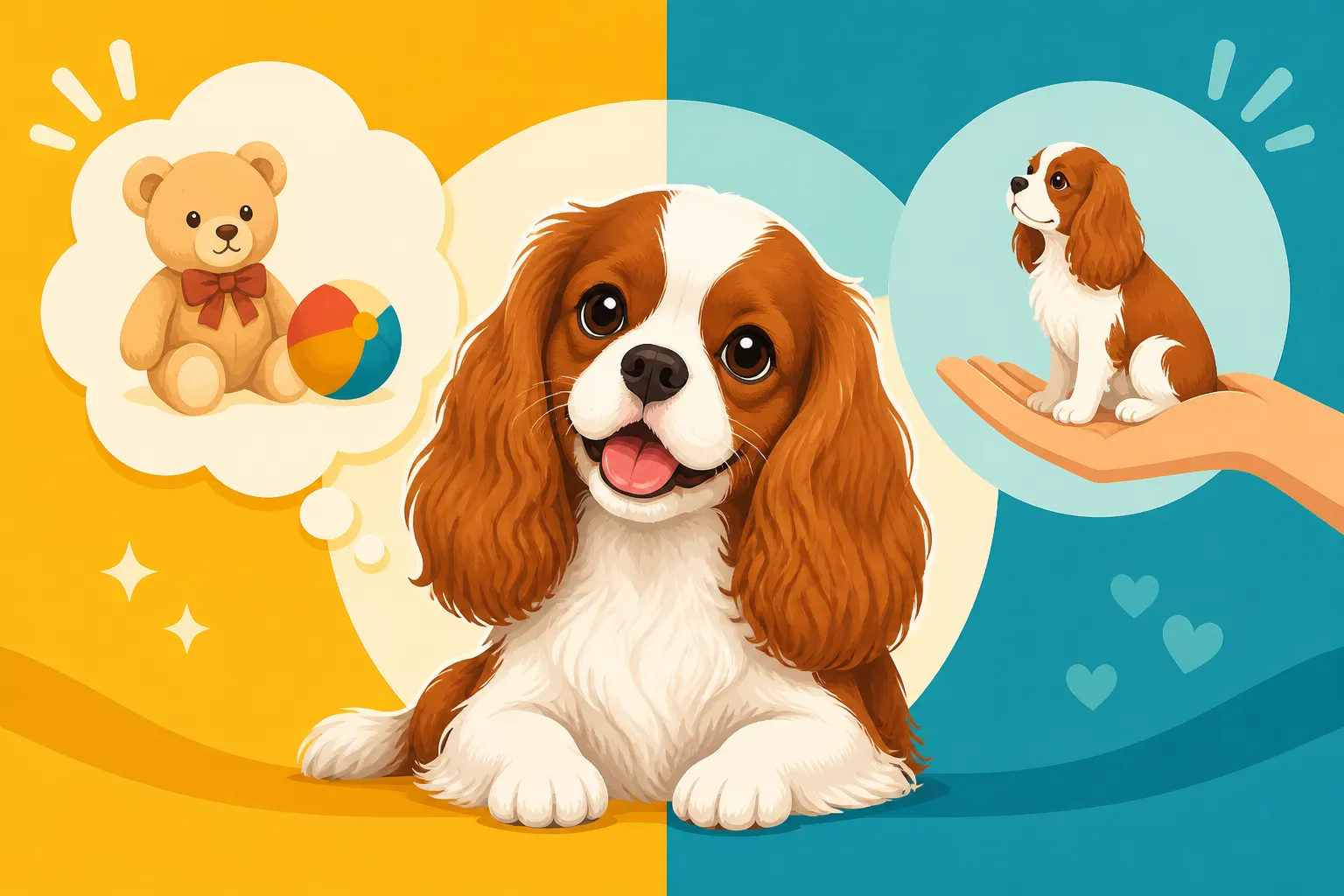
The most obvious reason a Cavalier King Charles Spaniel is grouped as a toy breed is, of course, their physical size. They are built to be small, manageable, and easily carried or held, making them ideal lap dogs.
Size and Weight Conforming to the Standard
The breed standard explicitly outlines the ideal size and weight for a Cavalier. Generally, they stand about 12 to 13 inches tall at the shoulder and typically weigh between 13 and 18 pounds. This is a very specific range, quite intentionally designed to keep them compact. When you compare this to, say, a Cocker Spaniel, which can easily weigh twice that and stand several inches taller, the difference is stark. The goal was never to breed a large, robust dog capable of long hours in the field, but rather a smaller, more delicate animal.
This compact size ensures they can comfortably share a sofa, fit into a cozy bed, or travel easily in a carrier. You'll find plenty of appropriate beds and travel accessories for their size on sites like Chewy. This physical characteristic is a direct inheritance from their ancestors, the "comforter spaniels" who were literally bred to sit on laps and keep people warm. Their structure, from their dainty paws to their relatively delicate bone structure, is simply not built for strenuous, sustained physical activity like a traditional working spaniel.
Delicate Build and Elegant Appearance
Beyond just height and weight, the Cavalier possesses a certain delicate elegance that is characteristic of many toy breeds. They have a softer, silken coat, often with profuse feathering that adds to their refined appearance, rather than a dense, weather-resistant coat needed for outdoor work. Their large, expressive eyes and sweet facial expression are also hallmarks of a breed developed for charm and engaging with humans up close.
Consider The AKC Standard for the Cavalier King Charles Spaniel. It describes a dog of grace and beauty, not one of rugged utility. The emphasis is on balance, proportion, and an endearing quality that would be highly valued in a household companion. Their slightly rounded skull, moderate muzzle length, and high-set, long feathered ears all contribute to this "pretty" rather than "practical" aesthetic. Even their tail carriage, often wagging cheerfully, is more about expressing joy than signaling game.
Temperament: The Ultimate Companion
Beyond their physical attributes, the Cavalier's temperament is perhaps the most compelling reason for their placement in the Toy Group. They are, at their core, companion animals, wired to connect with and be close to people.
Affectionate and People-Oriented Nature
If you've ever spent time with a Cavalier, you know they are utterly devoted to their families. They thrive on human companionship and will often follow you from room to room – a trait that has earned them the nickname "Velcro dogs." This isn't just cute; it's a deep-seated behavioral characteristic. They are bred to be emotionally intelligent, sensing their owner's moods and often offering comfort without being prompted. This intense focus on human connection is precisely what the Toy Group embodies.
Contrast this with a retriever, which might be loyal but also highly motivated by a task, or a terrier, which can be independent and feisty. A Cavalier's highest calling is to be your shadow, your confidant, your warm bundle of fur. This is why many owners find it hard to leave them alone for extended periods; Why a Cavalier Cannot Be Left All Day is a real concern because their desire for company is so strong. They literally light up when their people are near, making them wonderful pets for families, retirees, or anyone seeking a constant, loving presence.
Adaptable and Gentle Disposition
Cavaliers are renowned for their adaptability. They can be happy in an apartment or a large house, as long as they are with their people. They generally possess a gentle nature, making them excellent companions for children and even other pets, like cats. Cavaliers in Households With a Cat usually goes quite smoothly because of their easygoing temperament. Their low-key nature means they're often quite happy with moderate exercise – two short walks a day might be perfectly sufficient, leaving plenty of time for snuggles on the couch. How Much a Cavalier Actually Sleeps is often a lot, especially when given a comfy lap!
This adaptability extends to their training. While they can have a stubborn streak, they are generally eager to please and respond well to positive reinforcement. They aren't typically driven by complex working instincts that require highly specialized training; instead, they excel in basic obedience and thrive on praise and connection. Their goal isn't to outsmart you or challenge your authority, but to understand what makes you happy so they can participate.
The table below highlights key differences often associated with the Toy Group versus the Sporting Group, to further illustrate where the Cavalier fits:
| Characteristic | Toy Group (e.g., Cavalier) | Sporting Group (e.g., Cocker Spaniel) |
|---|---|---|
| Primary Purpose | Companionship, lap dogs, comfort | Hunting, retrieving game, working alongside humans |
| Typical Size/Build | Small, delicate to sturdy, built for indoor living | Medium to large, robust, athletic, built for endurance |
| Exercise Needs | Moderate, enjoys walks but happy with indoor play | High, requires significant physical and mental stimulation |
| Temperament Focus | Affectionate, adaptable, people-oriented, gentle | Energetic, eager to please, intelligent, strong prey drive |
| Grooming Needs | Often requires regular brushing for long, silky coats | Varies, but often includes weather-resistant coats |
| Training Focus | Basic obedience, house manners, socialization for companionship | Advanced obedience, field training, task-oriented skills |
Historical Role and Purpose: From Royal Laps to Modern Homes
To truly understand why the Cavalier is a toy breed, we must look to their history. Their roots are firmly planted in the laps of royalty, far removed from the hunting fields.
The Court Spaniels: Bred for Adornment and Affection
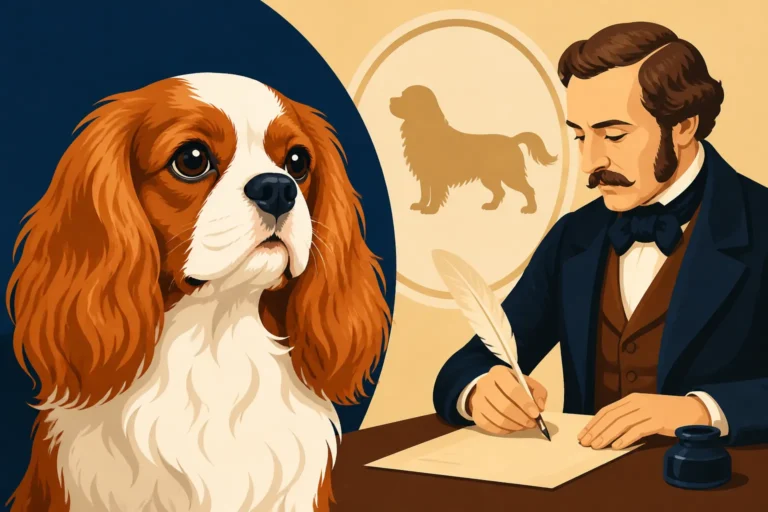
The ancestors of the Cavalier King Charles Spaniel were the "comforter spaniels" or "court spaniels" popular in Europe, particularly among the British aristocracy, for centuries. These dogs were not bred for any working purpose; their sole existence revolved around providing companionship and warmth. King Charles II, from whom the breed gets part of its name, was famously devoted to these little dogs, reportedly taking them everywhere, even to Parliament. They were essentially living fashion accessories, but more importantly, cherished members of the family. The Court Spaniels the Cavalier Descends From tells a rich story of their royal patronage.
Over time, through selective breeding, these dogs were refined to enhance the very qualities that made them excellent companions: small size, gentle temperament, and a beautiful, soft coat. They were kept indoors, pampered, and truly lived lives of leisure. This historical trajectory is key to their Toy Group classification.
The Divergence from Working Spaniels
While the Cavalier shares the "spaniel" moniker with breeds like the English Springer Spaniel or the Brittany Spaniel, their paths diverged dramatically many generations ago. True sporting spaniels were bred for their ability to flush game, retrieve, and endure long days in the field. They possess a high prey drive, boundless energy, and an independent spirit necessary for their work. The Cavalier, on the other hand, was bred away from these traits. Their prey drive is generally minimal, their endurance is suited more for a leisurely stroll than a hunt, and their independent spirit is almost entirely superseded by a desire to be with their human.
There was a period in history where the breed's appearance changed, with a shorter muzzle becoming fashionable, leading to the development of the English Toy Spaniel (known as the King Charles Spaniel in the UK). However, thanks to dedicated breeders in the early 20th century, there was a concerted effort to bring back the longer-nosed, "old type" spaniel, which eventually became today's Cavalier King Charles Spaniel. This effort was about restoring the appearance of the dogs from King Charles II's time, reaffirming their status as a dedicated companion breed. The story of How Roswell Eldridge Brought Back the Cavalier is fascinating and central to the breed's modern identity.
So, when you consider their diminutive size, their overwhelmingly affectionate and adaptable nature, and their centuries-long history as pampered companions to royalty and commoners alike, it becomes abundantly clear why the Cavalier King Charles Spaniel is firmly categorized as a Toy Group breed. They are not simply "small spaniels"; they are the quintessential example of a dog bred purely for the joy of companionship. This makes them Whether a Cavalier Is an Easy First Dog for many, and a beloved family member for countless others. Their purpose, both historically and presently, is to be cherished members of our households, bringing endless love and comfort. They fit their group perfectly.
Disclaimer
This article is for general informational purposes only and does not constitute professional advice. Laws, prices and regulations vary by location and change over time. Consult a qualified professional for guidance on your specific situation.