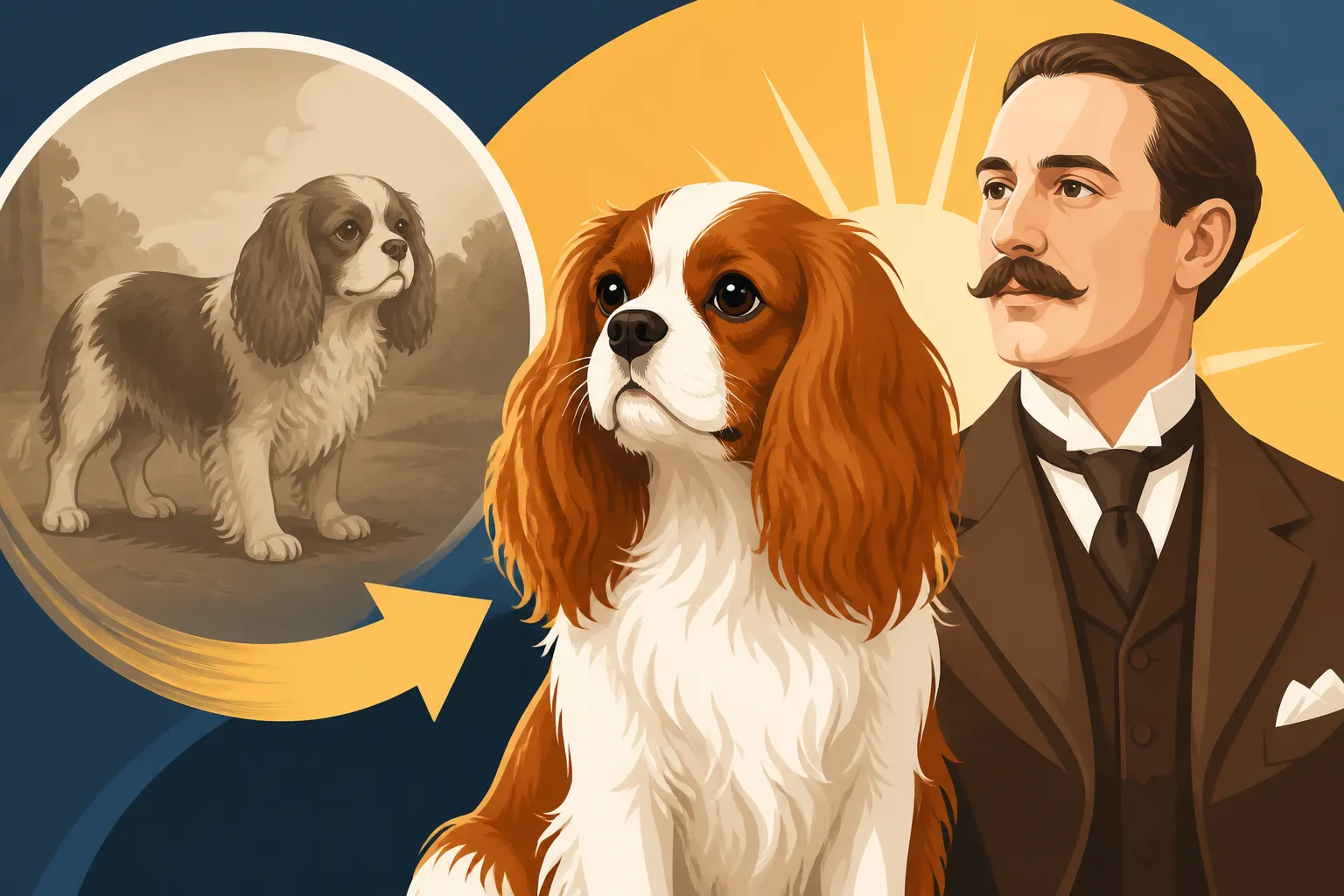
How Roswell Eldridge Brought Back the Cavalier
It’s easy to look at our sweet, gentle Cavalier King Charles Spaniels today and assume they’ve always been this way, an enduring symbol of aristocratic companionship. But for a time, the Cavalier as we know it nearly vanished, eclipsed by changing tastes and breeding trends. This guide will take you back in time to explore the fascinating story of Roswell Eldridge, the American enthusiast who, with a keen eye for history and a generous purse, sparked a revival that brought the beloved Cavalier back from the brink.
The Vanishing Cavalier: How the Breed Changed Before Eldridge
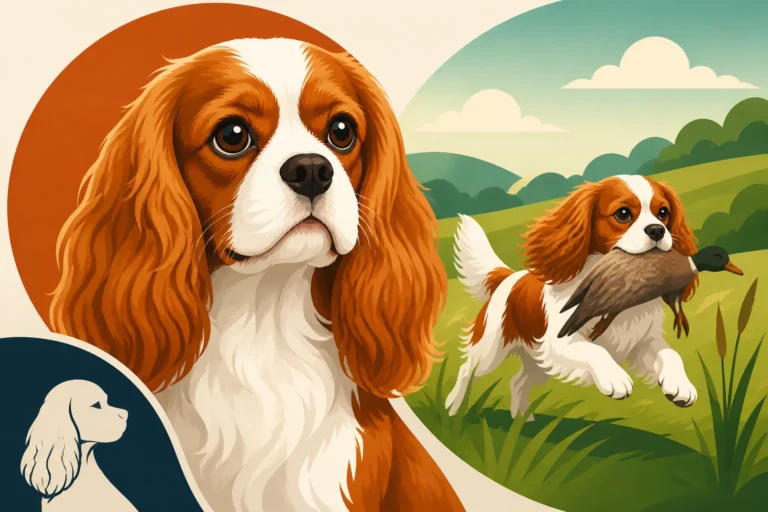
Before the 20th century, the toy spaniels of Great Britain, beloved by royalty and aristocrats alike, were a more diverse group than many realize. These charming little dogs, often seen gracing the laps of kings and queens, were characterized by their long muzzles, flat skulls, and active, sporting natures. They were true companions, capable of a day in the field flushing birds as well as a quiet evening by the fire. You can learn more about their history in The Court Spaniels the Cavalier Descends From. However, as the Victorian era dawned and progressed, fashion began to shift dramatically, not just in clothing and decor, but even in the appearance of beloved dog breeds.
The Popularity of the Flat-Faced Toy Spaniel
During the 19th century, a new aesthetic emerged for toy breeds, heavily influenced by imports from Asia, particularly short-nosed dogs like the Pug and the Japanese Chin. These breeds quickly gained immense popularity, captivating the public with their flattened faces, domed skulls, and large, round eyes. Breeders, eager to meet this burgeoning demand and win in the show ring, began to selectively breed the native British toy spaniels to mimic these features. The longer-nosed, flatter-skulled spaniels that had once been the norm started to fall out of favor. The "King Charles Spaniel" (the modern English Toy Spaniel in the US) became the standard, a delightful dog in its own right, but far removed from its 17th-century ancestors. This shift wasn't a sudden, overnight change, but a gradual evolution over decades, driven by Kennel Club standards and the competitive show circuit. The judges and the public alike rewarded these increasingly brachycephalic (short-nosed) traits, pushing the original type further into obscurity.
Loss of the Longer Muzzle and Sporting Instincts
As the centuries-old spaniel type was refined to fit the new fashion, several characteristics were inadvertently bred out or significantly diminished. The most noticeable change was, of course, the muzzle. The longer, elegant muzzle, so characteristic of the dogs seen in paintings from the time of King Charles II, became progressively shorter, eventually resulting in the very flat faces we associate with the modern King Charles Spaniel. This wasn't just an aesthetic alteration; it impacted the dogs' function and health, though the health implications weren't fully understood at the time. Alongside the physical transformation, the inherent sporting instincts that had defined these small spaniels also began to wane. The original dogs were miniature gundogs, keen on tracking and flushing small game. The new, fashionable toy spaniels, bred primarily for their looks and lap-dog qualities, no longer possessed the same drive or physical structure for active pursuits. Their delicate frames and increasingly compromised breathing made them less suited for strenuous activity, cementing their role purely as pampered companions. It's a prime example of how quickly a breed can transform under specific breeding pressures, as explored in How Cavalier Ancestors Changed Shape in the 1800s.
Roswell Eldridge's Vision: The Call to Restore the Old Type
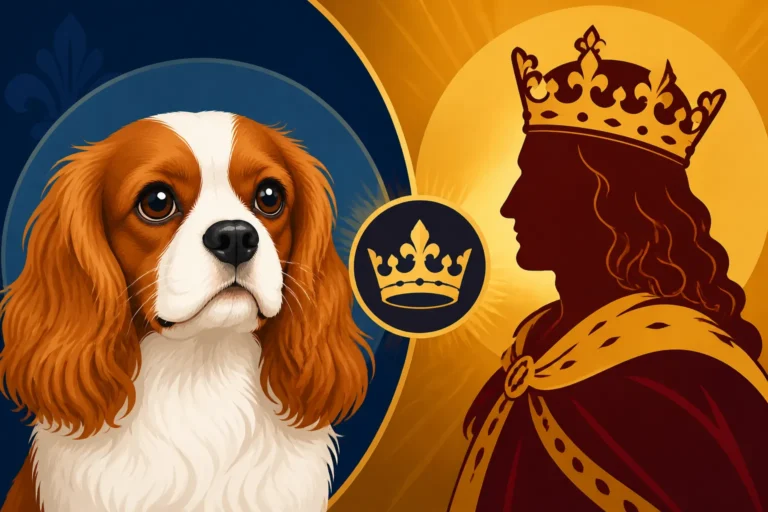
At a time when the flat-faced King Charles Spaniel reigned supreme in the show ring, an American named Roswell Eldridge held a different vision. He was an ardent admirer of the toy spaniels depicted in the historical paintings of the 16th, 17th, and 18th centuries, particularly those from the era of King Charles II. These were the dogs with the longer noses, the flatter heads, and the more active, cheerful disposition that seemed to have all but disappeared from the modern dog world. Eldridge felt a deep sense of nostalgia for this older type, believing that something precious had been lost in the pursuit of fashionable trends. He wasn't alone in this sentiment; a small contingent of enthusiasts in England also longed for the return of the original King Charles spaniel, but it was Eldridge who had the means and the determination to turn this longing into action.
A Nostalgia for the Past
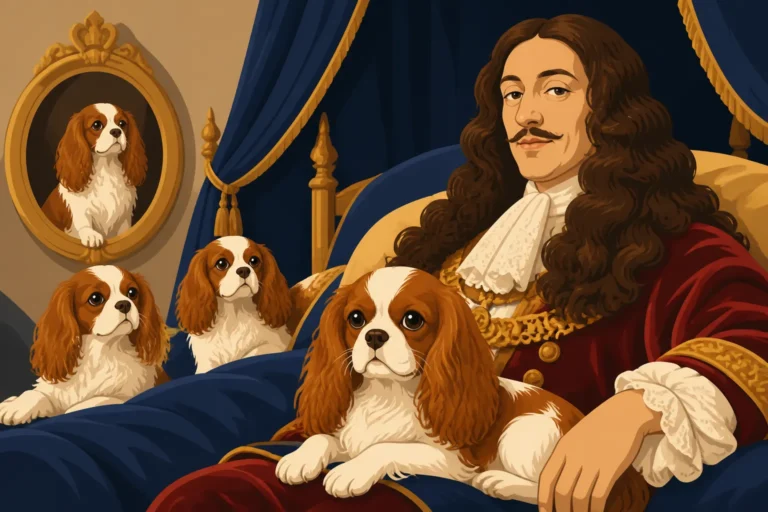
Roswell Eldridge's fascination wasn't merely a passing fancy; it stemmed from a genuine appreciation for the historical significance and charm of the original spaniels. He had seen countless portraits of these dogs at the feet of royalty, notably Charles II, who was famously inseparable from his little companions. These artistic renditions showcased dogs with distinct features: a relatively flat head, a discernible muzzle of moderate length, and an elegant, well-proportioned body, quite different from the short-nosed, domed-skulled dogs that dominated the show circuit of his time. Eldridge believed that these original characteristics contributed not only to the dogs' beauty but also to their overall health and vitality. He saw the shift in type as a deviation from the breed's true heritage and a loss of the very qualities that had made them so beloved by historical figures. His motivation was to resurrect this lost historical type, not to invent a new breed, but to bring back the "old world charm" that had been largely forgotten. He envisioned a return to the dogs that would have been recognizable to a monarch like King Charles II.
Eldridge's Printed Advertisement
To turn his vision into reality, Roswell Eldridge took a bold and unconventional step. In 1926, he placed a remarkable advertisement in the catalog for Crufts, the world-renowned dog show held annually in London. This was no small classified ad; it was a prominent declaration, laying out his desire and offering a substantial reward. The advert explicitly called for "King Charles Spaniels of the old type, as shown in the pictures of King Charles II's time, with long face, no stop, flat skull, not inclined to be domed, and with the spot in the middle of the skull." The "spot" refers to the Blenheim 'lozenge,' a distinctive chestnut mark on the forehead, highly prized in the Blenheim variety. He was essentially asking breeders to ignore decades of selective breeding for the modern King Charles Spaniel and instead present dogs that looked like their ancient ancestors. This was a direct challenge to the prevailing show standards and a call to rediscover a forgotten lineage. The detailed description served as a clear blueprint for what he was looking for, ensuring that any potential entrants understood the specific traits he aimed to revive. His directness and generosity in this advertisement would prove to be the catalyst for the Cavalier's resurgence, as detailed in The 1926 Advertisement That Revived the Cavalier.
The 1926 Crufts Challenge: A Bold Offer
Roswell Eldridge's advertisement wasn't just a nostalgic plea; it was a concrete challenge backed by a significant financial incentive. He recognized that breeders and owners, accustomed to showing and breeding for the contemporary flat-faced King Charles Spaniel, would need a compelling reason to seek out or develop dogs of the "old type." He aimed to create a specific class at Crufts, one of the most prestigious dog shows globally, to highlight these historical dogs and give them a platform. This was a shrewd move, as Crufts drew immense attention and would provide the perfect stage for his ambitious project.
The First Public Appeal
The advertisement placed in the Crufts catalog was more than just a call for dogs; it was the first public, organized appeal to reverse a century of breed evolution. Eldridge didn't just want any old-type spaniel; he wanted a specific representation that harkened back to the dogs seen in the royal courts. His description was precise: a long face, no 'stop' (the indentation between the eyes), a flat skull rather than a domed one, and the prized Blenheim spot. This meticulous detail was crucial, as it set a clear standard for breeders to aim for, distinguishing his desired type from the popular show dogs of the era. The impact of this advert was slow to build, as it took time for people to identify and present dogs that truly fit the bill. Many breeders were skeptical, having invested so much into the established "King Charles Spaniel" type. However, for those few who still held a candle for the traditional spaniels, or perhaps had a few hidden gems in their kennels that didn't fit the modern mold, Eldridge's challenge provided an unexpected opportunity to bring their dogs into the spotlight. It started a quiet but determined movement among dedicated enthusiasts who shared his vision for the restoration of the original Cavalier form.
The Prize Money That Drove the Effort
To ensure his vision was taken seriously and to incentivize breeders, Roswell Eldridge offered a truly substantial sum of money. He pledged twenty-five pounds sterling for the best male and twenty-five pounds sterling for the best female of the "old type" exhibited at Crufts for five consecutive years (1926, 1927, 1928, 1929, and 1930). This was not a trifling amount; in the 1920s, twenty-five pounds was a significant sum, enough to make a real difference to a breeder or a dog owner. It was a clear signal that Eldridge was serious about his endeavor and willing to back his passion with considerable financial commitment. This prize money was the driving force that encouraged owners to search their kennels, look through old pedigrees, and even consider dogs that had previously been considered "throwbacks" or undesirable by modern show standards. It suddenly made it financially viable and desirable to present a dog that embodied the traits Eldridge sought. Without this generous incentive, it's highly probable that the movement to revive the Cavalier would have fizzled out, as there would have been little motivation to deviate from the established and profitable show lines. This financial backing gave legitimacy and momentum to what could otherwise have been seen as a quixotic quest.
Early Successes and the First "Old Type" Cavaliers
The response to Roswell Eldridge's challenge was not immediate, nor was it overwhelming in numbers. Many breeders were entrenched in the prevailing fashion for short-nosed King Charles Spaniels. However, the tantalizing prize money and the clear description sparked curiosity and inspired a few dedicated individuals to look for dogs that fit the "old type." It was a hunt for needles in a haystack, as the desired characteristics had largely been bred out over generations. Slowly but surely, dogs began to emerge that were closer to Eldridge's ideal, laying the groundwork for what would become the Cavalier King Charles Spaniel.
Finding the Progenitors: Ann's Son and Others
Among the earliest and most influential dogs discovered was a Blenheim male named Ann's Son. He is widely considered the true progenitor of the modern Cavalier King Charles Spaniel, epitomizing the "old type" that Eldridge sought. Ann's Son won the Eldridge prize at Crufts in 1928, 1929, and 1930, consistently demonstrating the desired longer muzzle, flat skull, and overall balanced appearance. He wasn't the only one, but he certainly became the poster dog for the movement. Other important early dogs included Duchess of Woodstock and later, Daywell Roger and Carlo of Ttiweh. These dogs, often found in smaller, less prominent kennels, were perhaps a result of less intensive selective breeding for the flat-faced trend, or simply fortuitous throwbacks. They were invaluable, as they provided the genetic foundation from which the new breed type could be established. These foundation dogs were literally the living embodiments of Eldridge's vision, proving that the old type was not entirely extinct and could be resurrected with careful breeding. Their existence provided tangible proof that Eldridge's dream was achievable. You can read more about this pivotal dog in Ann's Son and the First Cavalier Standard.
Initial Breeding Efforts and Recognition
Once these foundation dogs were identified, the real work of establishing a new breed began. Breeders who were committed to Eldridge's vision started to selectively breed these "old type" spaniels, focusing on consistently reproducing the desired characteristics: the longer muzzle, flat head, and healthy structure. The goal was to create a distinct line that would breed true, separate from the existing King Charles Spaniels. This was a challenging task, as the gene pool was initially small, and careful attention had to be paid to health and temperament as well as conformation. Early breeders dedicated themselves to documenting pedigrees and promoting their dogs, slowly building a recognizable population. The initial recognition came in 1945, nearly two decades after Eldridge's first advertisement, when the Kennel Club (UK) officially granted separate registration for "Cavalier King Charles Spaniels" as a distinct breed. This was a monumental moment, acknowledging the successful efforts of those who had worked tirelessly to revive the type. It signified that the Cavalier was no longer just an "old type" King Charles Spaniel, but a breed in its own right, with its own standard and its own future. For new owners today, understanding the history of how this distinct breed came about can influence choices in everything from searching for a reputable breeder to finding the right care supplies. For instance, knowing the breed's origins might inform why certain types of grooming tools, perhaps found on platforms like Chewy, are better suited for their silky coats and long ears.
Establishing the Breed Standard and Separate Recognition
With the initial success of finding and breeding dogs that matched Roswell Eldridge's vision, the next critical step was to formalize the breed. This meant establishing a clear, written standard that defined the ideal Cavalier King Charles Spaniel and securing official recognition as a distinct breed, separate from the King Charles Spaniel (English Toy Spaniel). This process was painstaking, requiring dedicated effort from a group of committed enthusiasts who formed a club to champion the cause.
Forming the Cavalier King Charles Spaniel Club
In 1928, just two years after Roswell Eldridge launched his Crufts challenge, a small but passionate group of breeders and enthusiasts gathered to form the Cavalier King Charles Spaniel Club. This was a pivotal moment, as a formal club provided the necessary infrastructure to guide the breed's development, maintain records, and advocate for its recognition. The club's primary objective was to ensure the continued breeding of the "old type" spaniel, adhering to Eldridge's original description. They held their own shows and gatherings, providing a platform for these dogs to be judged and celebrated on their own merits, rather than being compared to the then-dominant King Charles Spaniel. The formation of the club was a clear declaration that this was more than a temporary fad; it was a serious effort to establish a lasting legacy. Without this organized body, the nascent revival movement might have lacked the cohesion and direction needed to achieve its long-term goals. Members worked diligently to gather information on the existing "old type" dogs, create a studbook, and map out a responsible breeding strategy to expand the gene pool while preserving the desired traits.
Defining the Ideal: The First Breed Standard
One of the first and most crucial tasks of the newly formed Cavalier King Charles Spaniel Club was to draft and adopt a breed standard. This document is essentially the blueprint for the ideal dog, describing in detail its physical characteristics, temperament, and movement. The first standard for the Cavalier King Charles Spaniel was largely based on Roswell Eldridge's advertisement criteria and the characteristics exemplified by dogs like Ann's Son. It emphasized the longer muzzle, flat skull, almond-shaped eyes, and overall balanced appearance that distinguished it from the short-faced King Charles Spaniel. This standard was vital for guiding breeders, ensuring consistency in type, and providing judges with a clear benchmark for evaluation. It moved the breed beyond a subjective preference to an objective set of measurable traits. The standard articulated the ideal weight, height, coat texture, ear set, and tail carriage, leaving little to ambiguity. This methodical approach was key to ensuring that the Cavalier would "breed true" and that future generations would consistently display the recovered characteristics, thereby solidifying its identity as a distinct breed. Understanding the meticulous detail in such standards helps us appreciate the depth of commitment by early fanciers. The AKC Standard for the Cavalier King Charles Spaniel provides a modern interpretation of these foundational ideals.
The Crucial Distinction from the King Charles Spaniel
The establishment of a separate breed standard and eventually, separate Kennel Club recognition, was absolutely crucial in distinguishing the "new" Cavalier King Charles Spaniel from its flat-faced cousin, the King Charles Spaniel (known as the English Toy Spaniel in the US). For decades, all these small spaniels were grouped together, with the short-nosed variety being the dominant and recognized type. Eldridge's intervention and the subsequent efforts of the Cavalier Club aimed to correct this historical drift. The official recognition in 1945 by The Kennel Club (UK) meant that the Cavalier could be shown and judged according to its own specific standard, without being penalized for having a longer muzzle or a flatter skull, traits that would have been faults in the King Charles Spaniel ring. This separation was vital for the breed's survival and growth. It provided a clear identity and protected the "old type" from being diluted or lost again. It effectively created two distinct breeds from a shared ancestry, each with its unique characteristics and lineage, as further explored in Why the Cavalier Split From the King Charles Spaniel and The Cavalier's Longer Muzzle and Flatter Skull. This formal distinction ensured that the efforts to revive the Cavalier were not in vain and that its unique historical type would endure.
| Feature | Pre-Eldridge (Modern King Charles Spaniel) | Eldridge's Ideal (Cavalier King Charles Spaniel) |
|---|---|---|
| Muzzle Length | Very short, flat, pushed-in | Moderate length, well-defined |
| Skull Shape | Domed, rounded | Relatively flat between the ears |
| Stop | Pronounced, deep indentation | Slight to moderate, not abrupt |
| Eye Shape | Large, round, often prominent | Large, round, but well-set and dark |
| Overall Look | Brachycephalic, delicate | Balanced, elegant, "spaniel" expression |
| Temperament | Often more sedate | Gay, fearless, sporting, affectionate |
The Legacy of Eldridge: Impact on the Modern Cavalier
Roswell Eldridge passed away just a month before the first Crufts show in 1928 where the "old type" spaniels were judged, never seeing the full fruition of his efforts. Yet, his vision and generous challenge laid the indelible foundation for the Cavalier King Charles Spaniel we cherish today. His actions didn't just bring back a specific look; they revived a beloved companion dog that embodies many of the qualities people seek in a pet. The legacy of Eldridge is evident in every Cavalier's cheerful disposition and classic appearance, a testament to one man's determination to reclaim a piece of canine history.
The Return of the Sporting Companion
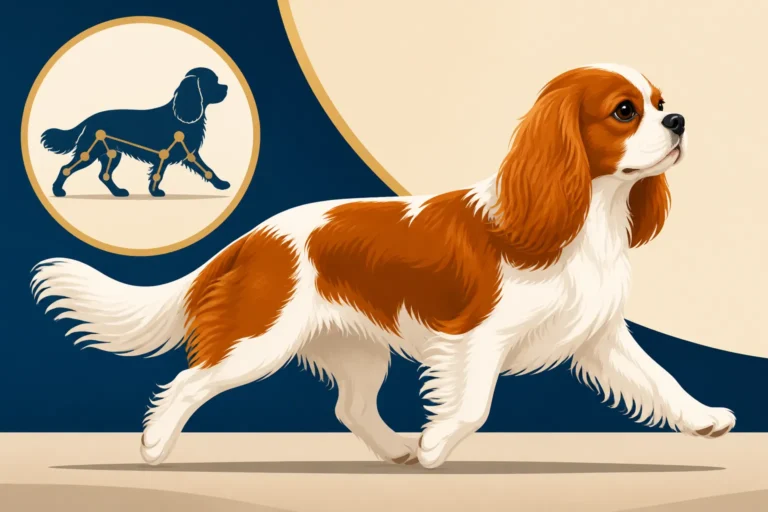
One of the most profound impacts of Roswell Eldridge's revival was the return of the Cavalier as a truly sporting companion, in spirit if not always in practice. The emphasis on a longer muzzle and a more proportionate skull meant that the dogs were better equipped structurally for physical activity. Gone were the extreme brachycephalic features that could impede breathing and stamina. The Cavalier, as it was being re-established, retained its gentle and affectionate nature, but also possessed the playful energy and eagerness to please that harked back to its spaniel ancestors. They became dogs that could genuinely enjoy a walk in the park, a romp in the yard, or even dabble in activities like scent work or obedience, rather than being confined solely to a lap. This balanced athleticism, coupled with their inherent sweetness, made them incredibly versatile pets, appealing to a wider range of owners. They were, and still are, dogs that thrive on companionship and participation in family life, embodying the best of both a devoted lapdog and a spirited little adventurer.
The Enduring Popularity of the Breed
From its formal recognition in 1945, the Cavalier King Charles Spaniel steadily grew in popularity, first in the UK and then internationally. Today, it is one of the most beloved toy breeds globally, consistently ranking high in registration numbers in countries like the United States. Its irresistible charm, derived from its large, soulful eyes and perpetually wagging tail, combined with its adaptable and affectionate temperament, has cemented its place in countless homes. The breed's ability to fit into various lifestyles—whether a quiet apartment or a bustling family home—is a huge part of its appeal. They are known for being excellent with children and other pets, making them ideal family dogs. This enduring popularity is a direct consequence of Eldridge's foresight. Had he not instigated the revival, the delightful Cavalier type might have been lost forever, and the world would be without this unique blend of aristocratic grace and joyful companionship. The sheer numbers of Cavaliers enjoying loving homes across the globe stand as a powerful testament to the success of his audacious endeavor. Even now, new owners preparing for a Cavalier puppy will often find themselves needing essentials, and a reliable source like Chewy can provide everything from sturdy puppy food to comfortable beds, continuing the tradition of caring for these special dogs.
Challenges and Continuations: Preserving the Breed Today
While Roswell Eldridge successfully resurrected the Cavalier King Charles Spaniel, the journey for the breed did not end with its official recognition. In fact, new challenges and responsibilities emerged, particularly regarding health and ethical breeding practices. The dedication required to bring the breed back is now matched by the ongoing commitment needed to preserve its health and type for future generations. It’s a continuous effort that involves breeders, veterinary professionals, and diligent owners who understand the unique needs of this special breed.
Modern Breeding and Health Considerations
With the Cavalier's surging popularity came a heightened awareness of its inherent health challenges. Mitral Valve Disease (MVD) and Syringomyelia (SM) are two of the most significant health concerns that have become synonymous with the breed. MVD, a progressive heart condition, is startlingly common, with a significant percentage of Cavaliers developing a heart murmur by middle age. Syringomyelia, a neurological condition related to a malformed skull, can cause severe pain and neurological deficits. These conditions, along with others such as Cavalier Eye Disease From Dry Eye to Cataracts and Cavalier Knees, Hips and Joint Problems, underscore the immense responsibility breeders face. Ethical breeders today go to extraordinary lengths to health test their breeding stock, including annual cardiologist exams for MVD, MRI scans for SM, and genetic screening for other inherited conditions like The Episodic Falling DNA Test for Cavaliers and The DNA Test That Ends Cavalier Curly Coat. The goal is not just to produce beautiful dogs, but healthy ones, breaking cycles of inherited disease. This is a far cry from the largely appearance-driven breeding of the Victorian era and reflects a deeper understanding of genetics and animal welfare. Buyers must be diligent, ensuring they choose a breeder who is transparent about health testing and actively participates in programs aimed at reducing the incidence of these diseases. This commitment is vital for the long-term well-being of the breed.
The Ongoing Debate: Preserving Type vs. Health
The Cavalier King Charles Spaniel, born from a desire to revive a historical "type," now finds itself at the center of an ongoing and often passionate debate: how to balance the preservation of its established breed standard with the paramount need for improved health. Some argue that strict adherence to the aesthetic standards, particularly concerning skull shape and muzzle length, may inadvertently perpetuate some of the very health issues the breed faces. For instance, the moderate muzzle and relatively flat skull that Eldridge championed are crucial to the Cavalier "look," but discussions continue about how skull conformation might relate to conditions like Syringomyelia. Others contend that abandoning the established type undermines the very identity of the breed that Eldridge worked so hard to restore. This tension creates a complex ethical landscape for breeders and breed clubs. Solutions often involve careful and responsible breeding practices, emphasizing health testing and selective breeding for healthier lines, even if it means minor deviations from extreme show trends. The Health Debate Around Breeding Cavaliers is a critical ongoing discussion within the community. Programs focusing on outcrossing, where Cavaliers are bred to other breeds to introduce new genetic diversity and then carefully bred back into the Cavalier lines, are also being explored, though not without controversy. It's a delicate balance, requiring thoughtful decisions to ensure the Cavalier not only continues to look like the historical dogs Eldridge admired but also lives a long, healthy, and pain-free life. The responsibility falls to every breeder, owner, and enthusiast to educate themselves and make choices that contribute positively to the breed's future.
Disclaimer
This article is for general informational purposes only and does not constitute professional advice. Laws, prices and regulations vary by location and change over time. Consult a qualified professional for guidance on your specific situation.