Ann’s Son and the First Cavalier Standard
Understanding the lineage and foundational moments of the Cavalier King Charles Spaniel can feel a bit like trying to untangle a very old, much-loved silk thread – beautiful, but complex. Many of us are familiar with the modern Cavalier, but often wonder how this beloved breed, with its distinctive long muzzle and gentle expression, truly came to be after centuries of changes to the toy spaniels of royal courts. This guide will walk you through a pivotal turning point in the breed's history: the emergence of Ann's Son and his profound influence on establishing the very first, definitive Cavalier breed standard.
The Historical Context: Before Ann's Son
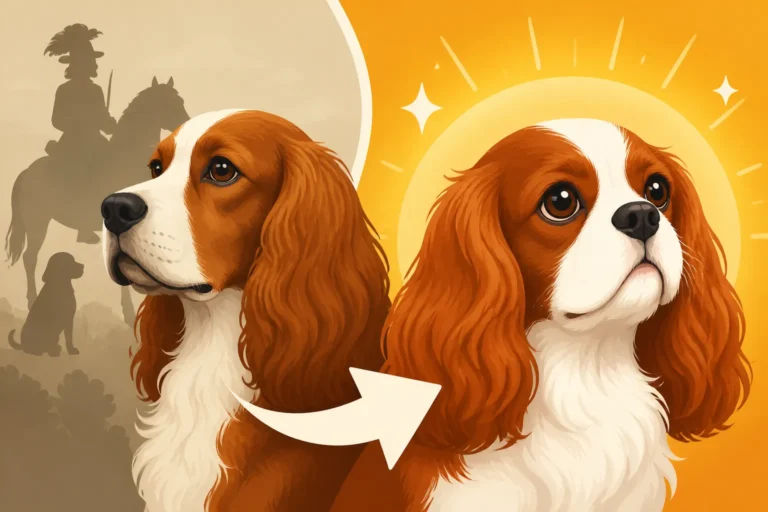
Before the Cavalier King Charles Spaniel as we know it took shape, the toy spaniels of England underwent a significant transformation. For centuries, these charming little dogs were the favored companions of royalty and nobility, immortalized in paintings with their longer noses and elegant, yet still spaniel-like, faces. But tastes change, and the dogs changed with them, creating a real muddle for anyone looking back at the breed's origins.
The Vanishing Toy Spaniel
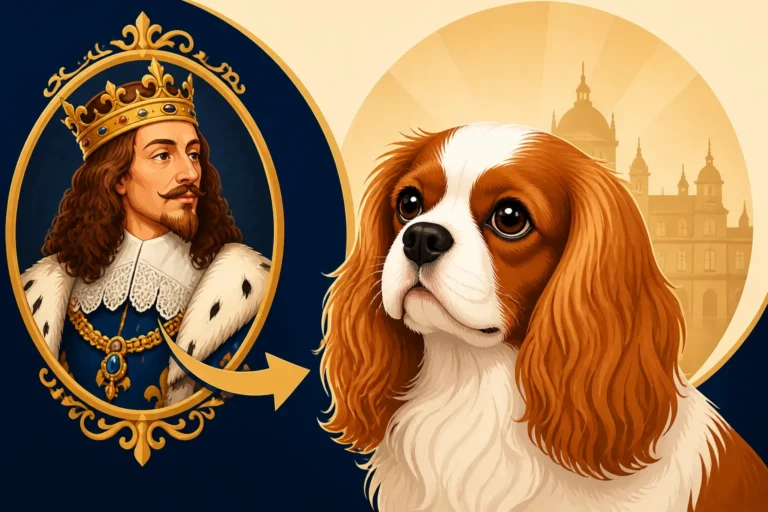
Imagine strolling through a 17th-century palace, and you'd likely see the "comforter spaniels" of King Charles II at every turn. These were dogs with distinctly longer muzzles, flat skulls, and a very active, inquisitive nature, always ready to snuggle or chase a squirrel. They were small hunting dogs turned lap companions. However, as the centuries passed, particularly in the Victorian era, new trends in dog breeding swept across Europe. Breeds with shorter faces, like the Pug and later the Japanese Chin, gained immense popularity. This preference for flat-faced dogs began to influence the breeding of the English toy spaniels.
Breeders, eager to meet demand, started selecting for shorter muzzles, domed skulls, and larger, rounder eyes. Over time, the beloved long-nosed spaniels of Charles II faded, replaced by what became known as the King Charles Spaniel (or English Toy Spaniel in America). These dogs, while still adorable and sweet-natured, had a very different appearance – a much flatter face, an apple-domed head, and a distinct "dished" profile. For many dog enthusiasts, it felt like the original, iconic toy spaniel had all but vanished, lost to changing fads. It's no wonder people get confused between the two breeds; they share a name but look quite distinct. You can really see this contrast when you delve into Cavalier Ancestors at the Court of Charles II.
Roswell Eldridge's Vision
It was this yearning for the "old type" spaniel that led to a remarkable initiative. An American named Roswell Eldridge, visiting England in the 1920s, was struck by the absence of the long-nosed toy spaniels he’d admired in historical paintings. He felt a deep desire to restore the breed to its original form. Eldridge wasn't just a nostalgic admirer; he was a man of action. He decided to put his money where his heart was, offering a substantial prize at Crufts, the world's most famous dog show, for any "King Charles Spaniel of the old type."
His advertisement in the Crufts catalogue in 1926 was quite specific: he was looking for dogs "with long faces, no dumpiness whatever, flat skulls, and with the spot in the middle of the skull." This last point referred to the famous "Blenheim Spot" or lozenge, a chestnut mark on the white forehead, said to be the thumbprint of the Duchess of Marlborough as she prayed for her husband's safe return from battle. Eldridge's offer was a direct challenge to the prevailing fashion and a clarion call for breeders to seek out and revive the ancestral traits. This bold move, detailed in The 1926 Advertisement That Revived the Cavalier, truly set the stage for the breed's revival. He literally told breeders what he wanted, and described The Old Type of Cavalier Eldridge Wanted Back in no uncertain terms.
Ann's Son Enters the Scene: A Defining Moment
The quest initiated by Roswell Eldridge sparked interest, but it wasn't until a particular dog appeared that the vision truly solidified. This dog became the living embodiment of Eldridge's dream and the undisputed standard-bearer for the burgeoning breed.
Who Was Ann's Son?
Ann's Son was a Blenheim King Charles Spaniel, born in 1923, owned by Mrs. B.O. Field. What made him special was that he perfectly matched Roswell Eldridge's description of the "old type" King Charles Spaniel. He possessed that distinctive longer muzzle, a flat skull, and the sweet, gentle expression that Eldridge had so admired in historical portraits. Crucially, he had been bred before the "old type" was actively being sought, meaning his appearance was a happy accident of a breeder maintaining traditional lines, rather than a direct response to Eldridge’s challenge. He was a rediscovery, not an invention.
His pedigree was traced back through generations of dogs that had not succumbed to the extreme short-faced trend, making him a genetic treasure. While many dogs entered the ring in response to Eldridge's prize money, Ann's Son was the one who consistently captured the essence of what was being sought. He represented a direct link to the past, a living fossil of the original court spaniels. Understanding Where the Cavalier Ann's Son Came From helps paint a fuller picture of his significance.
The Impact of His Appearance
When Ann's Son was exhibited at Crufts, he quickly became a sensation. He won the special prize offered by Eldridge in 1926, and continued to win in subsequent years until Eldridge's death in 1928. His consistent wins and undeniable adherence to the desired characteristics made him a celebrity in the small, dedicated circle of breeders working to revive the breed. He wasn't just a winner; he was the winner, year after year, proving the consistency of his "old type" features.
His striking appearance didn't just earn him prize money; it gave the budding Cavalier movement a tangible goal. Until Ann's Son, breeders were working from an idea, a description. With Ann's Son, they had a living, breathing blueprint. He showed exactly what Eldridge meant by a "long face" and a "flat skull." He proved that these dogs still existed and could be bred true to type. His success at the most prestigious dog show in the UK brought credibility and momentum to the revival efforts, galvanizing other breeders to find and cultivate similar dogs. The visual proof he offered was invaluable; people could see what they were aiming for.
Crafting the First Cavalier Standard
With Ann's Son providing a clear visual representation, the next logical, and absolutely crucial, step was to formally document what constituted this "old type" spaniel. Without a written standard, the breed's revival could easily drift back into subjective interpretation and changing fads.
The Need for a Formal Standard
Imagine trying to bake a cake without a recipe. You might get something edible, but it would vary wildly every time. The same applies to dog breeding. Before Ann's Son, there was no official description of the King Charles Spaniel that truly captured the "old type." Breeders were working from historical paintings and a general understanding, which, while helpful, was far too open to interpretation. This lack of a formal standard meant that each breeder might have a slightly different idea of what a "proper" long-faced King Charles should look like, leading to inconsistency in type. Without a clear guide, the risk of losing the desired traits again was very real.
A breed standard is like the architectural blueprint for a dog. It details everything: size, weight, head shape, eye placement, coat texture, tail carriage, and even temperament. It provides a common language and a shared goal for breeders, ensuring that future generations of dogs consistently adhere to the established "type." For a breed like the Cavalier, which was literally being resurrected from near extinction of its original form, a standard was paramount to solidify its identity and prevent further divergence from its historical roots. It's the ultimate tool for consistency, and a breed could not truly be recognized without one.
Ann's Son as the Blueprint
It's truly fascinating to think about how a single dog could become the template for an entire breed. But that's precisely what happened with Ann's Son. His physical characteristics were so admired and so perfectly aligned with Roswell Eldridge's vision that he effectively became the living embodiment of the nascent breed standard. When the breed enthusiasts gathered to pen the first official standard, they looked at Ann's Son and described what they saw.
Consider the specific traits:
- Muzzle Length: Unlike the very short, "cobby" muzzle of the contemporary King Charles Spaniel, Ann's Son had a distinct, moderate muzzle. The standard would specify that the muzzle should be well-tapered but not snipy, with enough length to distinguish it clearly from the flat-faced varieties. This was crucial, defining the "long face" Eldridge sought.
- Skull Shape: His skull was notably flatter between the ears, rather than the domed or "apple" head seen in many King Charles Spaniels of the era. The standard would emphasize this flat-top skull, a clear departure from the trend.
- Eye Placement and Expression: Ann's Son had large, dark, round eyes, but they were set in such a way as to convey a soft, gentle, and melting expression, rather than appearing bulging or prominent. The standard would highlight this kind, intelligent expression, often described as "melting."
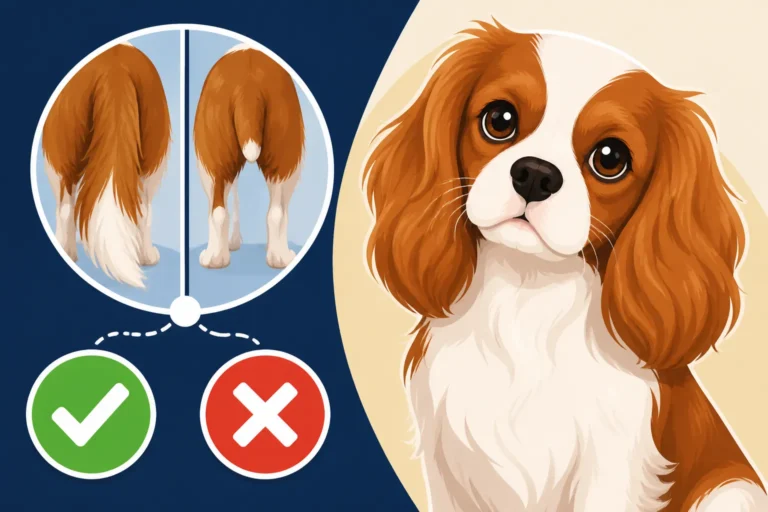
- Tail Carriage: The standard would describe a tail carried gaily but not much above the level of the back, and in balance with the body. Ann's Son displayed this elegant carriage.
These points directly countered the characteristics of the other "King Charles" varieties. The intention was to clearly differentiate this "new" old breed from its shorter-faced cousins. It was about recapturing the elegance and functional structure that had been lost. The distinction between The Cavalier's Longer Muzzle and Flatter Skull was literally the dividing line.
Early Breed Club Involvement
The effort to formally establish the Cavalier King Charles Spaniel as a distinct breed required a dedicated group of individuals. This led to the formation of The Cavalier King Charles Spaniel Club in 1928, just two years after Roswell Eldridge initiated his prize. This club was absolutely instrumental in bringing the dream to fruition. While Roswell Eldridge sadly passed away that same year, the momentum he created had taken hold.
The members of this newly formed club were the ones who took Ann's Son's living example and meticulously translated it into written form. This first standard was presented to the Kennel Club (the UK's primary dog registry) in 1928. However, formal recognition was not immediate. There was still a lot of debate and resistance, largely because the King Charles Spaniel already existed as a recognized breed, and differentiating the "new" old type required careful lobbying and demonstration of a consistent breed type. But the dedicated work of the club, using Ann's Son as their guiding light, was the crucial first step. If you're wondering Which Club Wrote the First Cavalier Standard, it was this pioneering group.
The Evolution and Legacy of the Standard
While Ann's Son provided the initial spark and blueprint, the breed standard, like any living document, had to evolve and solidify over time. His legacy, however, remained an unshakeable foundation.
Refining the Standard Over Time
A breed standard isn't typically set in stone the moment it's written. It's a foundational document that often undergoes subtle refinements as the breed develops, more individuals are evaluated, and collective understanding of the ideal type matures. For the nascent Cavalier King Charles Spaniel, the initial standard based on Ann's Son was excellent, but as more "old type" dogs were found or bred, and as the gene pool slowly expanded, there was room for nuance.
These refinements would address clarity, ensure that the descriptions were unambiguous for judges and breeders, and sometimes reflect a broader consensus on certain characteristics. For example, while Ann's Son demonstrated the ideal, the standard might be adjusted to ensure it didn't accidentally exclude other perfectly good examples that varied slightly. This iterative process is vital for any young breed. The ultimate goal is to produce a consistent look and temperament while maintaining genetic diversity within the desired type. Judges play a crucial role in this, interpreting the standard in the ring and rewarding dogs that best conform to its ideals, thus influencing breeding decisions.
Ann's Son's Lasting Influence
Even decades after his passing, Ann's Son's influence on the Cavalier King Charles Spaniel breed remained profound. He wasn't necessarily a prolific sire himself, but his significance lay in providing that undeniable, successful prototype. He proved that the "old type" was not merely a romantic ideal but a reproducible reality. His image and the descriptions of him became the benchmark for what a true Cavalier should look like.
Future breeders would look to dogs that carried similar traits to Ann's Son, striving to produce progeny that mirrored his elegant lines and distinctive head. He set the tone for the breed's physical appearance for generations. In essence, he became the iconic champion, defining excellence and proving the viability of the revival project. His early successes at Crufts are a testament to his impact; it wasn't just a one-off win but a sustained period of recognition for his correct type. One might even say he was undefeated in terms of establishing the ideal, a notion reflected in How Long the First Cavalier Champion Went Undefeated. His legacy is woven into the very fabric of the breed, a constant reminder of its historical roots and the vision that brought it back.
What the Standard Means for Cavaliers Today
The groundwork laid by Roswell Eldridge, cemented by Ann's Son, and formalized by the early breed club continues to shape the Cavalier King Charles Spaniel in the present day. The breed standard, initially drawn from Ann's Son's features, remains the essential guide for anyone involved with these charming dogs.
Guiding Breeders and Judges
For dedicated Cavalier breeders, the breed standard is their North Star. It's the blueprint they strive to achieve with every litter. A responsible breeder isn't just trying to produce "cute puppies" (though Cavaliers excel at that!), they are working to preserve and improve the breed's health, temperament, and conformity to this historical standard. When you visit a reputable breeder, they will be able to talk at length about how their dogs measure up to the standard, discussing everything from head shape to tail set. They understand that straying too far from the standard can lead to exaggerated features that might compromise health or function.
Similarly, for judges in the conformation ring, the standard is the ultimate rulebook. Every dog entered is assessed against this written description. Judges are not looking for personal preference; they are objectively evaluating how closely each Cavalier matches the ideal described in the standard. This rigorous process helps to maintain consistency in the breed's appearance and ensures that the Cavalier King Charles Spaniel today still resembles the dogs depicted in those ancient paintings and, crucially, still looks like Ann's Son. You can see this dedication in The AKC Standard for the Cavalier King Charles Spaniel, which directly descended from those early efforts.
Preserving Breed Type and Health
One of the most vital roles of the breed standard, particularly for a breed with specific health concerns like the Cavalier, is its connection to health and functional type. The early standard, by emphasizing a moderate muzzle length and a flat skull, was inherently promoting a more functional, healthier dog than the extremely short-faced King Charles Spaniels of the Victorian era. A proper muzzle allows for good breathing, and a correctly proportioned skull provides adequate space for the brain.
While modern health issues like Mitral Valve Disease and Syringomyelia have complex genetic roots that go beyond simple appearance, adherence to a sound structural standard can still contribute to overall vitality. A dog that is physically sound, with proper angulation, a strong topline, and correct proportions, is generally better equipped to live a healthy, active life. Responsible breeders use the standard not just as a beauty guide, but as a framework for sound physical development. While not a direct solution to every health challenge, the original vision, as personified by Ann's Son, sought to restore a more natural, functional dog, which is a crucial aspect of The Health Debate Around Breeding Cavaliers and ongoing efforts to improve the breed's well-being.
The careful selection for breed type also extends to temperament, which is another crucial part of the standard. The Cavalier is known for its sweet, gentle, and affectionate nature. The standard often describes this "gay and fearless" yet gentle disposition. Maintaining this temperament is just as important as maintaining physical appearance, ensuring that the Cavalier remains the delightful companion dog it was always intended to be.
| Feature | Victorian Era King Charles Spaniel | "Old Type" Cavalier (Ann's Son) |
|---|---|---|
| Muzzle Length | Very short, "cobby," pushed in | Moderate, distinctly longer |
| Skull Shape | Domed, "apple-headed" | Flat between the ears |
| Eyes | Large, prominent, often bulging | Large, dark, round, gentle expression, not bulging |
| Stop | Abrupt, deep indentation | Moderate, gentle slope |
| Head Profile | Dished, often with upturned nose | Flat skull, distinct muzzle, elegant profile |
| Overall Impression | Compact, sometimes almost square | Elegant, balanced, slightly longer in proportion |
Ann's Son was far more than just a dog who won a prize at Crufts; he was a living testament to a forgotten ideal, a tangible link to the past that helped redefine the future of a beloved breed. His emergence allowed the first Cavalier standard to be drafted, providing the crucial blueprint that breeders and judges continue to follow today. Thanks to his defining characteristics, and the dedication of early enthusiasts, the Cavalier King Charles Spaniel has returned to its historical roots, delighting families around the world with its enduring charm and distinctive good looks. When you see a Cavalier today, you're truly seeing the legacy of Ann's Son.
Disclaimer
This article is for general informational purposes only and does not constitute professional advice. Laws, prices and regulations vary by location and change over time. Consult a qualified professional for guidance on your specific situation.