Where the Cavalier Ann’s Son Came From
It’s a truly disheartening thought to imagine a beloved dog breed, a constant companion and source of joy for generations, almost fading away and transforming into something unrecognizable. For those of us who adore the Cavalier King Charles Spaniel, this wasn't just a hypothetical fear but a historical reality. This guide dives deep into that pivotal moment in canine history, exploring how the original type of spaniel was nearly lost and how a single dog, Ann's Son, played an absolutely crucial role in bringing the Cavalier back into existence as we know and love them today.
The Vanishing Breed: How Cavaliers Nearly Disappeared
Imagine strolling through a dog show in the late 19th or early 20th century, hoping to find a dog that resembled the elegant spaniels depicted in paintings from the courts of English kings. You'd likely have been met with disappointment. The sweet, long-nosed companions that sat on the laps of royalty, the very dogs that inspired the "King Charles" name, had undergone a drastic transformation. This wasn't some slow, natural evolution; it was the direct result of changing fads and selective breeding that pushed the breed in a completely different direction, nearly erasing its original form.
The Shift in Canine Fashion: From Long Snouts to Flat Faces
The original spaniels of King Charles II's era were known for their active, playful nature and their proportionate heads with distinct, albeit somewhat short, muzzles. They were hunting dogs first and foremost, scaled down for companionship, but retaining those functional features. However, as dog breeding became more about aesthetics and less about utility, especially with the rise of dog shows, tastes began to shift dramatically. The Victorians, in particular, developed a penchant for brachycephalic (flat-faced) breeds. Think about how popular Pugs and Japanese Chins became; their distinctive "squished" faces were considered highly fashionable.
This trend profoundly impacted the King Charles Spaniel, the ancestor breed. Breeders, aiming to meet the demands of the show ring and the prevailing fashion, began selecting for dogs with progressively shorter muzzles, domed skulls, and larger, rounder eyes. The result was a dog that, while charming in its own right, bore little resemblance to its 17th-century ancestors. This new type of spaniel eventually became known as the English Toy Spaniel in the US and simply the King Charles Spaniel in the UK. They were cute, yes, but they had lost the distinctive muzzle and elegant head of the dogs that had graced royal portraits. It was a complete makeover, and for many who admired the old ways, a true shame.
Roswell Eldridge's Vision: A Quest for the Old Type
Enter Roswell Eldridge, an American dog fancier with a keen eye for history and a deep love for the traditional spaniels. He looked at the show dogs of his day and saw a beautiful breed, but not the breed. He saw the "new type" King Charles Spaniel, with its flat face, and he knew it was a departure from the dogs of old. Eldridge was captivated by the classic paintings of King Charles II's beloved companions – elegant dogs with relatively flat skulls and longer muzzles, clearly distinct from the popular show dogs. He felt a profound sense of loss for this nearly extinct "old type" of spaniel.
In 1926, Eldridge made a bold move. At the prestigious Crufts dog show in England, he offered a generous prize of 25 pounds (a substantial sum at the time) for the "best dog or bitch of the Blenheim Spaniel type as shown in the pictures of Charles II's time, long face, no stop, flat skull, not inclined to be domed, with spot in centre of skull." This wasn't just a call for entries; it was a rallying cry for breeders to reverse course, to seek out and preserve the characteristics that had been bred out over decades. His advertisement, repeated for five years, sparked an interest that would eventually lead to the recreation of the breed we now call the Cavalier. You can read more about The 1926 Advertisement That Revived the Cavalier. Eldridge wasn't just looking for a dog; he was looking for a living piece of history.
Ann's Son: A Champion of the Revival
Roswell Eldridge's challenge ignited a small but passionate group of breeders. They began the arduous task of sifting through existing King Charles Spaniel lines, searching for dogs that still carried the recessive genes for the longer muzzle and flatter skull, or even finding dogs that had somehow escaped the brachycephalic trend. This was a true detective mission, poring over pedigrees and visiting kennels across the country. It was a huge undertaking, made more challenging by the fact that the "old type" was no longer fashionable.
The Search Begins: Finding the Right Stock
The initial response to Eldridge's prize was, understandably, slow. There weren't many dogs that fit his very specific description. Breeders had to start by identifying individuals that, even with the shorter faces, might still carry the ancestral genes or showed slight deviations towards the desired look. It was a painstaking process of selective breeding, often with limited stock. Think of it like trying to find a needle in a haystack, except the needle keeps trying to turn into a different kind of needle.
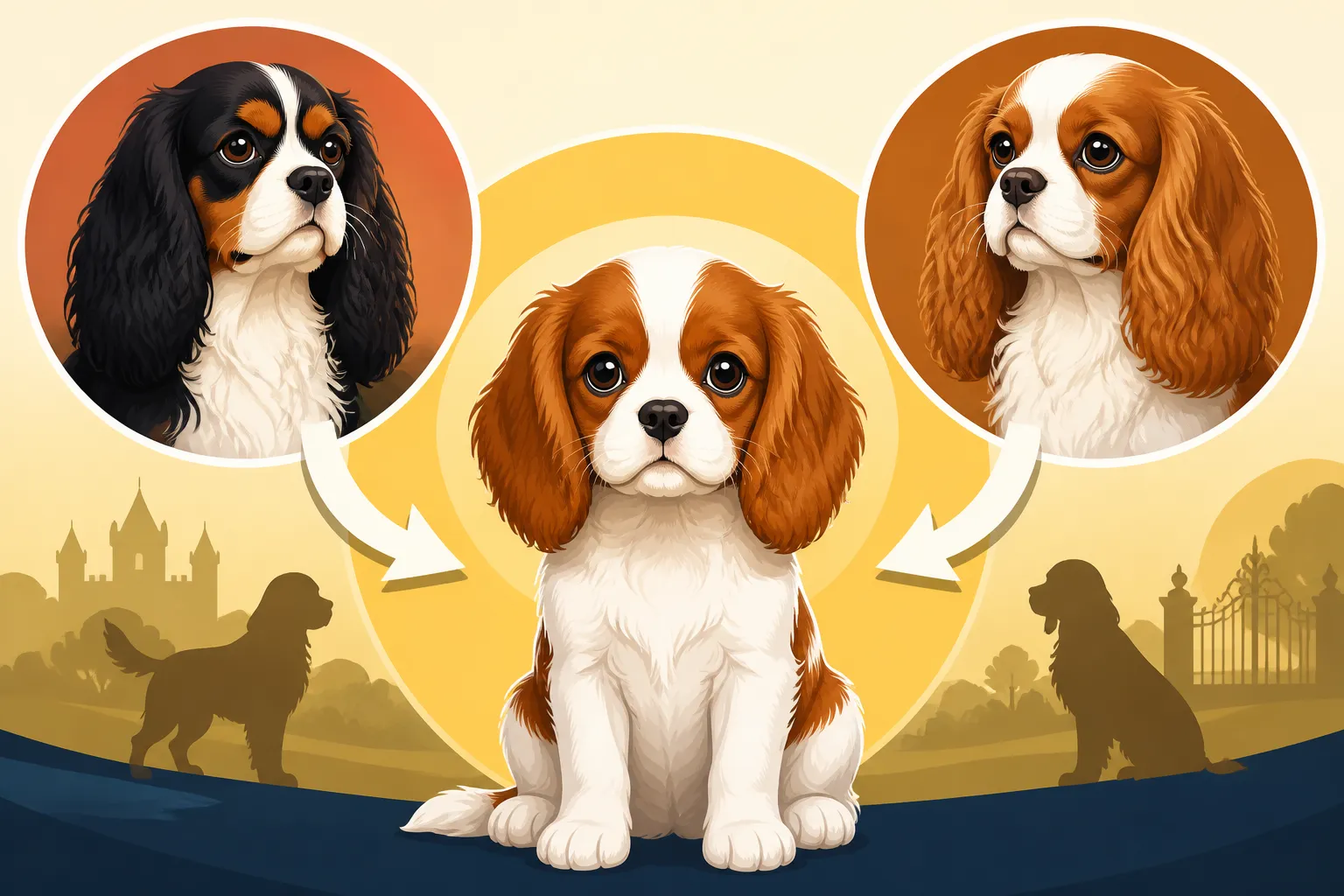
Among the early dogs that began to emerge and catch the eye of these dedicated breeders, a dog named Ann's Son quickly rose to prominence. He wasn't necessarily the first dog to win Eldridge's special class at Crufts – that honor often goes to a dog named "Duchess." However, Ann's Son's story, his lineage, and his remarkable adherence to the "old type" standard set him apart. He became a beacon of what the newly revived breed could and should be. He truly embodied the vision Roswell Eldridge had put forth.
Defining the Standard: Ann's Son's Influence
Ann's Son, born in 1928, was owned by Miss Mostyn Walker, one of the pioneering breeders dedicated to the revival. He was a Blenheim, with the beautiful chestnut and white markings that are so iconic today. What made Ann's Son so special was his exceptional conformation, particularly his head. He possessed that desired flatter skull and the longer, more elegant muzzle, without the pronounced "stop" (the indentation between the eyes) that was so common in the contemporary King Charles Spaniels. He had the kind, large, dark eyes without being overly prominent, and ears set high but with long feathering that framed his face beautifully.
He consistently won the special classes created for the "old type" spaniels at Crufts, demonstrating his exemplary adherence to the desired characteristics. His success in these classes cemented his status as a prime example of the developing Cavalier type. When the first official breed standard was being drafted for the new Cavalier King Charles Spaniel Club (formed in 1928), Ann's Son's physical traits were almost certainly a direct reference point. He wasn't just a winning dog; he was a living blueprint. Many believe that when it came to writing Ann's Son and the First Cavalier Standard, his very image was a central inspiration. His influence cannot be overstated in shaping what we consider a "correct" Cavalier today. For many searching for appropriate care products for their own Cavaliers, whether it's specific brushes or joint supplements, online retailers like Chewy offer a comprehensive selection based on the standard needs of the breed.
| Feature | Old Type (Cavalier King Charles Spaniel) | New Type (King Charles Spaniel/English Toy Spaniel) |
|---|---|---|
| Muzzle Length | Moderately long, tapering | Very short, pug-like |
| Stop | Shallow, gentle transition | Deep, well-defined |
| Skull Shape | Relatively flat between ears | Distinctly domed |
| Eye Prominence | Large, round, dark, but not bulging | Very large, prominent, sometimes bulging |
| Jaw Structure | Undershot jaw undesirable | Often undershot, typical of brachycephalic breeds |
| Body Build | Balanced, slightly more athletic | Compact, cobby |
The Legacy of Ann's Son and Early Cavalier Breeding
The appearance of dogs like Ann's Son was crucial, but it was just the beginning. The real work began with consistently breeding dogs that maintained these desired traits, moving beyond individual champions to establish a stable and healthy breed. This involved careful record-keeping, thoughtful selection, and a commitment to the vision that Eldridge and the early breeders shared.
Establishing the Breed Club and Registry
With a clear idea of the "old type" and exemplary dogs like Ann's Son to guide them, it became essential to formalize the effort. The Cavalier King Charles Spaniel Club was established in 1928. This club was instrumental in creating the first official breed standard, defining in detail the physical characteristics that distinguished the Cavalier from its shorter-faced cousins. Without this standard, the breed's development would have been chaotic, and the distinct look of the Cavalier might have fractured into many different interpretations. This pivotal moment solidified the direction of the breed and provided a framework for all future breeding efforts. Understanding this history helps us appreciate why certain traits, like The Cavalier's Longer Muzzle and Flatter Skull, are so fundamental to the breed's identity.
Establishing a registry was equally vital. This allowed breeders to track pedigrees, ensuring that future generations consistently met the standard and that careful breeding decisions could be made. It was about creating a genetic foundation for the breed, ensuring that the traits embodied by dogs like Ann's Son would be passed on and preserved. This foundational work laid the groundwork for the breed's eventual popularity worldwide.
The Challenges of a Limited Gene Pool
While the re-establishment of the Cavalier was a triumph, it came with inherent challenges. Starting a breed from a relatively small number of individuals, as was necessary with the "old type" spaniels, often means working with a limited gene pool. This can lead to a higher prevalence of certain genetic health conditions, even if the breeders are incredibly conscientious. Early breeders faced the difficult task of selecting for desired appearance while also trying to maintain genetic diversity as much as possible, a tension that continues to this day.
They were breeding to a very specific type, and while they were bringing back a beautiful dog, the long-term health implications of this concentrated breeding were not fully understood at the time. This is a crucial point to remember when we discuss the health challenges that Cavaliers face today, such as Mitral Valve Disease in the Cavalier King Charles Spaniel or Syringomyelia and Chiari Malformation in Cavaliers. The legacy of a limited gene pool, while necessary for the breed's aesthetic revival, inadvertently set the stage for some of its future health struggles. Responsible breeders today use DNA tests and health clearances to try and mitigate these historical genetic bottlenecks.
From Revival to Recognition: The Cavalier's Journey
The efforts of Roswell Eldridge and the early Cavalier breeders eventually bore fruit beyond just a few winning show dogs. The distinctive look and charming temperament of the "new old" spaniel began to capture hearts, and the breed slowly but surely gained traction.
Spreading the Cavalier Type: How Ann's Son's Offspring Propagated the Look
Ann's Son's importance extended far beyond his own show career. He was heavily utilized as a stud dog, meaning he sired many puppies, passing on his desirable traits to the next generation. His progeny became foundational for many of the early Cavalier lines, effectively propagating the "old type" look and solidifying it as the standard for the burgeoning breed. Through his offspring, the flat skull, longer muzzle, and gentle expression became hallmarks of the Cavalier. It's safe to say that a significant portion of Cavaliers alive today can trace their lineage back to these early, influential dogs.
The careful selection of mates for Ann's Son and other early champions was paramount. These breeders weren't just breeding dogs; they were shaping an entire breed's future. They sought to produce litters that consistently exhibited the ideal characteristics, ensuring that the "type" was firmly established and reproducible. This was a long-term commitment, often spanning generations of dogs and breeders, all working towards a common goal of bringing back The Old Type of Cavalier Eldridge Wanted Back. Whether you're researching historical breeding practices or looking for modern-day dog essentials, resources like Chewy provide insights and products that align with the care of Cavaliers across their lifespan.
The Road to Official Recognition
Despite the dedicated work of the Cavalier King Charles Spaniel Club and the growing number of beautiful "old type" spaniels, official recognition from major kennel clubs was a long time coming. For years, Cavaliers were shown in "Any Variety Not Separately Classified" classes because they weren't considered a distinct breed. The Kennel Club in the UK didn't grant separate registration for Cavaliers until 1945. It took even longer for the breed to be fully recognized by the American Kennel Club (AKC), which finally happened in 1995.
This slow path to recognition highlights the dedication and perseverance of the early enthusiasts. They believed so strongly in their vision for the breed that they continued their efforts for decades, even without the full official sanction of the major organizations. This recognition was the ultimate stamp of approval, signifying that the Cavalier King Charles Spaniel had successfully been revived and established as its own unique and beloved breed, distinct from its shorter-faced relatives. The journey from a few scattered dogs to a globally recognized and adored companion breed, with Ann's Son as a crucial early player, is truly remarkable.
Disclaimer
This article is for general informational purposes only and does not constitute professional advice. Laws, prices and regulations vary by location and change over time. Consult a qualified professional for guidance on your specific situation.