Where People Actually Get Their Cavaliers
You have decided a Cavalier King Charles Spaniel is the dog for you, and then you start searching. Within an hour you have found glossy breeder websites, pet store listings, classified ads, rescue profiles and a neighbor whose cousin has a litter. Each source tells a different story about health and price. This guide breaks down where people actually get their Cavaliers, what each route tends to mean for the dog’s health, and how to choose well.
The Main Routes Into Cavalier Ownership
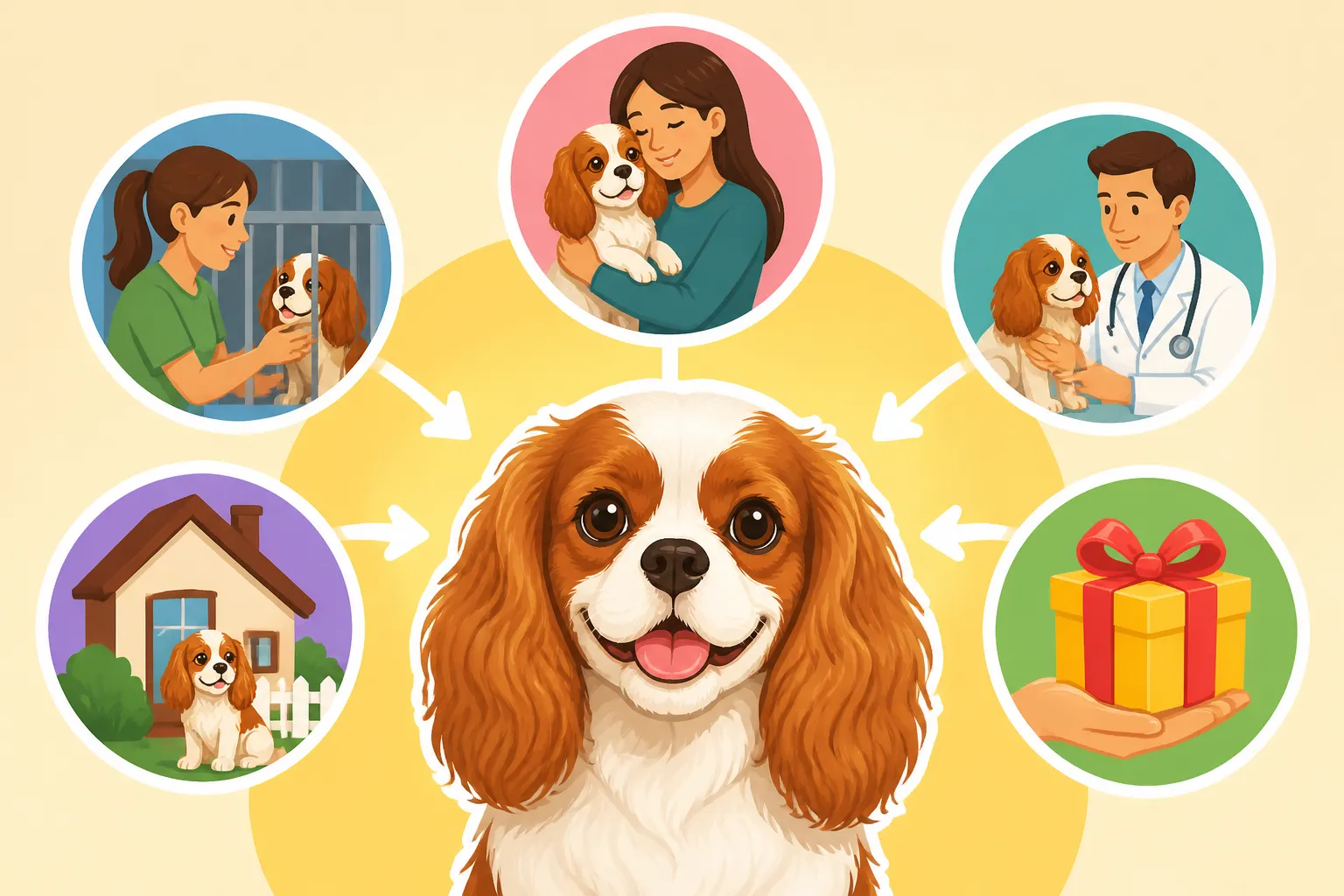
Cavaliers reach their families through a handful of channels. Some are well known, like show breeders and rescues. Others are less visible, like retired breeding dogs or private rehoming between friends. Understanding the whole landscape helps you see why two Cavaliers that look alike can come with very different health odds.
Hobby and Show Breeders
A large share of carefully bred Cavaliers comes from hobby breeders, often people who show their dogs and belong to a breed club. They typically breed a small number of litters, keep puppies from some of them for their own programs and place the rest in pet homes. Many of these breeders follow established health screening protocols for the heart, eyes, hips and knees, and some also scan for syringomyelia.
These breeders are not always easy to find. They may have a simple website or none at all, rely on word of mouth and keep a waiting list rather than advertising available puppies. Buyers who go this route often describe it as being interviewed as much as interviewing. The site’s guide Buying a Cavalier From a Health-Testing Breeder covers what that process usually looks like.
Picture a family in Ohio who contacts a breeder recommended by a regional club. The breeder asks about their schedule, their yard, their experience with dogs and whether they understand the breed’s heart risks. They are offered a spot on a list for a litter expected the following spring. It takes patience, but they know exactly which tests the parents have had.
Commercial Breeders and Pet Stores
A different stream of Cavaliers comes from larger commercial breeding operations. These puppies may be sold through pet stores, brokers or online storefronts. They often come with registration papers and sometimes a short health guarantee, but buyers rarely meet the parents or see the kennel.
Pet stores and online sellers can be convenient. A buyer can walk in and leave with a puppy the same day, or pay online and have a puppy delivered. The trade off is that it is much harder to confirm what health testing was done on the parents, particularly for the breed specific heart and neurological issues that matter most in Cavaliers.
Some states and cities restrict the sale of commercially bred puppies in retail stores, which has pushed more of this trade online. If you are considering this route, ask very specific questions about the parents’ health certificates and be prepared for vague answers.
Online Marketplaces and Classified Ads
Many Cavaliers are sold through classified ads, social media groups and general puppy marketplaces. Sellers range from careful small breeders to backyard breeders with a single litter and, unfortunately, scammers who never had a puppy at all.
These platforms can connect you with a good breeder, but they also make it easy to cut corners. Photos can be borrowed, health certificates can be invented and puppies can be shipped before a buyer has asked the right questions. The article Cavalier Puppy Scams and Fake Heart Certificates explains common red flags.
A rule of thumb many experienced Cavalier owners use is simple: if you cannot speak to the seller at length, see the parents in person or by live video and verify their health certificates independently, keep looking.
Rescue, Rehoming and Retired Dogs
Not every Cavalier arrives as a puppy. A meaningful number come from rescue groups, private rehoming and breeders placing retired adults. These routes can be wonderful matches for the right home, especially for people who prefer an adult dog with a known temperament.
Breed Specific Rescues
Cavalier rescue groups operate in many regions. They take in dogs surrendered by owners, dogs pulled from shelters and sometimes dogs released from commercial breeding operations. Most rescue dogs live in foster homes before adoption, which gives the rescue a clearer picture of each dog’s personality and needs.
Adopters often find that rescue Cavaliers are adults or seniors, and many have known health conditions, especially heart murmurs. That is not a reason to avoid them. It is a reason to adopt with open eyes. The site’s articles Whether a Rescue Cavalier Comes With Health History and What a Cavalier Rescue Asks Adopters to Pay are helpful places to start.
Many rescues include vaccination, spay or neuter, a vet check and sometimes dental work in their adoption process. Fees vary, and some rescues adjust them for seniors or dogs with significant medical needs.
Private Rehoming
Some Cavaliers move directly from one family to another. Owners may be moving, facing health issues or simply realizing they cannot give the dog enough time. These dogs might be offered to friends, coworkers, neighbors or through local online groups.
Private rehoming can be a good option when the current owner is honest about the dog’s health and behavior and shares vet records. It can be risky when the dog has hidden medical problems or behavior issues that the owner does not disclose. Ask for records, talk to the dog’s vet if possible and spend time with the dog before making a decision.
Retired Breeding Dogs
Responsible breeders sometimes place adult dogs that have finished their breeding careers or did not turn out to be suitable for showing or breeding. These Cavaliers are often well socialized, house trained and used to living with people. They are usually spayed or neutered before placement.
Retired dogs can be ideal for families who want a calmer adult and value knowing the dog’s history. Because they come from breeding programs that test regularly, they may have more complete health records than many rescue dogs. Ask about the most recent heart exam and any other relevant tests.
| Source | Typical Age | Health Records | Upfront Cost Pattern | Main Risk |
|---|---|---|---|---|
| Health testing hobby breeder | Puppy, sometimes retired adult | Parents’ heart, eye, hip and knee results, sometimes MRI | Higher | Long wait |
| Commercial breeder or pet store | Puppy | Registration, limited parent health detail | Often high | Unknown heart and neurological screening |
| Online marketplace or classified | Puppy | Varies from good to none | Wide range | Scams and untested parents |
| Breed rescue | Adult or senior | Vet check, known conditions disclosed | Adoption fee | Existing health issues |
| Private rehoming | Any age | Whatever the owner shares | Low to moderate | Undisclosed problems |
| Retired breeding dog | Adult | Breeding program records | Moderate | Fewer years ahead |
Imported Cavaliers
A smaller number of Cavaliers in North America are imported, usually by breeders bringing in dogs from established European or British lines to widen their breeding programs. Occasionally pet buyers import a puppy directly, often because they admire a particular kennel overseas.
Importing adds paperwork, travel stress for the dog and the challenge of verifying health results from another country. Heart and eye examinations are performed under different schemes in different places, so buyers need to understand exactly what each certificate means. For most pet homes, a well researched breeder closer to home is simpler, but imports do play a real role in the breed’s gene pool.
Why the Source Matters So Much for Cavaliers
Every breed has health concerns, but Cavaliers have two that make the source of your dog especially important: mitral valve disease and syringomyelia. How a breeder approaches these conditions shapes the odds your dog faces.
Heart Disease and Breeding Protocols
Mitral valve disease is the leading cause of death in Cavaliers. It is common in the breed and tends to appear earlier than in many other breeds. Breeders cannot eliminate it, but careful heart screening and thoughtful breeding decisions aim to delay its onset in future generations.
Many breed clubs encourage breeders to follow a mitral valve disease breeding protocol. In broad terms, it asks that breeding dogs be examined by a board certified cardiologist and that dogs be bred only if their own hearts and their parents’ hearts meet certain standards at certain ages. The site’s guides The Heart Testing a Cavalier Breeder Must Do and Reading a Cavalier Puppy’s Health Certificates explain what to look for in the paperwork.
When a seller cannot show cardiologist results for both parents, you have no way of knowing how seriously heart health was considered. That is why Cavaliers Sold Without Heart Clearances is one of the most important issues for buyers to understand.
Syringomyelia and Screening
Syringomyelia is a neurological condition in which fluid filled cavities develop in the spinal cord, often linked to a skull shape that does not leave enough room for the brain. Some affected Cavaliers show no signs, while others have pain, scratching at the neck or shoulder, or sensitivity to touch.
Some breeders MRI scan their breeding dogs and use the results to guide pairings. MRI is expensive and not every breeder does it, but those who do are investing in the long term neurological health of the breed. Ask breeders whether they scan, at what age and how they use the results.
Other Health Checks
Responsible breeders also screen for eye problems, hip dysplasia and patellar luxation, and some run DNA tests for conditions such as episodic falling and dry eye with curly coat. These tests give you a clearer picture of the risks your puppy might face. A breeder who can explain each result, rather than just handing over a folder, is usually one who takes health seriously.
What Buyers Actually Experience on Each Route
The source you choose affects more than health. It shapes how long you wait, how much contact you have with the seller and what support you get after the dog comes home.
The Wait for a Well Bred Puppy
Health testing breeders often have waiting lists, sometimes long ones. They may not have puppies available year round, and they may choose buyers carefully. For people who want a puppy quickly, this can be frustrating. The site’s piece Waiting Lists at Cavalier Breeders explains why lists exist and how buyers usually move through them.
Deposits are common at this stage. Policies vary widely, so read the terms before you pay. Ask whether the deposit is refundable, what happens if the litter is smaller than expected and whether it can roll over to a later litter, and get the answers in writing.
Many families find the wait worthwhile. It gives them time to prepare, learn about the breed and build a relationship with the breeder. Some breeders send photos and updates as puppies grow, and buyers often stay in touch for years.
The Speed of Commercial and Online Sales
Commercial breeders, pet stores and many online sellers offer speed and convenience. You may be able to choose a puppy today and take it home this week. For some buyers, that is appealing, especially after a long search.
The cost of speed is often uncertainty. You may not know how the parents were raised, how well the puppy was socialized or what health testing was done. If problems appear later, you may have limited recourse beyond a short guarantee.
Think of two buyers who bring home Cavaliers in the same month. One waited six months for a breeder who scanned hearts and showed records. The other bought from an online listing with a vague health promise. Both puppies may be healthy at first, but the first buyer has much clearer information about the risks ahead.
Support After the Dog Comes Home
Responsible breeders and rescues typically offer ongoing support. They answer questions about feeding, training and health, and many will take a dog back at any age if the owner can no longer keep it. That safety net matters, especially with a breed prone to heart disease and neurological issues.
Commercial sellers and online marketplaces often provide little support after the sale. Some offer basic guarantees, but they rarely have the breed specific knowledge or long term commitment of a dedicated breeder or rescue.
How Cost Really Differs by Source
Price is often the first thing buyers compare, and it is also the easiest thing to misread. The number on the listing is only part of what a Cavalier costs, and the cheapest route at the start is not always the cheapest over the dog’s life.
What the Upfront Price Pays For
A health testing breeder’s price usually reflects real expenses: cardiologist exams for breeding dogs every year, eye exams, hip and knee screening, sometimes MRI scans, quality food, vet care for the mother and litter, and many hours of socialization. The site’s article The Price Range Cavalier Breeders Actually Quote looks at how those costs show up in what breeders charge.
Commercial sellers and pet stores can charge similar or even higher prices without the same health investment, because the price there often reflects convenience, marketing and the cost of transport through brokers. A high price on its own tells you very little. What matters is what the price is paying for, and whether you can see proof of it.
Rescue fees are usually lower, but they often cover a vet check, vaccinations, spay or neuter and sometimes dental work or a cardiology exam. For an adult Cavalier, that can represent good value, especially when the rescue is honest about any existing conditions.
The Costs That Come Later
The bigger financial story for many Cavalier owners is what happens after the first few years. Heart disease in the breed can mean regular cardiology visits, imaging and lifelong medication. Syringomyelia can mean MRI scans and pain management. Ear and dental care add up too.
A puppy from parents with well documented heart results does not come with a guarantee, but it gives you a better chance of a later onset. A puppy from untested parents may cost less on day one and much more over the following decade. Many owners also look into pet insurance early, before any murmur is recorded, since conditions found before enrollment are usually excluded.
When a Low Price Is a Warning
Very low prices for Cavalier puppies should prompt careful questions. Sometimes there is an honest reason, such as a breeder placing a puppy with a minor cosmetic fault. More often, a low price reflects skipped health testing, poor rearing conditions or a listing that is not genuine at all.
If a seller asks for payment by wire transfer or gift cards, refuses video calls, pressures you to decide quickly or offers to ship a puppy without meeting you, step back. These patterns show up again and again in reports of puppy scams.
Red Flags That Cross Every Route
Some warning signs apply no matter where you are looking. Learning to spot them can save you heartbreak, whether you are talking to a breeder, a pet store, a private seller or even a rescue.
Missing or Unverifiable Health Records
Any source that cannot produce health records you can verify independently deserves caution. For heart results in particular, ask for dates and the name of the examining cardiologist. A certificate without dates, or one from a general practice vet listening with a stethoscope rather than a cardiologist, does not tell you the same thing.
Pressure and Secrecy
Good sources are generally happy to slow down and answer questions. Pressure to commit immediately, refusal to let you see where puppies are raised, or reluctance to share the parents’ registered names are all reasons to be cautious. Responsible breeders and rescues want the placement to last, so they have every reason to be open with you.
No Plan for the Dog’s Whole Life
Ask every source what happens if your circumstances change. Responsible breeders often require that the dog come back to them rather than going to a shelter, and many rescues have similar terms. A seller who has no interest in what happens to the dog after the sale is telling you something about how the puppy was produced.
Choosing Where to Get Your Cavalier
Choosing where to get your Cavalier is about balancing your priorities: health, timing, age of the dog and your comfort with uncertainty. There is no single right answer for everyone, but some approaches are more likely to lead to a healthy, well adjusted companion.
Questions to Ask Any Source
Whatever route you consider, a short list of questions sorts careful sources from careless ones:
- Can I see cardiologist heart results for both parents, with dates?
- Have the parents had eye, hip and knee screening, and can I see the results?
- Has either parent been MRI scanned for syringomyelia?
- Can I meet the mother, and the father if he is on site, in person or by live video?
- How are the puppies raised and socialized before they leave?
- What happens if I can no longer keep the dog at any point in its life?
- What does the contract or adoption agreement say about health and returns?
A breeder or rescue that answers clearly and shows documents without fuss is usually a good sign. One that avoids questions or pushes you to decide quickly is a reason to slow down.
Matching the Route to Your Situation
If you want a puppy and are willing to wait, a health testing breeder is often the best way to improve your odds of a healthy Cavalier. If you are open to an adult or senior and willing to manage existing health conditions, rescue can be a deeply rewarding option. The site’s guide Adopting an Older Cavalier With a Heart Diagnosis covers what that commitment involves, and Where Cavaliers Come From Besides Breeders looks at the less obvious routes in more detail.
If you are considering a pet store, commercial breeder or online seller, ask for the same health information you would expect from a dedicated breeder. If they cannot provide it, think carefully about whether the convenience is worth the risk.
Preparing for Your Cavalier’s Arrival
However you find your Cavalier, preparation makes the transition easier. Set up a quiet area with a bed and crate, choose a quality food recommended by your breeder, rescue or vet, and pick up basics like a harness, leash, grooming tools and toys. Many owners order these supplies through Chewy or similar retailers so they arrive before the dog does. The site’s guide Setting Up for a Cavalier Puppy’s First Weeks has a full checklist.
Book a vet visit soon after your Cavalier comes home. Bring any health records you received and ask about a heart check schedule, dental care and weight management. Building a relationship with your vet early makes it easier to catch problems before they become serious.
Cavaliers are affectionate, gentle companions who give a great deal of love. Choosing a thoughtful source is the first step in giving that love the best chance to last as long as possible.
Disclaimer
This article is for general informational purposes only and does not constitute professional advice. Laws, prices and regulations vary by location and change over time. Consult a qualified professional for guidance on your specific situation.