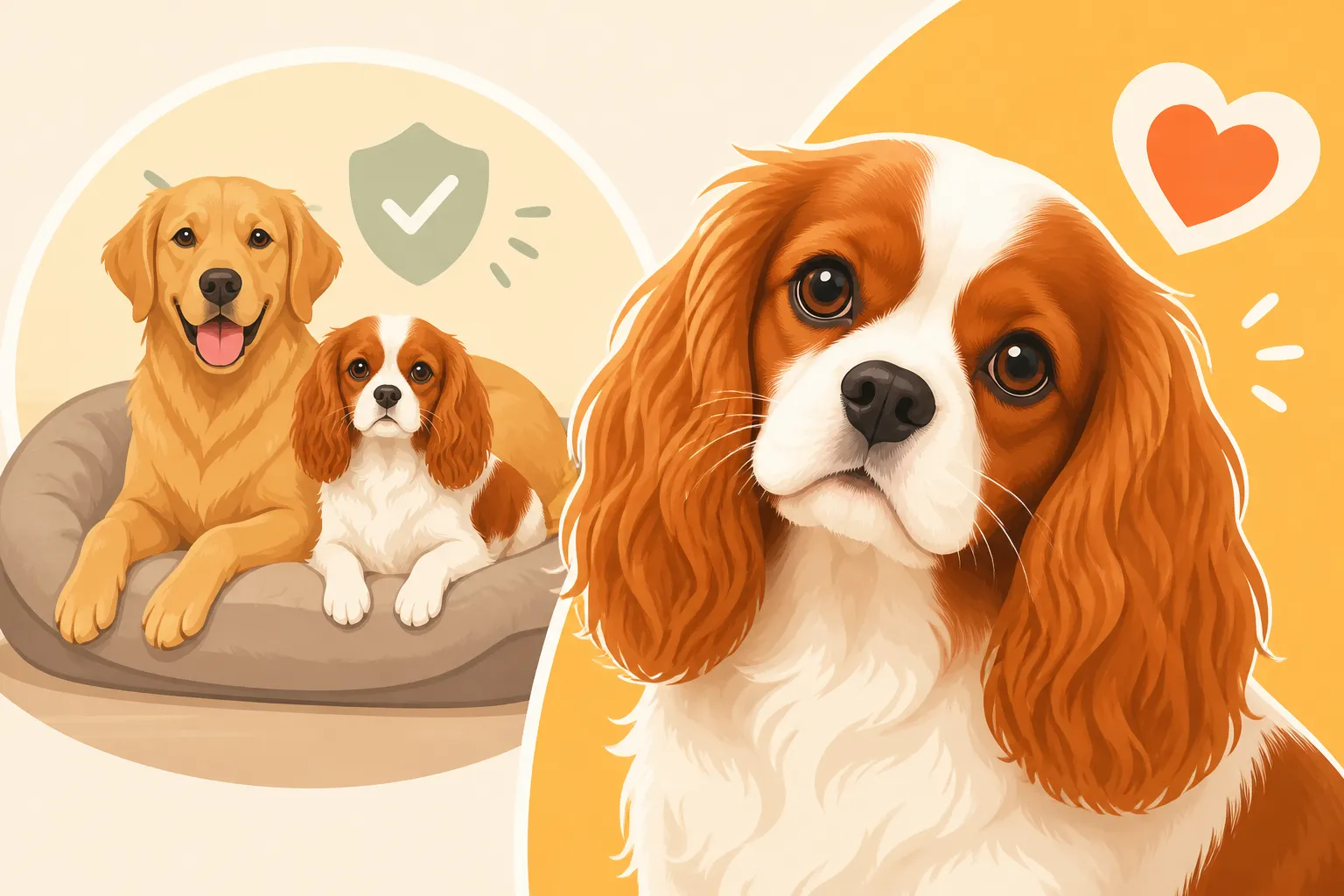
Cavaliers as a Second Dog
Bringing a Cavalier King Charles Spaniel into a home with another dog can be a lovely fit, but a sweet reputation does not guarantee instant friendship. Differences in size, energy, confidence, and routines can make the first weeks awkward. This guide explains how to choose a compatible Cavalier, prepare your home, introduce the dogs safely, and help them settle into life together.
Is a Cavalier a good second dog
Cavaliers are often affectionate and sociable, and many enjoy living with another dog. But “friendly” does not mean every Cavalier wants to share a bed, toys, food, or a person’s attention. The resident dog’s temperament and past experiences matter just as much as the Cavalier’s breed.
A second dog should add companionship without being expected to fix the first dog’s loneliness, anxiety, or behavior challenges. If your current dog struggles around other dogs, start by working on that issue rather than assuming a new companion will change it.
What Cavaliers may bring to a multi-dog home
Many Cavaliers are people-oriented and enjoy being near the household. Some also find comfort in having a calm canine companion around, especially when the dogs have compatible energy and communication styles. A relaxed Cavalier may happily nap beside another dog, follow them around the garden, or join a short play session.
Still, Cavaliers vary. One may be eager to greet every dog at the park; another may prefer a familiar companion and quiet interactions. Their sporting-spaniel background can also show up as interest in scents, birds, and movement. That instinct does not necessarily cause conflict at home, but it helps to remember that a Cavalier is a dog with individual preferences, not a guaranteed easygoing accessory. For more on the breed’s personality, see Cavalier Temperament and the Sporting Spaniel Beneath It.
What matters more than breed labels
Look closely at the resident dog’s actual behavior. Does your dog relax around other dogs after the initial greeting, or stay tense and vigilant? Can they move away from play when they want a break? Have they shared a home with dogs before? These details tell you more than a broad description like “good with dogs.”
Age and physical size matter, too. A small Cavalier can be injured by rough play even when the larger dog is not being aggressive. A senior dog may appreciate a quiet companion but dislike a bouncy puppy grabbing at their ears. A young, playful resident dog may be a better match for a Cavalier who enjoys games, provided both dogs can pause and settle.
If you are still deciding whether the breed’s needs suit your household, Whether a Cavalier Is the Right Dog for You can help you think beyond the appeal of having two dogs.
Choose a Cavalier that fits your resident dog
There is no perfect age or personality profile for a second dog. The best match depends on what your existing dog enjoys and what your home can realistically manage. Be honest about the dogs you already have, rather than choosing a puppy based on the hope that they will “grow into” a compatible companion.
Puppy, adult, or rescue Cavalier
A puppy gives you the chance to shape early experiences, but puppy energy can be a lot for an older or more reserved dog. Puppies often pounce, nip, and keep asking to play after the adult dog has had enough. You will need to supervise closely and give the resident dog child-free-style breaks from the newcomer.
An adult Cavalier may have a clearer personality and known history with other dogs. That can make it easier to judge whether the match is promising. A rescue dog may also come with useful information about previous home life, although any history is only part of the picture. Ask how the dog behaves around other dogs, food, toys, and handling, and whether introductions can be arranged thoughtfully.
If you are considering adoption, Where Cavaliers Come From Besides Breeders explains some of the routes people take to find a Cavalier. For a household with an older resident dog, Whether to Take an Older Cavalier Instead may also help you weigh the benefits and practical considerations of choosing an adult.
Match energy, size, and social style
A good match does not require identical personalities. A lively dog and a quieter dog can coexist if the lively one can respect boundaries and both have room to choose separate activities. The difficulty comes when one dog repeatedly pushes for interaction and the other has no way to retreat.
Consider play style as well as energy. Some dogs enjoy chasing and wrestling; others prefer parallel walks and sniffing together. A Cavalier may be physically small compared with a resident dog, so even friendly roughhousing needs management. Avoid assuming that a large dog will automatically be gentle or that two small dogs will automatically get along.
| Resident dog | Possible fit with a Cavalier | What to plan for |
|---|---|---|
| Calm adult dog comfortable with other dogs | Often a promising starting point | Give both dogs separate resting places and supervised time together |
| Older dog with low patience for puppy play | May suit a settled adult better than a puppy | Protect the older dog’s quiet time and interrupt pestering early |
| High-energy young dog | Can work if play stays controlled | Use breaks, size-aware supervision, and separate exercise when needed |
| Dog that guards food or toys | Needs careful assessment before adding a dog | Keep resources separate and seek qualified behavior support if guarding is significant |
| Dog that is fearful or reactive around dogs | A new dog may add stress rather than solve it | Get professional guidance before arranging a permanent introduction |
These are starting points, not guarantees. A dog with a history of serious fights, strong resource guarding, or intense fear needs an individualized plan. In that situation, a qualified reward-based trainer or veterinary behavior professional can help assess the risks before you commit.
Prepare your home before the dogs meet
A smooth transition is easier when the dogs do not have to compete for every valuable thing. Set up the home so each dog can eat, sleep, and take a break without being followed. The goal is not to force closeness; it is to make calm coexistence feel safe and ordinary.
Set up separate spaces and resources
Give each dog a bed or resting area that the other dog cannot crowd. Use baby gates, exercise pens, or closed doors to create separation when you cannot actively supervise. Separation is not a punishment. It lets the dogs relax and prevents a playful puppy from following an adult dog from room to room.
Feed the dogs separately, especially at first. Pick up bowls when meals are over, and keep chews and high-value toys apart until you know how each dog behaves. A second set of everyday supplies can prevent small household bottlenecks: separate bowls, leads, beds, and grooming tools make routines easier to manage. Chewy is one place owners may check when they need to organize basic dog supplies, but choose equipment that fits each dog safely rather than buying matching items for appearance.
Keep the resident dog’s familiar routines as steady as possible. Their usual walk, resting spot, and time with you can help them feel that the newcomer has not taken over the household. Cavaliers can be very people-focused, so make space for one-on-one attention for both dogs instead of expecting them to share every moment.
Plan introductions in stages
If possible, begin with scent rather than a face-to-face meeting. Swap a blanket or let each dog sniff the other’s bedding, without pushing either dog toward the item. Then arrange an initial meeting in a neutral, low-distraction place, such as a quiet outdoor area where both dogs can move comfortably.
Have one capable adult handle each dog. Start at a distance where both can notice one another without staring, pulling, or becoming overwhelmed. Walk in the same direction, gradually closing the gap only while their bodies remain loose and they can respond to their handlers. Avoid tight leash greetings that leave dogs nose-to-nose with no room to move away.
Keep the first sessions brief. A calm ending is more useful than stretching the meeting until one dog is tired or irritated. If you see stiff posture, prolonged hard staring, repeated attempts to escape, growling, or snapping, create distance and pause. Do not punish a warning growl; it is information that the dog needs more space. For help with gentle early experiences, Socializing a Cavalier Puppy Gently offers related guidance.
Help the dogs settle in safely
The first few days may look uneventful, or they may include awkward moments as the dogs work out how to share space. A little sniffing, avoidance, or brief uncertainty can be normal. What matters is whether both dogs can recover, relax, and disengage rather than being trapped in repeated tension.
Supervise play and protect breaks
Stay close during early interactions, particularly if there is a large size difference or the Cavalier is a puppy. Watch the dogs’ bodies, not just the noise they make. Play often includes loose movement, pauses, and role changes. A dog that repeatedly tries to leave, hides behind a person, freezes, or tucks their tail may be asking for a break.
Interrupt gently before excitement rises too far. Call the dogs apart, guide them to separate areas, and give them time to settle. If one dog keeps restarting play after the other has disengaged, manage access more carefully. A short, successful interaction is better than a long session that ends in frustration.
Supervision is especially important around children, food, doorways, and resting spots. Keep a Cavalier from jumping on or pestering a dog that is sleeping, and do not let either dog crowd the other in a narrow hallway. A gate can be helpful when you need to cook, answer the door, or take a phone call and cannot watch every interaction.
Build separate routines as well as shared ones
Two dogs do not need to do everything together. Individual walks, training sessions, and quiet time can reduce competition and give each dog a chance to enjoy attention without interruption. This is also practical when one dog has different exercise needs or health limitations.
Use reward-based training to teach simple behaviors such as coming when called, settling on a mat, and waiting while the other dog receives attention. Reward calm behavior around the other dog, including choosing to lie down or walk away. For guidance on keeping training low-pressure, see Reward-Based Training With a Cavalier.
A shared routine can grow gradually: a calm walk together, resting in the same room at a comfortable distance, or taking turns receiving treats. Keep food and treats controlled so neither dog feels they need to guard them. If you use online pet-supply retailers such as Chewy to restock treats or enrichment items, choose options that suit each dog’s dietary needs and supervise anything the dogs might try to take from one another.
Notice when the adjustment is not going well
Do not wait for a serious incident before changing the plan. Repeated hiding, inability to rest, persistent guarding, escalating growls, or one dog shadowing and harassing the other are signs that the arrangement needs more structure. Separate the dogs and seek professional help if the tension continues or if either dog has bitten or been injured.
A sudden change in behavior can also have a health-related cause. A dog in pain may become less tolerant of play or handling, while a newcomer may be overwhelmed by a noisy, busy household. A veterinary check is sensible when a dog’s behavior changes abruptly, or when you notice signs such as limping, yelping, appetite changes, or withdrawal. The guide Behavior Changes That Mean a Cavalier Hurts discusses why a shift in temperament deserves attention.
Do not assume that two dogs must become best friends for the arrangement to succeed. A peaceful home where they rest in separate spots, share space without conflict, and enjoy occasional activities together can be a perfectly good outcome. If you are considering another dog because your Cavalier seems distressed when alone, a second dog is not a guaranteed fix; Whether Another Dog Fills the Gap for a Cavalier explores that question more closely.
Disclaimer
This article is for general informational purposes only and does not constitute professional advice. Laws, prices and regulations vary by location and change over time. Consult a qualified professional for guidance on your specific situation.