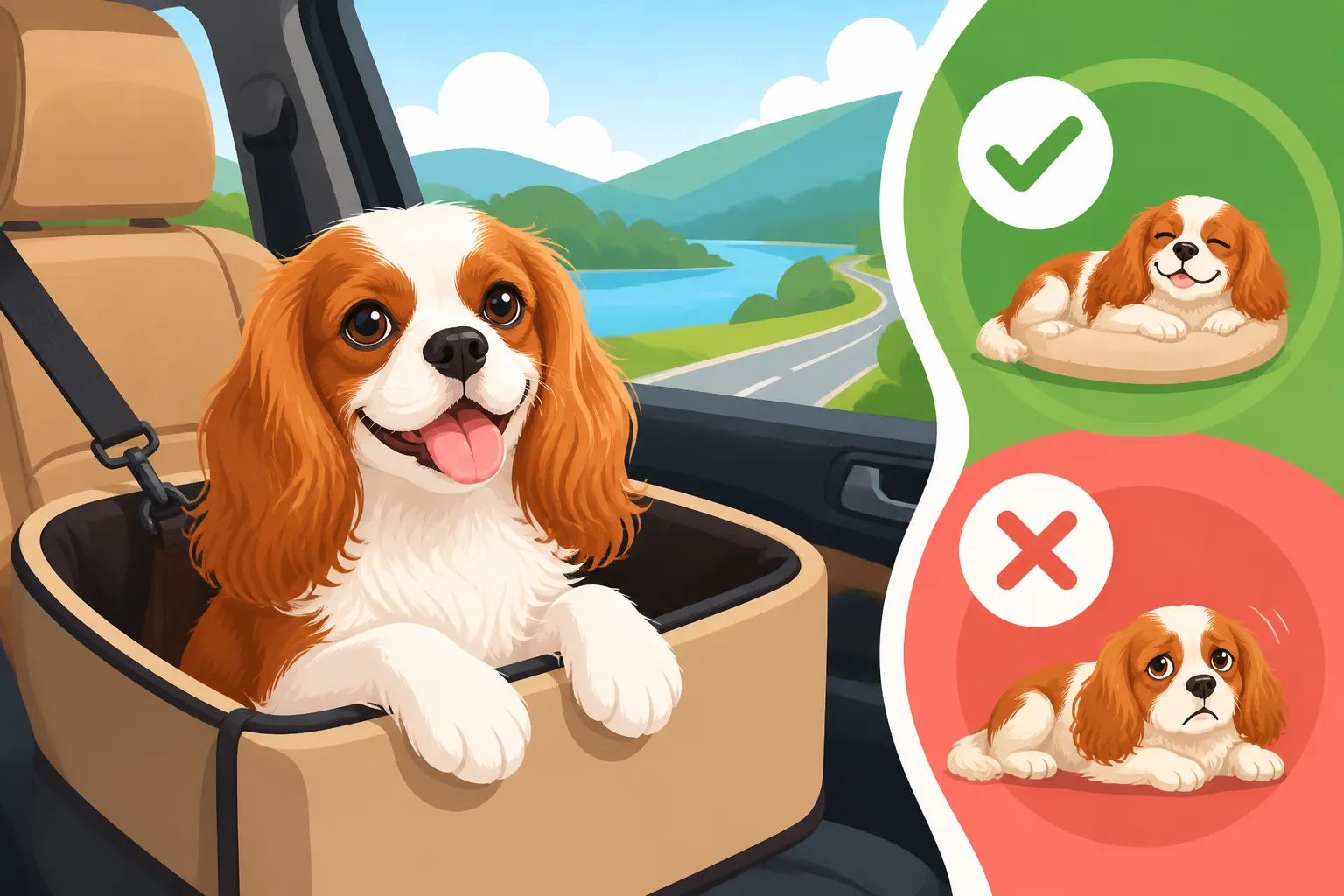
Whether a Cavalier Handles Long Car Trips
A Cavalier may happily curl up beside you for a long drive, then become restless, nauseated, or worried once the scenery keeps changing. Long car trips can suit many Cavaliers, but comfort depends on preparation, safe restraint, regular breaks, and your dog’s health and temperament. This guide explains how to decide whether your Cavalier is ready and how to make the journey easier.
Can a Cavalier Handle a Long Car Trip
Why many Cavaliers travel well
Cavaliers are usually people-oriented dogs, and many settle happily when they can rest near their family. A dog who already snoozes during short drives may adapt well to a longer journey, especially if the car feels familiar and the trip includes calm breaks. Their compact size can also make it easier to provide a secure travel space than it would be for a large dog.
Still, enjoying company does not automatically mean enjoying the car. Some Cavaliers find engine noise, movement, unfamiliar smells, and changing light unsettling. Others are content for the first stretch and then become uncomfortable, vocal, or unable to settle. A dog who is cheerful at home may need gradual practice before a multi-hour trip.
The breed’s affectionate, companionable nature is part of what makes many Cavaliers pleasant travel partners. It also means some can struggle when a car journey separates them from the person they want to be beside, or when they cannot sit on a lap as they normally do at home. For a fuller picture of the traits behind this behavior, see Cavalier Temperament and the Sporting Spaniel Beneath It.
What can make the drive difficult
Motion sickness is one common reason a Cavalier may dislike car travel. Signs can include drooling, repeated swallowing, lip licking, yawning, whining, restlessness, or vomiting. A dog may appear frightened when the actual problem is nausea, and an unpleasant early experience can make later rides harder.
Anxiety can look similar. Your dog might pant when the car starts, tremble, bark, try to climb into the front seat, or refuse to get in. Some dogs are unsettled by the restraint itself, particularly if they have not practiced wearing a harness or resting in a carrier before travel. For dogs who already find separation hard, being contained in a moving car can add another layer of stress. Why Cavaliers Are Called Velcro Dogs offers more context on why some Cavaliers find distance from their people difficult.
Health also matters. A dog with heart disease, neck pain, joint problems, or breathing difficulties may need a different travel plan from a healthy adult. Older dogs may need more frequent opportunities to stretch, drink, or relieve themselves. If your Cavalier has a heart murmur, cough, poor stamina, or a known neurological condition, ask your veterinarian what precautions fit that dog before setting off. A car journey should not be treated as a test of how much discomfort your dog can tolerate.
The individual dog matters more than the breed label
A young dog who has only taken short trips to the vet may need patient practice, while an older dog with years of calm car rides may be a seasoned passenger. A rescue Cavalier’s history may be unknown, so take time to observe their reactions instead of assuming they will either love or hate travel.
Consider the trip itself, too. A steady drive with predictable stops is very different from a day of stop-start traffic, loud rest areas, and frequent changes of vehicle. A route along I-95, for example, can involve congestion and noisy service areas; a quieter rural drive may offer calmer stops but fewer places to pull over. Think through where your dog can safely take a break before you leave.
If you are weighing whether the breed fits your routine more broadly, Whether a Cavalier Handles Long Car Trips is one part of the question, alongside daily companionship and exercise needs. Likewise, Whether a Cavalier Suits a Working Owner may help you consider how your schedule affects your dog’s comfort at home and on the road.
Prepare Your Cavalier Before the Journey
Build up to the length of the drive
Do not make your dog’s first real car experience a six-hour trip. Start with a parked car: let your Cavalier sniff around while the engine is off, offer praise, and end the session before they become worried. Once they are comfortable getting in and out, try sitting together in the car with the engine running, then take a very short drive.
Gradually extend the trips. A loop around the neighborhood can become a drive to a quiet park, followed by a slightly longer outing. Keep the experience positive and unhurried. If your dog starts panting, drooling, or scrambling around, go back to an easier step rather than pushing on until they are overwhelmed.
A short practice ride can also help you find out what your dog actually needs. Some settle best in a secured carrier; others do better in a crash-tested harness attached to the vehicle’s seat-belt system. Try the setup on brief drives, and check that your Cavalier can lie down comfortably without being able to roam around the cabin.
Choose a safe, comfortable setup
A Cavalier should not ride loose in the car, on your lap, or in the front seat. A loose dog can distract the driver and may be seriously injured during sudden braking or a collision. Choose an appropriately sized, securely fixed carrier or a well-fitted travel harness that attaches as directed by its manufacturer. Keep your dog in the back seat, away from airbags.
A carrier should allow your dog to stand, turn around, and lie in a natural position, but it should not slide around or be left unsecured. A harness should fit snugly without rubbing the armpits or restricting breathing. If you are unsure about fit, ask your veterinarian or a qualified pet-safety professional to check it before traveling.
Comfortable bedding, a familiar blanket, and a non-slip surface can help your dog settle. Avoid loose items that could become dangerous if the car stops abruptly. A washable seat cover can make cleanup easier after muddy breaks or an episode of travel sickness. If you are putting together a travel kit, Chewy is one place owners may look for items such as travel bowls, seat covers, and carriers; check measurements carefully so the setup fits your specific car and dog.
Plan around food, water, and medication
If your dog gets carsick, ask your veterinarian whether adjusting meal timing or using a prescribed medication is appropriate. Do not give human motion-sickness medicine or calming medication unless your veterinarian specifically tells you to. The right advice depends on your dog’s health, age, and other medications.
Bring water your Cavalier is used to drinking and offer it during breaks. A collapsible bowl can save space, but practice using it at home first if your dog is wary of unfamiliar bowls. Chewy carries a range of travel accessories, but the useful choice is the one your dog will actually use and that you can keep clean during the trip.
Pack any regular medication in its original packaging, along with the dosing instructions. Include a leash and a well-fitted harness for stops, waste bags, food, and a familiar towel. If your Cavalier has a special diet or feeding schedule, plan for that rather than relying on whatever food happens to be available on the road.
Make the Drive Comfortable and Safe
Schedule breaks before your dog is desperate
For a long trip, plan regular stops so your Cavalier can relieve themselves, drink, and have a gentle stretch. The right rhythm depends on your dog’s age, bladder habits, health, and previous travel experience. Puppies and senior dogs may need breaks more often than a healthy adult who already travels well.
Choose a safe place away from traffic. Keep your dog leashed before opening the car door, even if they are normally reliable at home. Rest areas can be noisy and crowded, and a frightened dog may bolt before you have time to react. Avoid letting your Cavalier greet unfamiliar dogs or eat scraps from the ground during a quick stop.
When planning the route, identify possible stopping places ahead of time rather than waiting until your dog is restless. A roadside park or quiet patch of grass may be easier than a busy service plaza. If you use a travel checklist, include a spare leash and waste bags in an easy-to-reach pocket. Teaching a Cavalier to Wait at the Front Door is useful background for practicing a pause before doors open, though car stops require close leash control every time.
Keep the cabin calm and temperature-safe
Keep the car at a comfortable temperature and provide airflow without letting your dog hang its head out the window. Flying debris can injure eyes, and a dog leaning out is at risk if the car stops suddenly. Do not leave a Cavalier alone in a parked vehicle, even for a quick errand. Temperatures inside a car can become dangerous, and cracking a window does not make unattended waiting safe.
Cavaliers can be sensitive to heat, and warm weather can make a long drive harder. Travel during cooler parts of the day where practical, use air conditioning when needed, and watch for heavy panting, weakness, excessive drooling, or unusual distress. Read Whether a Cavalier Struggles in Heat if you need more guidance on heat sensitivity and everyday precautions.
Keep the cabin predictable. Avoid loud music, sudden changes in temperature, or repeatedly reaching into the carrier while driving. A familiar blanket may help, but don’t let bedding block ventilation or interfere with a harness. Some dogs settle better when they can see their person; others become more excited if they can watch every movement. Adjust the setup based on what you observe during practice rides.
Notice signs that your Cavalier needs help
Whining or shifting position may simply mean your dog needs a break, but do not ignore repeated signs of distress. Persistent panting in a cool car, repeated vomiting, pale or unusually dark gums, weakness, collapse, or difficulty breathing call for prompt veterinary attention. If you are on the road, find a safe place to stop and contact a veterinarian or emergency clinic.
A Cavalier with a heart condition may tire more easily than expected. Avoid making the dog walk far during rest stops, especially in heat or on steep ground. If your dog has previously struggled on short walks, ask your veterinarian about safe activity and travel before planning a long drive. A Cavalier That Tires on Short Walks may help you recognize a stamina change worth discussing with your vet.
If your Cavalier has neck sensitivity, avoid lifting them by the front legs or allowing them to jump in and out of the car. Support the body when lifting, or use a stable ramp if suitable. For dogs with diagnosed or suspected syringomyelia, ask the veterinarian for advice about positioning and handling; Harnesses Instead of Collars for a Cavalier discusses one practical way to reduce pressure around the neck during walks.
A Practical Long-Trip Plan for Your Cavalier
Use a simple decision table
| What you observe | What it may mean | A sensible next step |
|---|---|---|
| Your Cavalier relaxes on short drives | They may be ready to build toward longer trips | Extend travel gradually and keep the familiar restraint |
| Drooling, lip licking, or vomiting | Motion sickness may be involved | Speak with your veterinarian before the long drive |
| Trembling or trying to escape the restraint | Anxiety or discomfort may be affecting travel | Practice in small steps and check the fit and setup |
| Coughing, weakness, or unusual breathlessness | A health concern may be affecting stamina | Pause travel plans and contact your veterinarian |
| Restlessness after a long stretch | Your dog may need a break, water, or a toilet stop | Pull over somewhere safe and give them time to settle |
This table is a starting point, not a diagnosis. A dog can show more than one cause of discomfort at once. For example, a Cavalier who feels nauseated may also become anxious because the car predicts an unpleasant experience. Your veterinarian can help distinguish medical causes from travel stress and suggest a plan that suits your dog.
Pack for the dog, not just the destination
A travel kit should make the journey manageable if the day runs longer than expected. Pack enough of your dog’s usual food and medication, a leash and harness, water, a bowl, waste bags, cleaning supplies, and a copy of relevant veterinary information. Include your veterinarian’s contact details and the location of an emergency clinic near your destination.
Bring a familiar blanket or bed if it fits safely in the travel space. If your Cavalier tends to get dirty or carsick, spare towels and bags for soiled items can save a stressful scramble at a rest stop. Chewy may be useful for finding travel bowls or washable covers, but check that anything you buy is secure and suitable for your dog before relying on it away from home.
For a dog with daily care needs, write down medication times and feeding instructions. A friend or family member helping with the drive should know how to handle the harness, where supplies are stored, and what signs mean the dog needs a break. If your Cavalier has a known heart or neurological condition, carry the relevant veterinary guidance rather than expecting another person to guess what is normal.
Know when to shorten or skip the trip
A long drive may not be the right choice if your Cavalier is currently ill, has uncontrolled nausea, panics in the car despite gradual practice, or has a condition that makes travel uncomfortable. Sometimes the kinder option is to shorten the journey, travel with another person who can help, or arrange care at home. That decision can feel disappointing, especially when the dog is part of the family, but preventing distress is more important than completing a planned itinerary.
If you have a puppy, remember that travel involves more than staying in the car. Puppies need frequent toilet opportunities, patient exposure to new surroundings, and protection from unsafe interactions. Cavalier Puppy Toilet Training Indoors can help you think through routines that may also matter when traveling between unfamiliar places.
For any Cavalier, make the first long trip a flexible one. Allow time for breaks, avoid a tight arrival schedule, and be ready to change plans if your dog is not coping. If the journey is successful, keep using the same safe setup and routines next time. If it is difficult, note what happened and discuss it with your veterinarian before trying again.
Disclaimer
This article is for general informational purposes only and does not constitute professional advice. Laws, prices and regulations vary by location and change over time. Consult a qualified professional for guidance on your specific situation.