Cavalier Puppy Toilet Training Indoors
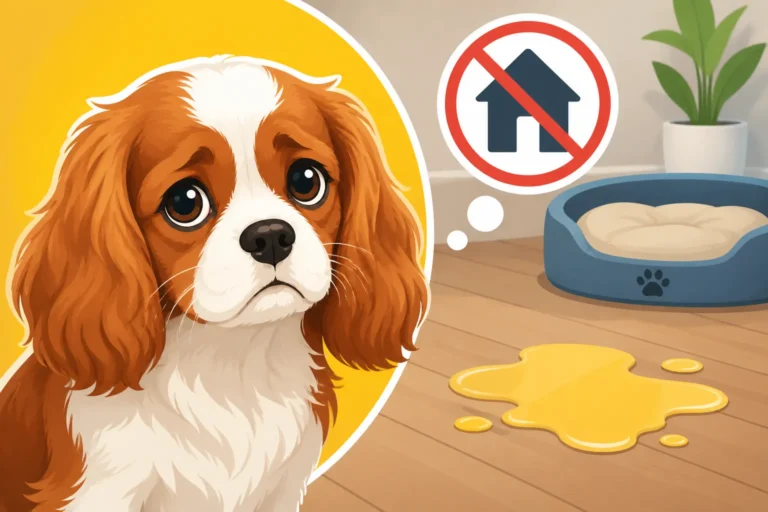
Bringing a Cavalier King Charles Spaniel puppy home is absolutely magical, full of tiny paws, soft fur, and endless cuddles. But let's be real, that magic can quickly turn to frustration when those adorable little bladders seem to have a mind of their own, leaving puddles and piles all over your spotless floors. Indoor toilet training a Cavalier puppy is a common challenge that many new owners face, feeling like they're constantly cleaning up. This comprehensive guide will walk you through proven, kind methods to successfully house-train your Cavalier puppy indoors, making those accidents a thing of the past and preserving your sanity (and your carpets!).
Understanding Your Cavalier Puppy's Bladder and Bowel Control
Before we dive into the "how-to," it's crucial to grasp the biological realities of a tiny Cavalier puppy. They aren't born with innate bladder control; it's a skill they develop over time, just like learning to sit or stay. Expecting a newborn puppy to hold it for hours is like expecting a human infant to be toilet trained – it's just not going to happen. Understanding these limitations is the first step to setting realistic expectations and approaching training with patience and empathy.
The Tiny Bladder Reality
Cavalier King Charles Spaniels are a small breed, and their puppies come with proportionately tiny bladders. This means they physically cannot hold their urine for very long, especially when they are very young. A general rule of thumb is that a puppy can hold their bladder for approximately one hour per month of age. So, an eight-week-old (two-month-old) puppy can reliably hold it for about two hours, maybe three at a stretch if they're sleeping soundly. Push past that, and you're almost guaranteeing an accident. This isn't stubbornness; it's pure physiology.
Imagine trying to keep your own bladder full when you're bursting, but you can't quite articulate that need yet. That's your puppy's experience! They are learning their body and learning to communicate. During the day, especially after waking, eating, or a burst of play, their need to go will be even more frequent. This is why a consistent, frequent potty schedule is non-negotiable for success. Trying to extend intervals too soon will only lead to repeated failures, which can be disheartening for both you and your puppy.
Reading Puppy Potty Cues
Your Cavalier puppy will give you subtle (and sometimes not-so-subtle) signs that they need to relieve themselves. Learning to read these cues is absolutely paramount to successful indoor toilet training. Early detection means you can whisk them to their designated potty area before an accident occurs, reinforcing the right behavior. These cues can vary from dog to dog, but many are universal.
Common signs include sniffing around intently, circling, suddenly stopping play, walking away from you, heading towards a specific spot in the house (often one where they've had an accident before), or even whining or barking. Some puppies will stand by the door, if they've already been introduced to outdoor pottying, but for indoor training, they might just start looking agitated or restless. Pay close attention to these signals, especially during critical times like just after waking up, within 15-20 minutes of eating or drinking, and after any significant playtime. Being proactive by observing and acting quickly is far more effective than reacting after the fact.
The Importance of a Schedule
When it comes to potty training, especially indoors, consistency is king, and a schedule is your royal decree. Without a predictable routine, your Cavalier puppy has no way of knowing when or where they are expected to go. They'll just go whenever and wherever the urge strikes, which is perfectly natural for them, but not ideal for your floors. A strict schedule helps build a predictable rhythm that their tiny bladder and bowels can learn to anticipate.
Your schedule should account for frequent potty breaks. We're talking every 1-2 hours during the day for a young puppy, and immediately after waking, eating, drinking, and playing. Think of it as "potty on demand" for the first few weeks. As your puppy grows and gains more control, you can gradually extend these intervals. But initially, err on the side of too often rather than not often enough. This constant routine helps minimize accidents, building a strong habit of going in the right place. It also helps you spot patterns in your puppy's elimination habits, which can be invaluable for predicting their needs.
Setting Up Your Indoor Potty Zone for Success
Having a designated indoor potty area is key for Cavalier puppies, especially in apartments, during bad weather, or if they're too young for full outdoor immunity. The setup needs to be clear, clean, and convenient for both you and your puppy. Creating a positive association with this area will make training much smoother.
Choosing the Right Potty Spot and Materials
Selecting the ideal indoor potty spot is about location, location, location. You want a place that's easily accessible for your puppy but also away from their eating and sleeping areas. Dogs are naturally clean creatures and generally won't want to soil their "den." A bathroom, laundry room, or a corner of a utility area can work well, provided it’s easy to clean. Avoid high-traffic areas where they might feel exposed or interrupted.
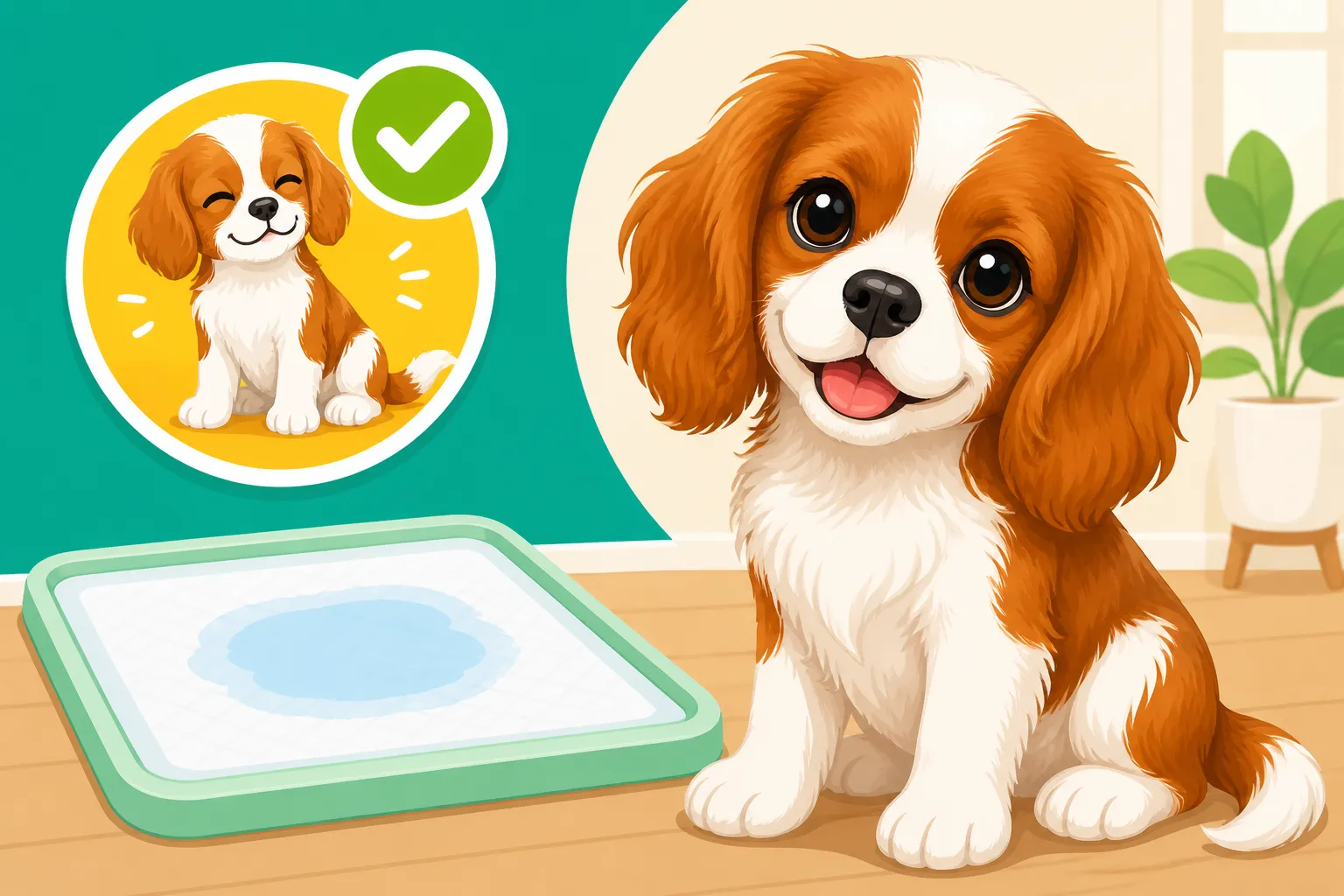
For materials, puppy pads are the most common choice. Look for highly absorbent pads, possibly with attractants. Brands like Amazon Basics offer large packs that can be quite cost-effective. Another option is a real or artificial grass patch, which can feel more natural to a puppy and ease the eventual transition to outdoor pottying. Some of these come with trays for easy cleanup. The material you choose should be distinct from your floor coverings so your puppy clearly differentiates it from the rest of the house. Lay several pads down initially, creating a larger target, then gradually reduce the number as your puppy's aim improves. Consider the long-term goal: if you eventually want them to go outside, an artificial grass patch might be a better bridge.
Crate Training as a Potty Training Ally
Crate training is one of the most effective tools for potty training, even for indoor setups. A crate leverages a dog's natural instinct not to soil their sleeping area. If introduced positively, a crate becomes a safe, comfortable den for your Cavalier, not a punishment. Crate Training a Cavalier That Panics can be approached gently and patiently, building positive associations with treats and comfort.
The crate should be just large enough for your Cavalier puppy to stand up, turn around, and lie down comfortably. If it’s too big, they might use one end as a bed and the other as a bathroom. You can use a divider to adjust the size as your puppy grows. When your puppy is not actively playing or eating, they should be in their crate, especially when you can't give them your undivided attention. This minimizes opportunities for accidents. Immediately after coming out of the crate, they should be taken to their designated indoor potty spot. This teaches them to hold it in the crate and then release it in the correct place. This method greatly accelerates the training process and also provides a safe, comfortable space for your puppy.
Containment Beyond the Crate
While the crate is invaluable, your Cavalier puppy can't spend all their time in it. When they are out, especially during their awake and active periods, you need to manage their environment to prevent accidents. This is where playpens and baby gates become your best friends. Pens Instead of Crates for a Cavalier can offer a larger supervised area.
Set up a puppy-proofed playpen in an area where you spend a lot of time. This allows your Cavalier puppy to be near you and interact, but within a controlled space. Inside the playpen, you can have their water bowl, a few safe toys, and their indoor potty setup. This creates a larger "safe zone" where they can play and go potty in the right spot, reducing the chances of accidents on your carpets. Baby gates can be used to block off rooms or sections of your home, gradually expanding your puppy's access as their reliability improves. This staged approach, often called "umbilical cord training," where the puppy is either crated, penned, or directly attached to you, is extremely effective in preventing those sneaky accidents that happen when you're not looking.
The Step-by-Step Indoor Potty Training Process
Potty training, particularly indoors, is a marathon, not a sprint. It requires dedication, consistency, and a whole lot of patience from you. But by breaking it down into manageable steps, you can guide your Cavalier puppy to success. Remember, every successful potty break is a step forward, and every accident is just a learning opportunity for both of you.
Establishing a Routine from Day One
The moment your Cavalier puppy steps paw in your home, the routine begins. From day one, you want to be proactive, not reactive. Take your puppy to their designated indoor potty spot immediately upon waking up, after every meal, after every drink, after every play session, and just before bedtime. These are the critical "potty times."
When you take them to the spot, use a consistent verbal cue like "go potty" or "do your business." Stand patiently with them (don't play or distract them) until they go. The key here is consistency in timing and location. If you adopt a puppy that came from a less-than-ideal environment, they might have a harder time with this, as their natural instincts might have been suppressed. A structured routine helps reset those instincts to associate elimination with a specific place. You might find a chart helpful to track their potty breaks and any accidents, helping you identify patterns and adjust your schedule accordingly. This structured approach, combined with positive reinforcement, helps your Cavalier understand what is expected of them quickly.
Rewarding Success and Cleaning Up Accidents
This is perhaps the most crucial part of positive reinforcement training. Every time your Cavalier puppy successfully goes potty in the designated indoor spot, you need to celebrate! This isn't just a pat on the head; it should be an immediate, enthusiastic verbal praise ("Good potty! Yes!"), accompanied by a high-value treat they adore. Make it a party! This strong positive association tells your puppy, "This is exactly what I want you to do, and it's super rewarding!" The reward must be instantaneous for them to link the action (pottying in the right spot) with the consequence (praise and treat). Reward-Based Training With a Cavalier works wonders for this breed.
On the flip side, accidents will happen. When they do, avoid punishment. Shouting, scolding, or rubbing their nose in it will only teach your Cavalier puppy to fear you or to hide their accidents, making them less likely to go in front of you (even in the right spot!). If you catch them in the act, calmly interrupt them with a clap or a soft "ah-ah!" and immediately scoop them up and take them to their potty spot. If the accident has already occurred, simply clean it up thoroughly with an enzymatic cleaner. These cleaners break down the odor-causing molecules, removing the scent that might attract your puppy to revisit the same spot. Brands found on Amazon, like Nature's Miracle or Rocco & Roxie, are popular choices for effectively neutralizing odors and discouraging repeat accidents. Think of accidents as an indicator that you missed a cue or extended a potty break too long, not as a deliberate act of defiance from your puppy.
Transitioning from Pads to Outdoor Potty (if applicable)
For many Cavalier owners, indoor potty training with pads is a temporary solution, with the ultimate goal being outdoor elimination. If this is your goal, the transition needs to be gradual and planned. Once your puppy is consistently using the indoor potty pads, you can start moving the pads closer to the door you'll use for outdoor potty breaks. Move it a few feet each day, over several days, until the pad is right by the door.
Once the pad is by the door, start taking your puppy (with the pad, or a piece of a soiled pad) outside to the spot you want them to use. Place the pad on the ground, encourage them to go, and praise heavily when they do. Over time, you can start making the indoor pad smaller, or remove it entirely, replacing it with the outdoor routine. This slow transition helps your Cavalier understand that the location is changing, but the action and the reward remain the same. Some owners use artificial grass patches indoors as an easier stepping stone, as the texture is similar to real grass. Remember, this transition can take time, and Cavalier Puppy Pads and When to Stop should be a gradual, patient process.
| Age of Cavalier Puppy | Maximum Hold Time (Approx.) | Potty Breaks (Day) | Potty Breaks (Night) |
|---|---|---|---|
| 8-10 Weeks | 1-2 hours | Every 1-2 hours | 1-2 times |
| 10-12 Weeks | 2-3 hours | Every 2-3 hours | 1 time (or less) |
| 3-4 Months | 3-4 hours | Every 3-4 hours | Often none |
| 5-6 Months | 4-5 hours | Every 4-5 hours | Often none |
| 6+ Months | 6-8 hours | Every 6-8 hours | Often none |
Note: These are general guidelines. Every puppy is an individual and may vary. Always prioritize frequent breaks for young puppies.
Common Challenges and Troubleshooting Indoor Potty Training
Even with the best intentions and a solid plan, potty training your Cavalier puppy indoors isn't always smooth sailing. There will be bumps, regressions, and moments where you feel like you're going backward. This is completely normal! Understanding common challenges and how to troubleshoot them will help you stay calm and effective.
When Accidents Keep Happening
If your Cavalier puppy is having frequent accidents despite your best efforts, it's time to play detective. The most common reasons for repeated accidents are:
- Too much freedom too soon: Are they allowed to roam too large an area unsupervised? Re-evaluate your containment strategy. Go back to basics: crate, playpen, or tethered to you.
- Infrequent potty breaks: Are you stretching the time between breaks too long for their age? Increase the frequency of trips to the potty spot. Set a timer if you need to.
- Inadequate cleanup: Are you using an enzymatic cleaner to fully eliminate odor? If not, the residual scent might be attracting them back to "old" accident spots.
- Lack of clear communication: Are your potty cues and rewards consistent? Is your praise enthusiastic enough?
- Distractions: Is the potty area too stimulating? For indoor pads, ensure it's a quiet, private spot where they can focus.
Consider filming your puppy when you can't directly supervise them (e.g., in their playpen). This can give you invaluable insight into their potty habits and cues you might be missing. If all else fails and accidents are constant, a vet visit might be in order to rule out any underlying medical conditions like a urinary tract infection, which can cause increased frequency and urgency. Accidents in a House-Trained Cavalier can sometimes point to health issues.
Managing Nighttime Potty Needs
Nighttime potty training is often one of the trickiest parts, especially with those tiny Cavalier bladders. The goal is to gradually extend the time your puppy can hold it overnight. Initially, for a very young puppy, you might need one or two nighttime potty breaks. Set an alarm for yourself.
Keep these nighttime breaks all business: no play, minimal interaction, just quickly out of the crate, to the potty spot, wait, praise when they go, and immediately back into the crate. Keep lights dim. This teaches them that nighttime is for sleeping, not for playing. As your puppy matures, they'll be able to hold it longer. Make sure to remove water a couple of hours before bedtime to reduce the need to go. If your puppy is crying in the crate at night, it's essential to distinguish between a cry to go potty and a cry for attention. If you've just taken them out and they didn't go, or if it's not time for a scheduled break, wait a few minutes to see if they settle. But if it's been several hours since their last break, it's safer to assume it's a potty call. For more tips on this, refer to Night Waking in a Cavalier Puppy.
Dealing with Regression and Adolescent Months
Just when you think you've mastered potty training, your Cavalier puppy hits adolescence (typically between 6-18 months), and suddenly, accidents start happening again! This "potty training regression" is incredibly common and can be frustrating. During adolescence, puppies test boundaries, their hormones fluctuate, and they simply get distracted more easily. A once-reliable puppy might suddenly forget their training.
Don't despair! This isn't a sign that your puppy has forgotten everything; it's usually a temporary phase. Go back to basics: increase the frequency of potty breaks, limit freedom with crates and playpens, and reinforce successful pottying with high-value treats and praise. Re-evaluate your schedule and ensure you're not extending intervals too long. Also, consider if there have been any changes in your household routine or environment that might be causing stress or confusion for your Cavalier. Patience and consistency are your best tools here. Remember that The Month a Cavalier Starts Ignoring You often coincides with this adolescent phase where they are more independent and may need reminders of their training.
Products and Resources to Aid Your Training Journey
Potty training, especially for indoor setups, can be made much easier with the right tools and support. Investing in a few key items and knowing where to find help can significantly smooth the process and boost your confidence as a new Cavalier owner.
Essential Potty Training Supplies
Having the right gear on hand is like having a secret weapon against accidents. Here's a rundown of items that will make your indoor potty training journey much more manageable:
- High-Quality Puppy Pads or Artificial Grass: As discussed, these are your primary indoor potty surface. Opt for larger, super-absorbent pads, or a realistic artificial grass patch. You'll find a vast selection on Amazon with various features like odor control or charcoal layers. Make sure you have plenty on hand, especially for the initial weeks.
- Crate: A appropriately sized crate is essential for managing your puppy's potty schedule and providing a safe den. Ensure it's not too big, or your puppy might use one end as a bathroom. You can find many options for small breeds like Cavaliers.
- Playpen or Puppy Gates: These are crucial for expanding your puppy's supervised area while still containing them in a safe space with easy access to their potty spot. They're also perfect for creating a designated "puppy zone" when you can't directly supervise.
- Enzymatic Cleaner: This is non-negotiable! Regular household cleaners might remove visible stains, but they often leave behind residual odors that only your dog can smell, which can attract them back to the same spot for future accidents. An enzymatic cleaner, like those from Nature's Miracle or Simple Solution, breaks down those odors at a molecular level. Stock up – you'll need it!
- High-Value Treats: Small, soft, incredibly delicious treats are vital for rewarding successful potty breaks. Save these special treats just for potty time so they become an extra powerful motivator.
- Dog-Safe Wet Wipes: For quick cleanups of little paws or bottoms after potty breaks, especially if using a real grass patch indoors.
For a comprehensive list of items needed before your puppy arrives, check out What to Buy Before a Cavalier Puppy Arrives.
Online Training Programs and Support
You don't have to navigate puppy potty training alone. There's a wealth of online resources and communities dedicated to supporting new puppy owners, which can be particularly helpful for Cavaliers, given their specific needs and temperament.
Online puppy schools or training programs can provide structured lessons, video demonstrations, and sometimes even direct access to trainers for personalized advice. One such popular program is BAXTER & Bella, which offers a comprehensive online curriculum covering everything from potty training to socialization and obedience. These programs can be especially valuable for visual learners or those who prefer to train at their own pace from the comfort of their home. They often provide troubleshooting guides and community forums where you can connect with other Cavalier owners facing similar challenges. Remember that Five-Minute Training Sessions With a Cavalier are often more effective than long, drawn-out ones, and online resources can help you structure these efficiently. Having a support system, whether it's through online communities or direct access to a trainer, can make a huge difference in staying motivated and solving problems effectively throughout your Cavalier's training journey.
Disclaimer
This article is for general informational purposes only and does not constitute professional advice. Laws, prices and regulations vary by location and change over time. Consult a qualified professional for guidance on your specific situation.