Whether a Cavalier Can Ever Be Off Leash
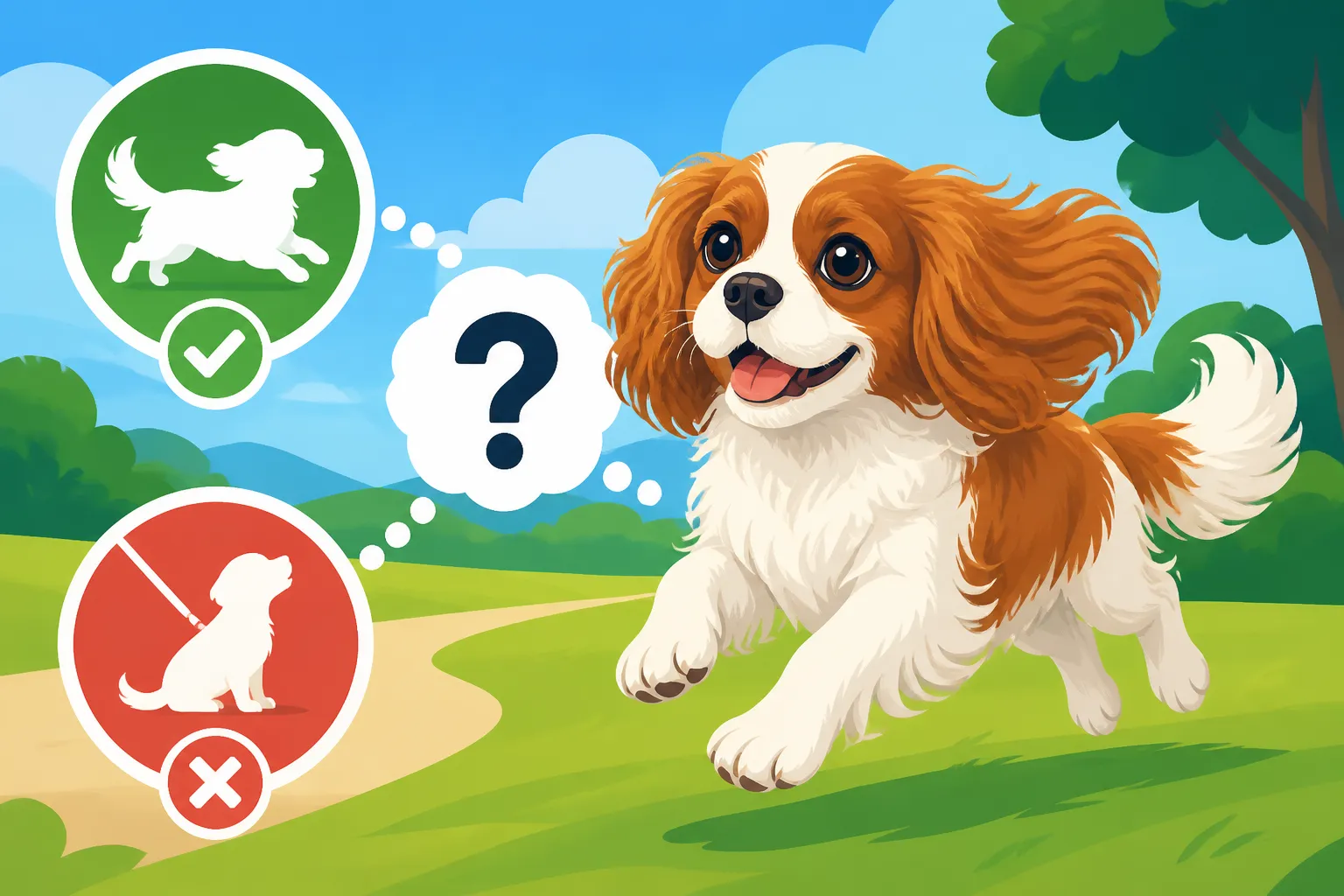
Oh, the dream of seeing your beloved Cavalier King Charles Spaniel gracefully bounding across an open field, ears flying, coming back to you with joyous enthusiasm the moment you call their name. It's a picture many of us hold dear, a vision of canine freedom and perfect obedience. But if you own a Cavalier, you know that the reality can be a stark contrast to this idyllic scene. Their sweet, cuddly nature often hides a stubborn streak and instincts that can put them in serious danger off-leash. This guide will delve into whether that off-leash dream is truly attainable for a Cavalier and, more importantly, how to prioritize their safety above all else.
The Lure of Off-Leash Freedom (and Why It's Risky for Cavaliers)
There's something incredibly appealing about allowing your dog to run freely, unrestrained by a leash. It speaks to a sense of trust and a deep bond, and for many dog owners, it's the ultimate goal in training. But with Cavaliers, this desire for freedom often clashes with their inherent breed characteristics and the very real dangers of the modern world.
The Dream of a Frolicking Cavalier
We all want our Cavaliers to experience joy, and for many dogs, running unhindered is the purest form of happiness. You see videos online of dogs playing fetch in vast parks, chasing squirrels without a care, and always, always returning to their owner's side. It makes you yearn for that same experience with your own furry companion. The thought of them exploring scents, stretching their legs at full speed, and truly "being a dog" without the constant pull of a lead can be incredibly tempting. This desire often comes from a good place – a wish to enrich their lives and allow them to express their natural instincts.
The Harsh Reality of Cavalier Instincts
However, the reality for many Cavalier owners is far from this dream. Despite their reputation as gentle lapdogs, Cavaliers are, at their core, spaniels. And spaniels were bred to flush birds and chase small game. This means they have a strong prey drive and an incredible nose that can lead them astray in a heartbeat. The moment a compelling scent hits their nose or a squirrel darts across their path, their spaniel instincts kick in, and everything else – including your frantic calls – can simply vanish from their awareness. This isn't disobedience; it's instinct. It's the reason why the concept of Cavalier Recall and Its Limits is such a crucial topic to understand. They may look at you sweetly one moment, and the next, they're gone, oblivious to the busy street or the dangerous woods ahead. This strong drive makes true off-leash reliability an incredibly challenging, and often risky, endeavor.
Understanding Your Cavalier's Instinctual Drive
To truly understand why off-leash freedom is such a gamble with a Cavalier, you need to appreciate the deep-seated instincts that govern their behavior. These aren't just quirks; they are ingrained traits developed over generations.
The Scent-Driven Spaniel Brain
Cavaliers possess a remarkable sense of smell, a remnant of their hunting heritage. They live in a world of scent, and a compelling aroma can be an irresistible siren call. Imagine you're walking your Cavalier in a park. Suddenly, they pick up the faint trail of a rabbit that passed by hours ago. To them, that scent is a thrilling puzzle, a story waiting to be followed, far more interesting than the sound of your voice. Their nose drops to the ground, their tail might start wagging with excitement, and their entire focus narrows down to that single, compelling scent. In that moment, your beautiful, well-behaved companion transforms into a miniature tracking dog, and no amount of yelling "come!" will break their concentration. This is the challenge of The Bird Chase a Cavalier Cannot Resist – it's not just birds; it's any small, intriguing creature or scent trail that can trigger this deep-seated drive.
The Lack of Road Sense
Another critical, and frankly terrifying, aspect of a Cavalier's instincts is their almost complete lack of road sense. Unlike some breeds that might develop a cautious awareness of traffic, many Cavaliers seem utterly oblivious to the dangers of cars, bikes, and busy roads. They don't process moving vehicles as threats. To a Cavalier, a car is just a big, loud thing that moves, and if a squirrel runs across the street, their focus is entirely on the squirrel, not the oncoming traffic. This isn't a trainable deficiency; it's a fundamental gap in their perception of danger in an urban or suburban environment. The heartbreaking reality of Losing a Cavalier to Traffic and How It Happens is a constant warning to never underestimate this trait. Even the most well-meaning owners can face tragedy if their Cavalier slips their lead or gets out of a gate, simply because their instincts tell them to chase, not to pause and look.
Factors Influencing Off-Leash Safety
While instinct is a powerful force, there are also external and individual factors that play a huge role in determining how safe (or unsafe) off-leash ventures might be for your Cavalier. It's never a one-size-fits-all answer.
Environment and Distractions
The environment where you consider letting your Cavalier off-leash is paramount. A completely secure, privately owned field, far from roads and other animals, presents a very different risk profile than a public park bordered by busy streets. Even in seemingly safe public parks, you have to consider other dogs, children, cyclists, and unexpected wildlife. A friendly greeting can turn into a chase, or a fearful encounter, especially if your Cavalier is small and delicate compared to larger breeds. The presence of just one squirrel can completely derail an otherwise perfect recall. For this reason, many Cavalier owners find that Fencing a Yard a Cavalier Will Not Leave is the only truly reliable "off-leash" environment. A small hole in a fence, a gate accidentally left ajar, or even an overly enthusiastic greeting from a dog on the other side of a barrier can lead to a quick escape and potential disaster.
Individual Temperament and Training
Every Cavalier is an individual, and while breed traits provide a blueprint, personal temperament can vary. Some Cavaliers are naturally more attached and less prone to wander, while others are bold explorers. An exceptionally well-socialized Cavalier who has been gently exposed to many sights and sounds as a puppy may be less prone to panic or chase out of fear. Socializing a Cavalier Puppy Gently from a young age can help them develop confidence without becoming overstimulated.
However, even with the best temperament, consistent and positive training is non-negotiable. Building a rock-solid recall isn't about yelling louder; it's about making coming back to you the most rewarding thing in their world. This takes countless hours of practice, starting in low-distraction environments and gradually increasing the challenge. It also means being honest about your Cavalier's limitations. If your dog has a history of bolting or ignoring you when excited, then full off-leash freedom is likely not a safe option, regardless of how much you wish it were. Programs like BAXTER & Bella offer comprehensive online training resources that can guide owners through building a strong foundation in positive reinforcement, which is essential for recall training.
Building a Reliable Recall: The Foundation of Any Off-Leash Work
If you dream of any form of off-leash activity with your Cavalier, even in controlled environments, a reliable recall is the absolute bedrock. Without it, you are putting your dog at undue risk. This isn't just about them coming back sometimes; it's about them coming back every single time they're called.
Starting Early and Making It Fun
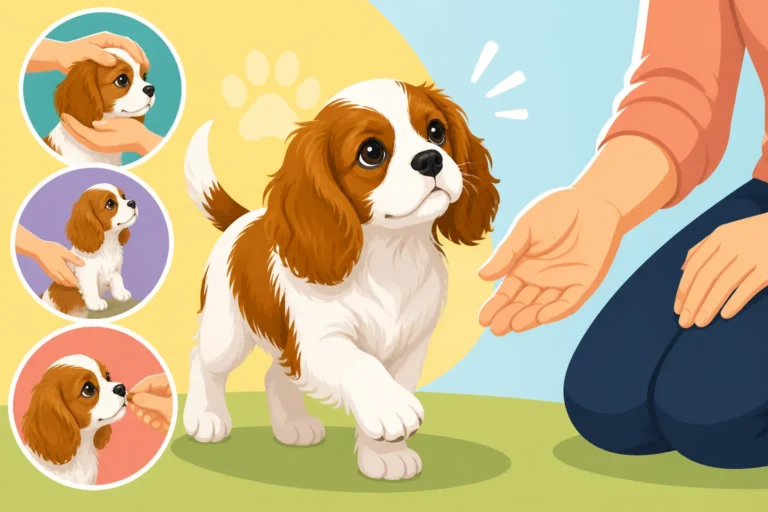
Recall training should begin the moment your Cavalier puppy arrives home. Start in a quiet, confined space like your living room or a secure, small backyard. Use a happy, excited tone of voice and a distinct recall word – something positive and unique, like "Come!" or "Here!" When your puppy toddles towards you, immediately reward them with a high-value treat and enthusiastic praise. Make it the best thing that ever happened to them. Play hide-and-seek in the house, calling their name from different rooms. This builds a positive association with coming to you. Remember, The Recall Word a Cavalier Learns Fastest is often one associated with absolute joy and delicious rewards.
As they grow, gradually introduce distractions. Practice in a slightly larger, still secure area, like a fenced yard. Call them when they're mildly distracted by a toy or a leaf. The key is to set them up for success. Never call them if you know they're unlikely to come, as this teaches them that "come" is optional. Always have a reward ready. Small, pea-sized, incredibly tasty treats are your best friend here. Brands like Zuke's Mini Naturals, widely available on Amazon, are often a hit and can be used frequently without adding too many calories.
Proofing Your Recall in Different Settings
Once your Cavalier has a good recall in a low-distraction environment, it's time to "proof" it, which means practicing in progressively more challenging settings. This is where most owners falter. They assume a dog that comes when called in the living room will do the same in a busy park. Not so!
Proofing involves practicing:
- In different locations: The backyard, a friend's fenced yard, a quiet park (on a long line).
- Around different distractions: Other dogs at a distance, children playing, mild wildlife (again, on a long line).
- With different people: Have family members practice the recall.
- At different times: When they're sleepy, when they're playful, when they're focused on something else.
This gradual increase in difficulty is crucial. Always start with short distances and high rewards. If your Cavalier struggles, go back to an easier environment. Never punish them for not coming, as this will make them reluctant to return. Instead, analyze why they didn't come and adjust your training approach. Many online programs, such as those offered by BAXTER & Bella, provide structured lessons that guide you through this proofing process, helping you systematically increase the challenge while maintaining success. Learning to recognize and manage Training a Cavalier Around Food Distraction is a common challenge, and proofing helps build that resilience.
Safe Alternatives to Full Off-Leash Freedom
Given the inherent risks, many Cavalier owners wisely decide that full off-leash freedom in unenclosed public spaces is simply not worth the danger. However, this doesn't mean your Cavalier can't enjoy a sense of freedom and exploration. There are excellent alternatives that prioritize their safety.
The Magic of a Long Line
A long line is a game-changer for Cavaliers. This is essentially a very long leash, typically 15 to 50 feet, made of durable material. It allows your Cavalier to explore, sniff, and run significant distances while you maintain control. You can purchase long lines easily through retailers like Amazon, often available in various lengths and materials.
How to use a long line effectively:
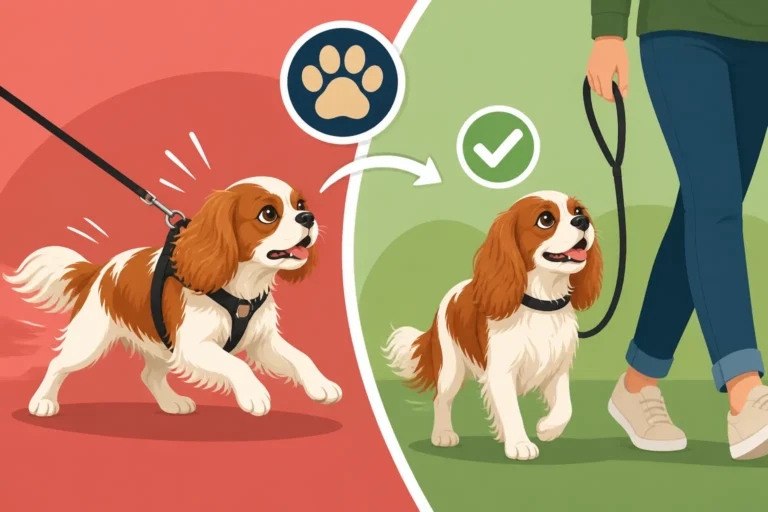
- Attach it to a secure harness: Never to a collar, as a sudden stop or jerk could injure their neck or trachea. A comfortable, well-fitting harness is essential. You can find guidance on Harnesses Suited to a Cavalier's Neck to ensure you pick the right one.
- Choose the right environment: Start in a large, open, grassy area without too many obstacles where the line could get tangled.
- Practice "dragging" the line: Let your Cavalier walk with the line dragging behind them, getting used to the feel. Only step on it if they get too far or ignore a recall.
- Practice recall with the long line: Call your Cavalier, and if they hesitate, gently guide them in with the line while still using your happy voice and preparing a treat. This reinforces the recall cue without letting them escape. Long Line Practice for a Cavalier is not just about giving them space; it's a critical tool for building a reliable recall in a controlled manner.
- Always supervise: A long line is not a "set it and forget it" tool. You need to be actively engaged, watching your Cavalier and your surroundings.
This method allows your Cavalier to stretch their legs, indulge their sniff-driven instincts, and feel a sense of independence, all while you have a safety net. It's an excellent way to safely experience the joy of a "free" run.
Secure, Fenced Areas
The safest "off-leash" environment for a Cavalier is a securely fenced area. This could be your own backyard, a friend's property, or a dedicated, professionally maintained dog park with high, secure fencing.
Considerations for fenced areas:
- Fence height and integrity: Cavaliers aren't typically jumpers, but they can squeeze through surprisingly small gaps. Check for any holes or weak spots in the fence. Ensure gates are securely latched.
- Supervision is still key: Even in a fenced yard, never leave your Cavalier unattended. They could find trouble, chew on something dangerous, or react negatively to an external stimulus like a passing dog or person.
- Dog park etiquette: If using a public dog park, ensure your Cavalier is comfortable with other dogs and up-to-date on vaccinations. Always gauge the energy of the park before entering. Some Cavaliers, especially smaller or more timid ones, can become overwhelmed by boisterous play.
- Private dog park rentals: Some areas offer private dog parks or fields for rent by the hour. This can be an excellent option for a truly secure, distraction-controlled environment without the risk of other dogs or unexpected events.
By utilizing secure, fenced spaces, you can provide your Cavalier with genuine off-leash freedom where they can run, play, and explore to their heart's content, minimizing the risk of them chasing after a scent and running into danger.
When Off-Leash Might (Cautiously) Be Considered
While full off-leash freedom is generally not recommended for Cavaliers in public, unfenced areas, there are highly specific and rare circumstances where it might be considered with extreme caution. This requires a confluence of exceptional training, ideal environmental conditions, and unwavering owner vigilance.
Exceptional Training and Specific Conditions
For a Cavalier to be safely off-leash, even in a very controlled setting, their recall must be beyond rock solid. This means they reliably return even when highly distracted, often responding to a whistle or a verbal cue with instant urgency. This level of training takes years of consistent, positive reinforcement, often with the guidance of a professional trainer.
Key conditions for consideration:
- Remote, unpopulated natural areas: Think vast, open moors, secluded beaches during off-peak hours, or large private rural properties with no roads or livestock nearby. Even then, an unexpected wild animal could trigger their chase instinct.
- Predictable environment: The area should be free from unknown dangers like deep water, steep drops, or hazardous debris.
- No other dogs or people: Introducing other variables drastically increases risk.
- Calm temperament: The Cavalier must have a naturally calm and focused temperament, less prone to high-energy chasing or easily startled reactions.
- No history of bolting: Any past instance of ignoring recall in a tempting situation immediately disqualifies them from off-leash consideration.
This is not a casual decision. It means putting your Cavalier through rigorous training that covers The Emergency Word That Stops a Cavalier and a general ability to perform under pressure. It also means you must be constantly aware of your surroundings, ready to intervene instantly if needed.
Lifelong Vigilance is Key
Even for the rare Cavalier who reaches this pinnacle of off-leash reliability under specific conditions, lifelong vigilance is absolutely critical. A momentary lapse in judgment from the owner can have devastating consequences.
This includes:
- Constant scanning of the environment: Always be looking for potential distractions (squirrels, other dogs, people, changes in terrain).
- Knowing your dog's "tells": Understanding the subtle body language that indicates they're about to focus on something else or are considering a chase.
- Never becoming complacent: Even if they've been perfect for years, one bad decision can be catastrophic.
- Re-evaluating regularly: As your Cavalier ages or their health changes, their off-leash capabilities may diminish. For instance, an older Cavalier with Cavalier Knees, Hips and Joint Problems might not be able to accelerate or stop as quickly, making them more vulnerable.
- Using safety devices: Even off-leash, some owners opt for a GPS tracker on their Cavalier's harness, providing an extra layer of reassurance.
Ultimately, the decision to allow a Cavalier off-leash is a heavy responsibility. For most, the risks far outweigh the benefits, and safe alternatives like long lines and secure fenced areas offer plenty of joy without the constant fear for their beloved companion's safety. Understanding The Spaniel Instincts Left in a Cavalier is the first step in making responsible choices for their well-being.
Comparing Off-Leash Options for Cavaliers
Let's take a look at the different approaches to giving your Cavalier a sense of freedom, weighing up the pros and cons of each.
| Feature | True Off-Leash Freedom (Unfenced Public) | Long Line Walking (Public) | Secure Fenced Area (Private/Dog Park) |
|---|---|---|---|
| Risk of Escape/Injury | Very High | Low to Moderate | Very Low |
| Mental Stimulation | High (full exploration) | High (extended exploration) | High (free run & play) |
| Physical Exercise | High (unrestricted running) | High (can run significant distance) | High (unrestricted running & play) |
| Owner Control | Minimal (relies solely on recall) | Moderate (physical connection) | High (physical barrier) |
| Training Required | Extremely Advanced Recall | Moderate Recall (initial practice) | Basic Recall (for interaction) |
| Environmental Needs | Extremely remote, no distractions | Open fields, low distractions | Secure perimeter, safe surface |
| Suitable for Most Cavaliers | No | Yes | Yes |
Disclaimer
This article is for general informational purposes only and does not constitute professional advice. Laws, prices and regulations vary by location and change over time. Consult a qualified professional for guidance on your specific situation.