Harnesses Suited to a Cavalier’s Neck
One of the most common worries for Cavalier King Charles Spaniel owners is finding gear that protects their beloved dog's delicate neck and throat, especially given their propensity for certain health conditions. Traditional collars can put undue pressure on these sensitive areas, leading to discomfort or even exacerbating underlying issues. This comprehensive guide is here to walk you through everything you need to know about choosing and fitting a harness perfectly suited to your Cavalier, ensuring their safety and comfort on every adventure.
Why Traditional Collars Are a Concern for Cavaliers
It's tempting to just grab any cute collar and leash, but for a Cavalier, it's really worth stopping to think about what that means for their tiny, precious body. These aren't robust working breeds with thick, muscular necks; they're delicate companion dogs, and their anatomy deserves special consideration.
The Delicate Cavalier Neck and Throat
Cavaliers, like many smaller breeds, have relatively delicate tracheas and necks. Imagine having a constant tugging sensation on your throat every time you moved or were gently corrected. That's essentially what can happen with a standard collar. Any sudden pull, even a minor one, can put significant strain directly on the windpipe (trachea), potentially leading to irritation, coughing, or, in more severe cases, long-term damage. This is particularly concerning if your Cavalier tends to pull on the leash, or if they're prone to sudden lunges when they spot a squirrel or another interesting smell. The delicate bones and cartilage in their neck simply aren't designed to withstand that kind of pressure repeatedly.
Furthermore, many Cavaliers are prone to conditions like Syringomyelia and Chiari Malformation in Cavaliers, which can cause neck pain and neurological issues. Pressure from a collar can worsen their discomfort, making walks, which should be enjoyable, into a painful experience. A simple yelp when picked up or when their collar is handled can sometimes be a subtle sign of underlying neck pain, and a collar might be contributing to that.
Risk of Tracheal Collapse
Tracheal collapse is a serious condition where the rings of cartilage that hold the windpipe open weaken and flatten, making it difficult for the dog to breathe. While it can occur in many small breeds, the delicate nature of a Cavalier's trachea makes them potentially susceptible. Even if your Cavalier isn't currently showing signs of tracheal issues, repeated stress from a collar can contribute to its development or worsen an existing, undiagnosed condition. Think about the cumulative effect of years of even slight pressure.
A harness, by design, distributes pressure across the chest and shoulders, completely bypassing the neck and throat. This simple shift in pressure points can make a world of difference for your Cavalier's respiratory health and overall comfort. It's not about being overly cautious; it's about proactive care for a breed known for its vulnerabilities. This preventative measure could save you and your Cavalier a lot of stress and potential vet bills down the line.
Key Features to Look for in a Cavalier Harness
When you start looking at harnesses, the sheer variety can be overwhelming. It's like walking into a massive pet store and seeing a thousand different options. But for a Cavalier, narrowing it down to harnesses with specific features can make your choice much easier and more effective. You're looking for something that prioritizes comfort, safety, and proper fit above all else.
Soft, Non-Irritating Materials
Cavaliers have beautiful, silky coats, but their skin can be sensitive. Rough, stiff, or abrasive materials can rub and cause chafing, especially in areas where the harness sits close to the skin, like under the armpits or across the chest. Look for harnesses made from soft, breathable fabrics such as neoprene, padded mesh, or soft nylon webbing. These materials are much kinder to their coat and skin, preventing irritation and matting of their delicate feathering.
Consider a harness with soft edges or rolled seams to further minimize rubbing. When trying on a harness, run your fingers along all the edges that will touch your dog's body. If it feels scratchy to you, imagine how it would feel to your Cavalier after a long walk! Comfort is paramount, particularly if your Cavalier is going to be wearing the harness for extended periods during walks or outings.
Multiple Adjustment Points
A harness isn't one-size-fits-all, and even within the same size, dogs vary greatly in their chest depth, girth, and neck circumference. This is where multiple adjustment points become your best friend. A good harness for a Cavalier should have at least three, but ideally four or more, adjustable straps. You want to be able to cinch or loosen straps around:
- The neck/chest opening: This is crucial. It needs to be snug enough that your Cavalier can't slip out, but loose enough not to restrict breathing or put pressure on the throat area.
- The girth (around the rib cage): This should fit snugly behind the front legs without rubbing.
- The chest strap (connecting the neck and girth straps): This often sits along the breastbone and determines how high or low the harness sits on the chest.
The goal is a fit that allows two fingers to comfortably slide under any strap, ensuring it's not too tight, but also secure enough to prevent escapes. Brands that offer robust sizing guides and harnesses with ample adjustability, which you can often find from retailers like Chewy, will be your best bet for a bespoke fit. Without these adjustment points, you might find a harness is too tight in one area and too loose in another, compromising both comfort and safety.
Proper Chest Plate Design
The design of the chest plate is crucial for distributing pressure away from the throat. Avoid harnesses that have a single strap running horizontally across the chest, right at the base of the neck. These can still put pressure on the trachea if your dog pulls. Instead, look for harnesses with a "Y" or "H" shape in the front, or a padded chest plate that sits low on the breastbone.
This design ensures that any pressure from pulling is distributed across the broad, muscular part of the chest and shoulders, rather than concentrating it on the delicate throat area. A good chest plate will sit comfortably on their sternum, well below their windpipe. This is especially important for Cavaliers, who might have a shorter neck or deeper chest. The right chest plate design is the primary way a harness protects their neck.
Different Types of Harnesses and Their Suitability for Cavaliers
Now that we know what features to look for, let's talk about the different styles of harnesses you'll encounter and how they stack up for a Cavalier. Each type has its own quirks, and what works beautifully for one dog might be a nightmare for another.
Step-In Harnesses
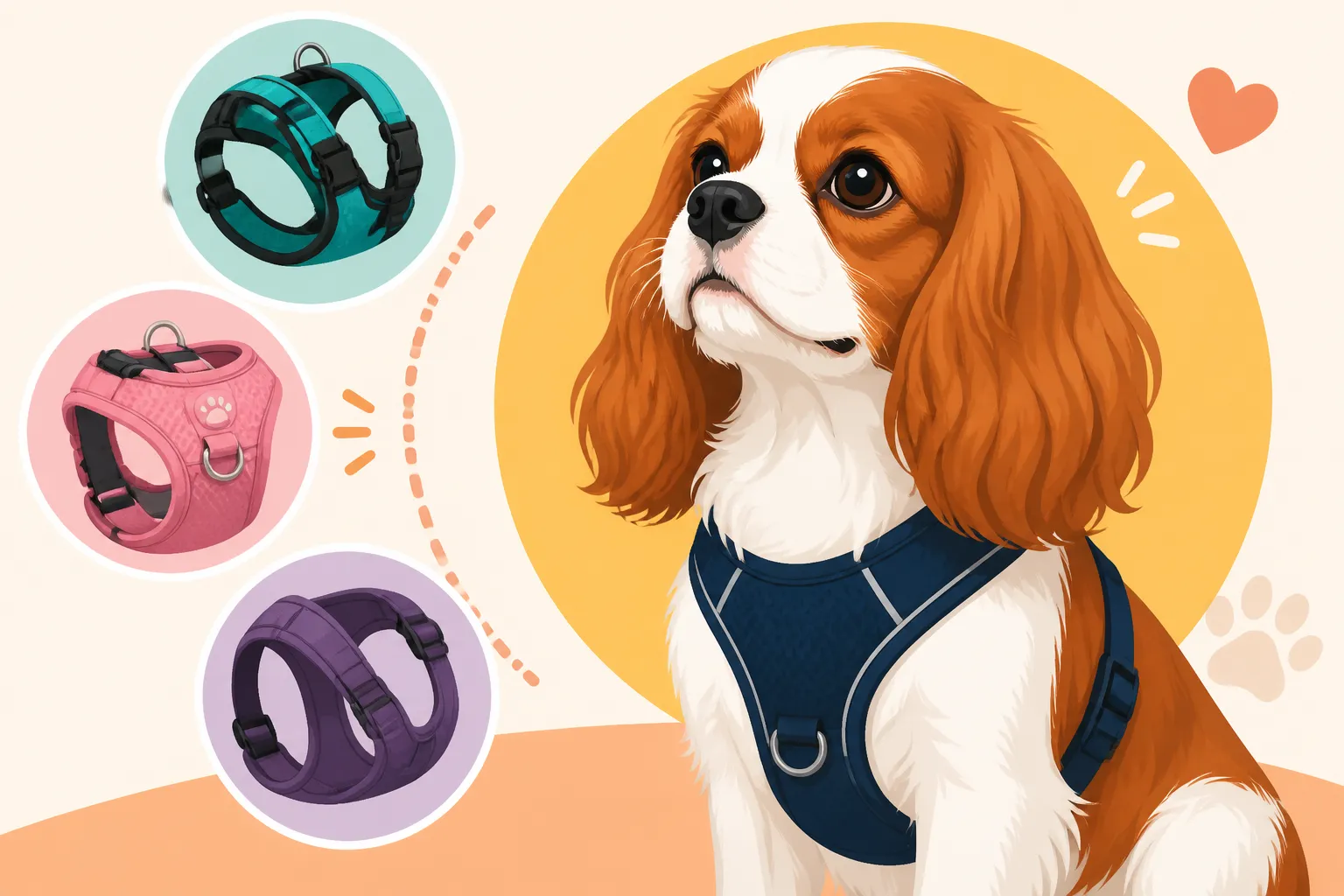
Step-in harnesses are quite popular, especially for smaller dogs, because they're generally easy to put on. Your Cavalier simply steps into two leg holes, and then the harness clasps over their back. They form a figure-eight shape when laid flat.
- Pros for Cavaliers:
- Ease of Use: If your Cavalier isn't a fan of things going over their head, this can be a great option. It minimizes handling around the head and ears, which can be sensitive for some dogs.
- Minimal Neck Contact: When properly fitted, the straps typically sit well away from the throat, distributing pressure across the chest and behind the front legs.
- Cons for Cavaliers:
- Fit Variability: Without a chest strap that connects the neck and girth, the fit can be less customizable. If the leg holes are too wide, the harness can rub under the armpits. If the top strap isn't quite right, it can sometimes shift and create pressure points.
- Escape Risk: Some Cavaliers are little Houdinis, and if the harness isn't perfectly snug around the girth, they can sometimes wriggle out by backing up.
- Armpit Rubbing: This is a common complaint with step-in harnesses if the material is stiff or the fit isn't spot on, especially for dogs with sensitive skin or fine hair, like Cavaliers.
Recommendation: If you choose a step-in, look for one with soft, padded material and ensure the leg holes are appropriately sized to prevent chafing. Regularly check under their armpits for any redness or irritation.
Vest Harnesses
Vest harnesses are exactly what they sound like – they're essentially a soft, usually padded vest that covers a larger portion of your dog's chest and back. They typically fasten with Velcro and/or buckles across the back.
- Pros for Cavaliers:
- Maximum Comfort & Pressure Distribution: Because the weight is spread over a wider area, vest harnesses are excellent at distributing pressure and minimizing any single point of contact. This can be fantastic for Cavaliers with delicate tracheas or neck pain.
- Warmth: In colder climates, a vest harness can offer a little extra warmth, which can be a bonus for a toy breed.
- Security: Many vest harnesses feel very secure due to their broad coverage, making them harder for clever Cavaliers to escape.
- Cons for Cavaliers:
- Bulkiness: Some vest harnesses can be quite bulky, which might be a bit much for a tiny Cavalier, especially in warmer weather.
- Limited Adjustability: While comfortable, many vest harnesses offer fewer adjustment points than other styles, so getting a precise fit can sometimes be a challenge. You might need to try a few sizes to find the perfect one.
- Matting: The fabric of a vest harness, especially if worn for long periods, can potentially rub and cause matting in a Cavalier's delicate coat, particularly in the armpit and chest areas. Regular brushing, even with the harness on, is key.
- Chafing: While generally comfortable, if a vest harness is too tight or poorly sized, the edges can still rub.
Recommendation: Ideal for Cavaliers who need extra comfort and protection across their chest. Opt for lightweight, breathable mesh versions for warmer weather. Be diligent with grooming to prevent matting.
Y-Front (or Front-Clip) Harnesses
Y-front harnesses get their name from the "Y" shape they make across the dog's chest, ensuring the straps sit well away from the throat. Many Y-front harnesses also feature a front-clip option (a D-ring on the chest), which can be excellent for training.
- Pros for Cavaliers:
- Superior Neck Protection: The Y-shape design inherently avoids the trachea, making it a top choice for breeds with delicate necks or those prone to tracheal issues.
- Excellent Pressure Distribution: Like vest harnesses, the design distributes pressure broadly across the chest, making it very comfortable.
- "No-Pull" Feature: If your Cavalier tends to pull, a front clip attachment can be a game-changer. When they pull, they're gently redirected to the side, discouraging the behavior without putting stress on their neck. This can be especially helpful during the puppy and adolescent months when they are still learning leash manners. Leash Manners for a Cavalier That Pulls can be a real challenge for some owners, so this feature offers a gentle training aid.
- Good Adjustability: Many Y-front harnesses come with multiple adjustment points, allowing for a very custom and secure fit.
- Cons for Cavaliers:
- Potential for Tangling: If using the front clip, the leash can sometimes get tangled around your dog's legs, especially with shorter-legged dogs or if the leash is too long. This just requires a bit more awareness from the handler.
- Getting On/Off: Some Y-front harnesses might require going over the head, which some Cavaliers dislike.
Recommendation: Generally considered one of the best choices for Cavaliers due to their anatomical safety and potential for gentle "no-pull" training. Look for padded versions to maximize comfort. Many premium brands offer Y-front designs, and you can usually find a good selection from online pet supply stores.
Back-Clip Harnesses (Other Styles)
Many harnesses, regardless of their front shape, offer a back-clip option where the leash attaches to a D-ring on the dog's back. This is the most common and traditional style.
- Pros for Cavaliers:
- Simplicity: Easy to use and attach the leash.
- Comfort: If the harness itself is well-designed (e.g., a Y-front or vest style with a back clip), it can still be very comfortable and protective.
- Cons for Cavaliers:
- Less Control for Pullers: For Cavaliers who are strong pullers, a back-clip harness doesn't offer the same directional control as a front-clip, meaning they can still lean into the harness and pull you along.
- Can Encourage Pulling: The pressure on the back can sometimes activate a dog's "opposition reflex," where they naturally pull against the pressure, inadvertently encouraging the very behavior you want to stop.
Recommendation: A good back-clip harness is perfectly suitable for Cavaliers who walk nicely on a loose leash. If your Cavalier is a puller, consider a Y-front harness with a front-clip option, or one that offers both.
| Harness Type | Pros for Cavaliers | Cons for Cavaliers | Ideal for… |
|---|---|---|---|
| Step-In Harness | Easy to put on, minimal neck contact if fitted correctly | Less customizable fit, potential for armpit rubbing, escape risk if not snug | Cavaliers who dislike overhead harnesses, loose-leash walkers |
| Vest Harness | Excellent pressure distribution, very comfortable, offers warmth | Can be bulky, limited adjustability, potential for coat matting | Maximum comfort, older or delicate Cavaliers, colder weather |
| Y-Front Harness | Superior neck protection, great pressure distribution, "no-pull" option | Leash can tangle with front clip, some require overhead fitting | All Cavaliers, especially pullers or those with neck sensitivities |
| Back-Clip Harness | Simple to use, can be comfortable if paired with good design (Y-front/vest) | Less control for pullers, can encourage pulling behavior | Cavaliers who walk well on a loose leash |
How to Properly Fit a Harness on Your Cavalier
Finding the right harness is only half the battle; fitting it correctly is absolutely critical for your Cavalier's comfort and safety. A poorly fitted harness can be just as problematic as a collar, causing chafing, restricting movement, or allowing for escapes.
Taking Accurate Measurements
Before you even think about buying a harness, grab a soft tape measure. Don't eyeball it, and definitely don't guess based on your Cavalier's weight alone – every dog is shaped differently!
- Chest/Girth Measurement: This is the most important measurement. Wrap the tape measure around the widest part of your Cavalier's rib cage, just behind their front legs. Make sure it's snug but not tight.
- Neck Measurement: Measure around the base of your Cavalier's neck, where a collar would naturally sit. This will help ensure the harness's neck opening isn't too tight or too loose, especially for harnesses that go over the head.
- Chest Length (Optional but helpful): For vest harnesses or those with a defined chest plate, measure from the base of their neck (between their shoulder blades) down to the end of their breastbone. This helps ensure the harness isn't too long or too short.
Compare these measurements to the sizing chart provided by the harness manufacturer. If your Cavalier is between sizes, it's often best to size up, especially if the harness has multiple adjustment points, to avoid it being too restrictive. Remember, a brand like Chewy often has very detailed product descriptions and customer reviews with sizing notes, which can be invaluable.
The Two-Finger Rule
Once you have the harness on your Cavalier, you need to perform the "two-finger rule." This is a quick and easy way to check if the harness is too tight or too loose.
- Slide two fingers comfortably under each strap of the harness. If you can't fit two fingers, it's too tight. If you can fit more than two fingers with significant wiggle room, it's likely too loose and could lead to chafing or your Cavalier slipping out.
This rule applies to the neck opening, the girth strap, and any other adjustable straps on the harness. Always double-check this before heading out for a walk. It's especially important after your Cavalier has been moving around for a bit, as harnesses can sometimes shift.
Checking for Rubbing and Restriction
After fitting the harness and taking a short walk (even just around the living room), remove it and carefully inspect your Cavalier's skin and coat.
- Under the Armpits: This is a notorious spot for chafing. Look for redness, irritation, or matted fur. If you see any, the harness might be too tight, too wide in the leg holes (for step-ins), or the material might be irritating.
- Behind the Ears/Neck: Check for any rubbing or signs of pressure. While a good harness should avoid the throat, some can still rub at the very base of the neck if the neck opening is too small or sits too high.
- Across the Chest and Back: Feel along these areas for any signs of discomfort.
- Freedom of Movement: Observe your Cavalier's gait. Are they walking naturally, or do they seem stiff or uncomfortable? Does the harness restrict their shoulder movement? They should be able to move their legs freely without the harness digging in. If they're A Cavalier That Tires on Short Walks or seems reluctant to move, the harness could be a factor.
It's a process of trial and error. Don't be afraid to adjust straps, or even try a different harness style if the first one isn't quite right. Your Cavalier's long-term comfort and health are worth the effort. And remember, preventing injuries and discomfort can also help you avoid unexpected vet bills, meaning less stress on your budget and potentially fewer claims with your pet insurance provider, like Healthy Paws.
When to Consider Professional Help
Sometimes, despite your best efforts, you might feel like you're just not getting the harness right. That's totally okay! It’s better to seek help than to continue with an ill-fitting harness that could cause discomfort or harm to your Cavalier.
Consultation with Your Veterinarian
If your Cavalier has any existing health conditions, especially those affecting their neck, spine, or breathing, a consultation with your veterinarian is always a wise first step. For instance, if your dog has been diagnosed with Syringomyelia and Chiari Malformation in Cavaliers or has a history of Cavalier Tracheal Collapse, your vet can offer specific recommendations for harness types that will provide the utmost support and protection. They might even have samples or specific brands they recommend based on their experience with other Cavalier patients.
Your vet can also assess your Cavalier's overall body condition and tell you if there are any areas of sensitivity that might be exacerbated by a harness. They can even demonstrate proper fitting techniques to ensure you're doing it correctly. Don't hesitate to bring the harness you're considering to your next routine check-up for their expert opinion. After all, their primary goal is your Cavalier's health and well-being.
Assistance from Professional Dog Trainers or Pet Store Staff
While your vet focuses on health, a professional dog trainer can be invaluable if your Cavalier is a persistent puller or has specific leash-walking challenges. Trainers are experts in equipment and can help you select a harness that not only protects your Cavalier's neck but also aids in training. They can observe your dog's gait and pulling style and recommend a harness (like a front-clip Y-front) that will give you better control and encourage loose-leash walking, without resorting to harsh corrections.
Many reputable pet stores also have knowledgeable staff who are experienced in fitting harnesses. They can often provide a hands-on fitting session right in the store, trying different styles and sizes until you find one that looks and feels right on your Cavalier. Don't be shy about asking for help; these professionals are there to assist you in making the best choice for your furry friend. They've seen it all and can often spot a poor fit even before you do.
Disclaimer
This article is for general informational purposes only and does not constitute professional advice. Laws, prices and regulations vary by location and change over time. Consult a qualified professional for guidance on your specific situation.