Cavalier Recall and Its Limits
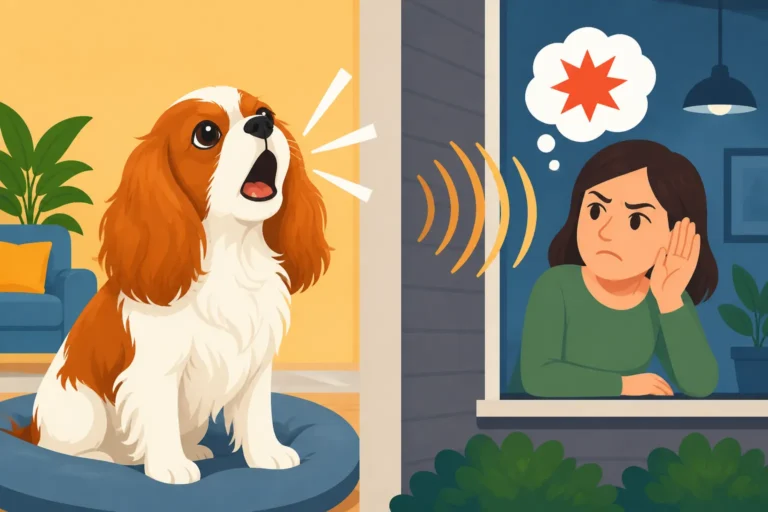
One of the most heart-stopping moments for any Cavalier King Charles Spaniel owner is when their beloved companion spots something utterly captivating – perhaps a bird, a squirrel, or even just an interesting leaf blowing across a field – and takes off, seemingly deaf to your frantic calls. That sudden rush of panic, the fear of them disappearing or, worse, running into danger, is a very real and common frustration. This comprehensive guide is here to help you understand why Cavalier recall can be such a challenge and how you can build a strong, reliable "come!" that keeps your sweet, sensitive dog safe, even amidst a world of tempting distractions.
Understanding the Cavalier's Instinctual Drive
It's easy to look at our fluffy, affectionate Cavaliers curled up on the sofa and forget that beneath that gentle exterior lies a tiny hunting dog. They are, after all, spaniels! This fundamental truth often explains why recall can feel like such an uphill battle, particularly when they're faced with an irresistible lure.
The Sporting Spaniel Within
Our Cavaliers might be celebrated today as the ultimate lapdogs, renowned for their sweet temperaments and desire to be close to their people. However, casting our minds back to their ancestors reveals a different picture: active, alert hunting dogs, bred to flush small game and birds. While selective breeding has softened many of these traits, the core The Spaniel Instincts Left in a Cavalier haven't entirely disappeared.
This means that a Cavalier can suddenly transform from a docile companion to a laser-focused predator the moment a bird flits by or a squirrel scampers up a tree. That deep-seated prey drive is incredibly powerful. It’s not that they're deliberately ignoring you; it’s that their ancient instincts kick in, overriding almost everything else in that moment. They’re simply doing what their ancestors were bred to do, even if it’s just chasing a pigeon across a park rather than flushing a pheasant from a hedgerow. Understanding this isn't an excuse for poor recall, but it is crucial for setting realistic expectations and tailoring your training approach. You're working with, not against, millennia of instinct.
Why a Cavalier Has No Traffic Sense
One of the most terrifying aspects of a Cavalier bolting is their apparent disregard for dangers like moving vehicles. It’s a sad reality that far too many Cavaliers are lost to traffic accidents, and it's vital for owners to grasp Why a Cavalier Has No Traffic Sense. Unlike some breeds that seem to develop a natural wariness of roads and cars, Cavaliers often don't. Their world is one of scents, movement, and sounds related to potential prey or interesting new sniffs.
When a Cavalier's hunting instinct is triggered, or they're simply following a compelling scent trail, their focus becomes incredibly narrow. The sound of a car, the speed of traffic – these things often don't register as a threat to them. Their small size also makes them less visible to drivers, exacerbating the danger. This isn't a sign of unintelligence; it's a reflection of their genetic blueprint. They weren't designed to navigate busy streets; they were designed to quarter fields. Therefore, relying on a Cavalier to instinctively understand road safety is a perilous gamble. Their safety, especially near roads, falls squarely on our shoulders as their guardians, meaning recall around traffic needs to be absolutely ironclad, or they need to remain leashed.
The Core Principles of Reliable Recall Training
Building a truly reliable recall isn't about magic; it's about consistency, positive reinforcement, and understanding your dog's motivations. It’s a journey, not a destination, and it requires dedication from day one.
Building a Positive Association with Coming When Called
The absolute bedrock of a good recall is ensuring your Cavalier views coming back to you as the best possible thing that could happen. This means making it incredibly rewarding, consistently and enthusiastically. Your recall cue should never, ever be associated with anything negative.
Imagine you're having the time of your life exploring a new scent, and someone yells your name only to put you on a leash and take you home, or worse, scold you. You'd quickly learn to avoid that name! The same principle applies to your Cavalier. When they come, regardless of how long it took or what they were doing, a celebration should ensue. This means immediate, high-value rewards – not just a pat on the head, but something truly delicious or their absolute favorite squeaky toy. Use an excited, happy tone of voice. Get down to their level. Make it a party! If you call your Cavalier to give them a bath, trim their nails, or put them away when guests arrive, you risk poisoning the cue. Instead, go to them, put them on the leash, and then do the less-than-thrilling activity. Always make coming to you a fantastic experience. A positive association ensures they want to come back, rather than feeling like they have to or dreading what might come next.
Consistent Practice in Varied Environments
Once your Cavalier understands what "come!" means in a low-distraction setting, the real work begins. Recall isn't a single skill; it's a skill that needs to be proofed across countless different scenarios and environments. Starting in your living room or a quiet, enclosed yard is perfect, but this is just the beginning.
Gradually, you need to introduce distractions, slowly increasing the challenge. This might mean practicing in your backyard while a family member walks by, then moving to a quiet park bench, then to a slightly busier park, and eventually, if appropriate, to a secure, dog-friendly field. The key is to set your Cavalier up for success. Don't throw them into a high-distraction environment too soon and expect perfection; that will only lead to frustration for both of you. Short, frequent training sessions are far more effective than long, infrequent ones. Five minutes of focused, fun recall practice several times a day will yield better results than a single 30-minute session once a week. This systematic approach helps your Cavalier generalize the recall cue, understanding that "come!" means "come!" no matter what exciting things are happening around them. During these training phases, especially outdoors, a long line is an invaluable tool for safety and control, which we'll discuss further down.
Common Challenges and Why Cavaliers Ignore You
It's frustrating when your normally attentive Cavalier suddenly develops selective hearing outdoors. Understanding the 'why' behind this behavior is the first step to overcoming it.
Why a Cavalier Stops Listening Outdoors
The transition from a quiet home to the stimulating outdoors can be overwhelming for a Cavalier. Inside, you're often the most interesting thing happening. Outside, the world explodes with sensory input. Every blade of grass holds a thousand fascinating smells, every rustle in the bushes could be a potential chase, and every passing person or dog is a new interaction. Why a Cavalier Stops Listening Outdoors often boils down to several factors converging.
Firstly, sheer over-excitement and sensory overload can make it difficult for them to process your command. Their brains are simply too busy taking everything in. Secondly, the reward history for ignoring you might be better. If they've successfully chased a bird or explored a fascinating smell after ignoring your call, they've been inadvertently rewarded for not coming back. This is why using a long line during practice is so vital – it prevents them from getting that self-reward. Lastly, many dogs struggle with generalization. They might know "come" perfectly in the house, but they haven't learned that the word applies in the park, on the beach, or by the creek. Each new environment needs to be treated as a new training ground, gradually building up their understanding that your voice cuts through all distractions. This takes time, patience, and consistent, high-value reinforcement in every new setting.
The Bird Chase a Cavalier Cannot Resist
Ah, the infamous The Bird Chase a Cavalier Cannot Resist! This is arguably the number one reason many Cavalier owners struggle with recall and often opt to keep their dogs leashed in open areas. That sudden dart, the intense focus, the utter deafening of your pleas – it's a powerful instinct at play.
Cavaliers, like all spaniels, possess a strong "flush and chase" drive. While they might not bring the bird back to hand, the thrill of the chase itself is immensely rewarding. The fluttering wings, the quick movement across the grass – these are precisely the stimuli that activate their deepest hunting instincts. Once that tunnel vision sets in, their little brains are hard-wired to pursue. It's not malicious disobedience; it's pure, unadulterated instinct. You might as well be asking the sun not to rise. This is where proactive management becomes paramount. If you see a flock of pigeons, quietly leash your Cavalier before the chase begins. Interrupt the behavior before it gets a chance to be reinforced. By preventing them from successfully engaging in the full chase, you can start to diminish the self-rewarding nature of the behavior. If a chase does happen, calmly retrieve them, put them on the leash, and move to a less stimulating area for some focused recall practice with high rewards.
Tools and Techniques for Better Recall
While the principles of positive reinforcement are universal, certain tools and techniques are particularly effective for Cavaliers and their unique blend of charm and prey drive.
The Power of the Long Line
For any Cavalier owner serious about building a reliable recall, a long line is your absolute best friend. This isn't just a longer leash; it's a training tool that provides safety, control, and the opportunity for your dog to experience a taste of freedom without the inherent risks. Long Line Practice for a Cavalier is essential for teaching them what it means to come back to you when they're not directly at your heel.
A long line, typically 15 to 30 feet in length, allows your Cavalier to explore, sniff, and move away from you in a controlled manner. When you call them and they hesitate or get distracted, you can gently reel them in, ensuring that they always come back to you for that reward. This prevents them from learning that ignoring your call sometimes works, which would undermine your training efforts. Make sure your Cavalier wears a comfortable, well-fitting harness when on a long line, never just a collar, to prevent neck injury if they hit the end of the line. Practice in open, safe areas away from traffic or other hazards, and always supervise closely to avoid tangles around legs or obstacles. The long line bridges the gap between on-leash training and potential off-leash freedom, allowing you to build that crucial muscle memory for returning to you.
High-Value Rewards and Motivators
Let's be honest: a plain kibble isn't going to cut it when your Cavalier is faced with the tantalizing scent of a rabbit or the flutter of a bird. For recall, especially in distracting outdoor environments, you need to pull out the big guns. You need high-value rewards that your Cavalier considers absolutely irresistible.
Think about what truly makes your Cavalier's eyes light up. Is it tiny pieces of cooked chicken, cheese, hot dogs, or perhaps a special commercial training treat? Many owners find success with soft, smelly treats that are easy to swallow quickly, allowing the dog to get back to sniffing or playing without a long chewing process. Don't be afraid to experiment to find your dog's ultimate motivator. You can find a huge variety of training treats and toys on platforms like Amazon that can elevate your reward game. Consider creating a "jackpot" reward – an extra-large handful of treats or an extended play session with a favorite toy – for those moments when your Cavalier comes back instantly from a significant distraction. This tells them, "Wow, that was amazing! I definitely want to do that again!" Remember, the value of the reward must consistently outweigh the value of the distraction. For inspiration, many professional dog trainers, including those from BAXTER & Bella, emphasize the critical role of these super motivators in their recall programs.
The Emergency Word That Stops a Cavalier
Beyond your standard "come" cue, consider training a separate, distinct, and highly impactful "emergency recall" word. This word is reserved only for dire situations when your Cavalier's safety is truly at risk, and it must always result in an immediate, enormous reward. This is your "break glass in case of emergency" word.
Choose a word or phrase that you don't use in everyday conversation. Perhaps "Rocket!" or "Freeze!" or "Cookie!" The key is its unique nature and the extremely high stakes associated with it during training. Introduce this word in a similar fashion to your regular recall, but with even higher value rewards from the very beginning. Practice it rarely, but when you do, make it the most exciting, rewarding event of your Cavalier's day. Never use this word for anything mundane, and never, ever associate it with punishment or ending fun. If you ever have to deploy your emergency word in a real-life scenario and your Cavalier responds, follow through with the biggest jackpot reward you can offer – a handful of special treats, a joyous game of tug, or a huge fuss. This ensures that the word retains its immense power and remains their top priority when truly needed. This can be the difference between a close call and a tragedy when The Emergency Word That Stops a Cavalier is truly needed.
| Training Stage | Environment | Distractions Introduced | Tools | Reward Level |
|---|---|---|---|---|
| Phase 1: Foundation | Inside home, quiet yard | None to minimal | Collar/Harness | High-value treats |
| Phase 2: Gradual | Quiet park, fenced area | Mild (distant people) | Long line | Very high-value treats |
| Phase 3: Proofing | Moderate park, dog run | Moderate (other dogs, birds) | Long line, treats, favorite toy | Jackpot rewards |
| Phase 4: Advanced | Secure, open field (if applicable) | High (wildlife, busy areas) | Long line (optional), emergency word | Variable, consistent high-value |
When Off-Leash Freedom is Not an Option (and That's Okay!)
It’s tempting to want your Cavalier to romp freely through fields and forests, just like you see some other dogs doing. However, it's crucial to acknowledge that not every dog, and certainly not every Cavalier, is destined for reliable off-leash freedom. Prioritizing their safety is always more important than a romantic ideal.
Recognizing the Limits of Cavalier Recall
It’s a hard truth, but for some Cavaliers, reliable off-leash recall, especially in truly stimulating environments, might never be achievable. There are many factors at play: individual temperament, the strength of their prey drive, the amount of consistent training, and the inherent risks of the environment. Whether a Cavalier Can Ever Be Off Leash is a question that doesn't have a universal "yes" answer.
If your Cavalier has an extremely high prey drive, shows little interest in checking in with you when distracted, or simply doesn't connect traffic with danger, pushing for off-leash freedom in open, unsecured areas can be incredibly dangerous. It's not a reflection of your failure as an owner or their intelligence as a dog. It's simply recognizing their natural predispositions and the very real dangers of the modern world. Prioritizing your Cavalier’s safety means making realistic choices about where and how they exercise. If a dog struggles to come back when a squirrel darts past, the risk of them chasing it into a road or getting lost is too great. Accepting these limits allows you to find safer, equally enriching ways for your Cavalier to enjoy the outdoors.
Safe Alternatives for Exercise and Exploration
Just because off-leash romping in an open field might not be in the cards doesn't mean your Cavalier can't enjoy a rich and fulfilling outdoor life. There are plenty of wonderful, safe alternatives that cater to their needs for exploration, exercise, and mental stimulation.
Securely fenced dog parks can be a good option, but always exercise caution and ensure the park is truly secure and well-maintained, as sometimes other dogs can be too boisterous for a gentle Cavalier. The long line, as discussed, remains an excellent tool for giving them a sense of freedom while maintaining control; think of it as a very long umbilical cord. Engaging in "sniffaris" on a regular leash, where you allow your Cavalier ample time to follow their nose and explore scents at their own pace, is mentally exhausting and incredibly satisfying for them. Doggie daycare, if you find a reputable facility with small dog playgroups, can provide safe socialization and exercise. Remember, a leashed Cavalier can be an incredibly happy Cavalier. What truly matters is that they are safe, engaged, and able to fulfill their natural desires to explore the world with you by their side. Don't feel pressured to risk their safety for an idealized notion of freedom.
Specific Training Scenarios and Troubleshooting
Let's dive into some practical applications and common issues you might encounter while working on your Cavalier's recall.
Practicing Cavalier Recall in a Secure Field
Once your Cavalier is solid on recall in low-distraction environments, it's time to level up to a secure field. This could be a rented, enclosed field, a friend's securely fenced yard, or a well-maintained, double-gated dog park. The key word here is "secure." Practicing Cavalier Recall in a Secure Field allows you to introduce more realistic distractions in a controlled manner.
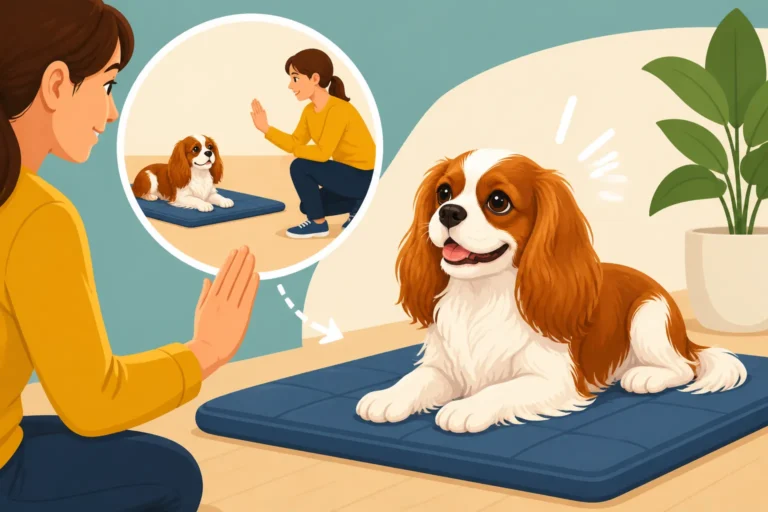
Start by entering the field with your Cavalier on a long line. Let them explore for a few minutes to get out some initial excitement and sniffs. Then, at an easy distance, call them with your happy, high-pitched recall cue. When they come, reward massively. If they hesitate, gently reel them in with the long line and still reward them when they reach you. Gradually increase the distance and the level of distraction. You can recruit a friend to walk by at a distance, or introduce a toy. Make recall a fun game: run away from them and call, hide behind a tree and call, or have a game of "ping-pong" recall between two people. Keep sessions short, fun, and end on a high note. The goal is to build consistent success and reinforce the idea that coming back to you is the best game in the field, no matter what else is happening.
Teaching a Cavalier to Watch You on Walks
Beyond just coming when called, a strong foundation for outdoor reliability is teaching your Cavalier to proactively engage with you and Teaching a Cavalier to Watch You on Walks. This "check-in" behavior creates a connection even when there are distractions present.
Start with a "look at me" or "watch me" command in a quiet environment. Hold a treat near your nose, say your cue, and when your Cavalier makes eye contact, immediately reward. Gradually increase the duration of eye contact and introduce minor distractions. On walks, actively reward your Cavalier whenever they voluntarily glance back at you. This teaches them that paying attention to you in a stimulating environment is highly rewarding. If you spot a potential distraction (another dog, a bird), get your Cavalier's attention before they notice it. Say "watch me," reward, and then calmly pass the distraction. This proactive approach helps them learn to choose to focus on you, even when temptation looms. Building this engagement strengthens your bond and makes your recall cue more potent because you're already on their radar.
Whether an Adult Cavalier Can Learn Recall Late
Perhaps you've adopted an older Cavalier, or your current adult dog never had formal recall training. You might be wondering, Whether an Adult Cavalier Can Learn Recall Late. The answer, unequivocally, is yes! It might take more patience and consistency to reshape ingrained habits, but adult dogs are absolutely capable of learning new behaviors, including a reliable recall.
The key is to approach it with the same foundational principles as puppy training: positive reinforcement, high-value rewards, and a gradual increase in distractions. Adult Cavaliers can be incredibly food-motivated, making treats a powerful tool. You'll likely need to spend more time in the lower-distraction phases, meticulously building up their understanding and positive associations. If your adult Cavalier has a history of successful "ignoring" you outdoors, you'll need to work extra hard to make coming back to you significantly more rewarding than whatever they're chasing or sniffing. A long line is even more critical for adult dogs who have established patterns of running off. Don't get discouraged if progress feels slow; every successful recall, no matter how small, is a step in the right direction. With dedication, you can absolutely teach an old (or older) Cavalier new tricks and ensure they're safer outdoors.
Broader Safety Measures Beyond Recall
While a strong recall is paramount, it's just one piece of the safety puzzle. Cavaliers are small, curious, and sometimes oblivious to danger, meaning responsible ownership extends to creating a secure environment.
Fencing a Yard a Cavalier Will Not Leave
For many Cavalier owners, a securely fenced yard is a non-negotiable part of providing a safe outdoor space. However, it's not enough to simply have "a fence." You need Fencing a Yard a Cavalier Will Not Leave, which means carefully assessing its integrity against a small, agile dog.
Cavaliers, despite their cuddly image, can be surprisingly resourceful when something piques their interest. Check for gaps under gates, loose boards, or areas where the fence meets the ground. A small Cavalier can squeeze through surprisingly narrow openings. If you have decorative railings, measure the space between the bars; if your dog's head can fit, their body can likely follow. Invisible fences can be a controversial topic; while they can deter some dogs, they don't prevent other animals or people from entering your yard, nor do they physically contain a highly motivated Cavalier who has a strong prey drive. For a truly secure environment, a physical fence that is tall enough and without escape routes is usually the best choice. This gives you peace of mind and your Cavalier a safe space to explore and relieve themselves without constant supervision. Understanding Whether a Cavalier Squeezes Through Railings is critical for yard security.
Preventing a Cavalier From Bolting
Even with the best recall training and a secure yard, there will be moments when your Cavalier is near an open door or a gate that's been left ajar. Preventing them from bolting in these vulnerable moments is a crucial safety measure. It's often in these unexpected seconds that Losing a Cavalier to Traffic and How It Happens.
Training a strong "wait" or "stay" command at thresholds (doors, gates, car doors) is incredibly helpful. Practice having them sit and wait calmly while you open the door, only releasing them on your cue. Always use a leash when first training this, even indoors. For extra security, especially if you have a busy household with frequent door openings, consider using baby gates to create a "double barrier" system, keeping your Cavalier safely contained in a separate area when the front door is in use. For walks, particularly in urban areas, double leashing (one leash attached to their harness, another to their collar, or using a head halter with a leash) can provide an extra layer of security. Microchipping and ensuring your Cavalier always wears ID tags are non-negotiable safety standards. In the unfortunate event that they do manage to bolt, these measures dramatically increase the chances of a safe reunion.
Disclaimer
This article is for general informational purposes only and does not constitute professional advice. Laws, prices and regulations vary by location and change over time. Consult a qualified professional for guidance on your specific situation.