Why a Cavalier Stops Listening Outdoors
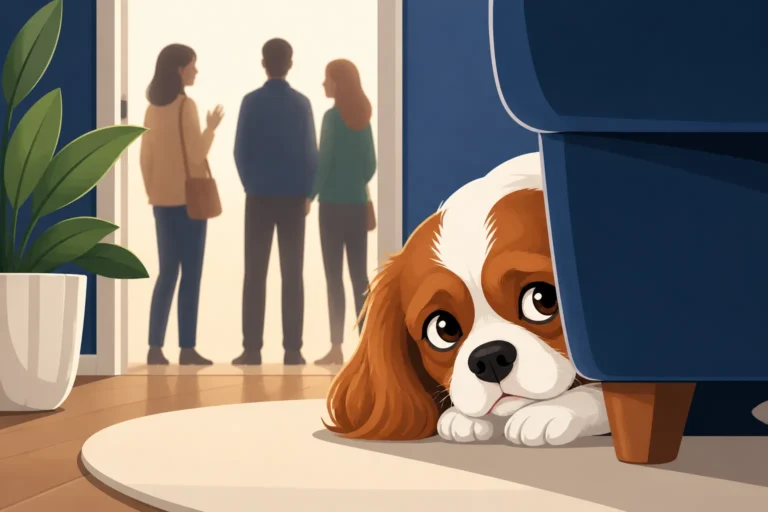
It can be incredibly frustrating when your sweet, attentive Cavalier, who hangs on your every word indoors, suddenly develops selective hearing the moment you step outside. One minute they're showering you with affection, the next they're nose-down in a scent trail or fixated on a squirrel, completely ignoring your increasingly frantic calls. This guide will help you understand why your Cavalier transforms into a heedless explorer outdoors and, more importantly, what you can do to bring back that attentive, eager-to-please companion you know and love.
The Lure of the Wild: Why Outdoor Distractions Trump Indoor Manners
The change in your Cavalier's behavior from inside to outside isn't just stubbornness; it's a perfect storm of instinct, sensory overload, and the sheer novelty of the great outdoors. What might seem like a simple walk in the park to us is a high-definition, surround-sound, 4D experience for our dogs.
The Cavalier's Hidden Spaniel Instincts
Many Cavalier owners fall in love with their gentle, lap-loving nature and forget that, deep down, these dogs are still spaniels. Spaniels were originally bred for hunting, specifically to "flush" birds from cover. This means they are inherently curious, scent-driven, and often have a strong desire to explore. While they might not be chasing pheasants in your local park, that innate drive to follow a fascinating scent or investigate a rustling bush is very much alive.
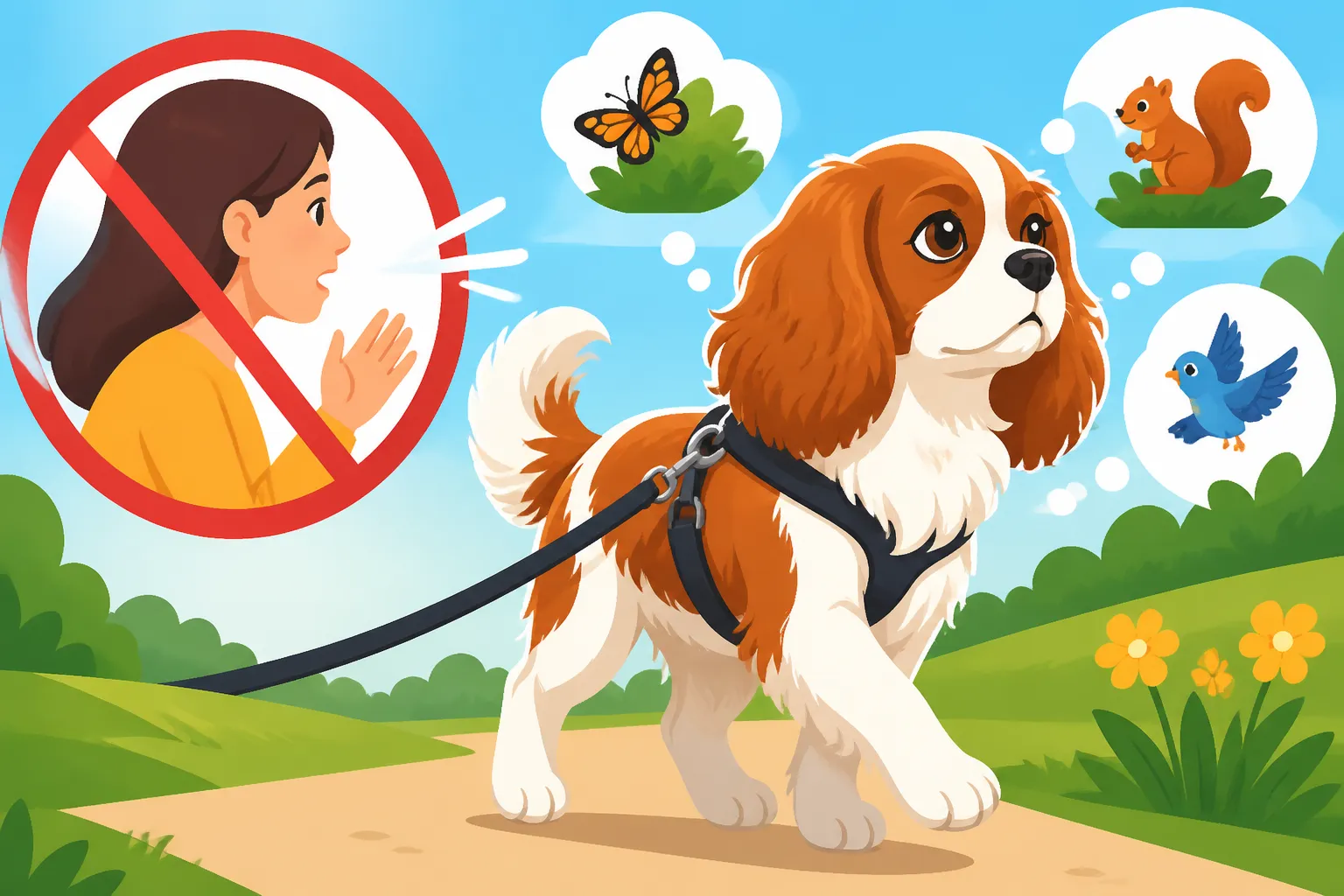
Imagine the thrill for a Cavalier when they catch a whiff of rabbit from yesterday morning, or the sight of a bird flitting just out of reach. These aren't just minor distractions; they're primal calls that can override even the most well-practiced "come." When your Cavalier's nose hits the ground, or their eyes lock onto movement, they're often operating on instinctual autopilot, and your voice simply becomes background noise. It's not that they don't love you; it's that, in that moment, their ancient brain tells them to hunt. Understanding The Spaniel Instincts Left in a Cavalier is crucial to managing their outdoor behavior. You might find them digging at tree roots, sniffing endlessly at a patch of grass, or suddenly taking off in a direction you weren't expecting, all driven by these powerful, inherent traits.
Overload of Sensory Input
Think about your home environment. It's relatively predictable. There are familiar smells, sounds, and sights. Your Cavalier knows the layout, the routine, and what to expect. Commands given indoors have a clear context, and there are few truly novel distractions. Now, step outside. Suddenly, there's a cacophony of new smells – the faint scent of a neighborhood cat, the exhaust from a passing car, the residue of a thousand other dogs' walks. There are countless new sounds – distant sirens, children playing, other dogs barking, leaves rustling, bicycle bells. And the visual landscape is constantly changing – people walking, cars driving, other animals, reflections, shadows.
This constant barrage of sensory information is incredibly stimulating for a Cavalier. Their brain is working overtime to process it all. While you might be focused on getting from point A to point B, your dog is experiencing a rich tapestry of data. When their brain is in overdrive processing these novel inputs, it's harder for them to filter out the less urgent information, like your voice asking them to "sit" or "stay." It's like trying to have a quiet conversation in the middle of a bustling carnival – it's just really hard to focus on one specific thing when there's so much else happening. This sensory overload is a significant reason why a command that works perfectly in your quiet living room falls flat near a busy street.
Training Gaps and Environmental Differences
It's easy to assume that if your dog knows a command indoors, they know it everywhere. But a dog's understanding is often much more context-specific than we realize. Bridging this gap from the living room to the local park requires deliberate, consistent training that accounts for the vastly different environments.
The Illusion of "Knowing" a Command
When your Cavalier flawlessly performs a "sit" or "come" in your kitchen, you probably feel a swell of pride. And rightly so! But here's the kicker: your dog isn't just responding to the word "sit." They're responding to the word "sit" in the kitchen, with you standing right there, with no distractions, when you're holding a treat. Dogs are masters of association, and they link commands to the entire environment in which they learn them.
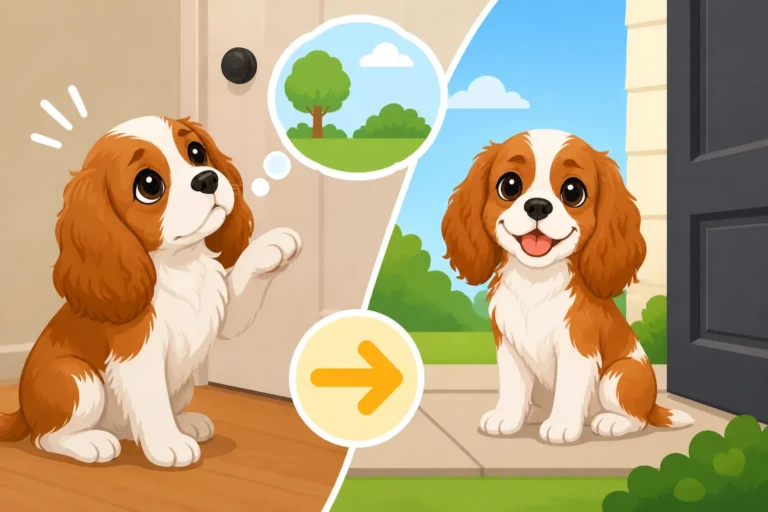
This means that "sit" in the quiet living room is an entirely different command to "sit" at the dog park with other dogs barking and exciting smells everywhere. To truly "know" a command, a dog needs to generalize it across various environments, with increasing levels of distraction. If you've primarily trained indoors, your Cavalier hasn't had the opportunity to build that generalized understanding. They might not be intentionally ignoring you; rather, their brain hasn't connected "come" in a distracting outdoor setting with the same urgency as "come" in your hallway. Many owners mistakenly believe that because their dog knows the command, they should automatically obey it in any situation. This oversight is a common reason Why a Cavalier Comes Back Slowly or not at all, when faced with overwhelming outdoor stimuli.
Insufficient Motivation Outdoors
Let's be honest: what's more exciting to your Cavalier? That crumb of kibble you offered them indoors, or the opportunity to chase a squirrel across a field? For many dogs, the internal reward of engaging with the outdoor world far outweighs the typical treat or praise they receive at home. If your Cavalier is ignoring you, it often means what you're offering isn't compelling enough to compete with the environment.
This isn't to say your Cavalier doesn't value your praise, but when they're truly engrossed in an outdoor activity, that "good boy!" might not register. This is where you need to seriously level up your reward game. The treats you use indoors for routine commands are likely not going to cut it when you're trying to recall them from a fascinating scent trail. We're talking about super high-value rewards: tiny pieces of cheese, cooked chicken, hot dogs, or their absolute favorite squeaky toy. These need to be reserved only for outdoor training or critical moments when you need their undivided attention.
Think of it like this: would you rather work for your usual salary or for a massive bonus that's offered only occasionally for exceptional effort? Your Cavalier is the same. To make yourself more interesting than the enticing outdoor world, your reward has to be truly irresistible. Resources from online training platforms like BAXTER & Bella often emphasize the importance of identifying and utilizing these high-value motivators to ensure your dog chooses to engage with you over external distractions.
Strategies to Reclaim Your Cavalier's Attention
The good news is that with consistent effort and the right approach, you can significantly improve your Cavalier's responsiveness outdoors. It's about gradually building their skills, boosting your appeal, and managing their environment smartly.
Building a Stronger Foundation Through Proofing
"Proofing" is the process of practicing a command in many different environments, with increasing levels of distraction, until your dog can perform it reliably anywhere. It's crucial for a Cavalier who "stops listening" outdoors.
Start by practicing commands like "come" and "stay" in extremely low-distraction environments that are still outside your home. This might be your quiet backyard, or a very quiet park early in the morning. Use your highest-value treats during these sessions. Once they're performing reliably there, gradually introduce minor distractions. This could be a friend walking by at a distance, or a distant sound. Slowly, over weeks and months, increase the level of distraction.
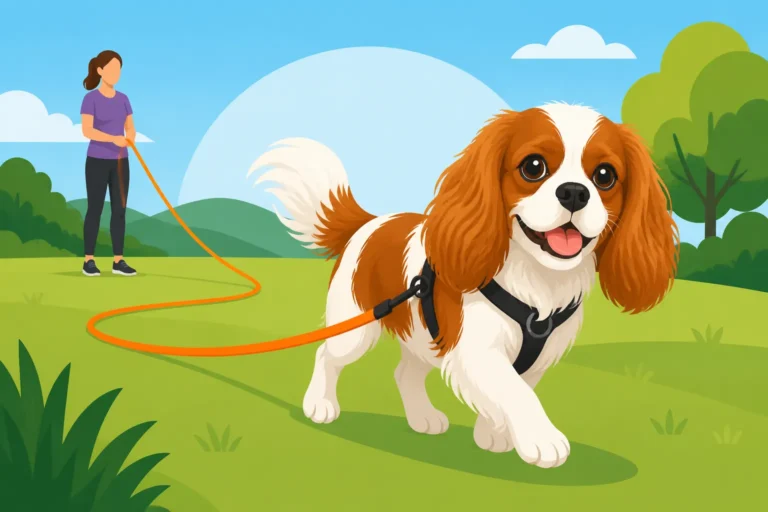
A fantastic tool for building a reliable recall in outdoor settings is a long line. This is a very long leash (15-30 feet) that allows your Cavalier to explore a bit, but still keeps them safely tethered to you. You can let them wander, then give your "come" command. If they ignore you, gently reel them in, praising and rewarding them enthusiastically when they reach you. This teaches them that "come" always means a reward, and that ignoring you doesn't lead to freedom. You can find excellent quality long lines on platforms like Amazon, offering a range of lengths and materials suitable for a Cavalier. It’s a vital step for Long Line Practice for a Cavalier before even thinking about off-leash adventures. Remember, short, frequent training sessions (5-10 minutes) are much more effective than one long, tedious one.
Upping Your Reward Game
As we discussed, your indoor rewards might not cut it. To make yourself the most exciting thing outdoors, you need to become the dispenser of ultimate joy.
Here's how to really supercharge your rewards:
- High-Value Treats: Forget the dry kibble. Think small pieces of cheese, cooked chicken, turkey hot dogs, or even specially made freeze-dried liver treats. Keep these reserved only for outdoor training or when you need exceptional focus. Your Cavalier should salivate at the sight of them.
- The "Jackpot" Reward: When your Cavalier does something truly amazing outdoors, like coming instantly when called despite a massive distraction, give them a "jackpot." This isn't just one treat; it's a handful of treats, one after another, delivered with immense praise and excitement. This makes a huge impression and tells them, "Wow, listening to Mom/Dad pays off BIG!" This strategy is key to understanding Treats a Cavalier Will Trade Anything For.
- Enthusiastic Praise and Play: Don't just hand over a treat. Get excited! Use a happy, high-pitched voice. Kneel down, make yourself inviting. Some Cavaliers are also highly motivated by a quick game of tug with a favorite toy immediately after a command, if it's safe to do so. The goal is to make returning to you a profoundly positive, exciting experience that they look forward to.
Managing the Environment
While training is crucial, it's also vital to be realistic about your Cavalier's limits and manage their environment to set them up for success.
- Leash Safety First: Until your Cavalier has a rock-solid recall in every environment you visit, they should be on a leash or a long line. This isn't just about obedience; it's about their safety. Cavaliers, with their low prey drive for birds and curiosity for scents, can dart into traffic or get lost faster than you can blink.
- Secure Fencing: If you have a yard, ensure the fencing is secure. Cavaliers are small enough to squeeze through surprisingly small gaps, and their desire to investigate can easily lead them astray. Regularly check for weak spots or holes they could exploit.
- Know Their Triggers: Pay attention to what distractions your Cavalier struggles with most. Is it squirrels? Other dogs? Certain smells? Avoid putting them in situations where these triggers are overwhelming until their training is more advanced. For example, if they absolutely cannot resist chasing a bird, Whether a Cavalier Can Ever Be Off Leash in an open park might not be a realistic goal, and that's okay. Prioritize safety and success over an idealistic vision of off-leash freedom.
- Controlled Exposure: If you want your Cavalier to get used to certain distractions, expose them to those distractions in a controlled way, from a distance, while they are on a leash and you are actively training. For instance, practice "look at me" or "sit" while another dog walks by far away, rewarding them heavily for choosing to focus on you.
| Aspect | Indoor Environment | Outdoor Environment | Training Solution |
|---|---|---|---|
| Distractions | Low, predictable, familiar | High, unpredictable, novel | Proofing: Gradually introduce distractions. |
| Motivation | Often satisfied with standard treats/praise | Needs higher value to compete with stimuli | Use jackpot rewards (cheese, chicken), enthusiastic praise. |
| Safety | Generally safe and contained | Potential for traffic, getting lost, other animals | Use leashes, long lines, secure fencing; never assume recall. |
| Learning | Context-specific associations | Requires generalization across many scenarios | Train in multiple locations; vary distances, sounds. |
| Cavalier Instincts | Subdued, easily redirected | Heightened (prey drive, scent trailing) | Understand breed traits; work with, not against, them. |
Common Pitfalls and What to Avoid
Even with the best intentions, it's easy to fall into common traps that can inadvertently undermine your outdoor training efforts. Being aware of these can help you steer clear of counterproductive behaviors.
Punishing for Coming Back Late
This is perhaps one of the most common and damaging mistakes owners make. Picture this: your Cavalier has been ignoring your calls for what feels like an eternity, chasing a scent, seemingly deaf to your increasingly exasperated shouts. Finally, after five minutes of frantic effort, they saunter back to you, perhaps looking a little sheepish. Your relief quickly turns to anger, and you might scold them, grab them roughly, or just ignore them entirely.
While your frustration is completely understandable, this reaction teaches your Cavalier a terrible lesson: coming back to you is unpleasant. They don't associate your anger with the five minutes they spent ignoring you; they associate it with the act of returning. This creates a negative association with recall, making them even less likely to come back quickly next time.
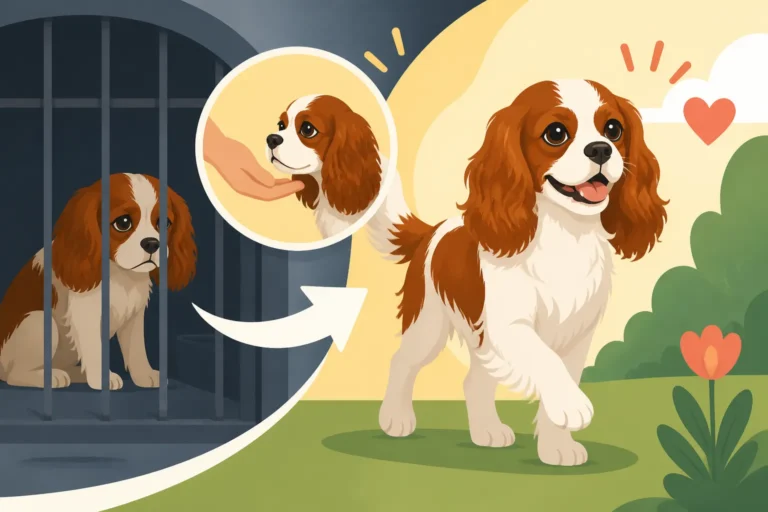
Instead, no matter how long it takes, always greet your Cavalier enthusiastically and with a reward when they return. Even if you're internally fuming, praise them like they just won an obedience championship. The goal is to reinforce the act of coming back, even if it's delayed. Then, you can adjust your training strategy to prevent future delays, perhaps by working in less distracting environments or using a long line to ensure they can't practice ignoring you for extended periods.
Over-Reliance on Verbal Commands Alone
We humans rely heavily on spoken language, so it's natural to assume our dogs do too. However, dogs are incredible at reading body language, facial expressions, and even subtle changes in our tone. Relying solely on a verbal command, especially outdoors where ambient noise can easily drown out your voice, is often a recipe for frustration.
Consider incorporating hand signals into your outdoor commands. When you teach "sit," for example, use a clear hand signal along with the verbal cue. Over time, your Cavalier will learn to associate both. This gives you a backup communication method. If your voice is lost in the wind or they're too far to hear you clearly, a familiar hand signal might cut through the noise and grab their attention. Furthermore, being mindful of your own body language can be incredibly helpful. If you stand stiffly and shout, you might appear threatening or simply uninteresting. If you crouch down, open your arms, and use an inviting posture, you're much more likely to encourage them to Teaching a Cavalier to Watch You on Walks and return to you. Consistency in both verbal cues and body language will greatly enhance your Cavalier's understanding and responsiveness in any environment.
Disclaimer
This article is for general informational purposes only and does not constitute professional advice. Laws, prices and regulations vary by location and change over time. Consult a qualified professional for guidance on your specific situation.