Whether a Cavalier Works Better for Toys or Food
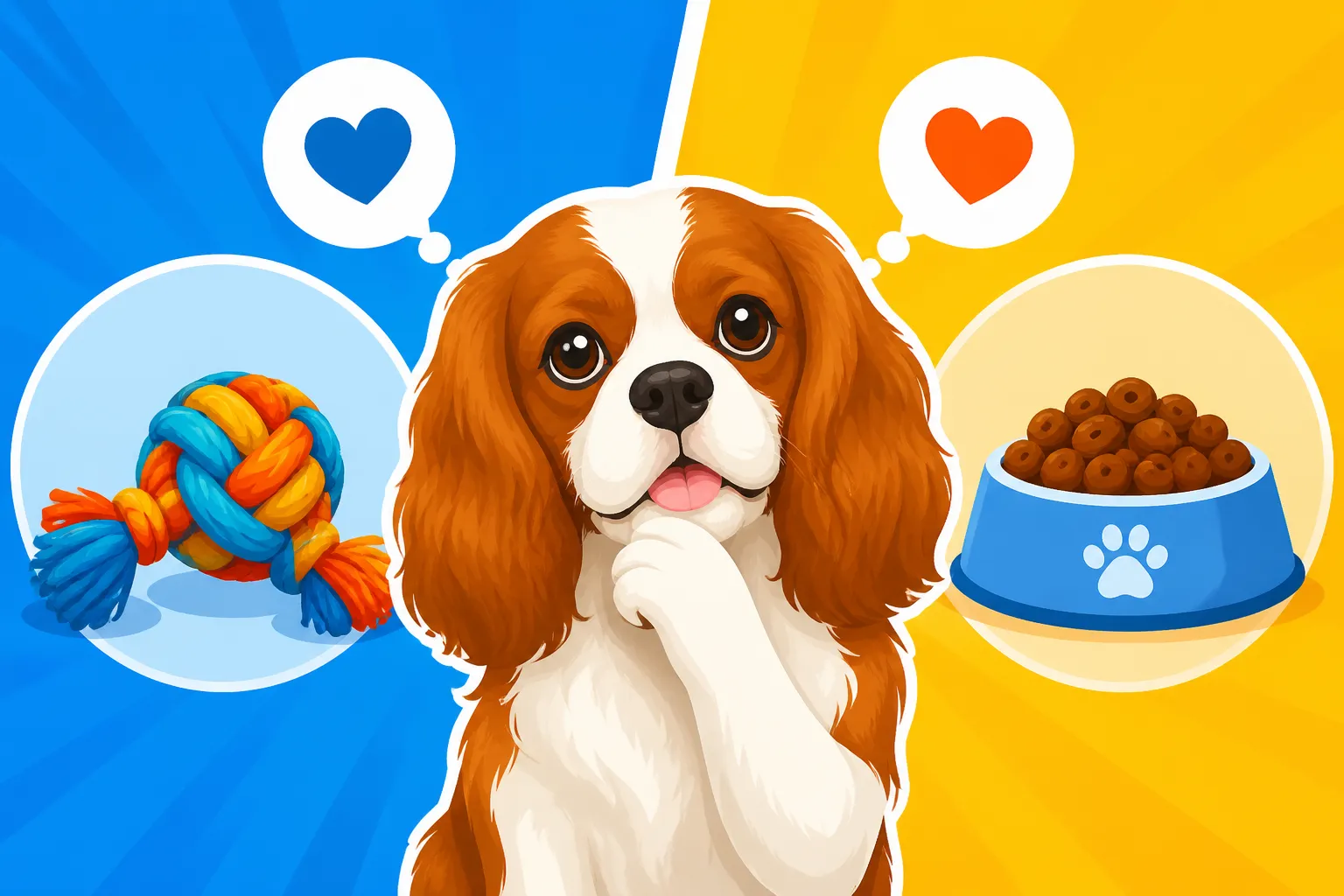
It's a common scenario: you’re standing there, treat in hand, trying to get your sweet Cavalier to focus on "sit" or "stay," and wondering if you're holding the right kind of bribe at all. Many Cavalier owners struggle with finding the ultimate motivator to make training effective and, let's be honest, a little easier for both of you. This guide will explore whether your Cavalier is more likely to thrive on food rewards or toy-based play during training sessions, and how to discover what truly makes their little tail wag with engagement.
Understanding Your Cavalier's Intrinsic Motivations
Cavaliers are generally known for their eager-to-please nature and deep affection for their human companions. They are, at their heart, companion dogs, bred for centuries to be lap warmers and loving friends. This inherent desire to be close to you and make you happy is a powerful intrinsic motivator in itself. However, beneath that sweet, docile exterior often lies a remnant of their spaniel ancestry – a dog with a keen nose and a drive for certain types of interaction. Understanding these fundamental aspects of their personality is crucial before you even pick up a treat or a squeaky toy.
The Cavalier's Desire to Please and Connect
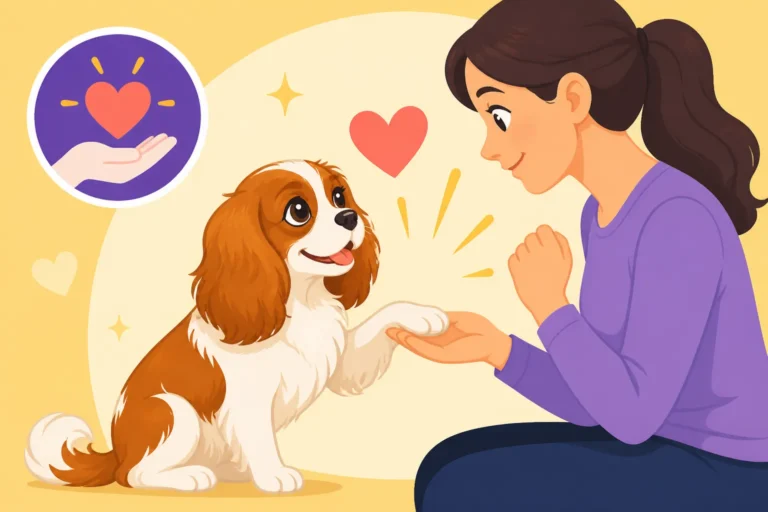
One of the most charming aspects of a Cavalier is their almost constant wish to be near you and be part of whatever you're doing. This isn't just a clingy trait; it's a deep-seated part of their breed's purpose. When they look up at you with those big, soulful eyes, they genuinely want to connect. This means that praise, gentle petting, and a happy, encouraging tone from you can go a long way in reinforcing desired behaviors. It’s not always about a tangible reward; sometimes, your genuine pleasure is enough.
However, relying solely on praise won't always cut it, especially when you're introducing new, more complex behaviors or trying to train in a distracting environment. Think about trying to teach a new trick at the park with squirrels darting around. Your "Good boy!" might be nice, but a high-value reward can cut through the noise and capture their attention more effectively.
The Subtle Spaniel Instincts
Don't let the "toy breed" label fool you entirely. Beneath the surface, Cavaliers still carry the instincts of their spaniel ancestors. This means they can be quite nose-driven, enjoying sniffing out interesting scents, and some may even have a surprising prey drive for small, fast-moving objects. While they aren't typically used for hunting anymore, this instinct can manifest in their love for games of fetch, chasing a thrown toy, or rooting around for dropped crumbs.
This spaniel heritage is important because it hints at how some Cavaliers might respond to different types of motivators. A Cavalier with a strong natural chase instinct might find a game of fetch with a favorite toy incredibly rewarding, whereas a more scent-driven Cavalier might be more enticed by a hidden treat. You'll want to observe your own dog's play style and how they engage with the world to get clues. Some Cavaliers might be more stimulated by a squeaky toy, while others might prefer a soft, cuddly plush that they can carry around like a trophy.
The Power of Food Rewards in Cavalier Training
For many Cavaliers, food is an undeniable and powerful motivator. Their relatively small size often means every calorie counts, and they can be quite enthusiastic about anything edible. Food rewards offer immediate gratification and can be incredibly effective for capturing attention and reinforcing new behaviors quickly.
Why Food is Often a Go-To Motivator
Let's be real, most dogs are food motivated to some degree, and Cavaliers are certainly no exception. A delicious morsel can instantly shift their focus from the squirrel outside to the task at hand. Food is primary; it's a basic need, and therefore, it triggers a strong, positive response. When you're trying to teach a new command, having a clear, quick reward like a treat means your Cavalier can instantly connect the action (e.g., sitting) with the positive outcome (the yummy treat). This makes the learning process much clearer and faster.
Think about teaching a puppy to toilet indoors. A small, easily digestible treat given immediately after they relieve themselves in the right spot is a powerful reinforcer that helps them understand exactly what they did correctly. This immediacy is much harder to achieve with a toy, which might require a short play session, potentially delaying the reward.
Choosing the Right Treats and Delivery
Not all treats are created equal in the eyes of a Cavalier. You'll want to experiment to find what your individual dog considers "high-value." For some, their regular kibble might be enough, especially in a quiet home environment. For others, particularly in distracting outdoor settings or for more challenging tasks, you'll need something irresistible.
Consider these types of treats:
- Low-value: Bits of their regular kibble, plain cheerios. Good for casual rewards, easy behaviors.
- Medium-value: Small, commercially made training treats (like those found on Amazon), often soft and chewy. Great for most daily training.
- High-value: Cooked chicken breast, bits of cheese, freeze-dried liver, hot dogs. These are the "jackpots" for breakthrough moments or intense distractions.
When delivering treats, timing is everything. The treat should appear within 1-3 seconds of the desired behavior. Keep them small – pea-sized or even smaller for quick consumption so you can move on to the next repetition. Using a treat pouch can help keep your hands free and make delivery swift and seamless. Remember, for a Cavalier, even a tiny piece of something truly delicious is a big deal. You can find a huge variety of options, from soft and chewy to crunchy, that fit Treats a Cavalier Will Trade Anything For easily.
Potential Drawbacks of Solely Food-Based Training
While food is effective, relying solely on it can have a few downsides. First, you run the risk of your Cavalier becoming overweight if you're not careful with calorie intake, especially since Cavaliers can Why a Cavalier Gains Weight So Easily. Those little treats add up! You can mitigate this by using smaller pieces or by deducting training treats from their daily meal allowance.
Second, some Cavaliers can become too focused on the food itself, rather than the lesson. You might find your dog staring intently at your hand, anticipating the treat, rather than truly engaging with the command. This is where Training a Cavalier Around Food Distraction becomes a real challenge. They might perform the action, but only if they see the food. The goal is to fade the lure and rely more on the verbal cue and eventual variable reinforcement.
Finally, food isn't always practical. If you're out for a walk and your dog suddenly needs to recall from chasing a leaf, fumbling for a treat might take too long. This is where a balanced approach, perhaps incorporating toys or other rewards, becomes beneficial.
| Motivator Type | Pros for Cavaliers | Cons for Cavaliers | Best Use Cases |
|---|---|---|---|
| Food | High compliance, immediate gratification, clear communication, versatile for most behaviors | Risk of weight gain, can create over-reliance/distraction, less spontaneous for play | New behaviors, high distraction environments, initial learning phases, Keeping a Cavalier Focused in a Short Session |
| Toys | Builds engagement/bond, burns energy, can be self-reinforcing, no calories | Not all Cavaliers are toy-driven, timing can be less precise, toy must be suitable for rapid play | Reinforcing known behaviors, breaking up training, rewarding recall, building confidence, fun! |
Leveraging Toys for Play-Motivated Cavaliers
Not every Cavalier is a food hound, or at least not only a food hound. For some, a rousing game with a favorite toy can be just as, if not more, motivating than a treat. Tapping into this play drive can be an incredibly rewarding way to train, fostering a stronger bond and adding an element of fun.
Identifying Your Cavalier's Preferred Play Style
Just as with treats, not all toys are created equal in a Cavalier's eyes. You need to become a detective of play. Does your Cavalier love to:
- Chase and Retrieve? A small, soft ball or a squeaky toy thrown a short distance might be their ultimate reward. The act of chasing and bringing it back is inherently satisfying for them.
- Tug? Some Cavaliers adore a good game of tug. A sturdy fabric tug toy can be a fantastic way to reward a job well done, teaching impulse control alongside fun.
- Shred and De-stuff? If your Cavalier loves to "kill" soft toys, a reward could be a brief moment with a new, cheap plush toy they can dissect (under supervision, of course, to avoid ingestion).
- Carry and Nuzzle? For more gentle Cavaliers, a soft plush toy they can proudly carry around might be a better reward than an active game.
Observe how your Cavalier plays when not in a training session. Which toys do they gravitate towards? Which ones elicit the most excitement? Knowing their preference helps you choose the most effective toy reward. Finding the perfect interactive toy can often be a delightful experiment, and online retailers like Amazon offer an incredible range, from crinkle toys to snuffle mats for mental stimulation.
Using Toys as Training Rewards Effectively
To use toys effectively in training, it's not just about tossing a ball. It's about making the toy the consequence of a good behavior.
- Build Value: Don't leave high-value toy rewards lying around all the time. Keep them special. Only bring out their absolute favorite tug toy or squeaker for training sessions.
- Short Bursts of Play: After a successful command, engage in a quick, enthusiastic game with the toy for 10-15 seconds. Make it exciting, then put the toy away. This keeps the toy high-value and prevents your Cavalier from becoming overstimulated.
- Timing is Still Key: Just like food, the play reward needs to happen immediately after the desired behavior. Say "Yes!" or use a clicker, then instantly engage with the toy.
- Practice Releasing the Toy: For tug or fetch, teach a "drop it" or "give" cue so you can easily end the play session and transition back to training. This also ensures you maintain control over the toy as the reward.
Using toys can be particularly effective for Cavalier Recall and Its Limits. If your Cavalier loves to chase a ball, calling them back for a game of fetch can be a far more compelling reward than a tiny treat, especially if they're quite a distance away.
When Toys Might Not Be the Best Fit
While wonderful for many, toy motivation isn't a universal language for all Cavaliers. Some are simply not very toy-driven. They might show mild interest but quickly lose focus, or prefer to just chew on a toy rather than engage in active play with you. If your Cavalier shows little enthusiasm for toys, trying to force it as a primary motivator can be frustrating for both of you.
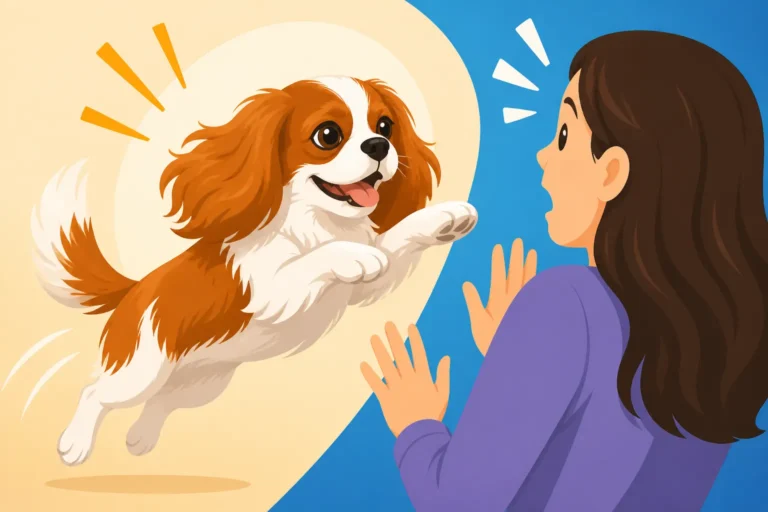
Another challenge is the potential for over-arousal. Some Cavaliers can get so excited by a game of tug or chase that they become too stimulated to focus on further commands. It’s important to know your dog's threshold and use play judiciously. For many, toys work best as a secondary or occasional reward, or for specific behaviors like a strong recall.
Combining Motivators for a Balanced Approach
The truth is, for most Cavaliers, the most effective training strategy involves a thoughtful blend of both food and toy rewards, along with generous praise. This balanced approach allows you to tailor your rewards to the specific situation, the difficulty of the task, and your Cavalier's current energy levels.
The Best of Both Worlds: A Synergistic Approach
Think of training like building a delicious meal for your Cavalier's brain. Sometimes they need a hearty main course (high-value food), and sometimes they need a fun dessert (their favorite toy).
- Initial Learning: When teaching a brand new behavior or command, food is often the most efficient way to communicate what you want. It's precise, immediate, and most dogs understand its value without much explanation. For example, when you're Shaping a New Behavior With a Cavalier, tiny food rewards for each small step can be incredibly clear.
- Proofing and Generalization: Once your Cavalier understands a command, you can start to mix things up. Practice in different environments and start alternating between food and toy rewards, or even just praise, on a variable schedule. This keeps them guessing and highly engaged.
- High-Distraction Environments: In a busy park, a high-value treat or a quick, enthusiastic game with a squeaky toy can cut through distractions far better than just verbal praise.
- Building Engagement: Toys are fantastic for building enthusiasm and strengthening your bond. If your Cavalier views training as a fun game with you, they'll be more eager to participate. Companies like BAXTER & Bella, known for their online puppy training programs, often advocate for integrating both food and play into their positive reinforcement approach, highlighting how this variety keeps dogs engaged and makes learning a joy.
Practical Strategies for Mixing Rewards
Here's how you can implement a mixed reward system:
- Start with Food, End with Play: For a training session, begin with food to get focus and teach new concepts. As your Cavalier gets tired or needs a boost of energy, switch to a short play session with a toy to keep things fun and end on a high note.
- The "Jackpot" Reward: For a truly outstanding performance or a breakthrough moment (like a perfect recall in a challenging spot), offer a "jackpot" – a handful of high-value treats and a quick game with their favorite toy.
- Variable Reinforcement: Don't reward every single correct response with the same thing, every time. Once a behavior is learned, sometimes they get a treat, sometimes a toy, sometimes just praise. This makes them work harder and keeps the motivation strong, much like a slot machine.
- Observer Your Cavalier's Energy: If your Cavalier is a bit sluggish, a high-value treat might perk them up. If they're full of beans and need to burn off some steam, a quick tug or fetch game might be perfect before settling down for more focus work.
- Use Different Rewards for Different Behaviors: Maybe loose-leash walking is always rewarded with a treat, but coming when called gets a burst of toy play. This can help them differentiate cues.
Remember, the goal is not to eliminate one type of reward, but to understand when each is most effective for your unique Cavalier. Pay attention to their responses, their enthusiasm, and what truly sparks that eager glint in their eyes. Whether it's the crunch of a biscuit or the squeak of a toy, finding your Cavalier's ideal motivation blend will make your training journey together much more enjoyable and successful. It's about adapting to them, not forcing them into a one-size-fits-all mold.
Disclaimer
This article is for general informational purposes only and does not constitute professional advice. Laws, prices and regulations vary by location and change over time. Consult a qualified professional for guidance on your specific situation.