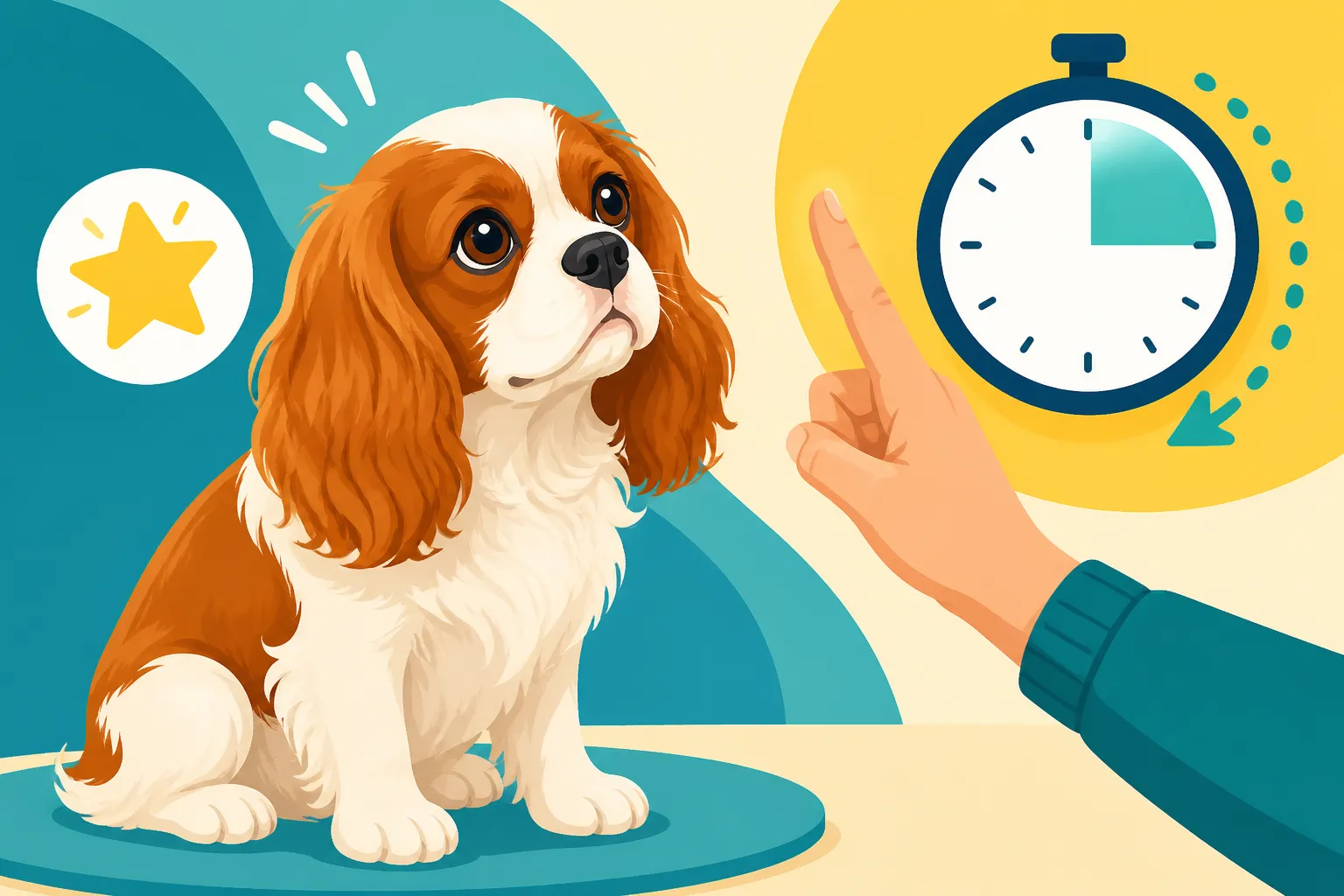
Keeping a Cavalier Focused in a Short Session
It's a familiar feeling for many Cavalier King Charles Spaniel owners: you’ve carved out five precious minutes for training, only to find your sweet, eager pup's attention drifting faster than a feather in the breeze. While their biddable nature makes them eager to please, the world is full of fascinating smells and sounds, and keeping their focus can be a real challenge. This guide dives deep into practical, empathetic strategies to ensure your Cavalier stays engaged and truly learns during those crucial, short training sessions.
Understanding the Cavalier Attention Span
Cavaliers are renowned for their affectionate, eager-to-please personalities, often described as "Velcro dogs" due to their desire to be constantly near their people. This wonderful trait can, ironically, sometimes make focused training a little tricky. They're not deliberately ignoring you; their world is just so rich with sensory input, and frankly, they'd often rather be cuddling than performing a perfect stay.
The "Velcro Dog" Paradox in Training
The term "Velcro dog" isn't just cute; it describes a core aspect of the Cavalier temperament. They thrive on companionship and want nothing more than to be a part of whatever you're doing. This means that while they might be in the room with you, their attention isn't always laser-focused on the task at hand. If you're trying to teach "sit" but the mail carrier just walked past the window, or if someone else is moving in the kitchen, their natural inclination is to observe or, even better, participate in that activity. They’re social observers by nature, making them easily diverted by anything more interesting than repeated cues for a paw shake. It's not a lack of intelligence; it's a prioritization of their social environment.
Consider a scenario: you're working on "down" in the living room, and your Cavalier, Pip, is doing great. Then, your partner walks in, heading to the fridge. Pip's head snaps up, tail gives a hopeful wag, and the "down" position is completely forgotten. This isn't defiance; it's a social creature reacting to social cues. Their desire to be with you extends to wanting to be involved in everything happening around you, which can understandably feel like a challenge when your goal is strict focus.
What "Biddable" Really Means for Training
Cavaliers are often described as "biddable," meaning they are generally willing to obey. This is a huge advantage in training, as they don't typically have a stubborn streak or an independent desire to work against you. They genuinely want to make you happy. However, "biddable" doesn't automatically mean "focused." A biddable dog might be willing to try, but if they're overwhelmed, bored, or distracted, their effort can wane quickly. They might offer a half-hearted attempt, then look around for something more engaging.
This means you, as the trainer, need to take responsibility for making the training engaging enough to capture and hold their attention. If your Cavalier isn't performing, it's rarely because they're being "naughty." It's more likely because the reward isn't high enough, the distractions are too great, or the session is simply too long for their current attention span. Understanding this helps you approach training with empathy and adjust your methods rather than getting frustrated. Remember, their biddability means they'll respond to positive reinforcement and clear communication, even if their attention initially wanders.
Setting Up for Success: The Environment and Timing
Before you even utter a command, the environment and the timing of your training session play a monumental role in your Cavalier's ability to focus. You wouldn't try to learn a complex new skill in a noisy, chaotic room, and neither should your dog. Creating the right conditions sets both of you up for effective learning.
Choosing the Right Space
When first teaching a new behavior or proofing a skill, choose a quiet, low-distraction environment. This often means indoors, in a room where other family members aren't constantly walking through, and where windows don't offer an irresistible view of squirrels or passing dogs. A clear, calm space allows your Cavalier to dedicate their mental energy solely to you and the task.
For instance, if you live in a busy household, perhaps the quietest time is early morning before everyone else is up, or late evening after dinner. A small, enclosed space like a spare bedroom or even a corner of the living room with the blinds drawn can work wonders. The goal is to minimize competing sensory input – fewer smells, fewer sounds, fewer visual stimuli. As your Cavalier gets better at a skill, you can gradually introduce more distractions, but always start simple. Trying to teach "stay" in a dog park is setting both of you up for failure; teaching it in your quiet kitchen first is setting you up for victory. This deliberate choice of environment is crucial for building a solid foundation.
Timing Is Everything for a Focused Cavalier
Just like humans, dogs have optimal times for learning. A Cavalier who has just woken up from a nap, or one who is absolutely bursting with energy after a long stretch of quiet time, might not be in the prime state for focused learning. Similarly, a dog who is ravenously hungry before mealtime might be too preoccupied with food, or one who has just eaten a big meal might be too sleepy. The trick is to find that sweet spot: when they are alert, rested, and slightly hungry but not famished.
Often, right before a meal is a fantastic time for training. Their food motivation is naturally high, making them more attentive to treats. Early morning or late afternoon, before the dinner rush, can also be ideal. Avoid training when your Cavalier is overly tired, overstimulated, or in need of a potty break. A quick bathroom trip before a session can prevent distracting pacing or whining. Think of it like a child in school: they learn best when they are well-rested, fed, and free of immediate needs. Similarly, a Cavalier who is comfortable and mildly motivated will be much more receptive. Five-Minute Training Sessions With a Cavalier are perfect for catching these opportune moments.
Maximizing Engagement: Keeping Training Fun and Short
Once you've got your optimal environment and timing, the real magic happens in how you conduct the session. Cavaliers respond beautifully to positive reinforcement and engaging interactions. The key is to make training feel less like work and more like a game they actively want to play.
High-Value Rewards Are Essential
For a Cavalier, a simple piece of kibble might work when there are absolutely no distractions, but to truly capture and hold their attention, especially when new or challenging concepts are being introduced, you need to pull out the big guns: high-value rewards. These are the treats your Cavalier goes absolutely wild for, the ones they'd trade anything for. This might be small pieces of cooked chicken, cheese, hot dogs, or specially made training treats. The higher the value, the more motivated your Cavalier will be to focus on you.
Think about it from your Cavalier's perspective: why should they focus on "sit" when there's a fascinating dust bunny or a shadow moving on the wall? Because you have the goods! Use these high-value treats sparingly, reserving them for training to keep their power. If you always use them, they lose their special appeal. Experiment to find out what truly motivates your specific dog. Some Cavaliers are obsessed with squeaky toys, others live for a piece of string cheese. Once you know their currency, you've got a powerful tool. Learn more about Treats a Cavalier Will Trade Anything For.
Here's a quick comparison of treat values:
| Treat Value Category | Examples | Best Use Cases |
|---|---|---|
| Low Value | Dry kibble, commercial dog biscuits | Maintenance of known behaviors in distraction-free environments |
| Medium Value | Store-bought chewy training treats | Practicing familiar cues with minor distractions |
| High Value | Cooked chicken, cheese, hot dogs, liverwurst | Introducing new behaviors, working in distracting environments, overcoming challenges |
Short and Sweet Sessions
Cavaliers, like many small breeds, often have shorter attention spans than some working breeds. Trying to force a 15 or 20-minute training session will likely lead to frustration for both of you. Instead, aim for incredibly short, frequent sessions. We're talking 1 to 3 minutes, tops, especially when you're just starting out or working on something new. It's better to have six 2-minute sessions throughout the day than one 12-minute session where the last 8 minutes are a battle for attention.
The goal is to end each session on a high note, before your Cavalier gets bored or frustrated. If they successfully perform a command two or three times, celebrate, give a jackpot of treats, and then end the session. This leaves them wanting more, eager for the next "game." It builds enthusiasm for training and helps prevent burnout. Imagine stopping when your dog is still excited and engaged, rather than when they're wandering off, yawning, or licking the floor. This positive association makes them much more likely to maintain focus in future sessions.
The Power of Play and Positive Reinforcement
Training should be a joyful experience, not a chore. Incorporate play into your sessions to keep your Cavalier engaged and to reinforce the bond you share. A quick game of tug or fetch after a successful set of commands can be an excellent reward, tapping into their natural spaniel instincts. This also helps to burn off a little excess energy, which can make subsequent focus easier.
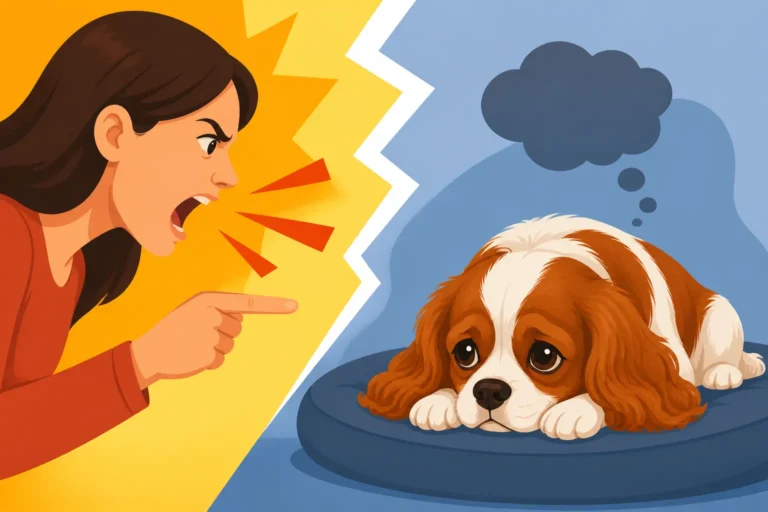
Beyond play, positive reinforcement is the bedrock of successful Cavalier training. This means rewarding desired behaviors immediately and enthusiastically. When your Cavalier offers the correct behavior, mark it with a clear verbal cue like "yes!" or a clicker, and then immediately deliver a high-value treat. Avoid harsh corrections or punishment, as these can easily shut down a sensitive Cavalier and make them anxious or unwilling to offer behaviors. Training a Cavalier With Praise Rather Than Pressure is key. They want to please you, and clear, positive feedback tells them exactly how to do that. Enthusiastic praise, gentle petting, and a happy tone of voice are all powerful reinforcers for these sensitive souls.
Dealing with Distractions: Strategies for the Real World
Life isn't a quiet, empty room, and eventually, your Cavalier needs to be able to focus even when the world is happening around them. Introducing distractions effectively is a gradual process that builds on the foundation of focus you've already established.
Gradual Exposure to Distractions
Once your Cavalier can reliably perform a behavior in a low-distraction environment, it's time to slowly increase the difficulty. This means carefully adding mild distractions, one at a time, and only moving on when your dog is successful. For example, if Pip can "sit" perfectly in the quiet living room, try it:
- Step 1: In the living room, with the TV on low.
- Step 2: In the living room, with a family member quietly reading in the corner.
- Step 3: In the kitchen, when no one else is moving.
- Step 4: In the kitchen, with someone quietly preparing a snack.
- Step 5: Outdoors in the yard, when it's quiet.
- Step 6: Outdoors in the yard, with a bird flying overhead.
The key is gradual and controlled. If your Cavalier fails, it means you've moved too quickly. Go back a step to where they were successful and build up again more slowly. This process is called "proofing," and it's how you teach your Cavalier that a "sit" means "sit" regardless of what's happening. Each small success builds their confidence and strengthens their ability to maintain focus amidst increasing real-world stimuli. This systematic approach prevents your Cavalier from becoming overwhelmed and shutting down.
Teaching a "Watch Me" Cue
One of the most valuable tools for gaining and maintaining your Cavalier's focus in distracting environments is teaching a solid "watch me" or "look" cue. This cue essentially tells your dog, "Look at my face, I have something important for you!" It's an invaluable way to redirect their attention from an impending distraction before they get fully locked onto it.
To teach it:
- Start in a quiet environment. Hold a high-value treat near your nose.
- Say "watch me" (or "look"). The moment your Cavalier looks at your eyes, even for a split second, say "yes!" and immediately give the treat.
- Repeat many, many times. Gradually increase the duration of eye contact before rewarding.
- Practice in different, slightly more distracting environments. If they get distracted, revert to an easier environment.
This isn't just about eye contact; it's about teaching your Cavalier to choose to look at you even when there are other interesting things happening. It's a fundamental building block for all other training, giving you a reliable way to regain their attention. For more structured online guidance on teaching cues like this, resources like BAXTER & Bella can offer step-by-step video tutorials and support. Learning The Recall Word a Cavalier Learns Fastest will also be a lifesaver in distracting environments.
Building Consistency: How to Make Progress Stick
Training isn't a one-and-done event; it's an ongoing conversation with your Cavalier. To truly build a focused companion, consistency is paramount, both in your approach and in integrating training into their daily life.
Frequent, Brief Sessions Throughout the Day
As we discussed, short sessions are far more effective for Cavaliers than long, drawn-out ones. To build consistency, aim for several micro-training sessions dispersed throughout your day. Instead of one 10-minute block, try two 2-minute sessions in the morning, another 2-minute session before lunch, a couple more in the afternoon, and a final one in the evening. This constant, brief engagement keeps their mind active, reinforces learning, and builds a habit of offering attention.
Think of it as little bursts of learning. While you're waiting for your coffee to brew, ask for a "sit" and a "stay." Before you put their food bowl down, ask for a "down." During commercial breaks in your favorite show, practice "paw" or "touch." These frequent, low-pressure interactions prevent training from feeling like a separate, arduous task, making it a natural part of your routine. The more often your Cavalier gets rewarded for focusing on you, the stronger that behavior becomes.
Integrating Training into Daily Life
The ultimate goal of training is for your Cavalier to understand and respond to cues in real-life situations, not just in a formal training setting. This means weaving training opportunities into your everyday interactions. Every time you ask your Cavalier to "sit" before getting their leash, before they get a treat, or before you open the door, you're reinforcing that behavior and practicing focus in a practical context.
For example, asking your Cavalier to "wait" before going through a doorway, or to "settle" on their mat while you're eating dinner, are excellent ways to integrate training. These aren't just about obedience; they're about teaching impulse control and self-regulation, which are crucial for focus. Use their mealtime as a training opportunity by asking for a series of known commands before placing the bowl down. Take advantage of walks to practice a "check in" or a "heel" for a few steps. The more often these behaviors are asked for and rewarded in various situations, the more deeply ingrained they become, leading to a Cavalier who is not only well-behaved but also consistently attentive to you. Don't forget how Harnesses Suited to a Cavalier's Neck can make walks and training more comfortable for them. You might even find useful training tools or high-value treats to aid these daily integrations on Amazon.
Troubleshooting Common Focus Killers
Sometimes, despite your best efforts, your Cavalier just can't seem to focus. It's important to be a detective and figure out why.
- Energy Levels: Is your Cavalier too wound up? A short walk or a game of fetch before training can help burn off excess energy, allowing them to settle and focus better.
- Physical Needs: Do they need a potty break? Are they thirsty? Unmet physical needs are huge distractions.
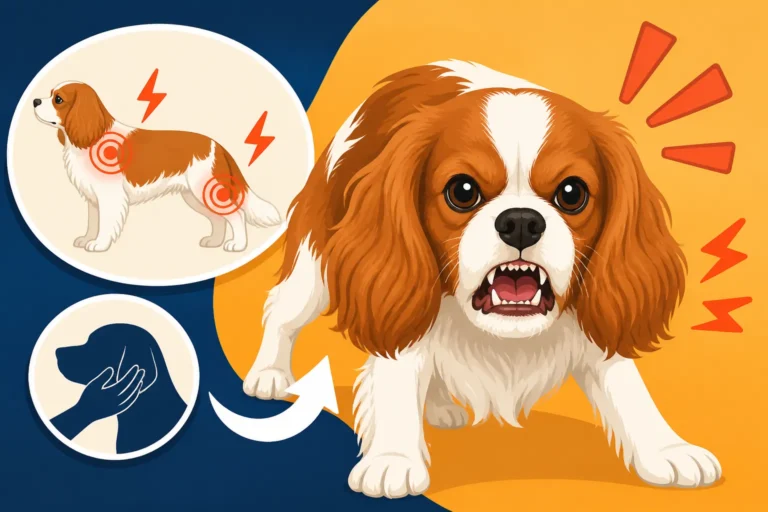
- Pain or Discomfort: A sudden, unexplained drop in focus or enthusiasm for training could be a sign of underlying discomfort. Cavaliers are prone to conditions like Syringomyelia Against Ear Pain in a Cavalier or Loose Kneecaps in a Thirteen-Pound Cavalier, which can cause pain and make them less willing to engage. If you suspect pain, always consult your veterinarian.
- Boredom: Are you repeating the same commands in the same way too often? Vary your routine, introduce new tricks, or try a different location to keep things fresh.
- Overwhelm: Are there too many distractions? Too much noise? Simplify the environment.
By systematically addressing these potential "focus killers," you can create a more conducive learning environment for your sensitive Cavalier.
Celebrating Progress and Staying Patient
Training a Cavalier, or any dog, is a journey, not a destination. There will be days when your Cavalier is brilliant, catching on quickly and offering perfect attention. And then there will be days when they seem to have forgotten everything you've ever taught them, distracted by a leaf blowing past the window. It's crucial to celebrate the small victories and maintain a positive, patient attitude.
Every successful "sit" in a slightly more distracting environment is a win. Every moment your Cavalier chooses to look at you instead of chasing a butterfly is a testament to your efforts. Keep a mental (or even written) note of their progress. This helps you see how far you've come, even on the challenging days. Remember that Cavaliers thrive on connection and positive interaction, so even if a session isn't perfect, ending it with a cuddle and a cheerful word reinforces your bond and their desire to please. Patience is perhaps the most valuable tool in your training kit; it allows both you and your Cavalier to learn and grow together without unnecessary stress.
Disclaimer
This article is for general informational purposes only and does not constitute professional advice. Laws, prices and regulations vary by location and change over time. Consult a qualified professional for guidance on your specific situation.