Lap Guarding When a Cavalier Sits With You
It's incredibly frustrating when your sweet Cavalier, usually a picture of cuddly affection, suddenly acts possessive or even snaps when they're settled comfortably on your lap. What was meant to be a bonding moment can quickly become tense, leaving you wondering why your usually gentle companion is sending warnings to your partner, another pet, or even your children. This guide will help you unpack the complexities of lap guarding in Cavaliers, offering insights into why it happens, how to spot the early warning signs, and most importantly, practical strategies to manage and prevent this challenging behavior.
Understanding What Lap Guarding Really Is
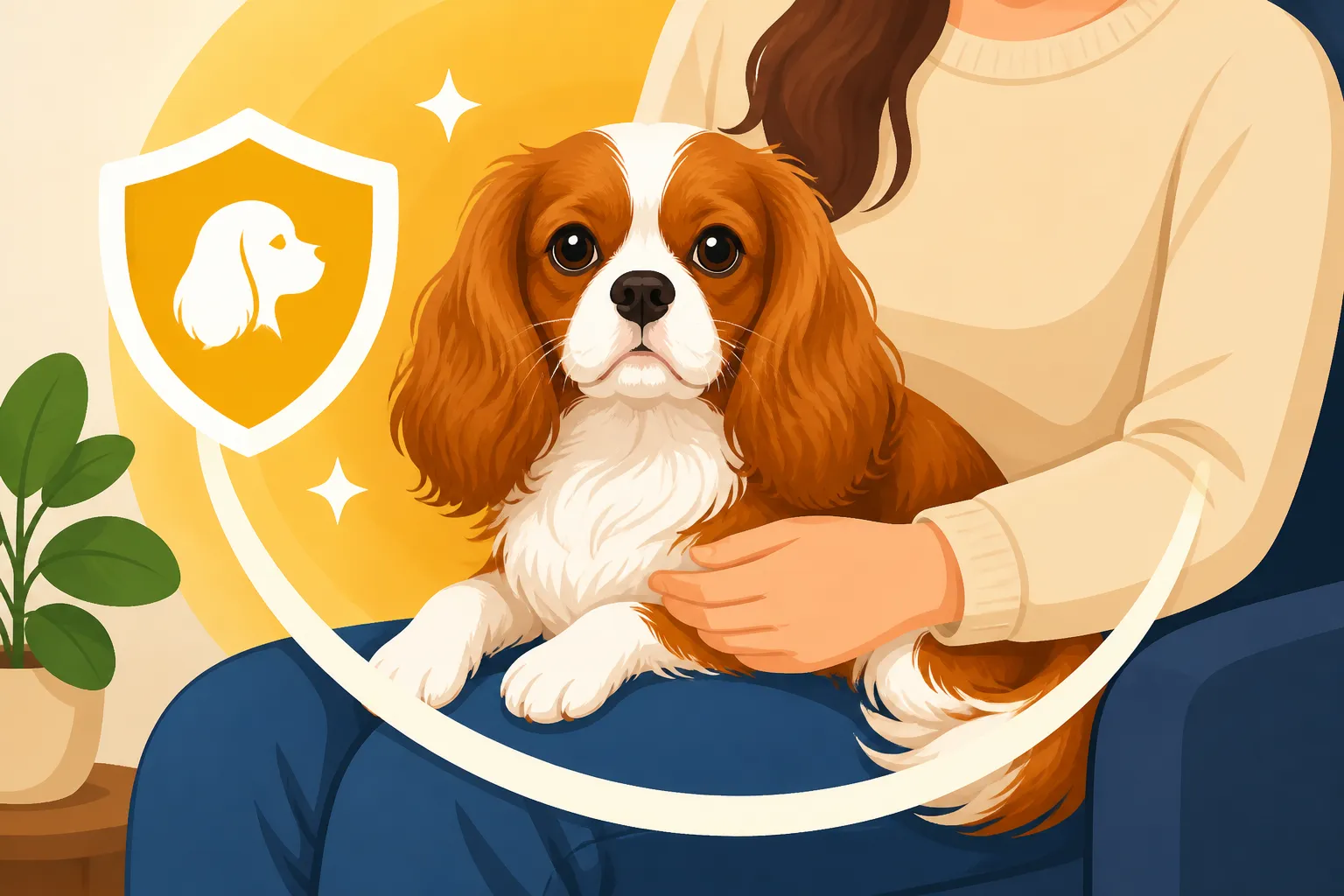
Many Cavalier owners mistakenly label lap guarding as simple aggression, but it’s more accurately understood as a specific manifestation of resource guarding. In this context, the "resource" your Cavalier is protecting isn't just a beloved toy or their dinner bowl; it's you and the secure, comfortable spot your lap provides. Your Cavalier views your lap as an incredibly valuable asset, and they will instinctively defend it from anyone or anything they perceive as a threat trying to take it away. This isn't necessarily about them being generally "dominant" or "mean," but rather a very focused, instinctual drive to protect something they hold in high regard.
Consider this common scenario: if your Cavalier has a particularly tasty chew bone, and another dog comes too close, your Cavalier might stiffen, emit a low growl, or even deliver a quick snap to warn them off. That's a classic example of resource guarding. Now, transpose that same protective impulse to the highly coveted space of your lap. When your spouse approaches to sit next to you, or your other dog attempts to jump up for attention, your Cavalier interprets these actions as a challenge – an attempt to usurp their prime spot, their comfort, and their exclusive access to your affection. It's a primal, protective response, which, while challenging for us, helps explain the underlying motivation. Recognizing this distinction can help us approach the behavior with a calmer, more understanding mindset rather than reacting with anger or frustration.
Why Your Cavalier Might Be Lap Guarding
Several factors can contribute to a Cavalier developing lap guarding behaviors. For many, it's a natural progression of their intense desire for closeness, coupled with a lack of clear boundaries. Cavaliers are famously known as Why Cavaliers Are Called Velcro Dogs, almost always preferring to be physically attached to their human companions. This profound need for proximity and connection, while endearing, can sometimes escalate into possessiveness if not carefully guided and managed from puppyhood. They thrive on being near you, and your lap often represents the ultimate expression of that desired physical bond.
A Cavalier's past experiences can also heavily influence their propensity for guarding. If they were previously in a chaotic environment, a rescue situation, or a home where they had to constantly compete with other pets or people for attention and resources, they might have learned that proactive defense is necessary to keep what they value. For instance, if earlier attempts to remove them from your lap resulted in a struggle, a growl, or a snap, and you (or the other person/pet) subsequently backed off, the Cavalier learned a powerful lesson: this behavior works to achieve their goal of retaining their cherished lap space. This unintended reinforcement can rapidly cement the guarding habit, making it harder to break over time.
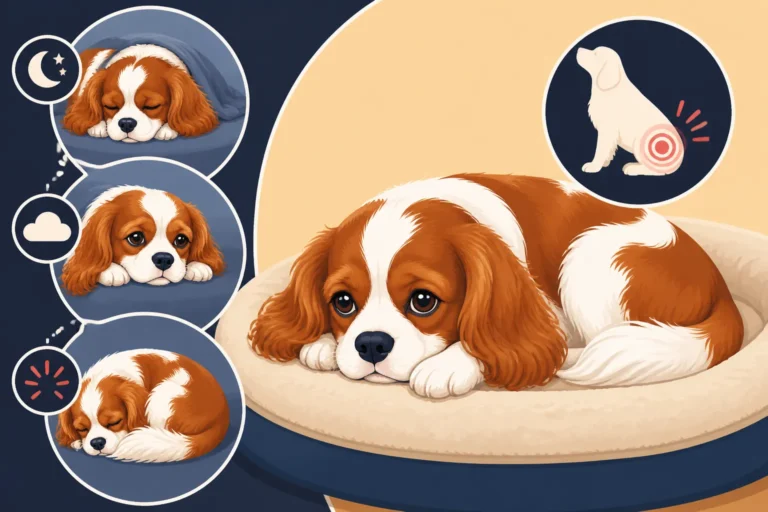
It's also worth noting that sudden onset of guarding behavior can sometimes be a red flag for underlying physical discomfort or pain. If your Cavalier is suffering from neck pain due to conditions like Syringomyelia and Chiari Malformation in Cavaliers, or even a less serious but still painful ear infection, being moved or having someone approach too closely might trigger a defensive reaction. Their guarding, in such cases, might be a cry for space to avoid pain. Therefore, if lap guarding starts abruptly, a veterinary check-up to rule out any medical issues is always a prudent first step.
Common Scenarios Where Lap Guarding Appears
Lap guarding typically emerges in predictable and specific situations, making it easier to identify and, eventually, manage. The most frequent scenario involves a partner, another family member, or even a guest attempting to sit beside you on the sofa or approach you while your Cavalier is comfortably nestled on your lap. In response, your dog might emit a low growl, fix them with an intense stare, or even deliver a quick snap in their direction. It's their unequivocal message: "This prime real estate is occupied, and so is this human!" Such incidents can be deeply unsettling, creating tension and potential embarrassment, particularly if visitors are present.
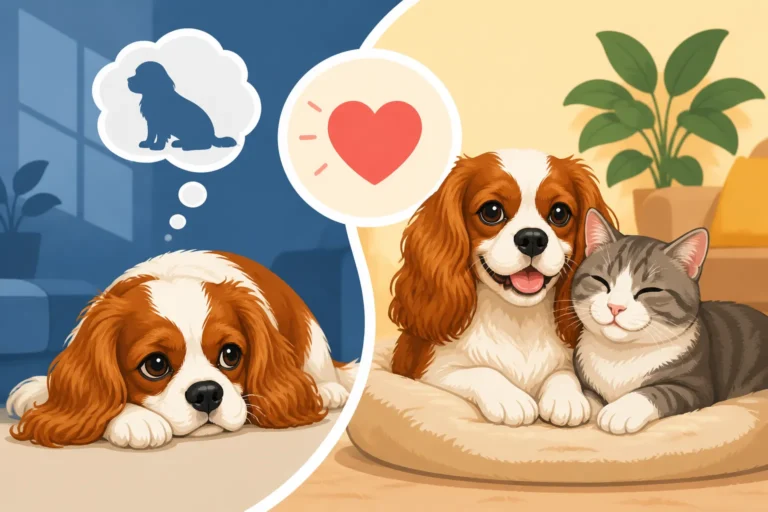
Another common trigger involves other pets in the household. If you share your home with another dog or a cat, your Cavalier might actively try to deter them from jumping onto the sofa or coming within close proximity to you during their treasured lap time. This can unfortunately lead to conflict and skirmishes between your pets, adding significant stress to the home environment. Imagine your usually amicable Cavalier, suddenly adopting a rigid posture and issuing a warning growl to your other dog simply because they ventured too near your knee. It’s a stark contrast to their typical loving demeanor and a clear sign of resource guarding at play.
Children can also inadvertently become targets of lap guarding. A child, innocently seeking a cuddle or attempting to interact with you, might approach while your Cavalier is on your lap, only to be met with a warning growl or snap. This situation is particularly concerning due to the potential for bites, underscoring the critical need for careful management to ensure Cavaliers in Families With Young Children remains a safe and joyful experience. Even subtle movements on your part, such as reaching for a remote or a book, can sometimes trigger a mild guarding reaction if your Cavalier perceives your shift as making room for another "competitor."
Recognizing the Signs of Lap Guarding in Your Cavalier
Learning to interpret your Cavalier's communication is paramount to addressing lap guarding effectively. Our dogs are constantly sending us signals, and by understanding these subtle cues, we can often intervene and prevent escalation long before a growl or a snap occurs. Being fluent in "dog speak" empowers you to respond proactively and appropriately.
Subtle Cues Before Things Escalate
Before your Cavalier ever resorts to an overt growl or a snap, they will almost always provide a series of subtle body language warnings. These early indicators are frequently overlooked by human owners who haven't yet learned to read their dog's nuanced communication. One common and significant sign is a sudden stiffening of the body when someone approaches. Your Cavalier might cease relaxing, becoming rigid, often tensing their muscles and holding their breath for a brief moment. Their tail, which might have been softly wagging or comfortably at rest, may become perfectly still, a stark contrast to their usual relaxed posture.
Another powerful indicator is what's often referred to as a "hard stare." This isn't the soft, adoring gaze you typically receive; instead, it's a fixed, intense look directed squarely at the perceived intruder. Their eyes might appear wider than usual, and you might even catch a glimpse of the whites of their eyes, known as "whale eye." A low, almost imperceptible rumbling growl, so faint you might initially mistake it for a sigh, is also a definitive warning signal. Sometimes, they might slightly curl their lip, revealing just a hint of teeth, or even perform a quick air snap – a snap that doesn't make contact but serves as a clear, audible message. If you observe any of these subtle signs, it’s a critical red flag indicating that your Cavalier is feeling possessive and is likely preparing to escalate their defensive behavior.
Overt Displays of Possession
When the early, subtle cues are missed or disregarded, or if your Cavalier feels particularly threatened, their behavior will typically escalate into much more overt and unmistakable displays of possession. These are the actions that most people immediately recognize and label as "lap guarding." A full-blown, undeniable growl, deep and resonant, is a clear and unambiguous warning that your Cavalier is serious about defending their space. This vocalization might be accompanied by piloerection, where the hair along their back and neck stands on end, making them appear larger and more intimidating to the approaching party.
A lunge or a snap that actually makes contact, even if it's just a warning nip that doesn't break the skin, signifies a significant escalation in their defensive posture. This is a direct physical warning, communicating their resolve to keep the resource. In more severe or persistent cases, a Cavalier might resort to a true bite, which can unfortunately break the skin and cause injury. This level of guarding behavior is inherently dangerous and necessitates immediate and expert intervention. It's crucial to understand that these overt displays rarely materialize out of nowhere; they are almost always the culmination of earlier, more subtle warnings that went unheeded. Your Cavalier is essentially communicating, "I warned you politely, and you didn't listen, so now I must be more direct."
The Difference Between Mild Annoyance and True Guarding
It's important for Cavalier owners to distinguish between a dog that is simply mildly annoyed by an interruption and one that is genuinely engaging in lap guarding. A mildly annoyed Cavalier might shift uncomfortably, let out a soft sigh, or perhaps even voluntarily get off your lap if another person or pet approaches, choosing to avoid confrontation altogether. They might grumble a little under their breath, but there's no underlying intent to cause harm or aggressively defend their position. They might just be seeking peace and quiet, and when that is disturbed, their preference is to relocate rather than to defend their spot with force.
True lap guarding, however, is characterized by a distinct defensive posture and a clear willingness to employ vocal or physical threats to maintain possession of the resource – your lap and your attention. The body language associated with true guarding is notably tense, rigid, and confrontational. There is a palpable intent to actively prevent the other party from coming closer or sharing the space, rather than just a benign expression of displeasure. If your Cavalier consistently shows teeth, growls, or snaps at others who approach you while they are resting on your lap, then you are indeed dealing with genuine lap guarding, and it's a behavior that requires serious, consistent attention. It should not be dismissed as merely a quirky habit; left unaddressed, it can erode trust and compromise safety within your home.
| Behavior Type | Subtle Cues | Overt Displays | Underlying Intent |
|---|---|---|---|
| Mild Annoyance | Sighs, shifts position, avoids eye contact, may voluntarily move away, ears slightly back | Muffled grumble, avoids confrontation, may walk away quietly | Expressing displeasure or discomfort, seeking personal space |
| True Lap Guarding | Body stiffening, hard stare, "whale eye," low rumbling growl, slight lip curl, air snap, ears pinned back | Loud growl, baring teeth, lunge, snapping contact, biting, sustained intense stare | Actively defending a perceived valuable resource (your lap/you) against a perceived threat |
Practical Strategies for Managing and Preventing Lap Guarding
Addressing lap guarding effectively requires a thoughtful, consistent, and patient approach centered on positive reinforcement training, clear communication, and sometimes, strategic environmental management. The ultimate goal isn't to punish your Cavalier for their natural protective instincts but rather to guide them toward understanding and accepting appropriate ways to share space and disengage when requested.
Setting Clear Boundaries and Expectations
One of the most powerful tools in managing lap guarding is establishing unambiguous boundaries around lap time. This means taking control of when and how your Cavalier gets on and off your lap, rather than allowing them to dictate the terms. Instead of permitting them to jump up whenever they please, proactively teach a "wait" or "up" cue. Your Cavalier should only be allowed onto your lap when explicitly invited. Similarly, teach a reliable "down" or "off" cue, ensuring they can calmly and willingly leave your lap on command. Reward their compliance generously with high-value treats and enthusiastic praise. This process reinforces the understanding that getting on and off your lap is a collaborative activity, not an inherent right or entitlement.
Crucially, designate several distinct, comfortable relaxation spots for your Cavalier that are not your lap. This could include a plush dog bed in the living room, a soft blanket draped over a specific armchair, or a cozy, inviting crate. Make these alternative spots incredibly appealing by consistently offering their favorite Toys That Last With a Cavalier or delicious treats whenever they choose to settle there. The underlying principle is to create equally, or even more, rewarding places for them to rest, thereby diminishing the perceived singular value of only being on your lap. This strategic dilution of the "resource" (your lap) makes it less critical for them to guard. You can easily find a wide array of comfortable dog beds and crate pads on platforms like Amazon, many of which could become your Cavalier's new favored resting places.
Desensitization and Counter-Conditioning Techniques
Desensitization involves gradually and systematically exposing your Cavalier to the triggers of their lap guarding in a controlled, non-threatening manner. Counter-conditioning, on the other hand, focuses on transforming your Cavalier's emotional response to that trigger from a negative one (such as fear or possessiveness) to a positive one (like happiness, anticipation, or relaxation).
Begin by having the perceived "threat" (for example, your partner) position themselves far enough away that your Cavalier shows absolutely no reaction while on your lap. As your partner simply stands or sits quietly at this comfortable distance, continuously feed your Cavalier a stream of incredibly high-value treats. The very moment your partner moves away or out of sight, immediately stop the treats. Repeat this exercise numerous times over many sessions, gradually and incrementally decreasing the distance your partner approaches, always ensuring your Cavalier remains calm, relaxed, and focused on the positive association with the treats. The golden rule here is to always work below their reaction threshold. If you observe any stiffness, growling, or any other warning sign, you've advanced too quickly, and you need to immediately increase the distance in the next repetition.
Another effective exercise involves your partner gently approaching you while your Cavalier is on your lap, perhaps briefly stroking your arm or placing a hand on your shoulder for a mere second, and then immediately retreating. Each time this happens without any reactive behavior from your Cavalier, they receive a coveted treat. This teaches your Cavalier that an approach by another person is not a prelude to losing their resource, but rather a reliable signal that good things (treats!) are coming their way. Online training platforms, such as the BAXTER & Bella program, can provide invaluable structured lessons and expert guidance, offering step-by-step instructions and support for navigating and successfully implementing these nuanced desensitization and counter-conditioning protocols for complex behaviors like lap guarding.
Training for Shared Space and Voluntary Disengagement
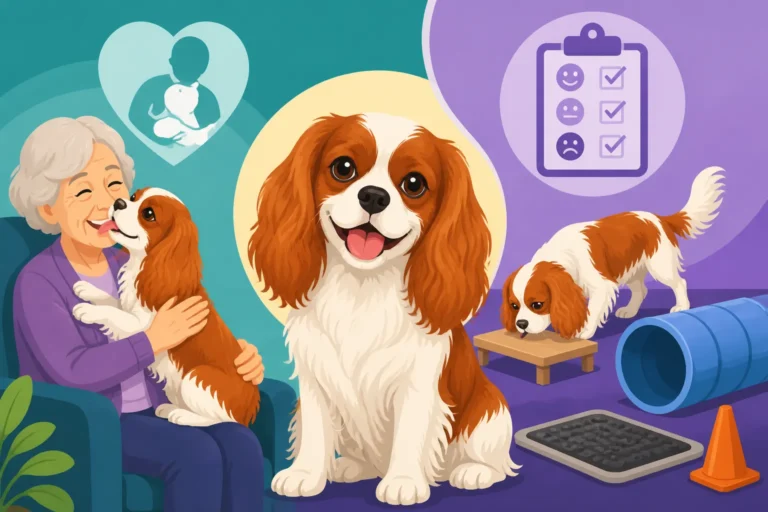
Teaching your Cavalier to not only tolerate but genuinely enjoy sharing space, and to willingly leave your lap on command, is a cornerstone of resolving lap guarding. The "place" command is exceptionally useful in this regard. Train your Cavalier to go to a designated "place"—whether it's their bed, a specific mat, or a crate—and to remain there calmly until you give them a release cue. Practice this command extensively in various low-stress situations when they are not exhibiting guarding behavior, rewarding them heavily for staying put. Once they have developed proficiency and reliability with this command, you can begin to use it as a redirection tool when someone approaches your lap, effectively giving them an acceptable alternative behavior and a "job" to do.
Another highly effective technique is the "trade" game. While your Cavalier is comfortably settled on your lap, and a potential trigger approaches, instead of physically forcing them off, offer them an utterly irresistible treat or a favorite toy away from your lap. The instant they voluntarily move off your lap to engage with or take the offered item, immediately praise them enthusiastically and allow them to enjoy their new reward. This strategy teaches your Cavalier that willingly leaving your lap when requested can lead to an even more valuable and satisfying outcome, thereby transforming disengagement into a positive, rewarding experience. Consistency is absolutely critical here; every member of the household must be committed to implementing these rules and training techniques uniformly to ensure your Cavalier receives clear, unambiguous messages. You may also find that a well-exercised and mentally stimulated Cavalier is generally less inclined to guard resources, so incorporating appropriate physical activity like Walk Length for a Cavalier With a Murmur or engaging in stimulating mental exercises such as Scent Work as a Low-Impact Cavalier Sport can indirectly contribute to a reduction in guarding behaviors.
When to Seek Professional Help and Why It Matters
While many devoted Cavalier owners can achieve significant progress with consistent, well-applied home training strategies, some instances of lap guarding can be deeply ingrained, or rooted in underlying anxieties that genuinely require the expertise of a professional. Recognizing when it's time to call in a specialist is not a reflection of failure on your part, but rather a responsible, proactive, and often crucial step toward ensuring the safety and enhancing the overall quality of life for both your Cavalier and your entire household.
Identifying When the Problem Is Beyond DIY Solutions
There are unequivocal indicators that signal it's time to seek the help of a certified professional dog trainer (CPDT) or a veterinary behaviorist. If your Cavalier's lap guarding behavior has progressed to actual bites that break the skin, or if the instances of snapping and lunging are becoming more frequent, more intense, or more difficult to predict, then expert guidance is absolutely imperative. Safety must always be the highest priority, particularly if there are children, elderly family members, or other vulnerable individuals present in the household. It is simply not worth the risk of a serious injury.
Furthermore, if your diligent attempts at desensitization and counter-conditioning are met with increased resistance from your Cavalier, or if you feel that the situation is escalating rather than improving despite your best efforts, do not hesitate to reach out for professional help. If you find yourself feeling overwhelmed, consistently frustrated, or even fearful of your own dog's potential reaction, these are all strong and clear signals that specialized intervention is needed. What might appear to be straightforward guarding could actually be intricately linked to more complex underlying issues, such as generalized anxiety or chronic pain from conditions like A Cavalier That Yelps When Picked Up. A qualified professional possesses the expertise to unravel these multifaceted behavioral layers. If the lap guarding behavior is causing significant stress, tension, or conflict within your household, it is a problem that warrants and benefits greatly from specialized attention.
The Role of a Certified Professional Dog Trainer or Behaviorist
A certified professional dog trainer (CPDT) or, for more severe cases, a veterinary behaviorist, brings an invaluable depth of knowledge, experience, and expertise to the table. Unlike well-meaning advice from friends or generic information found online, these credentialed professionals are equipped to accurately assess your Cavalier's unique situation, pinpoint specific triggers you might have overlooked, and then develop a truly customized and effective training plan. Their profound understanding of canine body language and behavior allows them to correctly interpret your Cavalier's subtle and overt signals, which is often the critical first step in successful intervention.
A skilled trainer can instruct you in the precise timing and nuanced techniques required for effective desensitization and counter-conditioning, methods that can be challenging to master independently. A veterinary behaviorist, who is a doctor of veterinary medicine with advanced specialization in animal behavior, can also thoroughly investigate and rule out any underlying medical conditions that might be contributing to the guarding behavior. If deemed appropriate and necessary, they are also qualified to prescribe medication to help manage significant anxiety or fear, which can act as a crucial adjunct to behavioral modifications, creating a more conducive state for learning. Their holistic expertise helps ensure that you are not merely treating the visible symptoms, but actively addressing the root causes of the behavior, leading to more profound and sustainable results. These professionals often provide broad insights into managing other common Cavalier challenges such as separation anxiety or developing a positive approach like Training a Cavalier With Praise Rather Than Pressure, which can ultimately contribute to a more confident and less guarded dog overall.
What a Professional Intervention Might Involve
When you make the decision to engage a professional for lap guarding, their intervention will typically commence with a thorough behavioral assessment. This initial evaluation is a critical diagnostic phase, involving a detailed interview about your Cavalier's complete history, their daily routines, specific incidents of guarding, and an in-depth exploration of your home environment and family dynamics. The professional might also observe your Cavalier's behavior firsthand, either in your home setting or in a controlled environment, to gain a direct understanding of how the guarding manifests. This comprehensive assessment is fundamental for truly understanding the underlying "why" behind the guarding behavior.
Based on their thorough assessment, the professional will then craft a comprehensive management and training plan. This personalized plan is typically multifaceted and might include:
- Environmental Management Strategies: Recommendations for specific adjustments to your home environment to minimize exposure to known triggers. This could involve using baby gates to create designated safe zones for your Cavalier or other pets, or strategically placing elevated beds to offer alternative high-value resting spots.
- Detailed Behavior Modification Protocols: Step-by-step instructions on how to effectively implement positive reinforcement techniques, along with precise guidance on desensitization and counter-conditioning exercises. These might involve structured practice sessions where you learn how to initiate "trade" behaviors with resources or how to manage approaches by others while your Cavalier is on your lap, always carefully staying below the threshold that would elicit a reactive response.
- Essential Safety Protocols: Clear, actionable strategies to prevent bites and to manage situations effectively when guarding is most likely to occur, ensuring the safety of all household members and visitors.
- Emphasis on Consistency: A strong reinforcement of the absolute necessity for all family members to strictly adhere to the established plan consistently, ensuring that your Cavalier receives unified and unambiguous messages.
- Medication (when indicated): In certain cases, particularly with significant anxiety or fear, a veterinary behaviorist might recommend anti-anxiety medication. This medication is typically used as a temporary aid to help your Cavalier achieve a calmer state, making them more receptive to learning and more capable of internalizing new coping mechanisms effectively.
- Ongoing Follow-up Sessions: Regular scheduled check-ins and follow-up appointments to monitor your Cavalier's progress, make necessary adjustments to the training plan, and provide continuous support and guidance as you navigate the behavioral changes.
Working with a professional provides you with an experienced and knowledgeable guide throughout this journey, helping you translate complex canine behavioral science into practical, actionable, and everyday strategies that foster a calmer, safer, and ultimately happier household for you and your beloved Cavalier for years to come. Such an investment can proactively prevent the development of more severe behavioral issues that might otherwise lead to a Cavalier becoming A Rescued Cavalier That Has Never Been Housetrained or struggling with other profound anxieties in the future.
Disclaimer
This article is for general informational purposes only and does not constitute professional advice. Laws, prices and regulations vary by location and change over time. Consult a qualified professional for guidance on your specific situation.