Whether a Cat Keeps a Cavalier Company
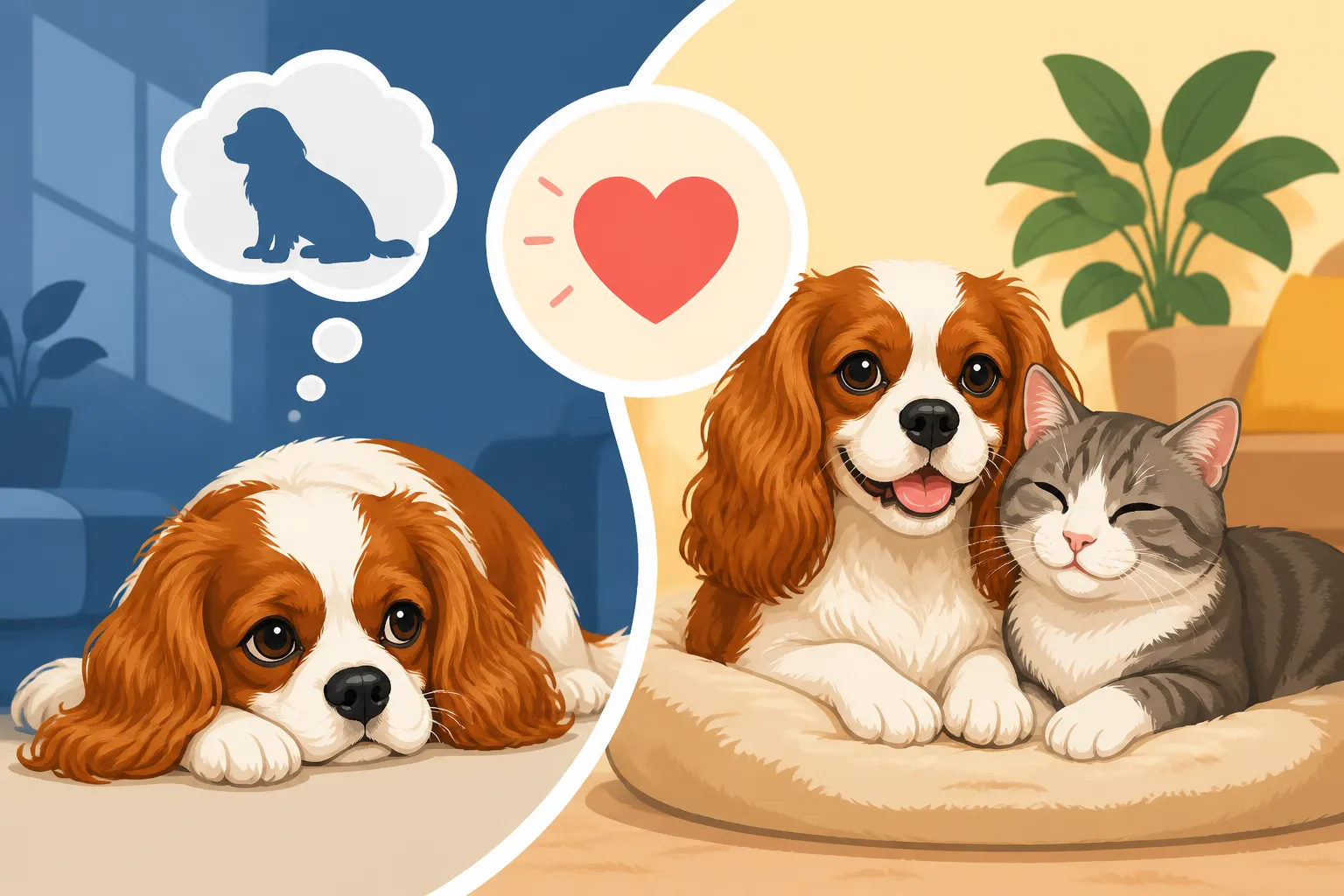
Many Cavalier King Charles Spaniel owners know the feeling all too well: the adoring eyes that follow your every move, the little shadow that pads from room to room behind you, and the undeniable sense of guilt when you have to leave them alone. Cavaliers are bred to be constant companions, and for some, time spent without their favorite people can lead to genuine distress. It's a natural leap to wonder if another furry friend, particularly a cat, could provide that much-needed company, a warm body to curl up with, and a comforting presence to ease their loneliness when you're out. This guide will delve into whether a cat can truly fill that companionship role for your Cavalier and what you need to consider.
Understanding Your Cavalier's Need for Company
Cavaliers are not just pets; they are deeply woven into the fabric of their human families. Their entire history, from their days as lap warmers for royalty to their modern role as beloved household members, has centered around close human interaction. This isn't just a preference; for many Cavaliers, it's a profound need.
The "Velcro Dog" Phenomenon
The affectionate nickname "Velcro dog" wasn't given to Cavaliers by accident. It perfectly encapsulates their almost magnetic attachment to their owners. They thrive on proximity, often content simply to be in the same room, curled at your feet, or gently leaning against you. This innate desire for constant connection means that when their primary source of interaction—you—is absent, they can feel a significant void. It's not uncommon for a Cavalier to greet you with an exaggerated level of excitement even after a short absence, as if you'd been gone for days. This charming, if sometimes overwhelming, trait makes them wonderful companions, but also particularly susceptible to feeling isolated. Why Cavaliers Are Called Velcro Dogs perfectly sums up this endearing, yet sometimes challenging, aspect of their personality.
Separation Anxiety vs. General Loneliness
It's really important to draw a line between a Cavalier who simply feels a bit lonely or bored when you're gone and one who is experiencing genuine separation anxiety. A lonely Cavalier might mope around for a bit, perhaps let out a soft sigh, and then settle down to nap until you return. They'll be thrilled to see you, but there won't be signs of panic or destruction.
True separation anxiety, however, is a much more intense emotional state. This isn't just loneliness; it's a panic disorder. A Cavalier suffering from separation anxiety might engage in destructive chewing, often targeting doors or window frames, excessive barking or howling that can upset neighbors, frantic pacing, or even house-soiling despite being perfectly potty-trained. Signs a Cavalier Is Distressed When Alone can also include excessive drooling, panting, or attempts to escape. For a dog experiencing this level of distress, the presence of another animal, while potentially providing some background noise or a fleeting distraction, is rarely enough to truly alleviate the deep-seated panic. Addressing severe separation anxiety usually requires a dedicated training protocol, often involving desensitization and counter-conditioning, and sometimes even the guidance of a veterinary behaviorist or medication. While tools from retailers like Amazon can help set up a safe space, the core training comes from specialized resources.
Cats and Cavaliers: A Different Kind of Connection
The idea of your Cavalier and a cat becoming the best of friends, a dynamic duo supporting each other through your absences, is a heartwarming one. However, the reality of interspecies friendships is often more complex, influenced by the distinct social behaviors and communication styles of felines and canines.
The Nature of Feline Companionship
Cats, by their very nature, are often more independent creatures than dogs. While they can form incredibly strong bonds with their human guardians and even with other pets, their expression of companionship tends to be different from a dog's. A cat might enjoy napping in the same room as your Cavalier, sharing a sunny spot, or even occasionally rubbing against them. They might tolerate or even enjoy gentle interaction. However, they are less likely to engage in the prolonged, interactive play sessions, the constant seeking of physical contact, or the "conversations" that a Cavalier often seeks.
For a cat, simply coexisting peacefully in the same space can be a form of companionship. For a Cavalier, whose concept of company often involves more active engagement and physical reassurance, a quiet, napping cat might not entirely fulfill their social needs. Imagine your Cavalier nudging the cat with its nose, perhaps offering a toy, only for the cat to gracefully stretch and return to its slumber. This isn't a judgment on cats' affection, but rather an acknowledgment of their different social dynamics.
The Coexistence vs. Companionship Debate
Many households successfully integrate cats and Cavaliers. They can learn to coexist peacefully, perhaps sharing a favorite window perch or even occasionally touching noses. You might see them lounging in different parts of the same room, acknowledging each other's presence without demanding constant interaction. This peaceful coexistence is a wonderful outcome and certainly preferable to conflict.
However, coexistence doesn't automatically translate into deep, active companionship in the way a Cavalier craves. It's similar to having a friendly housemate who mostly keeps to themselves; you're not technically alone, but you might still feel isolated if you're seeking active engagement. For a Cavalier that thrives on interactive play, walks, and the specific kind of affectionate bond they share with humans, a cat, no matter how sweet, may not provide the precise social fulfillment they are missing. The question of Whether another dog fills the gap for a Cavalier is already complex, and introducing a cat brings a whole new set of variables. While a second dog might offer a more relatable playmate and social structure, a cat's role is inherently different.
Introducing a Cat to Your Cavalier
If you've decided to move forward with introducing a cat to your Cavalier, remember that patience is not just a virtue, it's an absolute necessity. A rushed introduction can create fear, stress, and a strained relationship that's difficult to mend. The goal is to foster acceptance, not necessarily instant friendship.
Gradual and Supervised Introductions
The key to a successful introduction lies in a slow, controlled, and positive process. Never, ever, simply put the new cat and your Cavalier in a room together and hope they'll sort it out. Both animals need time to acclimate to each other's presence, scents, and behaviors.
Start with scent swapping: gently rub a cloth on the cat and allow your Cavalier to sniff it, then do the same with a cloth rubbed on your Cavalier for the cat. This helps them learn about each other in a non-threatening way. Next, move to visual introductions, but with a barrier. A sturdy baby gate across a doorway or the cat safely in a large, comfortable crate allows them to see and smell each other without direct contact. Keep these initial sessions short, positive, and always supervised. End them before either animal shows signs of stress, and use high-value treats to create positive associations with the other's presence. For example, give your Cavalier a favorite chew, and the cat a tasty treat, while they observe each other through the barrier.
Ensure the cat has a designated safe space that the Cavalier cannot access. This might be a room with a tall cat tree, high shelves, or a cat flap that only the cat can use. Having vertical space where the cat can retreat and feel secure is crucial. Products like baby gates or special cat enclosures can be found readily on Amazon to help manage these initial stages.
Managing Expectations and Safety
Even with the most meticulous introduction, there's no guarantee that your Cavalier and new cat will become inseparable pals. Some will develop a tolerant friendship, perhaps sharing sunbeams and occasionally grooming each other. Others might simply learn to ignore each other, coexisting without much interaction. And, regrettably, some pairs may never truly warm up, maintaining a wary distance.
Your primary responsibility is the safety and well-being of both pets. Always ensure the cat has safe escape routes and elevated resting spots. Keep food bowls and litter boxes in cat-only areas, possibly behind a pet gate that the cat can slip through but the Cavalier cannot, or on a counter if the cat is an agile jumper. Never leave them unsupervised until you are absolutely confident in their comfort and safety together. Even then, short, monitored periods are always a good idea initially. If your Cavalier displays an unexpected prey drive (which is rare for the breed but not impossible) or if the cat is overly skittish or defensive, professional guidance from a certified animal behaviorist may be necessary, or you might need to reconsider the arrangement. A small Cavalier could easily be injured by a frightened cat.
Evaluating the Success of the Arrangement
After all your efforts in the introduction phase, how do you determine if your cat is genuinely contributing to your Cavalier's sense of companionship and easing their loneliness? It comes down to careful observation of their interactions, both when you are present and, crucially, when you are not.
Observing Interactions When You're Home
When you're around, pay close attention to the dynamics between your Cavalier and the cat. Do they voluntarily share spaces, like a sofa or a patch of sunlight? Do they approach each other calmly, with relaxed body language—soft eyes, loose tails, no stiffness or excessive vigilance? Gentle interactions, such as mutual sniffing, a shared nap, or even a brief, low-key chase game (where both animals appear to be enjoying it), are good signs.
For a Cavalier, even the quiet presence of another animal in the room can sometimes be comforting. However, if your Cavalier continues to shadow your every move, showing little interest in the cat, or if the cat consistently retreats or hides whenever the Cavalier enters the room, it suggests that true companionship, in the interactive sense, may not be blossoming. Remember, A Cavalier That Follows You to the Bathroom is often just a demonstration of their inherent clinginess, a behavior that a cat's presence is unlikely to alter.
Assessing Your Cavalier's Behavior When Alone
This is arguably the most critical test. If your primary goal in getting a cat was to alleviate your Cavalier's distress when left alone, you need to objectively assess if that goal is being met. This is where technology becomes your best friend. Filming a Cavalier While You Are Out using a pet camera (many affordable and easy-to-use options are available on Amazon) can provide invaluable insights.
What you're looking for:
- Positive Indicators: Reduced vocalization (less barking, howling, crying), less destructive chewing or scratching at doors, more periods of calm resting, and perhaps even observing the cat and Cavalier napping peacefully near each other.
- Negative Indicators: The persistence of the same distress behaviors you observed before the cat's arrival, such as incessant barking, pacing, destructive chewing, or inappropriate urination/defecation. If the cat itself appears stressed or constantly hides during these periods of your absence, it's also a significant concern.
It's vital to maintain realistic expectations. A cat, with its distinct social structure and communication, is unlikely to ever fully replicate the specific type of companionship your Cavalier seeks from a human, or even from another dog. They won't engage in obedience training sessions, nor will they offer the same kind of highly physical, interactive reassurance that a person or another canine might. While their presence can certainly be a calming factor for some Cavaliers, it's rarely a complete solution for deeply ingrained separation issues. Continual effort towards Building a Cavalier's Tolerance for Being Left through structured training and environmental enrichment will almost certainly still be required, regardless of whether you have another pet. Resources, like those from BAXTER & Bella, often emphasize gradual training and positive reinforcement, which remains crucial for separation distress.
To summarize the different companionship dynamics:
| Aspect | Another Dog | A Cat |
|---|---|---|
| Species Interaction | Often similar play styles, mutual understanding, shared activities. | Different play styles, less direct communication, more independent. |
| Active Play | High potential for shared games, wrestling, chasing, tugging. | Low potential for shared games; interaction often observational. |
| Physical Proximity | High likelihood of co-napping, cuddling, direct physical contact. | Moderate likelihood of co-napping, often at a slight distance. |
| Emotional Support | Can be significant, offering comfort, reducing loneliness, shared experience. | Offers ambient presence, less direct emotional bond or reassurance. |
| Separation Anxiety | May help alleviate some mild cases, but not guaranteed to cure severe anxiety. | Unlikely to solve severe separation anxiety on its own; limited direct intervention. |
| Communication Style | Barking, body language, scent marking are largely understood between them. | Purring, meowing, subtle body language; communication often misread by dogs. |
Ultimately, while a cat can certainly bring joy, a different energy, and a general presence to your home, it's typically not the complete answer to a Cavalier's profound need for companionship or a quick fix for separation anxiety. Their unique social needs and communication styles mean that a cat generally cannot fully replicate the constant, interactive bond that a Cavalier craves from their human family or even another canine. Always prioritize the well-being and safety of both animals, and be prepared to continue addressing any underlying behavioral challenges independently.
Disclaimer
This article is for general informational purposes only and does not constitute professional advice. Laws, prices and regulations vary by location and change over time. Consult a qualified professional for guidance on your specific situation.