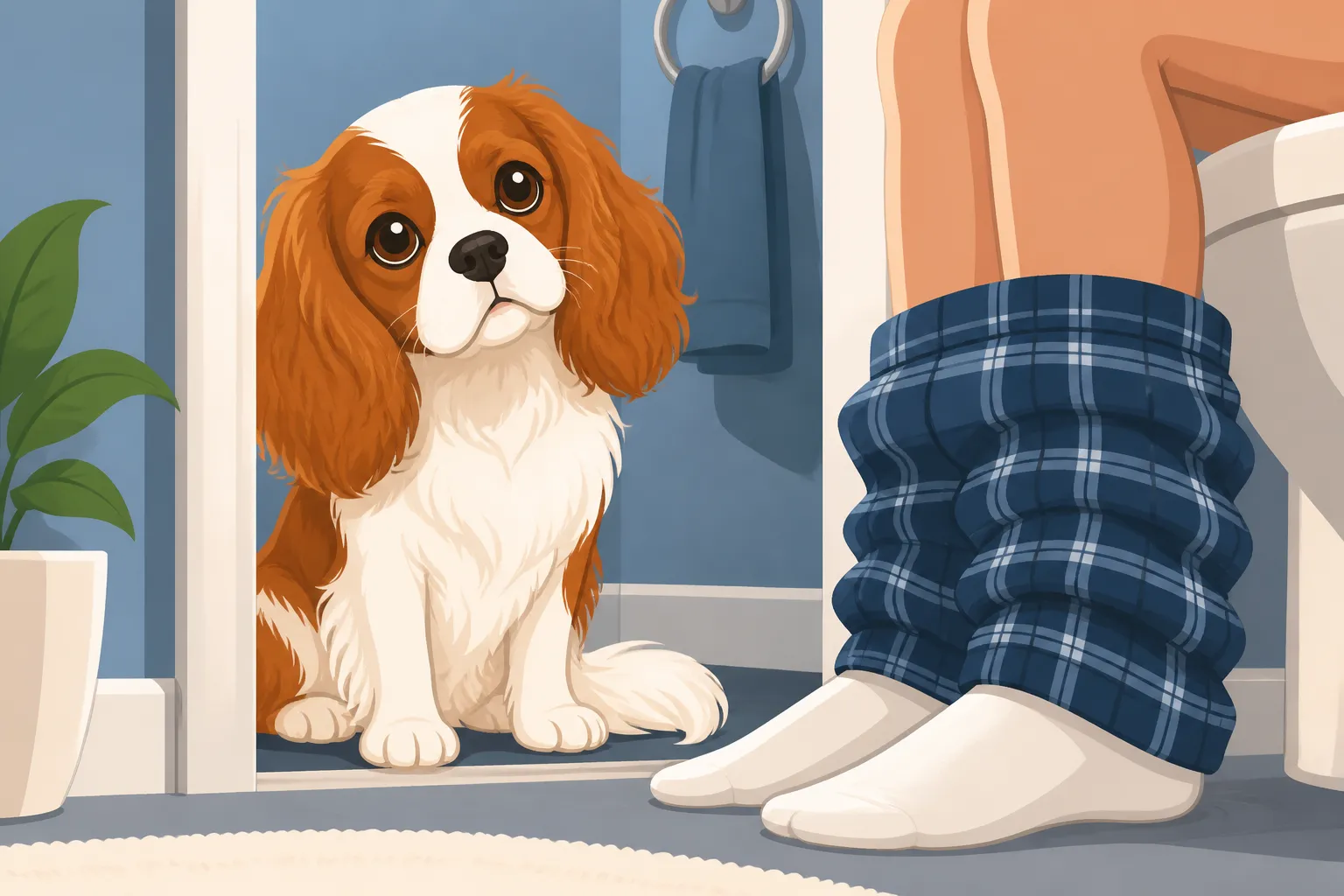
A Cavalier That Follows You to the Bathroom
Oh, the quintessential Cavalier King Charles Spaniel phenomenon! If you've got a little shadow attached to your heels, especially when you're just trying to get a moment of peace in the bathroom, you are absolutely not alone. Many Cavalier parents experience this charming, if sometimes slightly inconvenient, trait. This guide will dive deep into why your sweet Cavalier feels the need to accompany you to even the most private of places and, more importantly, offer compassionate, realistic strategies to help manage this lovable clinginess while ensuring your pup feels secure and loved.
Understanding the "Velcro Dog" Phenomenon in Cavaliers
Cavaliers are truly special dogs, known for their sweet nature and unwavering devotion. But that devotion often comes with a strong desire to be right by your side, all the time. It’s not just a cute quirk; it’s deeply embedded in their history and temperament.
The Cavalier's Innate Desire for Companionship
Let's face it, Cavaliers were literally bred to be companions. Their ancestors warmed the laps of royalty, becoming constant fixtures in the lives of their human families. They weren't bred to hunt or guard a flock; they were bred to be with people. This historical purpose has shaped them into the ultimate "Velcro dogs" we know and love today. They thrive on human connection, touch, and proximity. To a Cavalier, your presence is their world, and they genuinely want to participate in every moment of it.
Think about it: they are small dogs, often weighing in at the 13-18 pound range, perfect for cuddling on the sofa or riding in a bag. Their soft, expressive eyes and wagging tails are designed to elicit affection, and they usually get plenty of it! This constant interaction reinforces their belief that life is best lived as close to their human as possible. It's not a flaw in their training; it's a feature of the breed. They simply adore you, and their instinct tells them to stick close, ensuring they don't miss out on any potential affection or adventure.
Separation Anxiety vs. Normal Clinginess
It’s crucial for us Cavalier owners to distinguish between normal, breed-typical clinginess and genuine separation anxiety. While both involve a dog wanting to be near you, the underlying emotional state and behavior are vastly different.
Normal clinginess, like following you from room to room or settling at your feet while you work, is usually just a sign of your Cavalier's strong bond with you. They might even lie outside the bathroom door, patiently waiting. They are comfortable and calm in your absence from the room, just happy to rejoin you when you reappear. There's no panic, no destruction, just a quiet, loving presence. You might notice your Cavalier is a Cavalier that follows you room to room, but they settle easily once you stop moving.
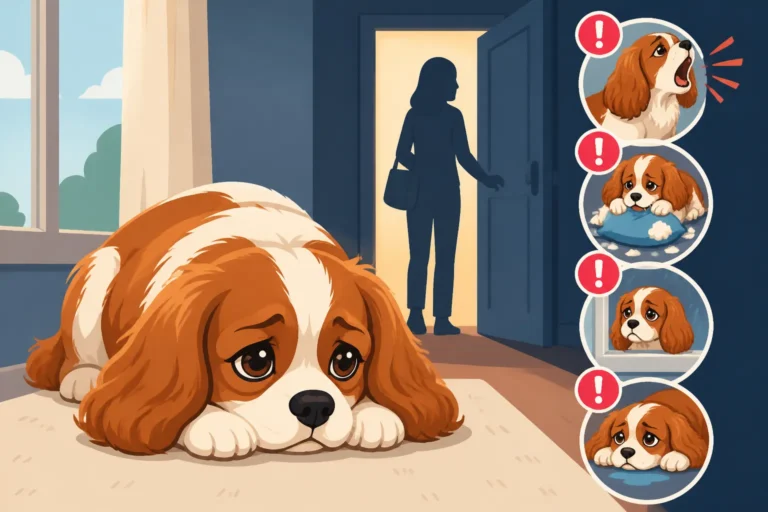
Separation anxiety, on the other hand, is a much more intense and distressing condition. A Cavalier suffering from true separation anxiety will exhibit significant distress when left alone, even for short periods. This can manifest as destructive chewing (often around exit points like doors or windows), excessive barking or howling the moment you leave, inappropriate urination or defecation indoors, drooling, pacing, or even self-harm. They are not just waiting for you; they are in a state of panic. If your Cavalier exhibits these signs, especially a Cavalier That Howls the Moment You Leave or a Cavalier That Chews Doorframes When Alone, it's time to consider professional help, as this is beyond normal clinginess.
Here's a quick comparison to help you tell the difference:
| Behavior Aspect | Normal Clinginess | Separation Anxiety |
|---|---|---|
| When Owner Leaves | May follow, then settles nearby; waits patiently | Panics, barks, howls, attempts to escape, destructive behavior |
| Emotional State | Calm, content, secure in owner's return | Distressed, anxious, fearful, frantic |
| Alone Time | Can relax and sleep, entertain themselves for periods | Unable to settle, paces, trembles, cries |
| Physical Signs | Relaxed body language, happy greetings | Excessive drooling, panting, shaking, frantic greetings |
| Destructive Acts | Rarely destructive (unless bored) | Chews furniture, doors, personal items; self-mutilates |
Learned Behavior and Reinforcement
Sometimes, our Cavaliers learn that following us actually gets them what they want – attention! We, as doting pet parents, often unintentionally reinforce this behavior. Imagine this scenario: your Cavalier trots after you into the kitchen. You might instinctively bend down, give them a quick pat, or murmur a sweet greeting. While this seems harmless and loving, from your Cavalier's perspective, they just successfully "summoned" attention by following you.
Every time you acknowledge them, even with a glance or a soft word, when they've followed you somewhere, you're essentially telling them, "Yes, this is a great way to get my attention!" Over time, this can solidify into a strong habit. It's not about being mean or ignoring them entirely, but about being mindful of when and how we give our attention. If they follow you and you immediately pick them up for a cuddle, you're teaching them that being your shadow directly leads to physical affection, which, let's be honest, is a Cavalier's ultimate goal! This is why A Cavalier That Follows You to the Bathroom becomes a common refrain.
Why Your Cavalier Becomes Your Bathroom Buddy
It's one of those uniquely dog-owner experiences: you close the bathroom door, only to hear a soft whine or a gentle pawing, or perhaps see a little nose poke under the crack. So, why exactly does your Cavalier choose this particular room to stake their claim outside?
Fear of Missing Out (FOMO)
Cavaliers are inherently social creatures, and they are incredibly curious about everything you do. To them, a closed door isn't just a closed door; it's a potential secret gathering, a sudden snack distribution, or an exciting adventure they are being excluded from! This powerful Fear of Missing Out (FOMO) drives many of their shadowing behaviors. If you disappear behind a door, especially one they can't access, their little Cavalier brains immediately wonder what amazing thing could be happening without them.
The bathroom is particularly mysterious. There are strange sounds, interesting smells, and you're in there for what feels like an eternity to a dog. They might think, "Is she playing with a new toy? Is there food in there? Is it a secret petting session?" To ease their FOMO, they plant themselves right outside, ready to pounce on any opportunity to rejoin the action the moment the door opens. It’s their way of keeping tabs on you and ensuring they're first in line for whatever fun might be about to unfold.
Seeking Proximity and Security
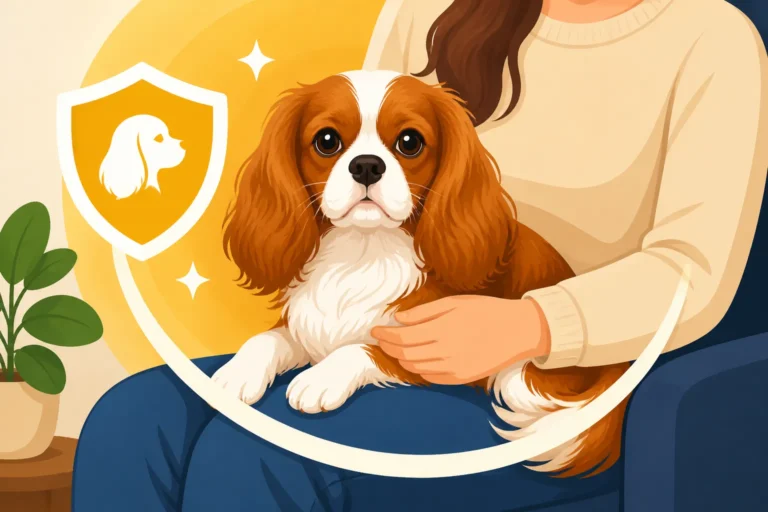
Beyond FOMO, your Cavalier’s desire for close proximity is also about comfort and security. You are their safe space, their provider, and their primary source of affection. Being near you makes them feel secure and happy. In a busy household, or even a quiet one, your constant presence is reassuring.
When you disappear into a room, especially one with a closing door, it can momentarily disrupt that sense of security. They don't understand the concept of "private time" or "personal space" in the human sense. All they know is that their anchor, their favorite human, has vanished. By waiting right outside the bathroom, they are ensuring that they are immediately accessible once you re-emerge, quickly re-establishing that vital connection and restoring their sense of peace. It's their way of saying, "I just need to know you're okay, and I'll be here when you're ready for me again." For many Cavaliers, this means being within a few feet of you at all times, a behavior lovingly dubbed Why Cavaliers Are Called Velcro Dogs.
The Sound of Running Water or Other Novelties
Sometimes, it's not entirely about you leaving, but about the sounds or smells associated with the bathroom that pique your Cavalier's interest. The sound of a toilet flushing, water running in the sink or shower, or even the crinkle of a toilet paper roll can be intriguing to a dog. These are sounds and sensations that aren't typically present in other rooms, making the bathroom a unique sensory experience.
A Cavalier might follow you not just because you're entering, but because they're genuinely curious about what those new sounds mean. They might try to investigate the source of the running water or sniff out any novel odors. Some Cavaliers are particularly sensitive to sounds, and the bathroom can be a symphony of unusual noises. This curiosity, combined with their strong desire to be near you, creates the perfect storm for your little bathroom shadow.
Gentle Strategies to Manage Bathroom Following
While your Cavalier's devotion is incredibly sweet, having zero privacy can become a bit much. The good news is there are gentle, positive reinforcement strategies you can use to encourage a bit more independence without making your beloved pup feel rejected.
Building Independence, Step by Step
The key to managing clinginess is to gradually build your Cavalier's confidence and comfort with being in a different room than you. This isn't about pushing them away, but rather showing them that being alone for a short period is perfectly safe and even rewarding.
Start small. Instead of making a big deal out of going to the bathroom, simply get up and walk towards the bathroom door. Before you even reach it, drop a high-value treat (like a tiny piece of cheese or cooked chicken) on their mat or bed in the living room. Close the door for just a few seconds, then immediately open it and calmly return. Don't make eye contact or fuss over them initially; let them process the treat and your brief absence. Repeat this many times a day, slowly increasing the duration you're behind the door. The goal is to make your departure a neutral, even slightly positive, event because it's associated with a reward. Over time, your Cavalier learns that your absence isn't a threat and can even lead to yummy things.
You can also incorporate "stay" exercises in different rooms. Ask your Cavalier to "stay" on their bed while you walk to the kitchen and back. Reward them heavily for remaining in place. Building these small pockets of independence around the house will slowly teach them that they don't always have to be right at your heels. Remember, consistency is vital here. If you sometimes reward the following and sometimes try to discourage it, you'll confuse your dog. Think about Building a Cavalier's Tolerance for Being Left as a broader goal, and bathroom independence is one small piece of that puzzle.
Creating a "Safe Space" Away from the Bathroom
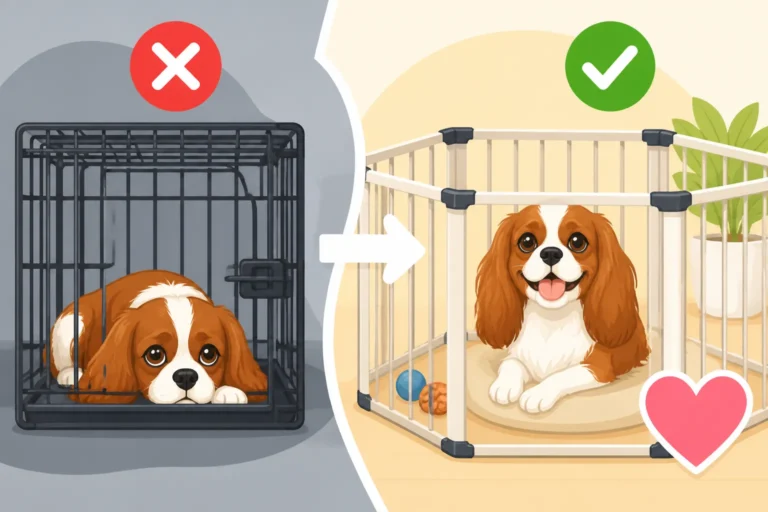
Having a designated "safe space" for your Cavalier in a room other than the one you’re heading into can be incredibly helpful. This space should be comfortable, inviting, and associated with positive experiences. It could be a cozy dog bed, a soft mat, or even a crate (if they are crate-trained and enjoy their crate as a den).
Fill this space with things your Cavalier loves: their favorite blanket, a sturdy chew toy, or a puzzle toy stuffed with delicious treats. Brands like Kong make excellent puzzle toys that can keep a Cavalier occupied for a good while, especially when filled with peanut butter or wet food and frozen. You can find a wide variety of these items on platforms like Amazon, ensuring you have plenty of options to keep your pup engaged. The idea is that when you go into the bathroom, your Cavalier has an appealing alternative activity and a comfortable place to settle down in a nearby common area. Before you head to the bathroom, quietly direct them to their special spot with a chew or toy. This creates a positive association with their independent time in their "zone."
Desensitization and Counter-Conditioning
Desensitization and counter-conditioning are powerful tools for changing your Cavalier's emotional response to your departures. The aim is to change their expectation from "Oh no, they're leaving!" to "Oh good, something nice is happening!"
Here's how it works for bathroom trips:
- Identify your "cues": What do you do before you head to the bathroom? Is it standing up from the sofa? Grabbing a book? Make a mental note of these actions.
- Practice "false exits": Randomly perform your pre-bathroom cues (stand up, walk towards the door, even touch the doorknob) but don't actually go into the bathroom. Just do the action, then calmly return to what you were doing. Repeat this many times throughout the day, so these cues lose their power to trigger an anxious response.
- Introduce the door: Once your Cavalier is calm during the false exits, start going into the bathroom and immediately coming out. Literally, open the door, step in, and step right back out. Do this without any fanfare. The goal is to make the bathroom door seem utterly boring.
- Add a reward: Now, as you step into the bathroom, before you close the door, toss a high-value treat onto their bed or a mat a few feet away. Close the door for one second, then open it and come out. If they eat the treat and remain calm, increase the time you're in there by tiny increments (2 seconds, 5 seconds, 10 seconds).
- Ignore the attention-seeking: If your Cavalier whines or paws at the door while you're inside, wait for a moment of quiet before you open the door. You don't want to inadvertently reward the demand for attention.
Training programs, like those offered by BAXTER & Bella, often incorporate these principles into their core curriculum, helping owners develop a well-rounded approach to building canine confidence and reducing separation-related behaviors. The key is never to punish them for following you, as this will only increase their anxiety and erode your bond. This process requires patience and consistency, but it can significantly reduce your Cavalier’s need to be your constant shadow.
When to Seek Professional Help
Sometimes, what starts as charming clinginess can deepen into something more concerning. It's important to know when your Cavalier's behavior warrants a closer look from a professional.
Recognizing Signs of True Separation Anxiety
We touched on the differences between normal clinginess and separation anxiety earlier, but it bears repeating: if your Cavalier's "bathroom following" or general clinginess is accompanied by more severe, distressing behaviors, it's likely true separation anxiety. These signs are not just inconvenient; they indicate your dog is in a state of genuine emotional distress when left alone.
Look for a combination of these behaviors, specifically when you are absent or about to leave:
- Excessive vocalization: Barking, howling, or whining that is sustained and intense, not just a few demand barks. This is often reported by neighbors if you live in close quarters.
- Destructive behavior: Chewing on doorframes, windowsills, furniture, or your personal items. This destruction is usually focused around exit points as if they are trying to escape to find you. A Cavalier That Chews Doorframes When Alone is a clear red flag.
- Inappropriate elimination: Urinating or defecating indoors, even if they are otherwise perfectly house-trained. This isn't out of spite; it's a physiological response to extreme stress.
- Pacing and restlessness: Constant movement, unable to settle down, often accompanied by panting or drooling.
- Self-harm: While less common, some severely anxious dogs may lick or chew themselves raw.
If you observe these patterns, it's a clear signal that your Cavalier needs more than just gentle training. This level of distress is heartbreaking for both you and your dog.
Consulting a Vet or Certified Behaviorist
The first step when you suspect separation anxiety is always a visit to your veterinarian. It's crucial to rule out any underlying medical conditions that might be contributing to the behavior. Sometimes, pain or a health issue can make a dog more anxious or clingy. For example, an older Cavalier with joint pain might become more dependent. Your vet can perform a thorough examination and recommend any necessary tests.
Once medical issues are ruled out, your vet may recommend consulting a certified veterinary behaviorist or a certified professional dog trainer specializing in separation anxiety. These professionals have expertise in canine behavior and can develop a tailored plan for your Cavalier. They can help you understand the root cause of the anxiety and implement behavior modification techniques that are effective and humane. In some cases, medication might be prescribed alongside behavior modification to help reduce your Cavalier's anxiety levels enough for the training to be effective. Articles like Medication for Cavalier Separation Anxiety explore this option in more detail.
Remember, addressing separation anxiety is a process, not a quick fix. It requires patience, consistency, and a deep understanding of your Cavalier's emotional state. But with the right professional guidance, you can help your beloved companion feel more secure and content, even when you need to use the bathroom.
Disclaimer
This article is for general informational purposes only and does not constitute professional advice. Laws, prices and regulations vary by location and change over time. Consult a qualified professional for guidance on your specific situation.