Pens Instead of Crates for a Cavalier
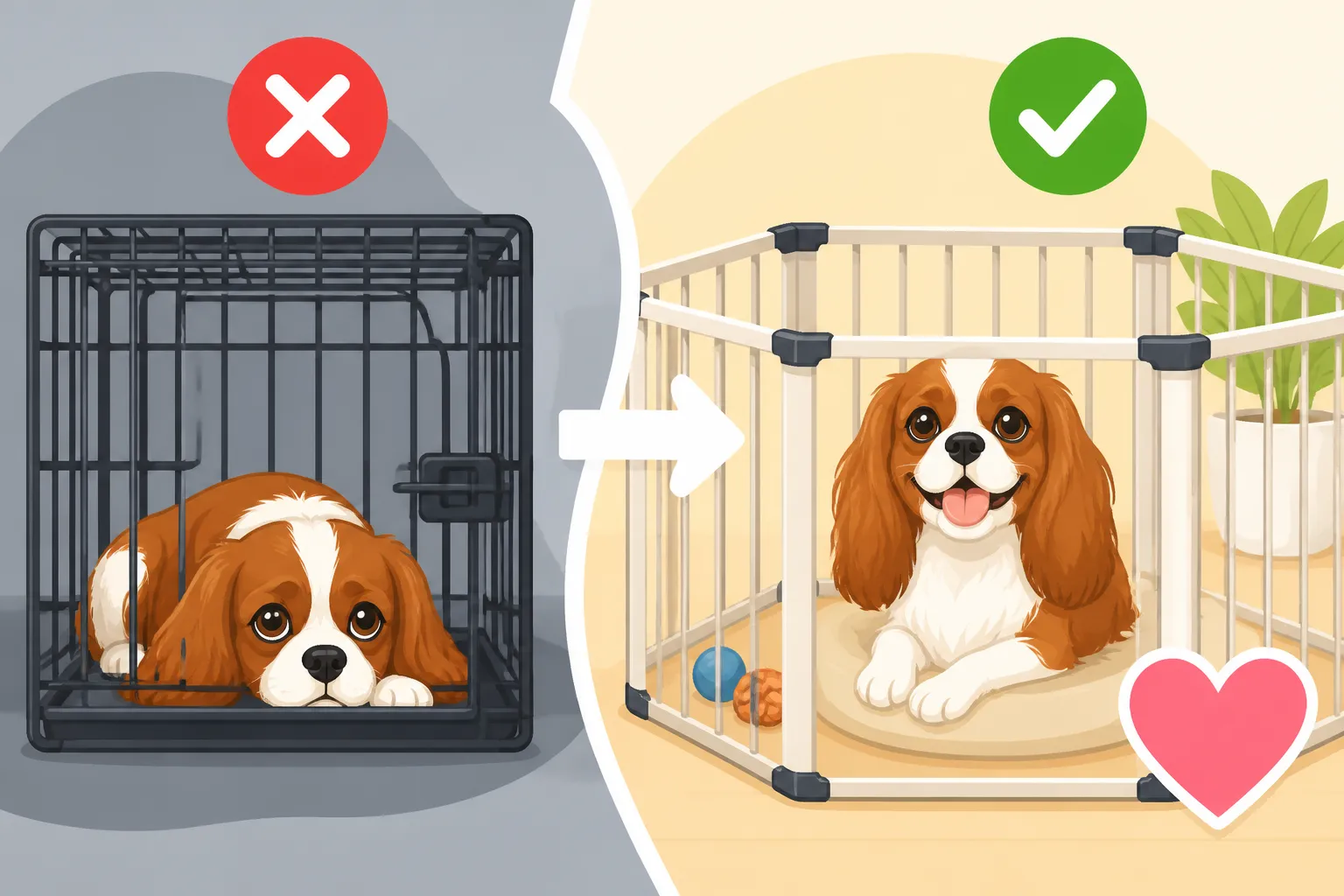
Many Cavalier King Charles Spaniel owners find themselves struggling with the traditional crate. While crates are widely recommended for puppies, their small size and restrictive nature can often clash with the Cavalier's deeply affectionate and sometimes anxious personality, leading to distress rather than comfort. This guide explores why a puppy pen, often called an exercise pen or ex-pen, can be a more humane and effective solution for containing and training your Cavalier, offering a better balance of safety, space, and peace of mind for both of you.
Why Crates Aren't Always the Best Fit for Cavaliers
It's a common piece of advice for new dog owners: get a crate. And for many breeds, it works beautifully. But with our beloved Cavaliers, whose hearts are as big as their need for companionship, a traditional, restrictive crate can sometimes create more problems than it solves. It's not a failure on your part or your Cavalier's; it's simply a mismatch of a training tool with a particular temperament.
The Cavalier's Clingy Nature and Crate Stress
Cavaliers are famously known as "Velcro dogs," and for good reason! They thrive on human companionship and connection, often following you from room to room. This innate desire to be close to their people means that being confined in a small, enclosed crate, especially when you're just on the other side of a door, can feel like a profound punishment. Instead of viewing it as a safe den, many Cavaliers will associate the crate with isolation and separation anxiety. You might hear incessant crying, whining, or even frantic barking, which only serves to heighten their stress and your own guilt. Imagine being a small, social creature suddenly cut off from your entire world, even if it's just for an hour. It's truly heartbreaking to witness, and it often sabotages any positive association you're trying to build with the crate. Why a Cavalier Cannot Be Left All Day is a common concern for many owners, and a small crate can exacerbate this feeling of abandonment.
Space and Comfort Concerns in Traditional Crates
A standard crate, by design, is meant to be just big enough for the dog to stand up, turn around, and lie down. The idea is that this limited space discourages them from soiling their sleeping area, thus aiding in potty training. However, for a breed like the Cavalier, who can spend a good portion of their day napping or lounging, this minimal space can feel incredibly cramped, especially if they're left in it for more than very short periods. There's little room for toys, a comfortable bed, or even for them to stretch out fully without bumping into the sides. This isn't just about physical discomfort; it's about mental well-being. A dog that feels physically restricted is more likely to become frustrated, agitated, or simply miserable. This isn't the calm, happy den we envision; it's often a source of stress and boredom, which can lead to destructive behaviors when they are eventually released, not because they're being "bad," but because they're overstimulated and need to burn off pent-up energy.
Understanding the Benefits of a Puppy Pen for Your Cavalier
When we talk about puppy pens – also known as exercise pens or ex-pens – we're really talking about creating a safe, spacious, and semi-open environment for your Cavalier. It's a fantastic middle ground between full run of the house and the restrictive nature of a traditional crate, offering numerous advantages for both puppies and adult Cavaliers alike.
More Room to Roam and Relax
One of the most immediate and significant benefits of a puppy pen is the sheer amount of space it provides. Unlike a crate, which restricts movement to the bare minimum, a pen offers a much larger footprint, giving your Cavalier room to stretch out, wander a few steps, and change positions comfortably. You can easily fit a cozy bed or a Beds and Crates for a Fifteen-Pound Cavalier, a water bowl, a few favorite toys, and even a potty pad or designated "toilet" area if you're still working on house training. This ample space allows for a more natural expression of their daily behaviors – napping, playing with a squeaky toy, or simply observing the household without feeling trapped. This reduced feeling of confinement can dramatically lessen anxiety for a Cavalier who might otherwise panic in a crate. They can still see you, hear you, and feel like they're part of the family, even if they're in their designated safe zone. This makes it a much more pleasant experience for them and, by extension, for you.
Easier Potty Training Integration
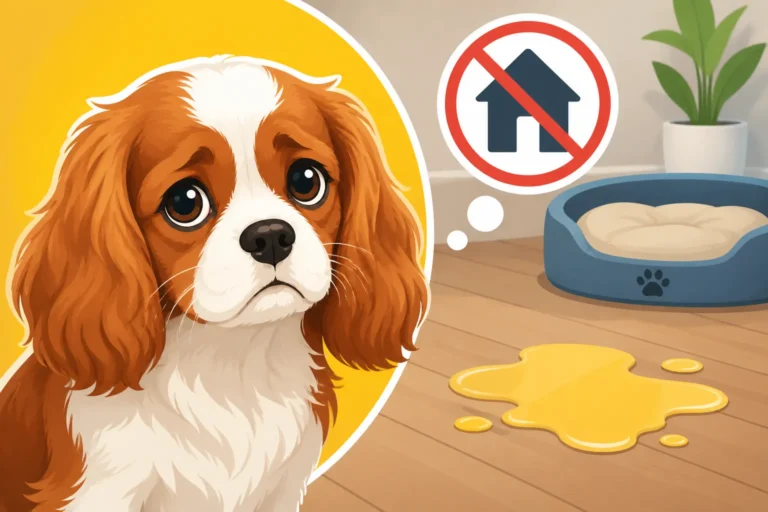
Potty training is a cornerstone of puppyhood, and while crates are often touted as the ultimate tool, they can be tricky with Cavaliers, especially if they hold their bladder for extended periods in the crate only to have accidents the moment they are free. A puppy pen, however, allows for a more gradual and positive approach. By setting up one side of the pen with a potty pad or an artificial grass patch, and the other side with their bed and toys, you are teaching them a clear distinction between sleeping/playing and eliminating. This mimics a larger environment where they naturally wouldn't soil their sleeping area, but still gives them an appropriate, designated spot within their safe zone. This setup can be especially helpful for Toilet Training a Cavalier in an Apartment where outdoor access might not be immediate, or for those moments when you simply can't get them outside fast enough. When used consistently, this method can help your Cavalier develop reliable potty habits without the stress of being forced to hold it in a tiny space.
Safe Zone for Play and Exploration
Beyond just potty training and comfort, a puppy pen provides a crucial safe zone for your Cavalier to engage in independent play and exploration without getting into trouble. Puppies, and even adult Cavaliers, can be incredibly curious, and without supervision, they might chew on electrical cords, raid the trash can, or get underfoot while you're busy. A well-set-up pen acts as a secure perimeter, allowing them to play with their toys, chew on appropriate items, or simply relax knowing they are safe and cannot access dangerous household items. This is particularly valuable when you need to focus on work, cook dinner, or attend to other tasks. You know your Cavalier is contained, safe, and happy, learning to entertain themselves within their boundaries. It fosters independence in a controlled way, which is vital for preventing A Cavalier That Chews Doorframes When Alone or other destructive behaviors driven by boredom or anxiety when left unsupervised. Many owners find pens from brands available on Amazon to be excellent for creating these secure spaces.
Choosing the Right Pen for Your Cavalier
Selecting the perfect puppy pen for your Cavalier isn't just about picking the first one you see. It involves considering size, material, and how it will integrate into your home and training routine. A well-chosen pen becomes an invaluable asset in your Cavalier's training journey.
Size, Material, and Portability Considerations
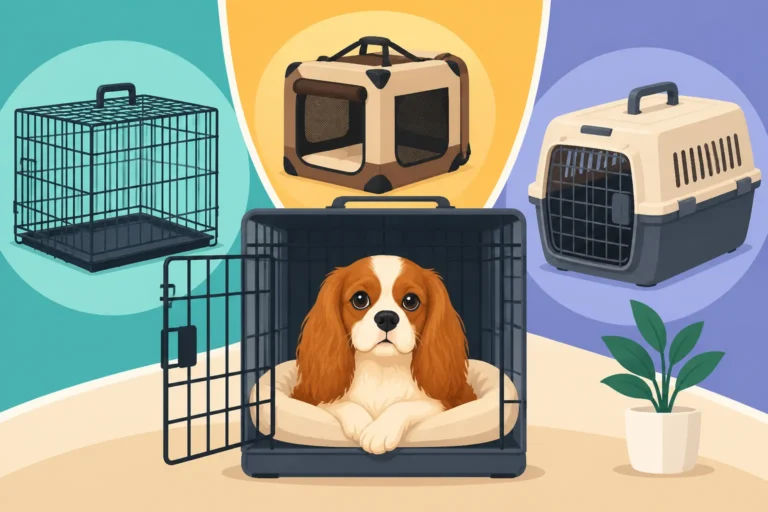
When choosing a pen, think about how much room your Cavalier really needs. While a 15-pound Cavalier might seem small, they need enough space to move, play, and have separate areas for sleeping and "potty" if you're using pads. A good rule of thumb is to look for a pen that provides at least 16-24 square feet of space. Materials often include metal wire, plastic, or even soft-sided fabric options.
- Metal wire pens are durable, easy to clean, and offer excellent visibility. They're often modular, allowing you to change the shape or add panels to increase size. Many popular wire pens can be found on Amazon, offering a good balance of cost and functionality.
- Plastic pens are lightweight, can be aesthetically pleasing, and are often easy to assemble. They might be a bit more expensive but can blend into home decor better.
- Soft-sided fabric pens are highly portable, collapsible, and ideal for travel or temporary use. However, they are less suitable for persistent chewers or dogs prone to trying to escape, as they are not as sturdy.
Consider portability: do you need to move the pen frequently, take it on trips, or will it be a semi-permanent fixture? If you're traveling, a collapsible soft-sided pen might be perfect, but for daily use at home, a sturdier metal or plastic pen is often more practical.
| Pen Type | Pros | Cons | Ideal For |
|---|---|---|---|
| Metal Wire | Durable, expandable, good visibility | Can be heavy, sometimes industrial-looking | Permanent home setup, strong chewers |
| Plastic | Lightweight, easy to clean, aesthetic | Less durable than metal, can be pricey | Indoor use, puppies, mild chewers |
| Soft-Sided | Highly portable, collapsible, comfortable | Not for chewers, less secure, harder to clean | Travel, temporary use, calm older dogs |
Setting Up Your Cavalier's Pen for Success
The way you set up the pen is just as important as the pen itself. This isn't just about containment; it's about creating a positive and inviting space for your Cavalier. Start by placing the pen in an area where your Cavalier won't feel isolated. A corner of the living room or kitchen, where they can still see and hear the family, is often ideal. A Cavalier That Cries in Another Room is a clear sign they want to be close, so proximity is key.
Inside the pen, create distinct zones:
- Sleeping/Rest Area: A soft, comfortable bed or blanket. Many Cavaliers adore plush beds.
- Feeding/Water Station: A sturdy, non-tip bowl for water. Food can be offered here during meal times.
- Play/Chew Area: A selection of appropriate chew toys and interactive puzzle toys. Rotate these regularly to keep things interesting.
- Potty Area (if applicable): A potty pad or artificial grass patch placed as far from the sleeping area as possible.
Introduce the pen gradually and positively. Throw treats inside, feed meals inside, and allow your Cavalier to explore it at their own pace. Never use the pen for punishment, as this will create negative associations. The goal is for them to view their pen as a safe, comfortable, and predictable space. Building From Thirty Seconds With a Cavalier in the pen, gradually extending the time with positive reinforcement, is an excellent strategy.
Integrating the Pen with Other Training Tools
A puppy pen shouldn't exist in a vacuum; it's a powerful tool that works best when integrated with other training methods. For example, if you're working on Building a Cavalier's Tolerance for Being Left, the pen can be a safe space for those initial short departures. Instead of leaving them alone in a whole room or a small crate, the pen gives them more space and comfort while still providing boundaries.
You can also use the pen to manage their energy levels. After a period of play or a walk, a quiet time in the pen with a chew toy can help them settle down. This teaches them to relax independently, which is a crucial skill for preventing A Cavalier That Jumps at Visitors or other over-excited greetings.
For ongoing training, consider using resources like BAXTER & Bella. Their online puppy training programs often advocate for positive reinforcement and creating safe spaces, which aligns perfectly with the philosophy behind using a puppy pen. They can provide structured guidance on how to maximize the benefits of the pen for everything from potty training to teaching your Cavalier to enjoy their alone time. Remember, the pen is a management tool, but consistent training and positive experiences are what truly shape your Cavalier's behavior and confidence.
Disclaimer
This article is for general informational purposes only and does not constitute professional advice. Laws, prices and regulations vary by location and change over time. Consult a qualified professional for guidance on your specific situation.