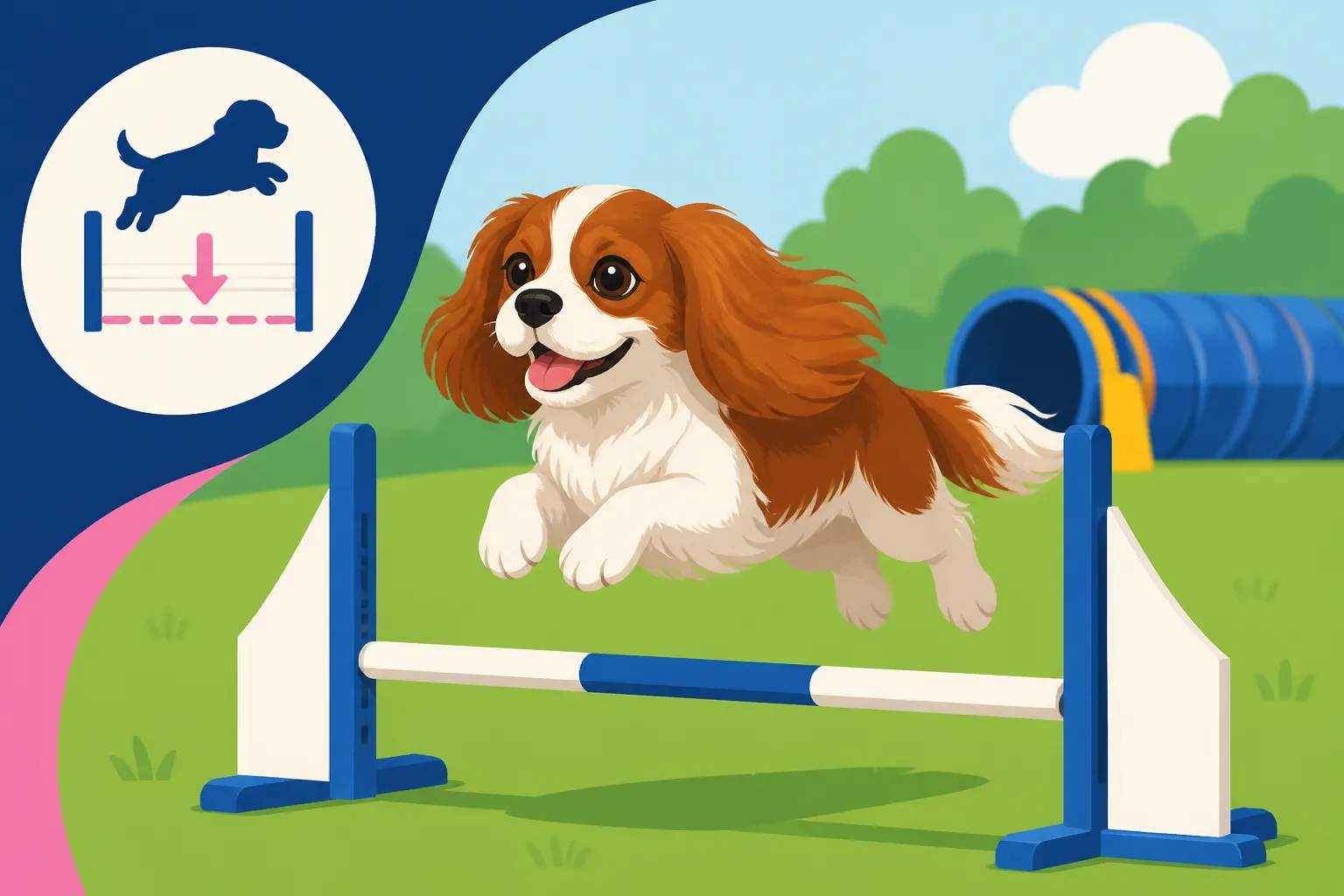
Low Jump Heights for a Cavalier in Agility
Many Cavalier King Charles Spaniel owners dream of seeing their happy, spirited dogs fly over agility jumps, but the reality of their breed's unique health challenges often brings a dose of worry. It's completely understandable to feel torn between wanting to let your Cavalier shine in a fun sport and fearing for their delicate joints or underlying conditions. This guide is here to walk you through exactly how you can embrace the joy of agility with your Cavalier, focusing specifically on how low jump heights can make the sport safe and incredibly rewarding, even for dogs with certain health considerations.
Understanding Cavalier Joint Health and Agility Concerns
Before we even think about setting up a single jump, it’s crucial to understand why Cavaliers, despite their eager-to-please nature, require a more careful approach to high-impact activities like jumping. Their genetic predispositions mean that what might be a minor strain for another breed could become a significant issue for a Cavalier. It’s not about being fragile, but about being proactive and informed.
The Reality of Patellar Luxation in Cavaliers
One of the most common orthopedic concerns we face with our Cavaliers is patellar luxation, often simply called "slipped kneecaps." Imagine trying to run and jump when your kneecap occasionally pops out of place – it sounds painful, right? For a Cavalier, this can range from a mild, intermittent skip in their step to severe lameness. The condition is graded, with Grade 1 being the mildest and Grade 4 being the most severe, where the kneecap is permanently dislocated.
Even a low-grade patellar luxation can be exacerbated by repetitive jumping, landing awkwardly, or sudden twists and turns. While agility looks like a lot of fun, it involves quick directional changes and the impact of landing, both of which can put undue stress on compromised knees. Many owners find their Cavaliers are incredibly enthusiastic, perhaps too much so for their own good, and will push through discomfort to please their handler. This is why it falls to us, their human companions, to be their best advocates and understand their limits. A thorough veterinary check-up, including an orthopedic examination, is absolutely essential before starting any agility work. If your vet diagnoses patellar luxation, discussing the appropriate modifications, which almost always include extremely low or non-existent jumps, is paramount. You might even want to explore the specific concerns in Loose Kneecaps in a Thirteen-Pound Cavalier to understand the nuances.
Syringomyelia and Its Impact on Movement
Another significant health concern for Cavaliers is Syringomyelia (SM), a neurological condition where fluid-filled cavities (syrinxes) develop within the spinal cord near the brain. This is often caused by Chiari-like Malformation (CM), where the skull is too small for the brain, compressing it and disrupting cerebrospinal fluid flow. SM can cause a range of symptoms, from mild discomfort to severe, chronic pain, often manifesting as phantom scratching (air scratching), sensitivity around the neck, or reluctance to be touched or have a collar on.
For a Cavalier with SM, any activity that puts stress on the neck or spine, such as jumping, weaving, or even sudden stops and starts, can be incredibly painful or even worsen their condition. Imagine having a persistent headache and then being asked to suddenly exert yourself or twist your body. It’s just not going to happen comfortably, or safely. A Cavalier with SM might appear hesitant, yelp when landing, or refuse obstacles altogether. These aren't signs of disobedience; they're cries for help. Even low jumps could involve head lowering or neck extension that triggers pain. Before engaging in agility, particularly if your Cavalier shows any signs of neck sensitivity or "air scratching" as discussed in Air Scratching as a Cavalier's First Warning Sign, it's vital to have them evaluated by a veterinary neurologist. Sometimes, even if they aren't diagnosed with full-blown SM, the underlying Chiari Malformation can make certain movements uncomfortable, making low-impact alternatives or even just walking over ground bars a much safer bet.
Mitral Valve Disease and Exercise Tolerance
Our beloved Cavaliers are heartbreakingly prone to Mitral Valve Disease (MVD), a progressive heart condition that affects roughly half of all Cavaliers by age five and nearly all by age ten. It’s the leading cause of death in the breed, and it significantly impacts their overall stamina and ability to exert themselves. The condition causes the mitral valve, which separates two chambers of the heart, to thicken and leak, leading to a heart murmur. As the disease progresses, the heart may enlarge, and eventually, fluid can build up in the lungs, leading to congestive heart failure.
Even if your Cavalier has wonderfully sound joints, MVD presents a different set of challenges for agility. While low jumps might not directly stress joints, the overall physical exertion, excitement, and sustained bursts of activity involved in an agility course can put a significant strain on a compromised heart. A dog in early stages of MVD might still seem energetic, but their exercise tolerance will gradually decrease. Signs that a Cavalier with MVD is struggling could include increased panting, a longer recovery time after activity, coughing (especially at night, which you can learn more about in Coughing at Night in a Cavalier), or simply wanting to lie down more often.
It’s crucial to monitor your Cavalier's breathing rates at rest and observe their energy levels. If your Cavalier has been diagnosed with a heart murmur, even if it's considered mild, a consultation with a veterinary cardiologist is non-negotiable before starting agility. They can provide specific guidance on appropriate exercise levels and help you determine Whether Exercise Is Safe for a Cavalier With MVD. The goal is to keep them active and happy without pushing their heart past its limits.
Safe Agility Training with Low Jump Heights
So, with these health considerations in mind, how can we still participate in agility? The answer lies in adaptation and a focus on fun and safety over speed or competition. The beauty of agility is that it’s incredibly versatile, and the principles can be applied in ways that truly benefit your Cavalier, both mentally and physically, without putting them at risk.
Adjusting Jump Heights to Protect Joints
When we talk about "low jump heights" for a Cavalier, we're really talking about a spectrum that goes from genuinely low to essentially non-existent. Standard agility organizations might have jump heights for small dogs, perhaps 8 or 12 inches, but for a Cavalier with predisposed joint issues or a confirmed diagnosis like patellar luxation, these are often still too high.
For many Cavaliers, especially those with any joint or spinal concerns, the ideal jump height is often a "ground bar" – meaning the bar is set directly on the ground, or even just a few inches off the ground, allowing them to step or trot over it rather than leap. This still teaches them the concept of the obstacle, develops body awareness, and allows them to navigate a course. If you use adjustable jumps, you can often set the bar at 2-4 inches, or even just use a PVC pipe laid flat. The emphasis shifts from clearing an obstacle to smoothly transitioning over it. This approach minimizes impact on knees, hips, and spine. It also removes the pressure to perform high jumps, allowing your Cavalier to enjoy the mental stimulation and physical movement without the physical strain. Remember, the joy is in the journey, not the vertical leap.
Alternatives to High-Impact Obstacles
Agility is so much more than just jumping! There’s a whole world of obstacles that are perfect for Cavaliers and don't involve any high impact. Focusing on these can build confidence, body awareness, and a strong bond between you and your dog.
- Tunnels: These are often a Cavalier favorite! They love darting through soft or rigid tunnels. You can start with them straightened out and gradually introduce curves. This is fantastic for building confidence and channeling their natural "go-get-it" energy.
- Weave Poles: While requiring careful teaching and muscle development, weave poles (where the dog weaves through a line of poles) are low-impact once learned. Start with widely spaced poles or guides to help them understand the motion, building up very slowly. This works wonders for coordination and focus.
- Pause Tables: These are essentially raised platforms where the dog learns to jump up and stay for a few seconds. For Cavaliers, you can use a very low table or even just a thick mat on the ground to signify the "pause" spot, eliminating the jump entirely if needed.
- Contact Obstacles (Dog Walk, A-Frame, Teeter-Totter): These can be intimidating, but with careful setup, they can be modified. For a Cavalier, focus on very low-angle dog walks or A-frames, ensuring the ramps are wide and have good traction. The teeter-totter can be introduced with minimal pivot, making it less jarring. The key is to teach them to go slowly and confidently, always touching the "contact zones" (the colored areas at the beginning and end of the ramps) before moving on. For training and general supplies for your Cavalier, you might find a lot of useful equipment, including collapsible tunnels or adjustable weave poles, on platforms like Amazon.
By emphasizing these less strenuous obstacles, you can create a full and engaging agility experience that celebrates your Cavalier's intelligence and desire to work with you, without pushing their physical limits.
Proper Warm-Up and Cool-Down Routines
Just like human athletes, our Cavaliers need proper preparation and recovery to prevent injury, especially when engaging in any form of physical activity, even low-impact agility. Skipping these crucial steps is an easy way to invite soreness or exacerbation of underlying issues.
A good warm-up should last at least 5-10 minutes. Start with a gentle, leash-led walk, allowing your Cavalier to sniff around and loosen up. After this, you can incorporate some dynamic stretches: gentle paw flexion and extension, slow circles with their front legs, and perhaps some light "play bows" or stretches where they reach for a treat between their front paws. The idea is to increase blood flow to their muscles and joints, preparing them for movement. Think of it as gently waking up their body, rather than expecting it to go from zero to sixty instantly. This is particularly important for breeds prone to joint issues.
The cool-down is equally important. After your agility session, immediately transition into another 5-10 minutes of a slow, relaxed walk. This helps bring their heart rate down gradually and allows muscles to release any tension built up during the activity. Following the walk, gentle static stretches can be beneficial. For example, slowly extending a leg forward or backward while supporting their body, holding the stretch for a few seconds. A gentle full-body massage can also be a wonderful way to check for any soreness and deepen your bond. This quiet time also gives you an opportunity to visually assess their gait and body language for any signs of discomfort. Ignoring these routines can easily lead to stiffness, muscle strains, or even more serious issues over time.
Practical Tips for Cavalier Agility Success
Agility with a Cavalier isn't just about the physical obstacles; it's a team sport that thrives on clear communication, positive reinforcement, and a deep understanding of your dog's individual needs. By focusing on these practical aspects, you can ensure a fulfilling and safe experience for both of you.
Working with a Knowledgeable Instructor
This might be the single most important tip for embarking on an agility journey with your Cavalier. Not all agility instructors are created equal, and finding one who truly understands the specific needs of a small breed, particularly one with known genetic predispositions, is paramount. Look for an instructor who emphasizes positive reinforcement, patience, and adapting courses to the dog's physical capabilities, rather than pushing for speed or competitive performance at all costs.
A good instructor will:
- Prioritize Safety: They will understand patellar luxation, syringomyelia, and MVD concerns in Cavaliers and be willing to modify all obstacles. They should never push your dog to jump higher or faster than is safe.
- Focus on Foundation Skills: Agility isn't just about obstacles. It's about building a strong foundation of focus, body awareness, impulse control, and handler communication. A good instructor will spend ample time on these foundational skills, which are transferable to all aspects of your Cavalier's life.
- Individualize Training: They won't apply a "one size fits all" approach. They'll observe your Cavalier's gait, energy levels, and comfort with different obstacles, offering personalized adjustments. They might even suggest specific exercises to strengthen core muscles or improve balance in a safe way.
- Encourage Observation: They will teach you how to read your Cavalier's body language for signs of stress, fatigue, or pain, empowering you to be your dog's best advocate. Many online training platforms, such as BAXTER & Bella, also offer resources for positive reinforcement and foundational skills that can supplement in-person classes or provide a great starting point before joining a group. Don't be afraid to ask questions about their experience with Cavaliers or small, health-sensitive breeds before committing to a class.
Essential Gear for Safe Training
Having the right equipment is crucial for both safety and comfort during agility training. Small details can make a big difference for a Cavalier.
- Harnesses over Collars: For any activity involving movement, and especially jumping (even low ones), a well-fitting, Y-front harness is much safer than a collar. A collar can put pressure on the trachea and neck, which is especially concerning for Cavaliers due to their brachycephalic tendencies and the risk of Syringomyelia. A harness distributes pressure evenly across the chest and shoulders, preventing strain. You can find excellent options online; a search on Amazon will bring up many adjustable, padded harness styles suitable for a Cavalier. A good fit means it's snug but not restrictive, allowing full range of motion. For more on this, you might find Harnesses Instead of Collars for a Cavalier helpful.
- Adjustable Agility Equipment: Invest in equipment that can be adjusted to very low heights, or even used with bars on the ground. Portable jump sets, collapsible tunnels, and soft weave poles are ideal for home practice and can be found from various pet supply retailers or online. Look for sturdy, lightweight materials that won't easily tip over if bumped.
- Non-Slip Surfaces: If you're training indoors, ensure the surface provides good traction. Slippery floors can lead to strains, slips, and falls, aggravating existing joint issues. Use non-slip mats or rugs. If training outdoors, choose a flat, even surface free of rocks or holes.
- High-Value Treats: Cavaliers are highly food-motivated! Have a stash of tiny, high-value treats on hand to reward success. Keep sessions short and sweet, always ending on a positive note.
Monitoring Your Cavalier's Signals
Your Cavalier communicates with you all the time through their body language, vocalizations, and changes in behavior. Learning to accurately interpret these signals is vital, particularly during physical activities like agility. Our Cavaliers are often eager to please, and they might try to push through discomfort if they think it makes us happy.
Pay close attention to subtle cues:
- Hesitation: Does your Cavalier suddenly slow down or hesitate before an obstacle they usually enjoy? This could indicate pain or discomfort.
- Changes in Gait: Are they limping, favoring a leg, or moving stiffly after a session? This is a clear red flag.
- Vocalizations: Do they yelp, whine, or make any unusual sounds when landing or performing a movement?
- Reluctance: Do they simply refuse an obstacle or try to go around it? Don't force it.
- Recovery Time: Are they panting excessively or taking much longer than usual to recover their breath after a short sequence? This could signal cardiac fatigue related to Mitral Valve Disease in the Cavalier King Charles Spaniel.
- Changes in Posture or Sleep: Are they sleeping in an unusual position, such as with their head raised (a possible sign of SM pain, as mentioned in A Cavalier That Sleeps With Its Head Raised), or are they generally more withdrawn or irritable after training?
It’s always better to err on the side of caution. If you notice any of these signs, stop the activity immediately and consult your veterinarian. Agility should always be a joyful experience for your Cavalier, not a test of their endurance or pain tolerance. The moment it stops being fun for them, it’s time to re-evaluate.
Here's a quick comparison of standard agility approaches versus those adapted for our beloved Cavaliers:
| Feature | Standard Agility Approach (Typical) | Cavalier-Friendly Agility Modifications (Recommended) |
|---|---|---|
| Jump Heights | 8-12 inches for small dogs, can be higher | 0-4 inches (ground bars to very low), stepping over |
| Pace | Fast, competitive, focus on speed and accuracy | Slow, controlled, focus on confidence and fun |
| Obstacle Type | All obstacles, often at full height/intensity | Emphasis on tunnels, ground bars, pause tables; modified contact obstacles |
| Training Focus | Performance, winning titles | Body awareness, handler bond, mental stimulation |
| Equipment | Standard competitive equipment | Adjustable, lightweight, safe, non-slip equipment |
| Warm-up/Cool-down | Often rushed or minimal, assuming fit dogs | Mandatory 10-15 minute gentle warm-up and cool-down |
| Health Check | Basic vet check | Thorough orthopedic & cardiac exam, neurologist consult if needed |
| Motivation | Drive for toys/food, handler encouragement | High-value treats, constant positive reinforcement, short sessions |
| Monitoring | Focus on errors, speed | Constant observation of dog's comfort, enthusiasm, and physical cues |
Remember, agility, even at low heights, is a fantastic way to engage your Cavalier's mind and body, strengthening your bond and providing them with a joyful outlet. Just make sure you're doing it in a way that truly protects their precious health.
Disclaimer
This article is for general informational purposes only and does not constitute professional advice. Laws, prices and regulations vary by location and change over time. Consult a qualified professional for guidance on your specific situation.