Whether Agility Is Safe for a Cavalier’s Knees
It’s such a joy to see our beloved Cavaliers full of life, eager to play, and up for any adventure we throw their way. Many of us look at these active little dogs and dream of engaging them in exciting sports like agility, but a nagging worry often pops up: is it truly safe for their delicate knees and joints? This guide dives deep into the realities of Cavalier joint health, the demands of agility, and how to make the best, safest decisions for your furry family member, ensuring their long-term well-being while still having fun.
Understanding Cavalier Knee Health
Before we even consider weaving poles and teeter-totters, it's crucial to understand the unique orthopedic landscape of a Cavalier King Charles Spaniel. These charming dogs, while often appearing robust, carry some predispositions that make their joints particularly vulnerable to stress. It's not about being fragile, but about being aware of their genetic blueprint.
Common Cavalier Knee Issues: Patellar Luxation
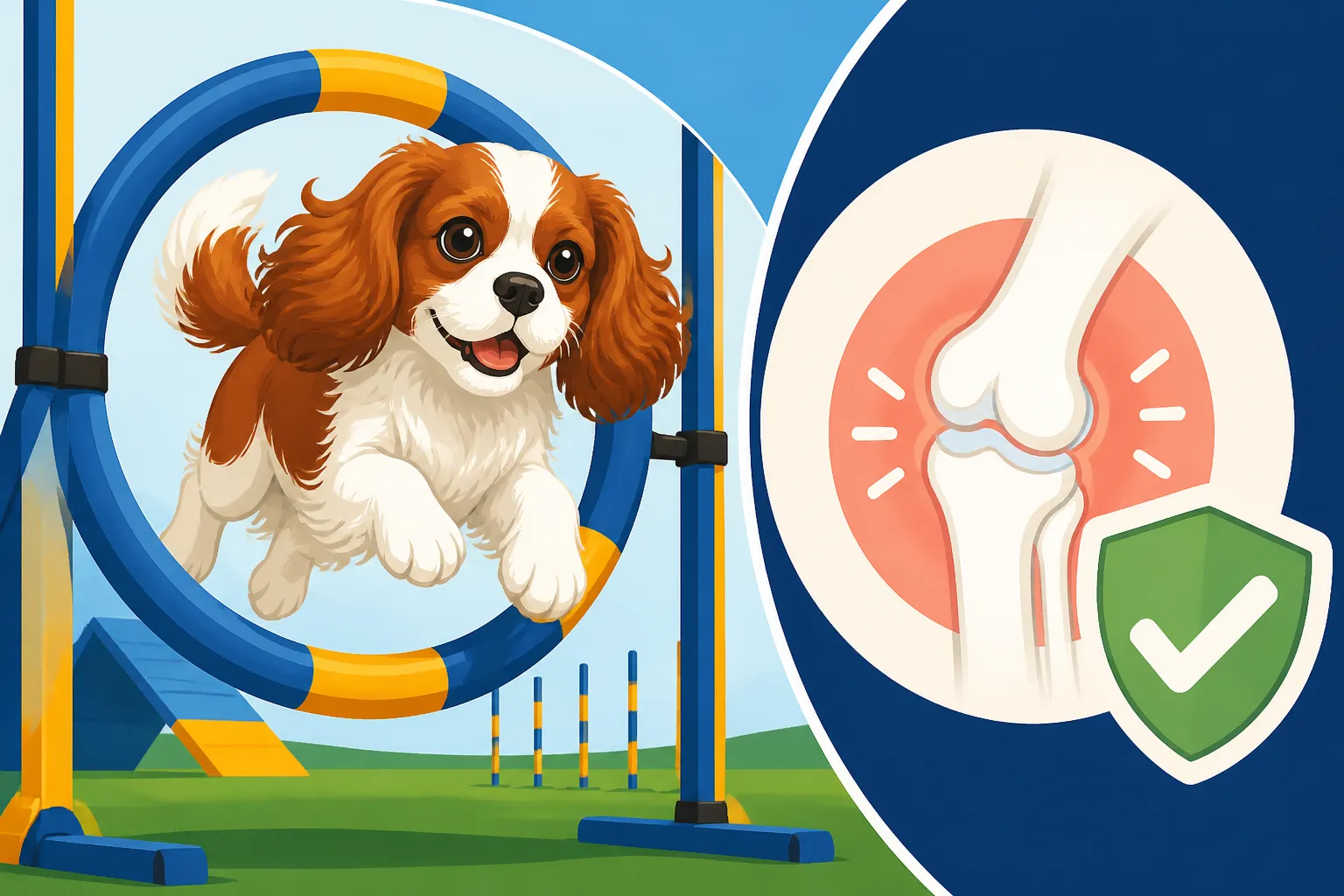
One of the most talked-about knee issues in our breed is patellar luxation, more commonly known as a "slipped kneecap." Imagine your own kneecap, designed to glide smoothly in a groove at the end of your thigh bone. In a Cavalier with patellar luxation, that kneecap can pop out of place, either to the inside (medial) or outside (lateral) of the leg. This isn't just a minor annoyance; it can range from a momentary skip in their step to severe lameness and chronic pain.
Patellar luxation is graded from 1 to 4. A Grade 1 might mean it pops out occasionally but goes back in easily, sometimes without you even noticing unless you're feeling for it or your vet points it out. A Grade 4, however, means the kneecap is permanently dislocated, causing significant discomfort and impacting their ability to walk normally. The ligaments and tendons supporting the knee joint can stretch and weaken over time, and the constant friction of the kneecap rubbing against other bones can lead to painful arthritis. This condition is unfortunately prevalent in many small breeds, including Cavaliers, and it's a critical consideration when thinking about high-impact activities. You can learn more about this specific concern in Loose Kneecaps in a Thirteen-Pound Cavalier. Even a mild luxation, which might seem insignificant in daily life, can become a much bigger problem when subjected to the twisting, jumping, and sudden stops inherent in agility.
Other Joint Concerns in Cavaliers
While patellar luxation often takes center stage, Cavaliers can face other joint challenges that shouldn't be overlooked. Hip dysplasia, though more commonly associated with larger breeds, can also affect Cavaliers. This condition involves an improperly formed hip joint, where the ball and socket don't fit together perfectly. Over time, this poor fit can lead to degenerative joint disease and arthritis. Even subtle forms can cause pain and reduce mobility, especially after strenuous activity.
Furthermore, general joint laxity or even early onset arthritis, which can be exacerbated by conditions like patellar luxation or hip dysplasia, means that their skeletal structure isn't always as resilient as we might hope. Our Cavaliers are built for companionship, for being wonderful lap warmers, and for gentle strolls, not necessarily for the rigorous demands of competitive sports. Their enthusiastic personalities often make them want to do everything, but their physical structure sometimes has other plans. It’s a sad reality, but being aware of these potential vulnerabilities is the first step in protecting them. You can dive deeper into various joint issues in Cavalier Knees, Hips and Joint Problems.
The Physical Demands of Agility
Agility is undeniably thrilling. Watching dogs fly over hurdles, weave through poles, and conquer obstacles with incredible speed and precision is captivating. It’s a fantastic way to bond with your dog, burn energy, and engage their minds. However, it's also a highly athletic endeavor that places significant strain on a dog's entire musculoskeletal system.
The Physical Stresses of Agility Training
Think about what an agility course involves. It's not just a casual walk in the park. Dogs are expected to jump over various heights of hurdles, sometimes multiple times in quick succession. They navigate weave poles, which require sharp, lateral movements and coordination, putting twisting pressure on their spine, hips, and knees. Tunnel runs involve crouching and explosive bursts of speed. The A-frame and dog walk require climbing and descending inclines, which can be challenging for hips and shoulders. And then there are the tight turns, sudden stops, and rapid accelerations that are integral to a fast, clean run.
Each of these movements, while appearing fluid and effortless in a well-trained, structurally sound dog, creates impact forces and repetitive stress on joints, ligaments, and tendons. For a breed like the Cavalier, already predisposed to conditions like patellar luxation, these demands can push their joints beyond their safe limits. A single awkward landing from a jump, a misstep in the weaves, or a sharp pivot on a hard surface could potentially exacerbate an existing, perhaps undiagnosed, joint issue or even cause a new injury. It's a high-risk activity for dogs whose joints are not perfectly aligned and robust.
Adapting Agility for Small Breeds
Thankfully, the agility community recognizes that not all dogs are built like Border Collies. There are often adaptations made for smaller breeds, including lower jump heights and smaller weave pole spacing. These modifications are certainly a step in the right direction for making the sport more accessible and safer for our pint-sized companions. However, even with these adjustments, the fundamental physics of jumping, weaving, and turning remain.
A 10 or 12-inch jump might seem insignificant to us, but for a Cavalier whose legs are only slightly longer than that, it's still a considerable leap that generates impact on landing. The tight turns are still tight, and the sudden stops still require strong core and leg muscles to absorb the shock. While these adaptations reduce some of the risk, they don't eliminate the inherent physical demands of the sport, particularly for a breed with known joint vulnerabilities. For more on this, check out Low Jump Heights for a Cavalier in Agility. It's vital to remember that "safer" doesn't necessarily mean "safe" for every individual dog, especially those with pre-existing conditions.
Minimizing Risks: Preparation and Training
If you're still determined to explore agility with your Cavalier, understanding how to minimize risks is paramount. It's not just about showing up; it's about a comprehensive approach to their health, careful training, and constant vigilance.
Pre-Agility Health Screening
The single most important step before you even think about signing up for an agility class is a thorough veterinary examination. This isn't just your annual check-up; it needs to be an orthopedic-focused assessment. Ask your veterinarian to specifically examine your Cavalier's knees for any signs of patellar luxation, as well as their hips, spine, and elbows for stability and range of motion. It's beneficial to find a vet who has experience in sports medicine or working with canine athletes, as they'll have a more critical eye for subtle issues that might be overlooked during a routine visit.
Some owners might also consider consultations with a veterinary orthopedist or a physical rehabilitation specialist. These professionals can provide a much deeper dive into your dog's musculoskeletal health, potentially identifying weaknesses or predispositions that could lead to injury. They might recommend specific exercises to strengthen core muscles or improve balance before any agility training begins. Remember, what we're looking for here is not just absence of current lameness, but a structural soundness that can withstand repetitive stress. Ensuring your Cavalier puppy comes with clear health certificates from its parents, especially concerning heart and patellar health, is also a good start; read more at Reading a Cavalier Puppy's Health Certificates.
Gradual Introduction and Proper Training
Once you've got a clean bill of health, the next critical component is a slow, controlled, and positive introduction to agility. This is where patience and proper instruction become your best friends. Avoid any "boot camp" style classes that rush through obstacles or demand high-impact work too soon. Instead, seek out an instructor who prioritizes foundational skills, body awareness, and building confidence, especially for a smaller breed.
Online resources, like those offered by BAXTER & Bella, can be fantastic for starting with the mental aspects and basic obedience needed for any dog sport, often before introducing physical obstacles. They focus on engagement and positive reinforcement, which is exactly what a Cavalier thrives on. A good instructor will help you build your Cavalier's core strength and proprioception (their awareness of their body in space) long before they attempt anything challenging. This means starting with low-impact exercises, balance work, and teaching obstacle discrimination without any speed involved. Always use positive, reward-based methods; you can explore this further in Training a Cavalier With Praise Rather Than Pressure. The goal is to condition their bodies gradually, allowing muscles and connective tissues to strengthen over time, rather than risking injury by jumping into advanced maneuvers.
Recognizing Warning Signs and When to Stop
Our Cavaliers are notorious people-pleasers. They often mask pain or discomfort because they simply want to make us happy and participate in whatever we're doing. This means it's absolutely crucial for us, as their guardians, to be hyper-vigilant about any subtle changes in their behavior or movement.
Keep a keen eye out for any limping, stiffness after exercise, reluctance to perform certain obstacles, or changes in their gait. Does their jump look less enthusiastic? Are they taking a wider turn than usual? Do they yelp or flinch when touched in a certain area? Even something as seemingly minor as a persistent "air scratch" (scratching at the air near their shoulder or neck without making contact) could be a sign of discomfort or nerve pain, possibly unrelated to agility but exacerbated by it. A Cavalier that normally zooms around but suddenly slows down or seems less engaged could be telling you something. You can read more about what to look for if your Cavalier is limping in A Cavalier Limping After Play. If you notice any of these signs, stop immediately. Consult your vet and assess the situation. Sometimes, taking a break, modifying activities, or even retiring from agility altogether is the most loving and responsible choice you can make for your dog's long-term health. Remember, their comfort and well-being always come first, even if it means foregoing a specific activity. Understanding Pain Management for a Senior Cavalier later in life often starts with recognizing signs in their active years.
Alternative Activities and Long-Term Joint Care
Just because high-impact agility might not be the safest choice for every Cavalier doesn't mean your dog has to live a boring, sedentary life! There are countless ways to engage their minds and bodies that are much gentler on their precious joints.
Lower-Impact Sports for Cavaliers
Consider sports and activities that emphasize mental acuity and controlled movement over explosive physical feats. Scent work, for example, is incredibly engaging for dogs, tapping into their natural instincts, and it's almost entirely low-impact. It challenges their brains and rewards their noses, building confidence without putting stress on their joints. Scent Work as a Low-Impact Cavalier Sport is a great way to explore this.
Rally obedience is another fantastic option, combining obedience commands with a course format, but without the high jumps or sharp turns. It builds focus and teamwork in a fun, flowing manner. Trick training is also wonderful for Cavaliers; they love learning new things and showing off, and you can tailor the tricks to be gentle on their bodies. Think about Trick Training an Older Cavalier – it’s proof that dogs of any age can enjoy learning! Even modified "urban agility" where you guide them over low, stable objects like benches or through safe, wide tunnels in a park can offer mental stimulation without the competitive pressures. The key is to find activities that allow them to use their brains and bodies in a way that aligns with their physical capabilities, ensuring enjoyment without undue risk.
Supporting Joint Health Proactively
Regardless of whether your Cavalier participates in dog sports or enjoys a more sedate life, proactive joint care is essential throughout their lives. One of the biggest factors in joint health is weight management. Even a few extra pounds can put significant strain on their joints, especially those already predisposed to issues like patellar luxation or arthritis. Keep your Cavalier lean and fit, ensuring you can easily feel their ribs without pressing hard. Keeping a Cavalier at a Weight Its Heart Can Carry is absolutely vital for their overall health, including their joints.
A high-quality diet provides the building blocks for healthy tissues. Some owners also choose to incorporate joint supplements, such as glucosamine, chondroitin, or omega-3 fatty acids, under veterinary guidance. While not a magic bullet, these supplements can help support cartilage health and reduce inflammation. Learn more about supplements in Whether Heart Supplements Help a Cavalier, as many also benefit joints. Providing comfortable, supportive bedding, especially for older Cavaliers, can also make a huge difference in their daily comfort. Companies like Amazon offer a wide range of orthopedic beds that can cushion joints and help reduce pressure points during rest. Regular, moderate exercise, like daily walks on varied but not overly strenuous terrain, helps maintain muscle tone and joint flexibility without the high impact risks. It's all about creating a lifestyle that supports their delicate structure, ensuring they can enjoy many happy, comfortable years by your side.
Here's a quick comparison of various activities and their potential impact on a Cavalier's knees:
| Activity Type | Examples | Knee Impact Level | Benefits | Considerations for Cavaliers |
|---|---|---|---|---|
| High Impact Sports | Agility, Flyball, Dock Diving | High | Builds athleticism, burns energy | High risk for patellar luxation, arthritis exacerbation, acute injury. |
| Moderate Sports | Obedience, Rally, Hiking (off-leash) | Medium | Mental stimulation, moderate exercise | Twisting, jumping, and uneven terrain can still pose risks. |
| Low Impact Sports | Scent Work, Trick Training, Canine Freestyle | Low | Mental engagement, bond building, body awareness | Excellent for all Cavaliers, minimal joint stress. |
| Daily Exercise | Leashed Walks, Gentle Play | Very Low | Essential for fitness, mental well-being | Maintain ideal weight, avoid over-exertion, monitor for limping. |
Disclaimer
This article is for general informational purposes only and does not constitute professional advice. Laws, prices and regulations vary by location and change over time. Consult a qualified professional for guidance on your specific situation.