Whether a Clicker Suits a Sound-Sensitive Cavalier
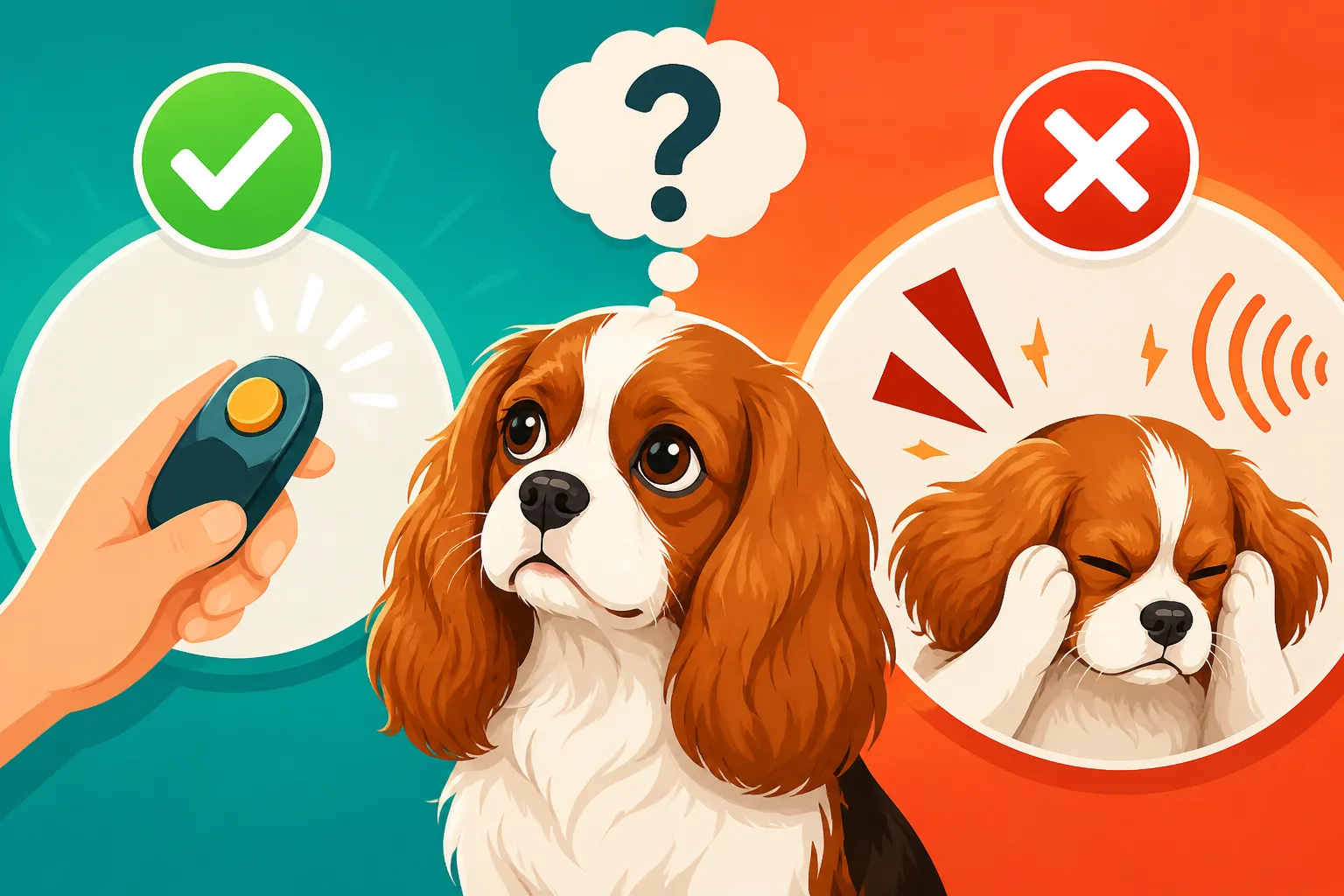
It's a common dilemma for Cavalier King Charles Spaniel owners: you've heard all the wonderful things about clicker training – how it’s precise, positive, and really helps dogs understand what you want. But then you look at your sweet, sometimes jumpy Cavalier, who flinches at a dropped spoon or a sudden car backfire, and you wonder, "Will that sharp click just scare them silly?" This guide is here to tackle that very real concern, helping you figure out if a clicker can truly be a beneficial tool for your sound-sensitive Cavalier and how to introduce it gently if it can.
Understanding Your Cavalier's Sensitivity to Sound
Cavaliers are renowned for their gentle, affectionate nature, often described as "Velcro dogs" due to their desire to be close to their people. However, this inherent sensitivity, while making them wonderfully empathetic companions, can also manifest as a heightened awareness or even anxiety towards sudden or loud noises. It's not uncommon for a Cavalier to startle at things other dogs might ignore, and understanding why this happens is the first step in addressing your concerns about clicker training.
Why Some Cavaliers Are More Sound-Sensitive
Several factors can contribute to a Cavalier's sound sensitivity. Genetics play a role; some lines are simply predisposed to being more timid or anxious. Early experiences, or a lack thereof, also weigh heavily. A puppy raised in a quiet environment without exposure to a variety of normal household sounds might find them overwhelming later on. Similarly, a negative experience associated with a loud noise – perhaps something fell and narrowly missed them – can create a lasting aversion. It's important to differentiate between general timidity, which can be overcome with gentle exposure and confidence building, and a true noise phobia, which might require more intensive behavioral modification and veterinary guidance. Knowing your dog's history and observing their reactions closely will give you crucial insights. For instance, does your Cavalier merely jump, then recover quickly, or do they hide, pant, and shake for an extended period? This distinction is vital.
Signs of Sound Sensitivity in Cavaliers
Recognizing the subtle cues of sound sensitivity is key. It's not always a full-blown panic attack. Sometimes it starts with ears twitching, a slight stiffening of the body, or a quick glance towards the source of the sound. As the sensitivity increases, you might see licking of lips, yawning, panting, trembling, tucking the tail, or trying to hide behind your legs. A particularly sensitive Cavalier might even vocalize with a small yelp or whine, or attempt to flee the room. A Cavalier That Refuses Stairs or sudden changes in their willingness to explore new environments could also be subtle indicators of underlying anxiety, including sound sensitivity. These are all signals that your dog is feeling uneasy, and ignoring them can escalate their anxiety, making them more reactive in the future. Paying attention to these early warnings allows you to intervene gently and prevent an overwhelming experience.
Adapting Clicker Training for the Sound-Sensitive Cavalier
The good news is that clicker training doesn't have to be a loud, jarring experience. With a little creativity and patience, you can absolutely adapt this highly effective positive reinforcement method to suit even the most delicate of Cavalier ears. The goal is to make the "marker" signal, whether it's a click or something else, a predictor of good things without causing stress.
Choosing the Right Clicker or Alternative Marker
The standard box clicker often used in dog training can indeed be quite sharp and loud. For a sound-sensitive Cavalier, this is probably not the best starting point. Fortunately, there are many alternatives:
- Soft Clickers: Many brands now offer clickers specifically designed to produce a softer, less abrupt sound. These might be button-style clickers with a quieter mechanism or even small, plastic-covered box clickers that muffle the sound slightly. You can often find these on platforms like Amazon, searching for "quiet dog clickers" or "soft clickers."
- Muffling the Sound: If you already have a standard clicker, you can easily muffle its sound. Try wrapping it in a dishcloth, holding it inside your pocket, or even placing a piece of tape over the clicker mechanism. Experiment with different levels of muffling to find a sound that is soft enough not to startle your Cavalier, but still distinct enough for them to hear.
- Verbal Markers: For some Cavaliers, even a muffled click might be too much. In this case, a consistent verbal marker can work beautifully. A short, sharp, and consistent word like "Yes!" or "Good!" can serve the same purpose as a clicker. The key is to choose a word you don't use casually throughout the day, so it retains its special meaning as a "success signal." The trick with a verbal marker is ensuring your tone is always consistent – always happy, always the same pitch and volume when marking the behavior.
Remember, the "click" or chosen marker is simply a signal that tells your dog, "That's it! You did it! A treat is coming!" It doesn't have to be loud to be effective. The consistency of pairing the sound with a reward is what builds its power.
Gentle Introduction and Desensitization Techniques
Once you've chosen your marker, the introduction needs to be extremely gradual and positive. You want to create a strong positive association from the very first moment.
- Start in a Quiet Environment: Pick a time and place where your Cavalier is relaxed, calm, and unlikely to be distracted by other noises.
- Pairing (Loading the Clicker): This is the crucial step. Have tiny, high-value treats ready – think small pieces of cooked chicken, cheese, or Treats a Cavalier Will Trade Anything For. Click (or use your verbal marker) and immediately give a treat. Repeat this about 10-15 times in a session. The goal is for your Cavalier to hear the click and instantly look to you for a treat, associating the sound with something wonderful. Don't ask them to do anything yet; just click-treat, click-treat.
- Observe Reactions: Watch your Cavalier's body language closely. If they show any signs of stress (flinching, hiding, ears back), your marker is still too loud. Go back to a softer clicker or more muffled sound, or switch to a verbal marker entirely.
- Gradual Increase in Intensity: Once your Cavalier is happily anticipating a treat after the click, you can slowly, incrementally, expose them to slightly louder or less muffled clicks. Do this over days, not hours. For example, if you started with the clicker in your pocket, try holding it loosely in your hand next session. If they remain comfortable, you're on the right track. This slow desensitization helps them build a positive association with the sound without being overwhelmed.
- Integrating into Training: Only when your Cavalier shows absolutely no hesitation or fear at the sound should you begin using it to mark behaviors. Start with simple, low-pressure exercises like marking an eye-contact or a sit. The key is to keep it fun and rewarding.
This process builds trust and helps your Cavalier understand that the sound means good things are happening, not something scary.
Pros and Cons of Clicker Training for Sensitive Cavaliers
Deciding whether to use a clicker with a sound-sensitive Cavalier involves weighing the potential benefits against the challenges. It's not a one-size-fits-all solution, and what works for one dog might not be ideal for another, even within the same breed.
Benefits of Clicker Training
Clicker training, when done correctly, offers several compelling advantages, especially for intelligent and sensitive breeds like Cavaliers.
- Precision: The clicker marks the exact moment your dog performs the desired behavior. Unlike a verbal "good boy" that can be drawn out or vary in tone, a click is always the same, making it incredibly clear to your dog what they did right. This precision speeds up learning. For a Cavalier prone to getting confused or overthinking, this clarity can be a huge relief. They aren't left guessing what you want; the signal is unambiguous.
- Consistency: Every click sounds the same, every time. This consistency helps your Cavalier understand the rules of the game faster. They learn to trust the signal because it always means the same thing, which is vital for Reward-Based Training With a Cavalier. This predictability can actually be calming for a sensitive dog once they've overcome the initial sound hurdle, as they know exactly what to expect.
- Positive Reinforcement Focus: Clicker training is inherently positive. It's all about rewarding good choices, never about punishment or correction. This approach builds confidence and strengthens your bond with your Cavalier, which is crucial for sensitive dogs who can easily shut down under pressure. Why Shouting Sets a Cavalier Back Weeks is a reminder of how important gentle methods are. Using a clicker, you are actively seeking opportunities to reward, fostering a happy, engaged learner.
- Mental Engagement: Training with a clicker encourages your Cavalier to think and offer behaviors, rather than just waiting for commands. This mental stimulation is fantastic for Cavaliers, who, despite their cuddly image, are quite intelligent and enjoy having a "job" to do, even if it's just learning new tricks. It turns training into a fun game, reducing boredom and potential behavioral issues rooted in lack of engagement.
Potential Challenges
While the benefits are clear, there are indeed challenges when introducing a clicker to a sound-sensitive Cavalier.
- Initial Fear Response: The most obvious challenge is the possibility of the clicker causing an adverse reaction. If not introduced gently, the sudden sound can be startling or even frightening, setting back training and potentially increasing their overall anxiety. This is why careful desensitization is paramount. If a dog forms a negative association, it can be very difficult to reverse.
- Over-reliance on the Clicker: Some owners worry that their dog will only perform behaviors when the clicker is present. However, good clicker training practices involve phasing out the clicker once a behavior is learned, replacing it with verbal cues and occasional varied rewards. The clicker is a teaching tool, not a permanent crutch. It helps engrain the behavior, allowing you to transition to other forms of reinforcement.
- Owner Consistency: The effectiveness of clicker training relies heavily on the owner's timing and consistency. If you click too late, too early, or inconsistently, your Cavalier will become confused, negating the precision benefit. This requires practice on the owner's part, but resources like the BAXTER & Bella online puppy school can provide excellent guidance and practice exercises for perfecting your timing.
- Managing Environment: With a truly sound-sensitive dog, you might find yourself needing to train in very quiet environments for longer periods before they are ready for distractions. This can limit where and when you can train effectively, especially if your goal is a bomb-proof recall in a busy park, for example. However, slowly expanding the training environment is part of the process, just as you would with any desensitization.
By being mindful of these challenges and implementing the gentle introduction techniques, you can mitigate most of the potential downsides for your sensitive companion.
Alternatives and Complementary Methods
What if, despite your best efforts, your Cavalier just can't tolerate any form of clicker, even a muffled one? Don't despair! Clicker training is just one tool in the positive reinforcement toolbox. Many other methods can be incredibly effective for Training a Cavalier With Praise Rather Than Pressure, especially those with sound sensitivities.
Verbal Markers and Praise
As mentioned, a clear, consistent verbal marker like "Yes!" or "Good!" can be a fantastic substitute for a clicker. The key is to deliver it in a cheerful, upbeat tone the instant your Cavalier performs the desired action, followed immediately by a high-value treat. Practice making your verbal marker short, sharp, and always the same. This method works well because it removes the potentially startling click while still providing precise communication. Many trainers successfully rely solely on verbal markers, proving their effectiveness. Think of it as your voice becoming the clicker – a precise, positive signal that "Nailed it!"
Hand Signals and Lure-and-Reward
For Cavaliers who are particularly attuned to visual cues, hand signals can be a primary method of communication. You can teach behaviors using lure-and-reward techniques, where you use a treat to guide your dog into the desired position (the "lure"), and then reward them with praise and the treat once they achieve it. Over time, the lure fades, and your hand movement becomes the cue. This is a very gentle and non-intrusive way to train. It's especially useful for teaching behaviors where a quiet environment might be hard to maintain, as it's less affected by ambient noise. For a Cavalier who struggles with auditory input, leaning into their visual perception can be highly advantageous.
Combining Approaches and Professional Help
Often, the most effective approach is a combination of methods. You might use a verbal marker for speed and flexibility, hand signals for quieter situations or distance work, and abundant praise to keep your Cavalier motivated and happy. Remember, the goal is effective communication and a positive learning experience. If you find yourself struggling, don't hesitate to seek guidance from a certified professional dog trainer who specializes in positive reinforcement and has experience with fearful or sensitive dogs. They can observe your Cavalier's unique reactions and help you tailor a training plan that builds confidence without causing undue stress. Online resources, like the BAXTER & Bella program, can also offer structured lessons that emphasize positive, gentle methods suitable for sensitive dogs, guiding you step-by-step through the process. Ultimately, it’s about finding what resonates best with your individual Cavalier and reinforces the wonderful bond you share.
| Marker Type | Description | Pros for Sensitive Cavalier | Cons for Sensitive Cavalier |
|---|---|---|---|
| Standard Clicker | Loud, distinct "click" sound. | Highly precise, consistent. | Too loud and startling for most sensitive Cavaliers. |
| Soft/Muffled Clicker | Quieter click, often achieved by design or muffling. | More gentle, still precise, consistent. | May still be too sharp for extremely sensitive dogs; requires testing. |
| Verbal Marker | A short, consistent word (e.g., "Yes!"). | No sudden mechanical sound, adaptable volume, always available. | Requires careful, consistent tone from handler; less precise than a click. |
| Silent Hand Signal | A specific, consistent hand gesture. | Completely silent, ideal for deaf or severely sound-phobic dogs. | Less precise timing for fast-moving behaviors, requires visual attention. |
Disclaimer
This article is for general informational purposes only and does not constitute professional advice. Laws, prices and regulations vary by location and change over time. Consult a qualified professional for guidance on your specific situation.