Whether a Cavalier Pulls Hard Enough to Matter
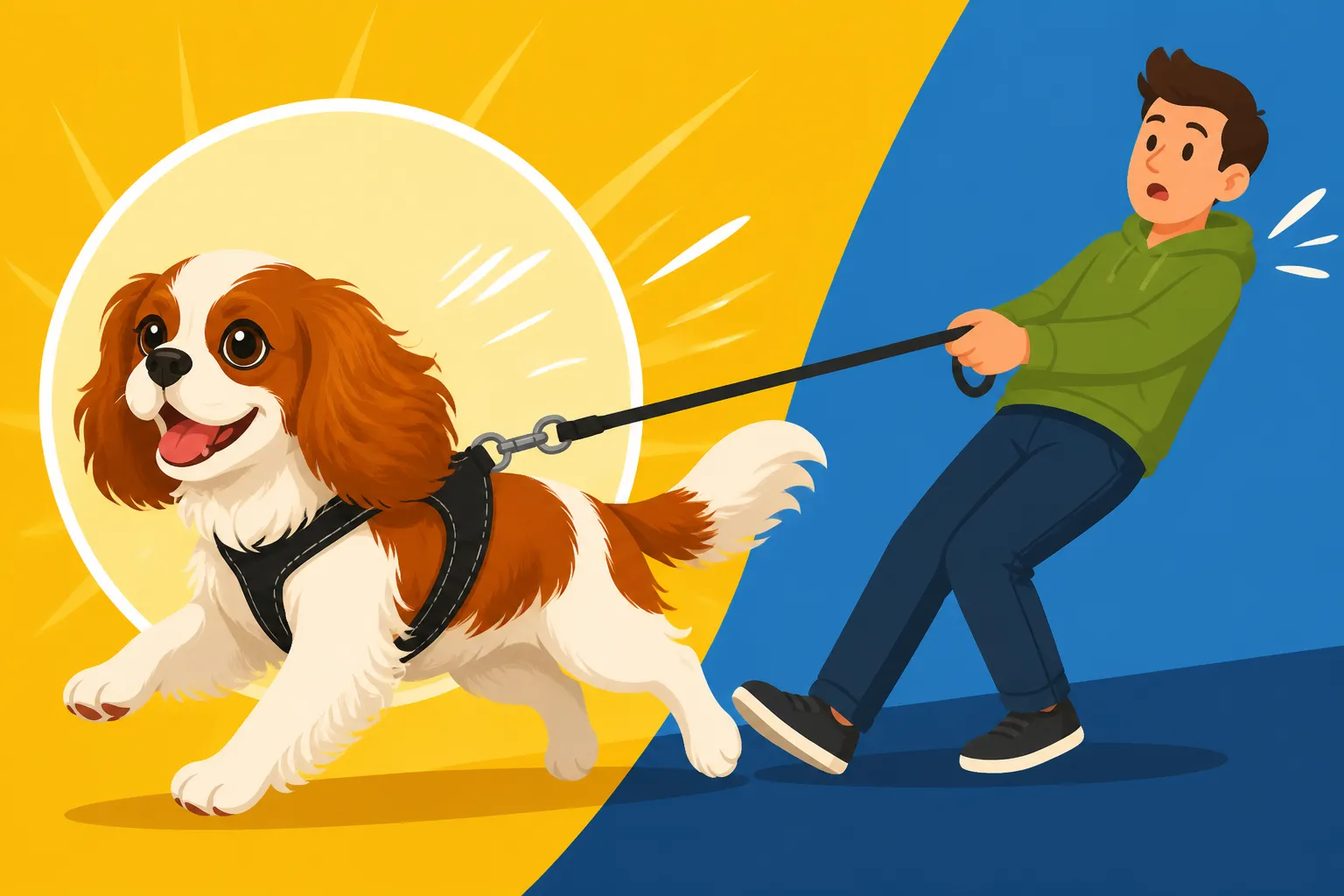
It's a common sight: a tiny Cavalier King Charles Spaniel, all fluff and charm, straining at the end of their leash, dragging their devoted human along. You might think, "They're so small, how much can it really matter?" But this seemingly minor issue can lead to big problems for both you and your beloved companion. This guide will delve into why even a small dog pulling can be significant, explore the reasons behind this behavior, and offer actionable strategies to transform your walks into enjoyable, stress-free experiences for everyone involved.
The Myth of the "Small Dog, No Problem" Puller
Many Cavalier owners find themselves in a peculiar situation. Their adorable, eager-to-please Cavalier, despite its modest size, can pull with surprising force. It’s easy to dismiss it, thinking, “Oh, they’re just excited,” or “It’s not like they’re a giant breed.” But this mindset often leads to bigger issues down the line, both for the dog's well-being and the owner's peace of mind. The truth is, a pulling Cavalier can matter quite a bit.
Why Cavalier Pulling Isn't Just Annoying
While a Cavalier might not dislocate your shoulder, their persistent pulling can still cause significant discomfort and even injury to themselves and you. Imagine walking with constant tension on your neck or back – that’s what your Cavalier experiences.
For your Cavalier, a collar that constantly tightens around their throat can put undue pressure on their delicate trachea, which is their windpipe. Cavaliers, like many small breeds, can be prone to conditions like tracheal collapse, where the rings of cartilage supporting the trachea weaken and flatten. Constant pulling exacerbates this risk, leading to coughing, gagging, and difficulty breathing, especially during exercise. It's a real and painful issue that no amount of cuteness can excuse. Even if they don't develop tracheal collapse, the sheer discomfort of being choked by their collar can make walks a miserable experience for them, turning something that should be fun into a chore.
Beyond the trachea, continuous pulling can also strain their neck muscles and even contribute to spinal issues over time. If your Cavalier is regularly wearing a flat buckle collar and pulling, you're essentially applying pressure to a very sensitive area with minimal protection. This constant strain is not only physically taxing but can also lead to aversion to their leash and collar, making future training even harder. Their small bodies aren't built to withstand constant tension without consequence, and what seems like a minor tug to us is a significant force for them.
From your perspective, even a fifteen-pound Cavalier pulling continuously can strain your wrist, shoulder, or back over time. It makes a leisurely stroll feel like a tug-of-war, draining the enjoyment out of what should be quality bonding time. Think about trying to hold a coffee or answer your phone while being unexpectedly yanked forward – it’s inconvenient at best and dangerous at worst. If you have any joint issues yourself, or if you're a senior owner, even a small dog's persistent pulling can easily lead to a stumble or a fall. It limits where and when you feel comfortable walking your dog, making you avoid pleasant routes if they involve too many distractions your Cavalier might pull towards.
When a Cavalier's Pull Becomes a Safety Issue
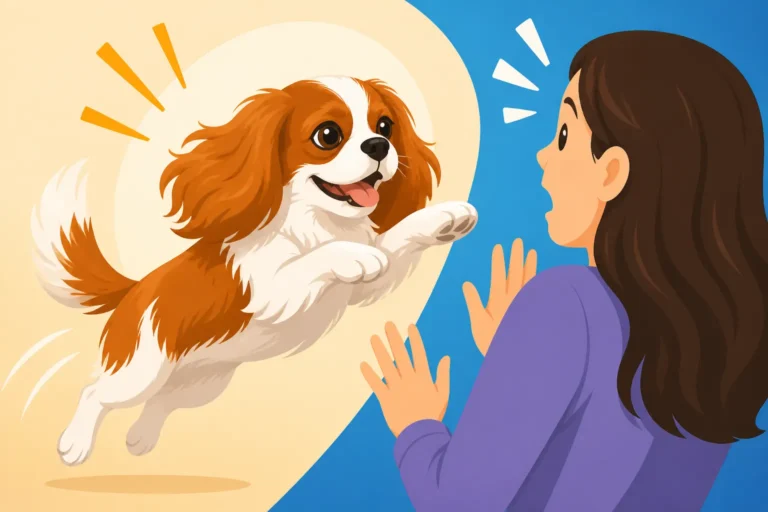
Beyond physical discomfort, a pulling Cavalier presents genuine safety hazards for themselves and for you. Their enthusiastic zest for life can quickly put them in harm's way if not managed properly. A momentary lapse in your grip, or a sudden, strong lunge, can have serious consequences.
Picture this: you’re walking your Cavalier along a busy street, maybe just a few feet from the curb. Suddenly, a squirrel darts across the path, or another dog appears. Your Cavalier, driven by instinct or excitement, lunges. If your grip isn't absolutely iron-clad, or if the collar slips over their head (which is surprisingly common with an ill-fitting one), your little buddy could be in the middle of traffic in a split second. Cavaliers, with their keen spaniel noses and often limited awareness of their surroundings when excited, have no traffic sense and can easily become disoriented or panic-stricken. Losing a Cavalier to Traffic and How It Happens is a heartbreaking reality for many owners who underestimated the risk of a loose dog.
Moreover, a pulling Cavalier can react unpredictably when encountering other dogs or people. They might be friendly, but lunging and pulling can be perceived as aggressive or rude by other dogs, potentially leading to tense interactions or even fights. A smaller dog is always at a disadvantage in such encounters, and a tangled leash situation can make it impossible for you to intervene effectively. Even if they're just excited, a full-force lunge towards a nervous child or an elderly pedestrian could cause them to fall, leading to injuries and potential liability for you. The risk is simply not worth taking, no matter how sweet your Cavalier's intentions might be.
Understanding Why Your Cavalier Pulls
Knowing that pulling is a problem is one thing, but understanding why your charming Cavalier feels the need to drag you along is the first step toward finding a solution. It's rarely out of malice or stubbornness; it's usually a combination of natural instincts, learned behaviors, and a lack of clear communication from us, their human companions.
The Enthusiastic Greeting and Spaniel Instinct
Cavaliers are, by nature, incredibly social and curious dogs. Their spaniel heritage means they were bred to work closely with humans, but also to follow their noses and explore. When they're out on a walk, the world is a giant buffet of smells, sights, and sounds, and they want to experience all of it, often immediately and at full speed. This intense desire to greet every person and dog, investigate every lamppost, and chase every rustling leaf contributes significantly to their pulling.
Their enthusiasm is often overwhelming. They see a person, and their entire body language screams, "Friend!" They want to get there now to offer a loving lick or a happy wag. This isn't just a casual stroll for them; it's a mission to gather information and make connections. This excitement, coupled with their strong sense of smell, means that every walk is a sensory overload. Their little noses are far more powerful than ours, and every patch of grass tells a story they desperately want to read. The Spaniel Instincts Left in a Cavalier means they have a natural drive to follow scent trails, explore new territory, and react to moving objects like birds or squirrels. This inherent curiosity often overrides any polite leash manners they might have.
Consider a Cavalier encountering a patch of grass where another dog has recently sniffed. For them, it's like finding an exciting novel. Their head goes down, their tail might start to wag, and they have an undeniable urge to immerse themselves in that olfactory experience. They are not consciously trying to pull you; they are simply driven by their instincts to explore and react to their environment, and the leash becomes an unwelcome impediment to their mission. This is particularly true when they spot a bird or a squirrel and their prey drive kicks in, leading them to chase birds into the road without a second thought for their safety.
Lack of Leash Training Fundamentals
While instinct plays a huge role, a significant portion of leash pulling stems from a simple lack of consistent and effective training. Dogs aren't born knowing how to walk politely on a leash; it's a skill they need to be taught, and we, as owners, often inadvertently teach them the opposite.
Think about it: when your Cavalier pulls, what usually happens? They get closer to what they want – whether it's that exciting patch of grass, another dog, or the front door. Every time they pull and you continue moving forward, even for a few steps, you are unknowingly reinforcing the behavior. They learn that tension on the leash is the signal to keep pulling because it eventually leads to their desired outcome. This is a classic example of operant conditioning at play, and unfortunately, it works in reverse of what we want.
Many owners also struggle with consistency. One day, they might try to correct the pulling, but the next, they're in a hurry and just let their Cavalier drag them along. Dogs thrive on predictability and clear rules. If the rules keep changing, it's impossible for them to understand what's expected. They might also not have been properly introduced to the leash and collar in a positive way as puppies, associating it with frustration rather than pleasant experiences. Furthermore, a failure to teach basic obedience commands like "heel," "wait," or "look at me" can leave a Cavalier unprepared for the distractions of the outside world, making them more likely to revert to pulling when overstimulated. Leash Manners for a Cavalier That Pulls are not just about stopping pulling, but about establishing a clear communication system that makes walks enjoyable for both of you.
Practical Solutions for a Pulling Cavalier
The good news is that a pulling Cavalier isn't a life sentence to uncomfortable walks. With the right tools, consistent training, and a good dose of patience, you can transform your walks into pleasant, stress-free excursions. It's about teaching your Cavalier that a loose leash is the pathway to all the wonderful things they want to explore.
Equipment That Can Make a Difference
Choosing the right equipment is your first crucial step in managing a pulling Cavalier. A standard flat buckle collar is simply not designed for teaching loose-leash walking, and as we discussed, it can be harmful. The goal is to redirect their pulling power without causing pain or discomfort, and to communicate more effectively.
-
Front-Clip Harnesses: These are often a game-changer for many owners. Unlike back-clip harnesses that simply give your dog more leverage to pull, a front-clip harness attaches the leash at your Cavalier's chest. When your Cavalier pulls, their body is gently redirected to the side, making it much harder and less effective for them to drag you forward. This works by disrupting their forward momentum and turning them slightly towards you. It's a non-aversive way to teach them that pulling doesn't get them where they want to go. Many brands offer comfortable, well-fitting front-clip harnesses that you can find readily on platforms like
Amazon. When looking for Harnesses Suited to a Cavalier's Neck, prioritize those with a Y-shape at the front to avoid pressure on the throat and ensure freedom of shoulder movement. -
Head Halters: For some very strong or persistent pullers, a head halter (sometimes called a head collar) can be incredibly effective. This piece of equipment fits around your Cavalier's muzzle and behind their ears, giving you control over their head direction. Where the head goes, the body follows. When your Cavalier tries to pull, the halter gently turns their head to the side, again making it difficult to pull forward. It's important to introduce head halters gradually and positively, as some dogs initially resist them. They should never be yanked or used punitively, but rather as a gentle steering mechanism. Always consult with a professional trainer or vet before using a head halter to ensure proper fit and introduction.
Here's a quick comparison of popular leash training tools:
| Equipment Type | Attachment Point | How it Works | Pros | Cons |
|---|---|---|---|---|
| Flat Buckle Collar | Neck (back) | No redirective action, direct pressure on throat | Simple, common | Choking risk, tracheal strain, encourages pulling |
| Back-Clip Harness | Back | Distributes pressure over chest/back, but allows pulling | Comfortable, secure, good for non-pullers | No control over pulling, gives dog leverage |
| Front-Clip Harness | Chest | Redirects dog's body to the side when they pull | Reduces pulling, comfortable, no neck strain | Can tangle legs if not fitted well, dog can still pull, just less effectively |
| Head Halter | Muzzle/Neck | Controls head direction, where head goes, body follows | Excellent control, gentle redirective force | Requires positive introduction, some dogs dislike it, can be mistaken for a muzzle |
Training Techniques for Loose-Leash Walking
Once you have the right equipment, it's time to teach your Cavalier what you actually want them to do. Loose-leash walking is a skill built on positive reinforcement and clear boundaries. Reward-Based Training With a Cavalier is by far the most effective and humane approach.
-
The Stop-and-Start Method: This is a classic for a reason. As soon as your Cavalier puts tension on the leash, you immediately stop walking. Don't say anything, don't yank the leash – just stop. Wait for the leash to go slack, even for a second, then immediately take a step forward. If they pull again, stop again. Your Cavalier quickly learns that pulling makes the walk stop, and a loose leash makes the walk continue. This requires immense patience and consistency, especially at first. You might only get a few feet in five minutes, but stick with it!
-
Redirection and Engagement: Cavaliers thrive on attention and engagement. Instead of letting them pull towards every distraction, use high-value treats and praise to keep their focus on you. When you see a distraction approaching, try to get their attention before they react. Say their name, offer a treat at your side, and reward them for looking at you. You can even practice a "watch me" command in low-distraction environments first. The more you can make you the most interesting thing on the walk, the less likely they are to pull away. Consider online programs like those offered by
BAXTER & Bella, which provide structured lessons to guide you through these techniques, often with video demonstrations. -
Rewarding Slack: Actively reward your Cavalier whenever the leash is loose, not just when they stop pulling. Every time they walk beside you with a nice, relaxed leash, mark that moment with a verbal cue like "Yes!" or "Good!" and give them a treat. The goal is to make a loose leash a highly rewarding behavior. You can also vary your pace and direction during walks to keep them engaged and paying attention to you, rather than blindly charging forward. Short, frequent Five-Minute Training Sessions With a Cavalier throughout the day, even in your yard, can build this skill much faster than long, frustrating walks.
Consistency and Patience Are Key
Loose-leash walking isn't a one-and-done lesson; it's an ongoing process that requires consistent effort from everyone in the household. Every walk is a training opportunity, whether it's a quick potty break or a longer stroll around the block.
Ensure that every family member who walks the Cavalier understands and uses the same training methods and commands. If one person allows pulling and another doesn't, your Cavalier will become confused and progress will be slow, if not non-existent. Make a family pact to be consistent. This means no exceptions, even when you're running late or it's raining. If you can't commit to a training walk, consider a short, controlled potty break right outside the door, or skip the walk entirely rather than reinforcing bad habits.
Patience is perhaps the most important ingredient. Your Cavalier has likely been practicing pulling for months or even years, and it will take time to unlearn that behavior and replace it with a new one. There will be frustrating walks, moments of backsliding, and times when you feel like you're getting nowhere. But remember, your Cavalier isn't pulling to spite you; they're pulling because they haven't learned a better way, or because their instincts are strong. Celebrate small victories, like a few steps with a loose leash, and try to end each training session on a positive note. Over time, these small steps will add up to a much more enjoyable walking experience for both of you. You're building a new habit, and habits take time and repetition to form.
Long-Term Benefits of Addressing Pulling
Investing the time and effort into teaching your Cavalier proper leash manners pays off in countless ways. It's not just about preventing a pulled muscle or a choked trachea; it's about fostering a deeper bond and ensuring a happier, healthier life for your cherished companion.
Enhancing the Bond and Enjoyment
When walks are no longer a struggle, they transform into genuine bonding experiences. Imagine strolling through a park with your Cavalier calmly trotting by your side, occasionally glancing up at you for direction or reassurance. This relaxed posture allows both of you to be more present, to enjoy the scenery, and to simply be together. The tension that once existed on the leash disappears, replaced by a feeling of partnership and mutual respect.
This newfound harmony on walks carries over into other aspects of your life. Your Cavalier learns to trust your guidance and respond to your cues, strengthening the communication between you. You'll feel more confident taking your Cavalier to new places, knowing they can navigate distractions without becoming a runaway train. This opens up a world of possibilities for adventures, from exploring new hiking trails to enjoying a quiet coffee on a pet-friendly patio. It reduces stress for both of you, making every outing a source of joy rather than a source of anxiety. When your Cavalier is calm and attentive, you can truly connect, enjoying the simple pleasure of companionship.
Protecting Your Cavalier's Health
Beyond preventing immediate injuries like tracheal strain, loose-leash walking contributes significantly to your Cavalier's long-term health. Constant pulling puts repetitive stress on their neck, shoulders, and spine. While they might be small, these continuous impacts can lead to muscle soreness, joint issues, and even exacerbate underlying conditions like early arthritis or Cavalier Knees, Hips and Joint Problems. A dog that walks calmly on a leash distributes its weight and movements more naturally, reducing wear and tear on their body.
Furthermore, a calm walk allows your Cavalier to explore their environment at a more relaxed pace, which is often more beneficial for their mental and physical well-being. They can sniff, observe, and engage with the world in a mindful way, rather than being dragged past everything in a rush. This mental stimulation, combined with appropriate physical exercise, contributes to a well-balanced and happy dog. It also makes vet visits, grooming sessions, and other necessary handling much easier, as your Cavalier will be more accustomed to cooperating and responding to gentle guidance rather than fighting against pressure. By teaching your Cavalier to walk politely, you're not just training a behavior; you're safeguarding their comfort, promoting their health, and investing in years of happy, shared adventures.
Disclaimer
This article is for general informational purposes only and does not constitute professional advice. Laws, prices and regulations vary by location and change over time. Consult a qualified professional for guidance on your specific situation.