Toilet Training a Cavalier in an Apartment
It's a common worry for many Cavalier King Charles Spaniel owners living in apartments: how on earth do you successfully potty train a tiny pup when immediate outdoor access isn't always an option? The struggle is real, whether it's navigating multiple flights of stairs, rushing down an elevator, or facing inclement weather. This comprehensive guide aims to demystify apartment potty training for your beloved Cavalier, offering practical strategies and a healthy dose of empathy for the journey.
Understanding the Unique Challenges of Apartment Potty Training for Cavaliers
Bringing a Cavalier puppy into an apartment home is a special joy, but it also comes with its own set of unique hurdles when it comes to house training. Unlike a home with a yard where you can simply open the door and let your puppy out, apartment living often means a more complex route to the designated potty spot. This can be frustrating for both you and your little one, but understanding these challenges is the first step toward overcoming them.
The Limited Outdoor Access Conundrum
The biggest hurdle for apartment dwellers is, without a doubt, the often-limited and inconvenient access to the great outdoors. Imagine a tiny Cavalier puppy, who can barely hold its bladder for an hour, needing to go from your fifth-floor apartment all the way down to a patch of grass. This often involves waiting for an elevator, walking through common areas, and then making it to the specific dog relief area. By the time you get there, an accident might have already happened right by the front door or, worse, inside the elevator. This isn't a failure on your or your puppy's part; it's a systemic challenge of the environment. The sheer distance and time involved in reaching an appropriate outdoor spot can make consistency incredibly difficult, leading to many frustrated sighs and extra cleaning sessions.
Tiny Bladders and Cavalier Breed Tendencies
Cavalier King Charles Spaniels are relatively small dogs, and like most small breeds, they come equipped with delightfully tiny bladders. A young Cavalier puppy might only be able to hold it for an hour or two at best, and even adult Cavaliers generally can't hold it for as long as larger breeds. This biological reality clashes directly with the limited outdoor access. You might think you have plenty of time, but that little bladder fills up quickly, especially after eating, drinking, or waking from a nap. Furthermore, some Cavaliers, due to their affectionate and sometimes dependent nature (they are often called "Velcro dogs" for a reason!), might also struggle with signaling their need to go, or they might become too distracted by the journey to the potty spot to focus on the task at hand once they get there. Ignoring these inherent traits sets both of you up for failure.
Weather Woes and Public Space Pressures
Let's be real: no one, and certainly no tiny Cavalier, enjoys being dragged out into a torrential downpour, a blizzard, or scorching summer heat just to go potty. Bad weather can make an already inconvenient trip outdoors feel utterly miserable. Your puppy might resist going out, leading to accidents inside, or rush the job, only to need to go again five minutes after returning upstairs. Beyond weather, there's the added pressure of public spaces. Apartment complex dog relief areas can be busy, full of distractions, and sometimes not as clean as you'd like. This environment can be overwhelming for a shy or easily distracted Cavalier puppy, making it hard for them to relax and do their business. You might also feel self-conscious if your puppy has an accident or takes a long time, adding to the stress of the process.
Setting Up Your Apartment for Potty Training Success
Successfully potty training your Cavalier in an apartment requires a bit of foresight and strategic planning. It's not just about teaching your puppy where to go, but also about creating an environment that supports good habits and minimizes opportunities for mistakes. Think of your apartment as a training ground, designed to guide your Cavalier toward consistent success.
Creating Designated Potty Zones: Indoors and Out
One of the most crucial steps is to establish clear, consistent potty zones. This might mean both an outdoor spot and a temporary indoor option, especially for those early puppy days or when the weather is truly uncooperative.
For your outdoor zone, identify the closest, safest, and most consistent area where your Cavalier can relieve itself. Make this the only outdoor spot you use for potty breaks initially. This consistency helps your puppy associate that specific area with going to the bathroom. Always take your Cavalier to this same spot, every single time, even if it feels repetitive.
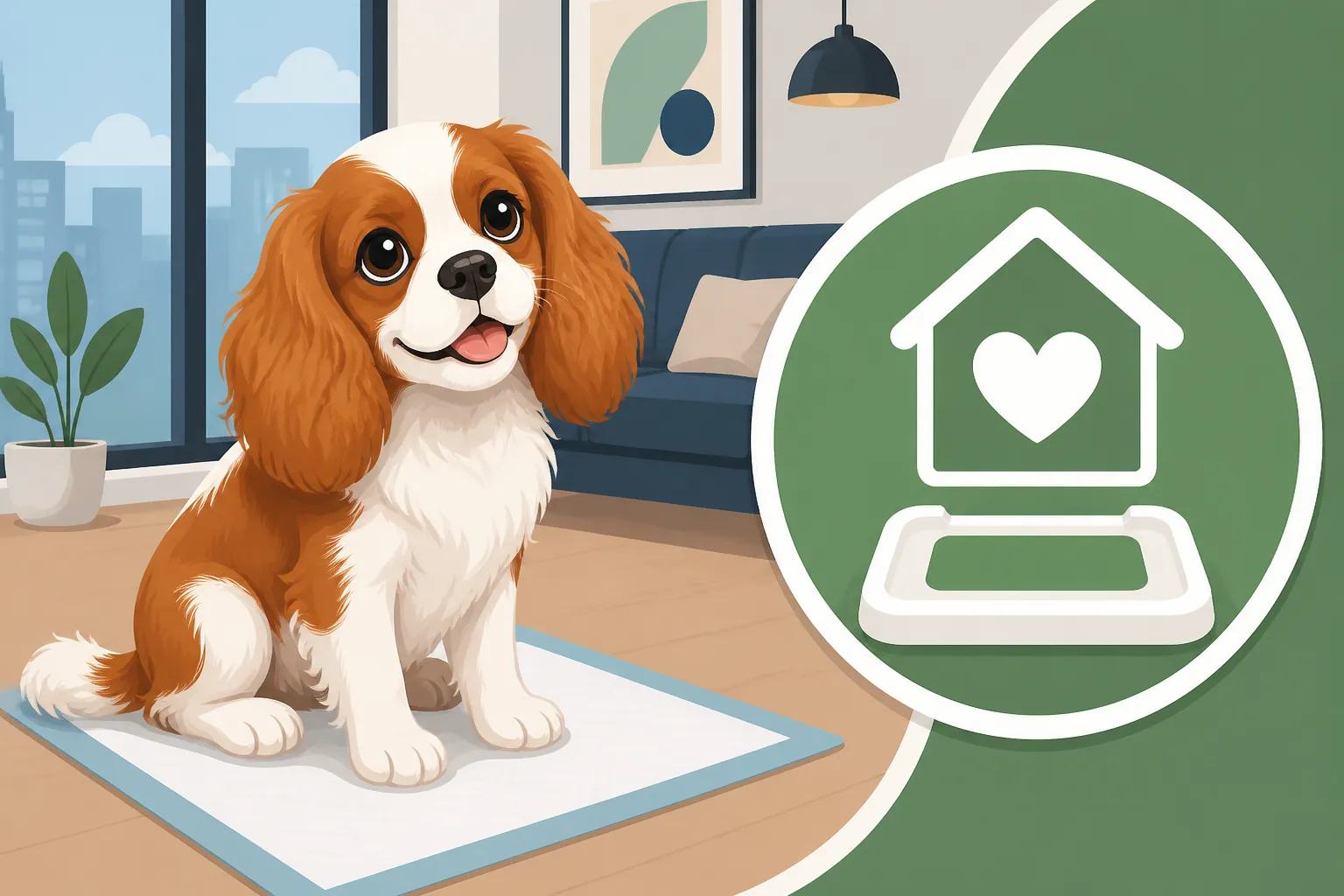
For indoor potty options, puppy pads are often the go-to for apartment dwellers. Place a few pads in a designated, easily accessible area, perhaps in a quiet corner away from their food and bed. Some owners opt for a more sophisticated indoor "grass patch" system, available on sites like Amazon, which can feel more natural for the dog and reduce plastic waste. The key is to teach your Cavalier that this specific indoor spot is also an acceptable place to go. You can even consider an online training program, like those from BAXTER & Bella, which often include modules on setting up effective indoor potty zones. Cavalier Puppy Pads and When to Stop offers more insights into transitioning away from pads later on.
The Power of Crate Training in an Apartment
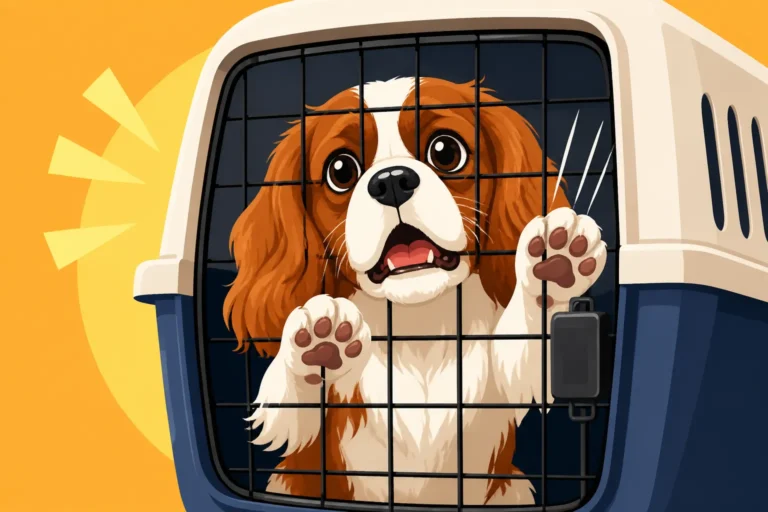
Crate training isn't just about giving your Cavalier a safe den; it's an invaluable tool for potty training, especially in an apartment setting. Dogs are naturally clean animals and instinctively avoid soiling their sleeping area. A properly sized crate – one where your Cavalier can stand up, turn around, and lie down comfortably, but not one large enough to establish a "bathroom corner" – leverages this natural instinct.
When your Cavalier is in their crate, they're less likely to have an accident. This allows you to manage their schedule more effectively. The moment they come out of the crate, it's time for an immediate potty break, whether that's outside or on their designated indoor pad. This creates a strong association: "Crate time means holding it, outside/pad time means going." The crate also provides a safe place for your puppy during those times you can't actively supervise them, preventing unsupervised accidents. Remember, the crate should never be used as punishment, but rather as a comfortable, secure den. If your Cavalier tends to panic in the crate, you might find Crate Training a Cavalier That Panics a helpful read.
Essential Cleaning Supplies for Accident Management
Let's face it: accidents will happen. It's part of the process, and getting upset about them only creates anxiety for your Cavalier and frustration for you. What's paramount is how you clean them up. Regular household cleaners might remove the visible stain and smell for humans, but a dog's keen sense of smell can still detect residual odors, which act like a "go here again" signpost.
Invest in a high-quality enzymatic cleaner. Brands like Nature's Miracle or Rocco & Roxie (easily found on Amazon) are formulated to break down the biological matter in urine and feces, completely eliminating the odor. Keep paper towels or dedicated cleaning cloths, gloves, and your enzymatic cleaner readily accessible. When an accident occurs, blot up as much of the mess as possible, then douse the spot with the enzymatic cleaner and let it sit according to the product's instructions before wiping it clean. This thorough cleaning prevents your Cavalier from being drawn back to the same spot, helping them understand that indoors is not the toilet.
The Step-by-Step Apartment Potty Training Plan for Your Cavalier
Potty training an apartment-dwelling Cavalier is all about consistency, positive reinforcement, and a clear routine. It might feel like you're constantly monitoring them, but this intense initial period pays off with a well-trained companion.
Establishing a Predictable Potty Schedule
Consistency is king. Cavaliers thrive on routine, and a predictable schedule helps them learn when and where they're expected to relieve themselves. For a young puppy, this means taking them out (or to their indoor potty spot) very frequently.
Here's a general guideline for a puppy schedule, which you'll adjust as your Cavalier gets older:
| Time of Day | Activity | Potty Break Location |
|---|---|---|
| 6:00 AM | Wake up, immediate potty break | Outdoor/Indoor Pad |
| 6:15 AM | Breakfast | N/A |
| 6:30 AM | Post-meal potty break | Outdoor/Indoor Pad |
| 6:45 AM | Playtime/Supervised free time | N/A |
| 7:30 AM | Potty break | Outdoor/Indoor Pad |
| 7:45 AM | Crate time / Nap | N/A |
| 9:30 AM | Wake up, immediate potty break | Outdoor/Indoor Pad |
| 9:45 AM | Playtime/Training | N/A |
| 10:30 AM | Potty break | Outdoor/Indoor Pad |
| 10:45 AM | Crate time / Nap | N/A |
| 12:30 PM | Wake up, immediate potty break | Outdoor/Indoor Pad |
| 12:45 PM | Lunch | N/A |
| 1:00 PM | Post-meal potty break | Outdoor/Indoor Pad |
| 1:15 PM | Playtime/Supervised free time | N/A |
| 2:00 PM | Potty break | Outdoor/Indoor Pad |
| 2:15 PM | Crate time / Nap | N/A |
| 4:00 PM | Wake up, immediate potty break | Outdoor/Indoor Pad |
| 4:15 PM | Playtime/Walk | N/A |
| 5:00 PM | Potty break | Outdoor/Indoor Pad |
| 5:30 PM | Dinner | N/A |
| 5:45 PM | Post-meal potty break | Outdoor/Indoor Pad |
| 6:00 PM | Playtime/Cuddle Time | N/A |
| 7:00 PM | Potty break | Outdoor/Indoor Pad |
| 8:00 PM | Last potty break before bed | Outdoor/Indoor Pad |
| 9:00 PM | Bedtime | N/A |
Remember to take your Cavalier out immediately after waking up, after eating or drinking, and after playing. This schedule will be quite intense at first, especially for young puppies, but it's crucial for building good habits. As they mature, you can gradually increase the time between breaks. For night waking, which is common in young puppies, check out Night Waking in a Cavalier Puppy for more tips.
Rewarding Success and Positive Reinforcement
Positive reinforcement is the most effective way to train a Cavalier. They are eager to please and respond beautifully to praise and treats. Every single time your Cavalier successfully goes potty in the designated spot – whether it's outdoors or on an indoor pad – you need to throw a party!
As soon as they finish, immediately offer a high-value treat (something they love and only get for potty success) and enthusiastic verbal praise ("Good potty!"). This instant reward creates a clear link in their mind: "Going here makes my human happy and gives me delicious things!" The timing is critical; if you wait even a few seconds, they might not associate the reward with the act of peeing or pooping. Avoid scolding or punishing your Cavalier for accidents. They don't understand why you're angry, only that you're angry, which can lead to them hiding their accidents or becoming fearful of going potty in front of you. Focus on rewarding the desired behavior instead. If you're looking for more general training tips, Reward-Based Training With a Cavalier is an excellent resource.
Dealing with Accidents in the Apartment
No matter how diligent you are, accidents will happen, especially in an apartment. It's part of the process, and how you react makes all the difference. If you catch your Cavalier in the act of having an accident indoors, interrupt them gently. Make a sudden noise (like a clap) to get their attention, then immediately scoop them up and rush them to their designated potty spot (outdoor or indoor pad). If they finish going there, praise and reward them lavishly.
If you discover an accident after the fact, simply clean it up thoroughly with an enzymatic cleaner. Do not scold your Cavalier; they won't understand what they did wrong. Your focus should be on prevention:
- Supervision: Keep a close eye on your Cavalier, especially during their free time. Use a leash indoors to keep them tethered to you, or use a baby gate to confine them to a puppy-proofed area.
- Crate Time: When you can't supervise, use the crate.
- Frequent Breaks: Stick to your schedule, and when in doubt, take them out!
Remember that Accidents in a House-Trained Cavalier can sometimes signal underlying health issues, so if accidents become frequent after a period of success, a vet visit is a good idea.
Transitioning from Puppy Pads to Outdoor Only
For many apartment dwellers, puppy pads are a lifesaver in the early stages. However, the ultimate goal is usually for your Cavalier to go potty exclusively outdoors. This transition needs to be gradual and thoughtful.
- Move the Pad: Once your Cavalier is consistently using the indoor pad, gradually move it closer to the door over several days. A few feet at a time.
- Move the Pad Outside: Once the pad is right by the door, start taking it outside to the designated potty spot. Your Cavalier is already used to the smell and texture of the pad, which can encourage them to go in the new location.
- Phase Out the Pad: Once they're consistently using the pad outdoors, start cutting down the size of the pad. First, half the pad, then a quarter, until it's just a small square. Eventually, you can remove it entirely, and they should be accustomed to going in that spot.
- Reinforce Outdoor Success: During this transition, maximize positive reinforcement for outdoor potty breaks. Make those rewards extra special. If you're still using an indoor option, only offer medium-value treats for indoor success and high-value treats for outdoor success.
This process can take time, and setbacks are normal. Don't rush it, and always be prepared to go back a step if needed.
Troubleshooting Common Potty Training Hurdles in Apartments
Even with the best plan, potty training your Cavalier in an apartment will likely present a few challenges. Don't get discouraged! These issues are common, and with patience and persistence, you can overcome them.
Dealing with Potty Training Regression
It's frustrating when your Cavalier, who was doing so well, suddenly starts having accidents indoors again. This is called regression, and it's a common part of puppy development or can be triggered by changes in routine or environment.
- Rule out medical issues: First, a sudden increase in accidents warrants a vet visit to ensure there isn't a urinary tract infection or other medical problem.
- Revisit the basics: If medically cleared, go back to square one. Increase the frequency of potty breaks, enhance supervision (leash your Cavalier to you indoors), and re-implement strict crate time when you can't watch them.
- Evaluate consistency: Has your schedule slipped? Are you rewarding every success? Are you cleaning accidents thoroughly with enzymatic cleaner? Any lapse in consistency can lead to regression.
- Consider life changes: Did you move, change your work schedule, or introduce a new pet? Stress or changes can temporarily set back training. Be patient and reassuring.
Sometimes, a Cavalier might also display changes in behavior if they are experiencing pain, which could manifest as reluctance to move to their potty spot or sudden accidents. A Cavalier That Yelps When Picked Up could be related to physical discomfort rather than a training issue.
When Your Cavalier "Holds It" or Gets Distracted
Some Cavaliers, especially those in busy apartment complexes, might get so distracted by the sounds, smells, or other dogs in the outdoor potty area that they refuse to go. Then, the moment you get back inside, whoops!
- Find a quieter spot: If possible, identify a quieter, less stimulating area outdoors where your Cavalier can focus. Even a less exciting corner of the designated dog run can make a difference.
- Give them time and space: Don't rush them. Stand still and let them sniff around. Many dogs need a few minutes to "get in the zone." Bring a book or your phone, but try not to engage with your Cavalier too much until they've done their business.
- "Potty command": Consistently use a specific phrase like "Go potty" or "Do your business" every time you take them out. Say it as they are eliminating, and eventually, the phrase will become a cue that prompts them to go.
- Bring a familiar scent: If you use an indoor pad, sometimes bringing a soiled piece of the pad outdoors can encourage them to go in the new spot because it already smells like their toilet.
- Limit distractions on the way: If the elevator or hallway is too stimulating, try to make the trip as quick and uneventful as possible. Don't allow greetings with other dogs or people until after the potty break is complete.
Tackling Nighttime Potty Issues
Nighttime can be a challenging time for apartment potty training. A young puppy simply can't hold it all night long, and even older dogs might need a middle-of-the-night break.
- Last call: Ensure a very late-night potty break right before you go to bed. Even if it's just ten minutes after your last regular break, it can make a difference.
- Water cut-off: Stop giving your Cavalier water about 2-3 hours before bedtime. Just make sure they've had plenty of access throughout the day.
- Midnight breaks: For young puppies, set an alarm for a middle-of-the-night potty break. Carry your puppy to their spot, keep it quiet and business-like, and then immediately back to the crate. No play, no fuss. Gradually extend the time between these breaks.
- Clean bedding: Ensure their crate bedding is clean and dry. A wet bed will encourage them to soil it again.
- Location: If possible, keep the crate in your bedroom initially. This allows you to hear if your Cavalier wakes up and whines to go out.
Remember, patience is key here. As your Cavalier matures, their bladder capacity will increase, and they'll naturally be able to hold it longer through the night.
When to Seek Professional Help
If you've been consistent, patient, and followed all the steps, but your Cavalier is still having frequent accidents, it might be time to bring in professional help.
- Veterinarian check-up: As mentioned, persistent accidents should always trigger a visit to the vet first. Rule out any medical conditions like a UTI, bladder stones, or even conditions like Episodic Falling Syndrome in a Cavalier which could cause them to lose control.
- Certified dog trainer or behaviorist: If your Cavalier gets a clean bill of health, consult a certified professional dog trainer or a veterinary behaviorist. They can observe your Cavalier's behavior, assess your training methods, and provide personalized strategies tailored to your specific apartment environment and your Cavalier's personality. They can help identify subtle cues you might be missing or suggest alternative approaches.
- Online resources: Reputable online training academies can also offer valuable guidance. Programs like BAXTER & Bella provide comprehensive video lessons and support that can be particularly useful for apartment dwellers facing unique challenges. Sometimes an outside perspective is exactly what you need to break through a plateau.
Don't view seeking help as a failure. It's an investment in your Cavalier's well-being and your peace of mind, ensuring a happy, healthy, and reliably house-trained companion in your apartment home.
Disclaimer
This article is for general informational purposes only and does not constitute professional advice. Laws, prices and regulations vary by location and change over time. Consult a qualified professional for guidance on your specific situation.