Cavalier Puppy Pads and When to Stop
Bringing home a Cavalier puppy is an absolute joy, filled with cuddles and tiny tail wags, but it also comes with the undeniable reality of tiny bladders and frequent accidents. Many new Cavalier parents understandably turn to puppy pads as a seemingly simple solution to manage those early potty breaks indoors, hoping to spare their floors and sanity. This guide will walk you through the nuances of using puppy pads for your beloved Cavalier, from setting them up effectively to the crucial moment of phasing them out for a fully outdoor-trained companion, helping you navigate this common puppy challenge with grace and patience.
The Lure of Puppy Pads for Cavalier Owners
It's completely understandable why puppy pads become a go-to for so many new Cavalier families. When you're staring down a tiny, adorable fluffball that seems to need to relieve itself every twenty minutes, the idea of having a designated, absorbent spot indoors can feel like a genuine lifesaver. But while they offer immediate convenience, it's important to understand both the initial appeal and the potential long-term pitfalls.
Why Pads Seem Like a Lifesaver for Tiny Puppies
Let's face it, a Cavalier puppy is small, and their internal plumbing is even smaller. They can't hold it for long, especially when they're very young. Imagine trying to rush a tiny eight-week-old puppy outside every single time they wake up, eat, or have a burst of play. For those living in apartments on higher floors, or during inclement weather like pouring rain or freezing snow, the thought of bundling up and heading out repeatedly can be exhausting. Puppy pads offer a controlled environment where you can teach your puppy to go in an acceptable place without the immediate pressure of making it all the way outside. They can be particularly useful when you're still building Cavalier Puppy Toilet Training Indoors habits.
The convenience is undeniable. You place the pad, guide your puppy to it, and theoretically, your floors remain pristine. This reduces stress for both you and your puppy during those demanding first few weeks. It allows you to focus on other aspects of bonding and early training, knowing that at least one major hurdle has a temporary workaround. For busy households, or those working from home but needing to manage calls and tasks, pads provide a bit of breathing room. They are also a reasonable interim solution if your puppy hasn't had all their vaccinations yet and isn't safe to be on public ground outdoors.
The Downsides of Long-Term Pad Reliance
While the initial appeal is strong, relying on puppy pads for too long can create significant challenges. The biggest issue is that you're essentially teaching your Cavalier that it's perfectly acceptable to relieve themselves indoors. While the pad itself is a specific spot, your puppy might not distinguish between the pad and other similar-looking surfaces once the habit is ingrained. I've seen Cavaliers who, after extended pad use, start thinking bath mats, rugs, or even piles of laundry are fair game. This can lead to frustrating Accidents in a House-Trained Cavalier later on.
Furthermore, long-term pad use can delay the crucial step of fully outdoor potty training. Your Cavalier becomes accustomed to the ease and accessibility of an indoor option, making the transition to waiting to go outside feel like a bigger imposition. This can also lead to hygiene issues; pads need to be changed frequently to prevent smells and ensure your Cavalier isn't stepping in their own mess. Over time, the cost of constantly replenishing pads can add up, and the environmental impact of disposable products is also a consideration for some owners. It's a habit you introduce for convenience, but it can quickly become a habit you desperately want to break.
How to Introduce and Use Puppy Pads Effectively (If You Must)
If you've decided puppy pads are a necessary bridge to outdoor training, the key is to use them strategically and with a clear exit plan. It's not just about tossing a pad on the floor; it's about making it a designated, temporary "potty zone" that helps, rather than hinders, your ultimate goal.
Setting Up a Dedicated "Potty Zone"
When you first bring your Cavalier puppy home, establish a very clear, consistent "potty zone." This should be an area away from their eating and sleeping spots, but still easily accessible. A laundry room, a quiet corner of the kitchen, or a designated space within a puppy pen are good options. Place the puppy pad, or several pads if your area is larger, securely on the floor. Consistency is paramount – once you've chosen a spot, stick to it. Don't move the pad around haphazardly, as this will confuse your tiny pup.
Consider the type of pad you're using. There's a wide variety available, and you can easily find different options on Amazon. Some are scented to attract puppies, though this isn't always necessary. Others are extra absorbent or have sticky tabs to prevent them from sliding around, which can be helpful if your Cavalier puppy tends to play with the pad. For very young puppies or those prone to missing the pad, you might even consider a puppy pad holder or a washable pad system which can be more eco-friendly and cost-effective in the long run. The goal is to make it an obvious and unchanging target for your Cavalier's potty needs.
Guiding Your Cavalier to the Pad
The magic happens through vigilant supervision and positive reinforcement. Take your Cavalier puppy to the pad very frequently, especially after waking up, within 15-20 minutes of eating or drinking, and after periods of play. Look for signs that your puppy needs to go: circling, sniffing, suddenly stopping play, or heading towards a secluded spot. The moment you see these cues, gently pick up your puppy and place them on the pad. Don't scold them if they have an accident elsewhere – just clean it up thoroughly and remind yourself to be even more vigilant next time.
When your Cavalier successfully uses the pad, lavish them with praise and offer a small, high-value treat immediately. Make it a celebration! The timing of the reward is crucial; it needs to happen while they are still on the pad or just stepping off it, so they clearly associate the act of going on the pad with something positive. This Reward-Based Training With a Cavalier approach is much more effective than punishment, which can simply teach your puppy to hide their potty breaks from you. Continue this consistent guidance and positive reinforcement until your Cavalier reliably uses the pad on their own.
The Transition: When and How to Phase Out Puppy Pads
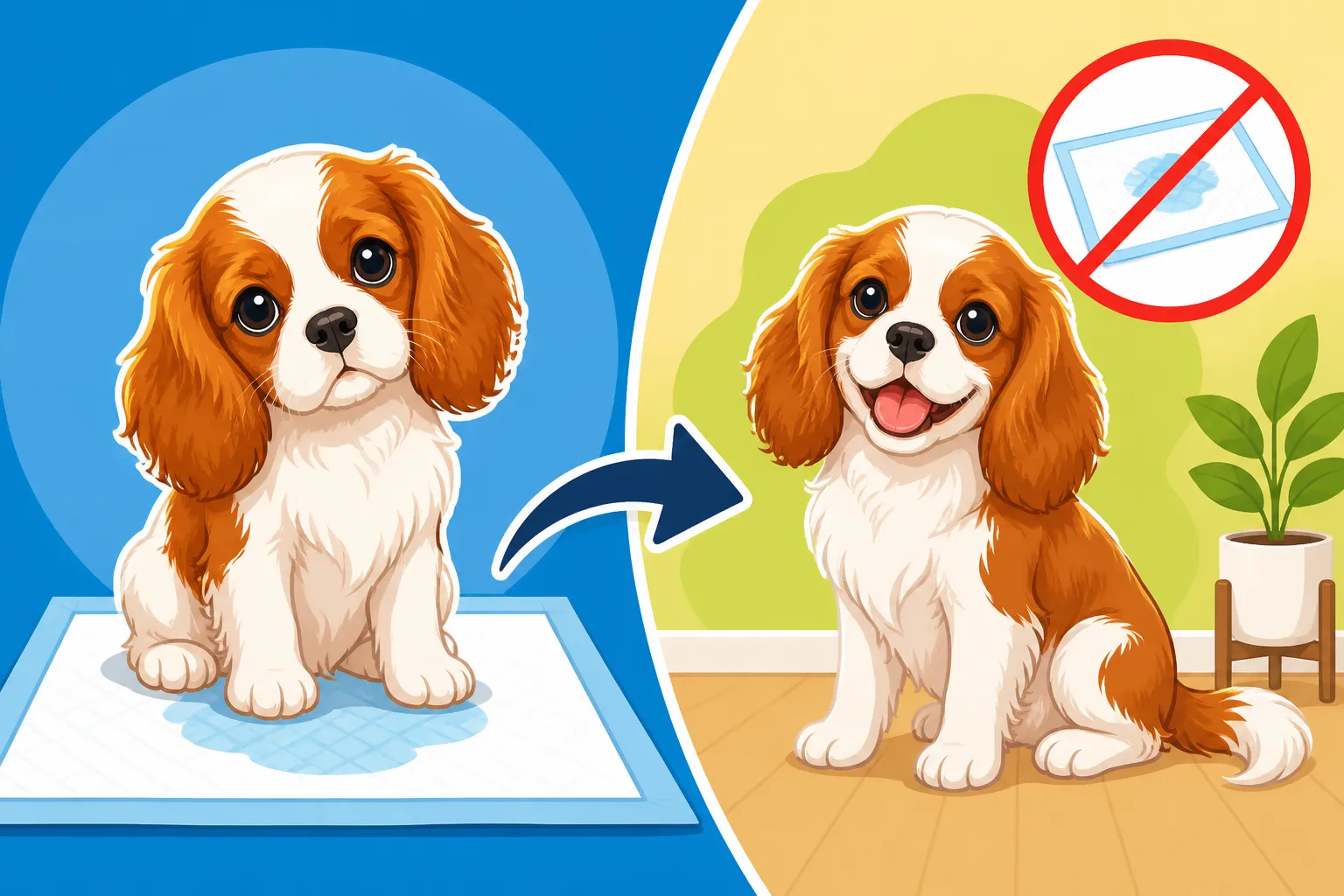
The ultimate goal for most Cavalier owners is to have a dog that reliably potties outdoors. Once your Cavalier has mastered the puppy pad, the next phase is critical: weaning them off the pads and onto the grass. This transition requires patience, consistency, and a clear understanding of your Cavalier's developing bladder control.
Recognizing Readiness for Outdoor-Only Training
Before you start phasing out pads, your Cavalier should be reliably using them. This means few to no accidents off the pad indoors. Look for signs of improved bladder control, such as longer stretches between potty breaks, especially overnight. While every Cavalier is different, most puppies begin to have better bladder control around 12-16 weeks of age, though some might take longer. If your puppy is 16 weeks old and still having frequent accidents on the floor despite regular pad use, they might not be ready for the transition, or there might be an underlying issue to discuss with your vet.
Another key indicator is your Cavalier's ability to "hold it" for short periods. If they can wait for you to pick them up and carry them to the pad, they're developing the necessary control. You also want to ensure they are fully vaccinated and cleared by your vet for outdoor excursions to public areas. Once you're confident your Cavalier understands "potty on the pad" and has better physical control, you can begin the strategic shift to "potty outside." This might be a good time to revisit resources on Teaching a Cavalier Puppy Where to Toilet outdoors.
Gradual Reduction Strategies
The trick to phasing out pads is a gradual approach. Don't just remove them cold turkey. Start by slowly moving the pad closer to the door you want your Cavalier to use for outdoor potty breaks. Move it a foot or two each day, or every couple of days, depending on your puppy's comfort level. The idea is to associate the pad with the exit point. Once the pad is right by the door, you can start taking it outside.
Initially, place the pad just outside the door, in the spot where you want them to go. Continue to take your Cavalier to this outdoor pad frequently, praising them enthusiastically when they use it. Over a few days, you can start making the pad smaller – perhaps cutting it in half, then a quarter. Eventually, you'll remove the physical pad altogether, but the association with that specific outdoor spot remains. This gentle reduction helps your Cavalier adapt without feeling suddenly abandoned by their familiar indoor potty spot. Simultaneously, you should be taking your Cavalier out for outdoor potty breaks as often as you were taking them to the pad indoors, ensuring that going outside is always the preferred and rewarded option.
Managing Setbacks and Accidents During the Transition
It's almost guaranteed that you'll encounter a few setbacks during this process, and that's perfectly normal. Your Cavalier has been taught to go inside, and breaking that habit takes time and patience. If your Cavalier has an accident indoors after you've started phasing out pads, resist the urge to get frustrated or angry. This will only make your puppy anxious and potentially fearful of going near you. Instead, calmly clean up the mess with an enzymatic cleaner to remove any odors that might attract them back to the same spot.
Think about why the accident happened. Did you push the transition too quickly? Did you miss their cues? Did you not take them out often enough? Go back a step in your training. If you removed the pad, put a smaller one back near the door. If you moved it too far, bring it closer. Re-establish consistency and rebuild their confidence. This isn't a race; it's about setting your Cavalier up for long-term success. Remember, they aren't trying to spite you; they're just communicating what they've learned or what their body needs. Consistency with their outdoor routine, even if they're having an indoor accident, is key to helping How Fast a Cavalier Puppy Learns to Ask Outside.
Establishing a Solid Outdoor Potty Routine for Your Cavalier
Ultimately, the goal is for your Cavalier to confidently and reliably do all their business outside. This requires establishing a robust, consistent outdoor routine and reinforcing it positively. It’s about building a healthy habit that will serve both of you for years to come.
The Importance of a Consistent Schedule
Cavaliers thrive on routine, and potty training is no exception. Set a consistent schedule for taking your Cavalier outside. This should include:
- Immediately upon waking up in the morning.
- After every meal and drink.
- After every nap.
- After every play session.
- Before bedtime.
- At least every 2-3 hours during the day for young puppies, gradually increasing as they gain bladder control.
Take your Cavalier to the same spot in the yard each time, if possible. This helps them associate that specific area with potty time. Keep these initial potty trips boring and focused. Don't turn it into a play session until they've done their business. Once they've gone, then you can reward them and allow for a short play or sniff-around time, making the outdoor experience even more positive. This structure helps them understand that "outside" first means "potty time," then "fun time." Night Waking in a Cavalier Puppy often means a potty trip is needed, so stick to the schedule even then.
Positive Reinforcement for Outdoor Success
Every single time your Cavalier successfully potties outside, it’s a moment to celebrate! Praise them enthusiastically with a happy, high-pitched voice – "Good potty, Fido!" – and immediately give them a special, high-value treat that they only get for outdoor potty success. Think tiny pieces of cooked chicken, cheese, or specialized training treats. The speed and quality of the reward are crucial for them to make the connection.
Some owners find great success with comprehensive online puppy training programs. Companies like BAXTER & Bella, for example, often emphasize positive reinforcement and structured training modules that can guide you through not just potty training but many other foundational behaviors. These programs can be incredibly helpful for owners who want a clear, step-by-step plan for building good habits in their Cavaliers. The more positive and rewarding you make outdoor potty breaks, the faster your Cavalier will choose to do their business there.
Troubleshooting Common Potty Training Challenges
Even with the best intentions, you might hit a few snags. Your Cavalier might get distracted outside, sniffing every blade of grass instead of doing their business. In this case, keep them on a short leash, guide them to their usual potty spot, and stand still. Use a consistent potty cue word, like "go potty" or "do your business," and only praise and reward when they perform the action. If they don't go after a few minutes, bring them inside and try again in 10-15 minutes, supervising them closely during that time to prevent indoor accidents.
Weather can also be a challenge. Some Cavaliers absolutely despise rain or cold. For these pups, invest in a good waterproof jacket or a small umbrella to make the experience more comfortable. Don't give in and let them potty indoors just because of the weather; this will undo all your hard work. Patience and persistence are your greatest tools here. Remember that occasional regressions are normal, especially during developmental stages like The Cavalier Adolescent Months. Just go back to basics, reinforce the routine, and maintain a positive attitude.
| Feature | Puppy Pads (Temporary Use) | Outdoor Potty Training (Long-Term Goal) |
|---|---|---|
| Initial Convenience | High (easy access, quick solution) | Moderate (requires immediate trips outside) |
| Learning Curve | Easier to teach for young puppies | Requires more bladder control and environmental adaptation |
| Hygiene | Requires frequent changing, can be messy if missed | Generally cleaner, no indoor waste |
| Cost | Ongoing expense for disposable pads | Minimal direct cost (treats for rewards) |
| Environmental Impact | Creates waste (unless using washable pads) | Low environmental impact |
| Long-Term Habit | Can create confusion about indoor vs. outdoor potty | Establishes clear distinction for appropriate potty areas |
| Flexibility | Useful for emergencies, travel, or apartment living | Best for overall house-training and consistent routine |
| Owner Effort | High vigilance, pad placement, quick cleanup | High vigilance, frequent outdoor trips, consistent rewards |
Disclaimer
This article is for general informational purposes only and does not constitute professional advice. Laws, prices and regulations vary by location and change over time. Consult a qualified professional for guidance on your specific situation.