A Cavalier That Cries in Another Room
That mournful cry coming from the next room, or even just the other side of a baby gate, can absolutely tug at your heartstrings when you own a Cavalier King Charles Spaniel. You want your sweet companion to feel secure, not distressed, but you also need a moment to yourself without the soundtrack of sadness. This guide will dive deep into why your Cavalier might be vocalizing when they're not right by your side and offer practical, empathetic steps you can take to foster a sense of calm and independence, helping them understand that being alone isn't scary.
Understanding Why Your Cavalier Cries When Alone
It’s easy to dismiss a dog’s crying as simply wanting attention, but for a Cavalier, there's often a much deeper, more instinctual reason behind it. Understanding the root cause is the first step toward finding a solution that truly helps your furry friend.
The Deep-Rooted Need for Proximity
Cavaliers were bred for centuries to be ultimate companion dogs, literally "lap warmers" for royalty. Their entire historical purpose revolves around close human companionship. This isn't just a preference; it's ingrained in their genetic makeup. They thrive on being near their people, feeling secure in your presence. When that physical connection is broken, even by a wall or a closed door, it can trigger a natural response to seek you out. Many owners lovingly refer to their Cavaliers as "Velcro dogs" for a reason, and if you read Why Cavaliers Are Called Velcro Dogs, you'll quickly understand just how fundamental this trait is to the breed. It means their desire for proximity isn't a flaw, but a characteristic we need to work with, not against.
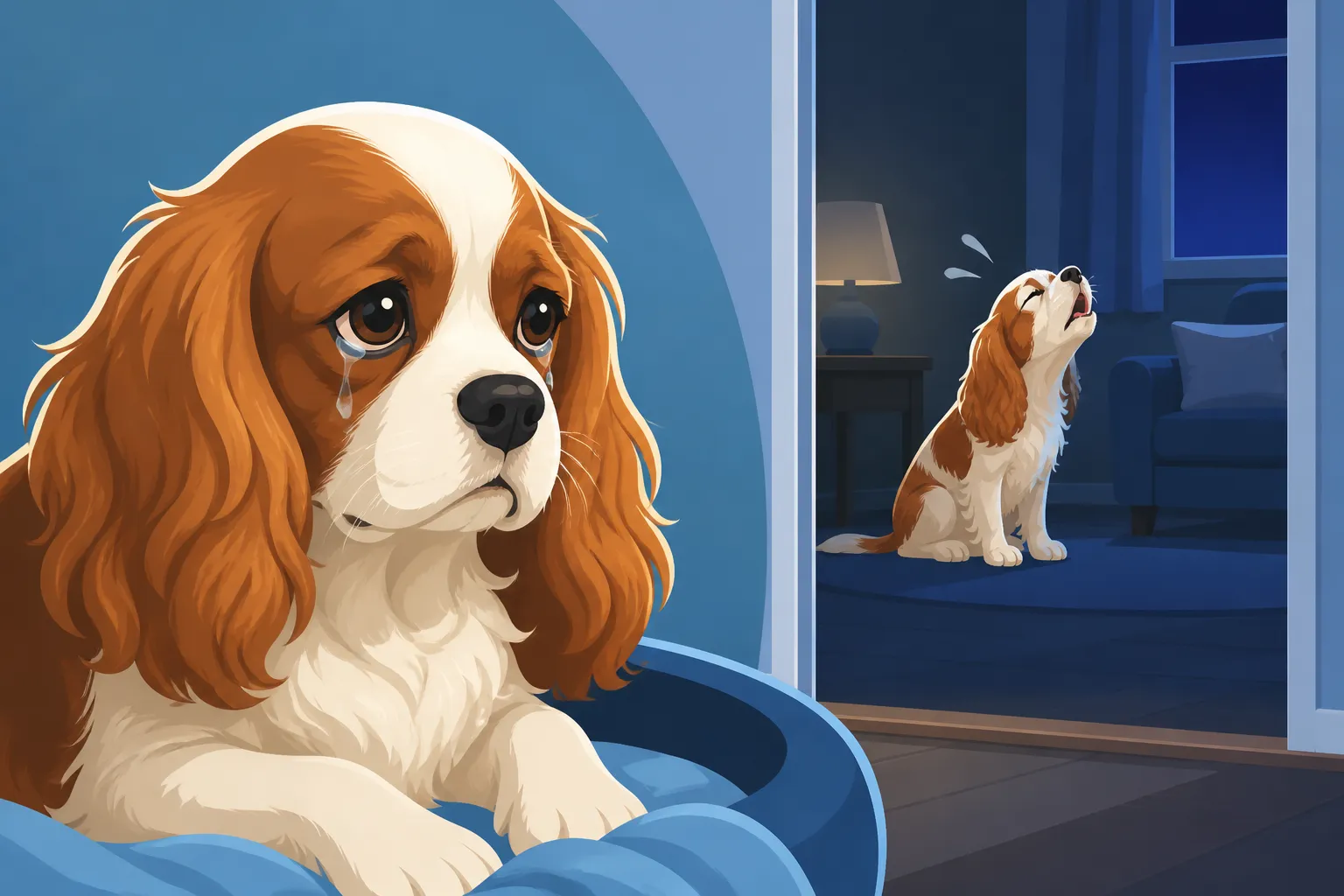
Imagine your Cavalier, nestled comfortably beside you one moment, then suddenly finding themselves in a quiet, empty room. To them, this isn't just a temporary change; it can feel like a sudden loss of their security blanket. Their crying is often an expression of this innate need to re-establish contact and ensure they haven't been abandoned. It’s their way of asking, "Where are you? Are you still there? Please come back!" This is a legitimate feeling for them, not just a ploy.
Separation Anxiety Versus Learned Behavior
This distinction is absolutely critical when your Cavalier cries from another room. Are they truly experiencing panic and distress, or have they learned that crying brings you back?
- True Separation Anxiety: If your Cavalier is suffering from separation anxiety, their crying is just one symptom. You might also notice destructive chewing (especially around exits like doors or windows), pacing, excessive drooling, panting, or even toileting accidents specifically when left alone. These behaviors are not malicious; they are outward manifestations of extreme distress and panic. A Cavalier suffering from true separation anxiety isn't trying to be "bad"; they are genuinely terrified of being abandoned. This level of distress often manifests even when you're just in the next room, out of sight. You might hear A Cavalier That Howls the Moment You Leave or even before you physically exit the home. This isn't something they can simply "get over" without targeted, gentle intervention.
- Learned Behavior: On the other hand, many Cavaliers learn that a little whimper or bark from another room will instantly summon their beloved human. Perhaps you’ve responded in the past, rushing in to reassure them, not realizing you were inadvertently teaching them that crying is an effective communication tool for getting you to appear. This is incredibly common and completely understandable – who can resist a sad Cavalier face or a mournful cry? However, if the crying is the only symptom, and your Cavalier settles quickly once you reappear or isn't displaying other signs of panic, it's more likely a learned behavior. They're smart, and they've figured out how to get your attention.
It's vital to observe your Cavalier closely. What else do they do when you leave the room? Do they eventually settle if you don't respond? Does the crying escalate to frantic scratching at the door? The answers will help you tailor your approach.
Environmental Factors and Triggers
Sometimes, the crying isn't just about your absence, but about what they perceive in their immediate environment.
- Noise and Unfamiliar Sounds: A sudden loud noise outside, the mail carrier's approach, or even just the unfamiliar creaks and groans of an empty house can be unsettling for a sensitive Cavalier. If they're alone in a room and hear something alarming, their natural instinct is to vocalize and seek protection from their primary caregiver – you. This isn't necessarily separation anxiety, but a fear response that your presence usually alleviates.
- Recent Changes: Cavaliers are creatures of habit. A recent move to a new home, a change in your work schedule, the arrival of a new family member (human or pet), or even just rearranging furniture can throw them off balance. These changes can make them feel insecure and more prone to vocalizing when they find themselves alone in a different space. They rely on predictability, and disruptions can heighten their need for reassurance.
- Discomfort or Physical Needs: While less common, sometimes crying can indicate a physical need. Is their bladder full? Are they too hot or too cold? Is their bed uncomfortable? Is there an underlying pain or discomfort that they can't express otherwise? It’s always worth ruling out a simple physical need before assuming it's purely behavioral. For an older Cavalier, especially, subtle pains can make them more clingy and vocal.
Strategies to Build Independence and Quiet
Once you have an idea of why your Cavalier might be crying, you can start implementing strategies to help them feel more secure and less reliant on your constant physical presence. The key is patience, consistency, and positive reinforcement.
Gradual Desensitization and Counter-Conditioning
This is the cornerstone of helping your Cavalier feel comfortable in another room. The goal is to gradually expose them to your absence in tiny, manageable steps, pairing it with positive experiences.
- Tiny Absences: Start by simply stepping just out of sight for a second or two, then returning. Don't make a big fuss when you leave or return. The moment your Cavalier is quiet, even for a breath, step back in. Slowly, slowly increase the duration. This might mean progressing from 2 seconds to 5, then 10, then 30, and so on. The goal is for them to experience your return before they even have a chance to get distressed. If they start to cry, you've gone too far, too fast. Reset to a shorter duration where they were successful. This process is detailed further in Building a Cavalier's Tolerance for Being Left.
- High-Value Rewards: During these brief absences, give them something amazing to distract them and associate alone time with good things. A stuffed KONG with frozen peanut butter or a puzzle toy filled with their favorite treats works wonders. These aren't just toys; they're positive anchors. Make sure these special treats only come out when they are alone in that room.
- Neutral Departures: When you do leave the room, keep your goodbyes low-key or non-existent. Overly emotional goodbyes can heighten their anxiety. Similarly, when you return, wait until they are calm before acknowledging them. This teaches them that your departures and returns are routine, not a dramatic event. More on this can be found in Departure Routines That Calm a Cavalier.
Creating a "Safe Zone"
Your Cavalier needs a designated space where they feel secure and comfortable, especially when you're not right there. This could be a cozy crate, a pen, or even just a specific bed in a quiet corner.
- The Crate as a Den: If your Cavalier is crate-trained, ensure their crate is a comforting haven. It should be just large enough for them to stand, turn around, and lie down comfortably. Fill it with soft bedding, a familiar blanket, and a favorite chew toy. Never use the crate for punishment. The idea is that it’s their safe, private den, not a place of confinement. Choosing a Crate a Cavalier Will Rest In offers excellent advice on making this space inviting.
- Playpen Power: For Cavaliers who prefer a bit more space, a sturdy playpen can offer a secure area without feeling as enclosed as a crate. Again, furnish it with a comfy bed, fresh water, and engaging toys. This can be particularly useful if you need them contained but visible from a distance, such as in a living room while you're in the kitchen.
- Positive Association: Always make the "safe zone" a positive place. Feed them meals there, offer special treats, and encourage them to relax in it when you're home. The more good things happen in that space, the more they will associate it with comfort and safety, reducing the urge to cry when left there.
Interactive Toys and Mental Stimulation
A bored Cavalier is more likely to cry for attention. Mental exercise can be just as tiring as physical exercise and helps redirect their energy.
- Puzzle Toys: These are fantastic for keeping a Cavalier occupied. Toys that dispense treats as your dog manipulates them (like a KONG Wobbler or snuffle mat) provide mental stimulation and make them "work" for their food. You can find a wide variety of these on platforms like Amazon, from simple treat balls to more complex puzzles. Introducing these before you leave the room, or as you leave, can create a positive association with your absence.
- Chew Toys: High-quality, safe chew toys can satisfy their natural urge to chew and provide a calming outlet. Look for durable chews appropriate for their size that won't splinter or be easily swallowed. Again, Amazon has a vast selection, but always check reviews for safety and suitability for Cavaliers.
- Rotate Toys: Keep a selection of toys and rotate them regularly to maintain novelty and interest. A toy that's "new" again after a week or two will hold their attention better than one they see every day.
Creating a Safe and Soothing Environment for Your Cavalier
Beyond direct training, the overall environment you create can significantly impact your Cavalier's ability to cope with being in another room.
The Power of Routine
Cavaliers thrive on predictability. A consistent daily schedule helps them understand what to expect, reducing anxiety and uncertainty.
- Predictable Schedule: Try to keep feeding times, potty breaks, exercise, and playtime at roughly the same times each day. When your Cavalier knows that a walk always follows breakfast, or that a quiet rest time always happens after your morning coffee, they feel more secure. This structure provides comfort, even when you're not in the same room.
- Wind-Down Before Alone Time: Before you plan to leave them in another room, ensure they’ve had adequate physical and mental exercise. A good walk, some playtime, and a potty break will leave them more likely to settle down and rest, rather than pace and cry. A tired Cavalier is often a quiet Cavalier.
Calming Aids and Environmental Enrichment
Sometimes, a little extra help can go a long way in creating a tranquil space for your Cavalier.
- Calming Music or White Noise: Leaving on a radio tuned to classical music, a specialized "dog calming" playlist, or a white noise machine can help mask household sounds or outdoor noises that might otherwise trigger your Cavalier's vocalizations. This consistent background noise can be very soothing.
- Pheromone Diffusers: Products like DAP (Dog Appeasing Pheromone) diffusers release synthetic pheromones that mimic those a mother dog produces to calm her puppies. These are odorless to humans but can have a calming effect on anxious dogs. Many owners find these available through veterinarians or on sites like Amazon, to be a subtle yet effective tool. You can learn more about general calming aids in Calming Supplements for an Anxious Cavalier.
- Comfort Items: An old t-shirt with your scent on it can provide immense comfort to a Cavalier. Place it in their bed or crate when you leave the room. The familiar scent acts as a proxy for your presence.
Considering a Pet Cam
A pet camera can be an invaluable tool for understanding what your Cavalier does when you're not in the room and provides insights you simply can't get otherwise.
- Real-Time Monitoring: Setting up a simple pet camera allows you to observe your Cavalier's behavior when you're out of sight. You can see if they are genuinely distressed, or if they settle after a few minutes of crying. This crucial information helps you distinguish between true anxiety and learned attention-seeking.
- Behavioral Insights: Does the crying start immediately, or after a few minutes? Do they chew on furniture, pace, or just sit by the door? This footage is also incredibly helpful if you decide to consult with a professional trainer or vet. Documenting these behaviors is key. Filming a Cavalier While You Are Out explains the benefits of this practice in more detail. Many affordable pet cameras with two-way audio and night vision are readily available on Amazon.
Teaching a "Place" Command
A "place" command gives your Cavalier a designated spot to go to and relax, regardless of where you are in the house.
- Designated Spot: Choose a comfortable mat or bed as their "place." Start by rewarding them heavily for simply going to and lying down on their mat. Use high-value treats to make it a super positive experience.
- Gradual Distance and Duration: Once they understand "place," start increasing the distance you move away and the duration they stay there. Begin with you sitting right next to the mat, then move to a few feet away, then across the room. Eventually, you can practice having them stay on their mat while you step into another room for short periods. The BAXTER & Bella online dog training program often incorporates "place" training as a fundamental skill for building independence and manners, making it a valuable resource. This skill directly ties into Teaching a Cavalier to Lie on a Mat Nearby.
| Behavior Observed | Likely Cause | Recommended Initial Strategy |
|---|---|---|
| Crying starts immediately, accompanied by pacing, drooling, destruction, or accidents | True Separation Anxiety | Consult vet, gradual desensitization, calming aids, professional help |
| Crying starts shortly after you leave the room, stops if you return, no other distress signs | Learned Attention-Seeking Behavior | Ignore crying, reward silence, consistent routine |
| Crying appears random or in response to external noises | Environmental sensitivity, fear response | White noise, calming music, secure "safe zone" |
| Crying is new, especially in an older Cavalier, with other subtle behavioral changes | Potential underlying medical issue or discomfort | Vet check-up to rule out pain or illness |
| Crying persists despite efforts, dog seems genuinely stressed | Moderate to Severe Separation Anxiety / Underlying issues | Professional behaviorist referral, veterinary assessment, potential medication |
When to Seek Professional Help and Medical Considerations
While many crying behaviors can be managed at home with consistent training and environmental adjustments, there are times when it’s best to bring in professional support.
Recognizing Red Flags for Severe Anxiety
If your Cavalier's crying is more than just a plea for attention and is accompanied by specific behaviors, it's a strong indicator of deeper anxiety that requires immediate attention.
- Destructive Behaviors: Chewing on doorframes, windowsills, or even attempts to escape their crate or pen. This isn't naughtiness; it's a frantic effort to reunite with you. A Cavalier That Chews Doorframes When Alone is a common, heartbreaking sign.
- Self-Harm: Excessive licking or chewing at their paws or other body parts, sometimes to the point of creating sores, can be a self-soothing mechanism that indicates extreme stress.
- Inappropriate Elimination: Urinating or defecating indoors, especially in unusual spots, only when left alone. If they are otherwise perfectly house-trained, this is almost certainly a stress response, not a potty training issue.
- Excessive Drooling and Panting: Even in a cool environment, if your Cavalier is excessively drooling or panting when left alone, it's a physiological sign of stress and panic.
- Panic at Your Departure Cues: If your Cavalier starts to show signs of panic (pacing, whining, trying to block your path) the moment you pick up your keys, put on your shoes, or grab your bag, they are anticipating your departure with dread.
These signs indicate that your Cavalier is not just "missing" you; they are experiencing significant psychological distress.
Consulting Your Veterinarian
Before you dive deep into behavioral training, especially if the crying is a new behavior or accompanied by other concerning symptoms, a visit to your veterinarian is crucial.
- Rule Out Medical Causes: Sometimes, crying can be a sign of physical pain or discomfort. An older Cavalier might be experiencing arthritis, dental pain, or other health issues that make them more anxious and less tolerant of being alone. Your vet can perform a thorough examination to rule out any underlying medical conditions.
- Discuss Calming Aids and Medication: If your vet confirms there's no medical cause, they can discuss options for calming supplements or, in more severe cases, prescription anti-anxiety medication. These medications aren't a "cure" but can help reduce your Cavalier's anxiety levels enough for behavioral modification techniques to be more effective. This can be especially relevant if you are considering Medication for Cavalier Separation Anxiety. They might also suggest specific diets or supplements that promote calm.
Working With a Certified Professional Dog Trainer or Behaviorist
For persistent or severe crying, especially if it's true separation anxiety, a professional can provide tailored guidance.
- Specialized Expertise: A certified professional dog trainer or veterinary behaviorist has experience diagnosing and treating separation-related behaviors. They can assess your Cavalier's specific situation, identify triggers, and develop a customized training plan that you might not be able to create on your own. They use positive reinforcement techniques, which are essential for sensitive breeds like Cavaliers. You'll want to avoid any methods that use punishment or fear, as these can severely damage your Cavalier's trust and worsen anxiety, as explained in Why Harsh Corrections Break a Cavalier.
- Step-by-Step Guidance: They will guide you through the desensitization process, often with video consultations, helping you understand how to adjust your approach based on your Cavalier's responses. They can help you implement strategies from platforms like BAXTER & Bella that focus on positive, confidence-building exercises.
- Building Confidence: The goal of a good trainer isn't just to stop the crying, but to build your Cavalier's confidence and ability to cope with your absence, transforming their emotional response rather than just suppressing a symptom.
Considering Daycare or Pet Sitters
For some Cavaliers, especially those with moderate to severe separation anxiety, completely resolving the issue can take a long time. In the interim, or as a long-term solution, external care options can provide relief.
- Doggy Daycare: A reputable doggy daycare can provide a stimulating and social environment for your Cavalier during the hours you need to be away. This ensures they are supervised, exercised, and engaged, rather than being distressed at home. Before enrolling, ensure the facility is clean, safe, and has staff experienced with small, sensitive breeds like Cavaliers. For more details, consider Whether Daycare Suits an Anxious Cavalier.
- Professional Pet Sitter or Walker: If daycare isn't an option, hiring a professional pet sitter to come to your home, or a dog walker to break up their day, can make a huge difference. They can provide companionship, potty breaks, and playtime, reducing the amount of time your Cavalier spends truly alone. Ensure any pet sitter is bonded, insured, and has positive references. This is especially important if your Cavalier needs medication for heart conditions or other health issues.
Ultimately, addressing a Cavalier that cries in another room requires empathy, patience, and a willingness to understand their unique needs as a companion breed. With consistent effort and, when necessary, professional guidance, you can help your Cavalier feel secure and content, even when they're not right by your side.
Disclaimer
This article is for general informational purposes only and does not constitute professional advice. Laws, prices and regulations vary by location and change over time. Consult a qualified professional for guidance on your specific situation.