Protecting a Small Cavalier From Off-Leash Dogs
It's a fear that keeps many Cavalier King Charles Spaniel owners awake at night: the sudden appearance of an uncontrolled, off-leash dog when you're out enjoying a walk with your beloved, often tiny, companion. The feeling of helplessness and terror as a larger dog barrels towards your vulnerable Cavalier is something no one should have to experience, yet it happens far too often. This guide is here to help you navigate this unsettling reality, offering practical strategies to protect your Cavalier and your peace of mind.
Understanding the Vulnerability of Your Cavalier
Our Cavaliers are such sweet, gentle souls, often completely oblivious to danger, which makes them incredibly vulnerable to aggressive or even just overzeexuberant dogs. It's not about being dramatic; it's about acknowledging the very real risks they face when an uncontrolled dog approaches.
Why Small Size is a Major Disadvantage
When you compare a 12-pound Cavalier to a 60-pound Labrador, let alone a larger, more powerful breed, the size difference alone tells a terrifying story. A simple knock from a large dog, even one that means no harm, can cause serious injury to a small dog like a Cavalier. Their delicate bone structure, smaller organs, and general lack of intimidating presence mean they are almost always at a disadvantage in an unmanaged interaction. It's not just bites we worry about; a playful bump could lead to broken ribs, internal trauma, or severe sprains.
Imagine you're at the park, and a large, bouncy retriever decides your Cavalier looks like a fun toy. The retriever might just want to play, but its sheer weight and speed could easily knock your Cavalier off its feet, potentially causing a serious fall or even a head injury. For dogs, size often dictates dynamics, and smaller dogs are often perceived as prey or simply easily dominated by larger, less inhibited canines.
The Impact on a Cavalier's Temperament
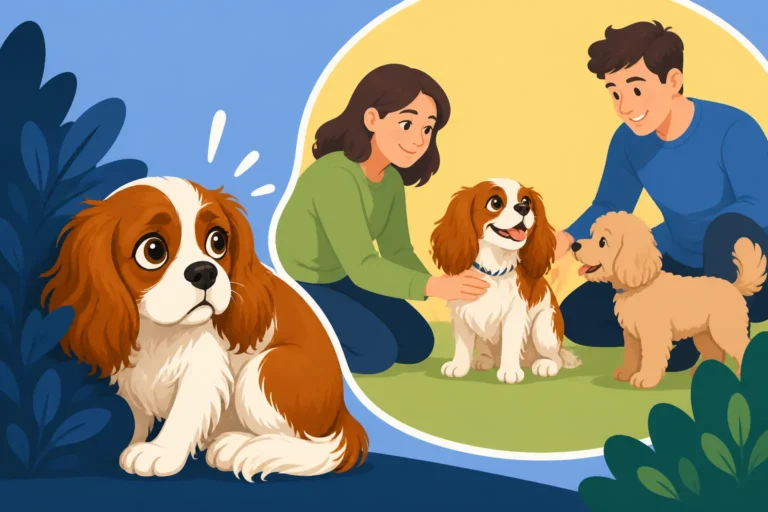
Cavaliers are known for their loving, gentle, and often rather submissive temperament. While this makes them wonderful companions, it can also mean they don't have the natural assertiveness or defensive instincts that might deter a boisterous or aggressive dog. They are often more inclined to freeze, cower, or try to escape rather than stand their ground. This can be misread by an approaching dog as an invitation to chase or further harass.
A single traumatic experience with an off-leash dog can also have lasting psychological effects on your Cavalier. A once confident and happy walker might become fearful, reactive, or even aggressive towards other dogs, purely out of self-preservation. You might find your Cavalier barking on walks when it sees another dog or becoming extremely anxious whenever another dog is nearby. It's heartbreaking to see their joyful spirit dimmed by fear. This is why prevention is so crucial – protecting not just their physical body, but their delicate emotional well-being too.
Proactive Prevention: Minimizing Risks
The best defense is often a good offense, and when it comes to protecting your Cavalier, that means being as proactive as possible to avoid dangerous encounters in the first place. This requires a combination of strategic planning, proper equipment, and ongoing training.
Strategic Walk Planning and Location Choices
Think critically about where and when you walk your Cavalier. Busy dog parks, popular hiking trails during peak hours, or even neighborhoods known for dogs with lax owners are places to approach with extreme caution, or avoid altogether. Instead, seek out quieter paths, less frequented areas, or private, fenced spaces where you have more control over the environment.
Consider walking at off-peak times, such as early mornings or late evenings, when fewer dogs are likely to be out. If you have a car, drive to areas less populated by dog walkers, perhaps a quiet industrial estate on a Sunday, or an empty school field after hours (if permitted). The goal is to reduce the probability of running into an uncontrolled dog. Having a car also opens up opportunities to find safe, enclosed dog parks specifically for small breeds, if available in your area, or even renting a private dog field for secure off-leash play.
Essential Gear for Safety and Control
Your Cavalier's collar and leash are your lifelines. A simple neck collar might not be enough, especially if your Cavalier is a bit of a puller or prone to panicking. A well-fitting harness that distributes pressure across their chest rather than their delicate neck is often a safer choice. Look for harnesses with a strong D-ring on the back and perhaps even a front clip for better control. Many owners find harnesses sourced from places like Amazon offer good variety and reviews to help choose. Just make sure it's snug enough that your Cavalier can't back out of it, but not so tight it causes chafing.
A sturdy, non-retractable leash, preferably 4-6 feet long, gives you better control and prevents your Cavalier from getting too far ahead. Retractable leashes can be dangerous as they can snap, allow your dog too much range, and make it harder to quickly reel in your Cavalier in an emergency. For some Cavaliers, especially those prone to Leash Manners for a Cavalier That Pulls, a different style of leash or harness might be beneficial for better control.
Beyond the basics, consider carrying a deterrent. This isn't about aggression, but about creating space and breaking focus if an off-leash dog approaches. Options include:
- A loud air horn: The sudden, sharp noise can startle an approaching dog and its owner, giving you precious seconds to react.
- Citronella spray: These sprays are designed to be harmless but unpleasant, disrupting a dog's focus without causing injury. They are often marketed as training aids.
- A sturdy stick or hiking pole: Not for hitting, but for holding between your dog and the approaching dog to create a physical barrier.
- Your car keys: Jingle them loudly to create a distraction.
Here's a quick comparison of some common deterrents:
| Deterrent Option | Pros | Cons | Best Use Case |
|---|---|---|---|
| Air Horn | Very loud, immediate startling effect | Can be startling to your own dog and you, single-use per can | Creates distance, alerts owner, breaks focus quickly |
| Citronella Spray | Non-harmful, unpleasant smell/sensation | Requires closer proximity, might not deter all dogs | Mild deterrent, breaking focus, scent aversion |
| Hiking Pole/Stick | Creates physical barrier, non-aggressive | Requires skill to wield safely, can be misconstrued | Creating space, deterring close approaches |
| Loud Voice/Shouting | Always available, no cost | May escalate situation, some dogs ignore it | Immediate, first line of verbal defense |
| Strong Leash/Harness | Essential for control, not a deterrent itself | Does not deter other dogs, only controls your own | Primary safety gear, prevents escapes |
Training for Confidence and Responsiveness
A well-trained Cavalier is a safer Cavalier. While you can't control other people's dogs, you can certainly empower your own with skills that can help in a crisis. Focus on commands like "stay," "leave it," and a rock-solid "come" (recall). If your Cavalier can reliably respond to "come" even with distractions, you might be able to call them back from a potential confrontation before it escalates. Consider working with a positive reinforcement trainer or using an online program like BAXTER & Bella to build these foundational skills. Consistency is key, and practicing in various environments helps proof the commands.
Building confidence in your Cavalier is also important. A dog that is overly fearful might react in ways that escalate a situation. Gentle socialization from puppyhood, exposing them to different sights, sounds, and friendly dogs in a controlled manner, can help create a more resilient dog. Remember, Socializing a Cavalier Puppy Gently is about positive experiences, not overwhelming them.
During an Encounter: What to Do
Despite all your best efforts, an off-leash dog might still approach. In these tense moments, your quick thinking and calm demeanor can make a huge difference.
Assessing the Threat and Creating Distance
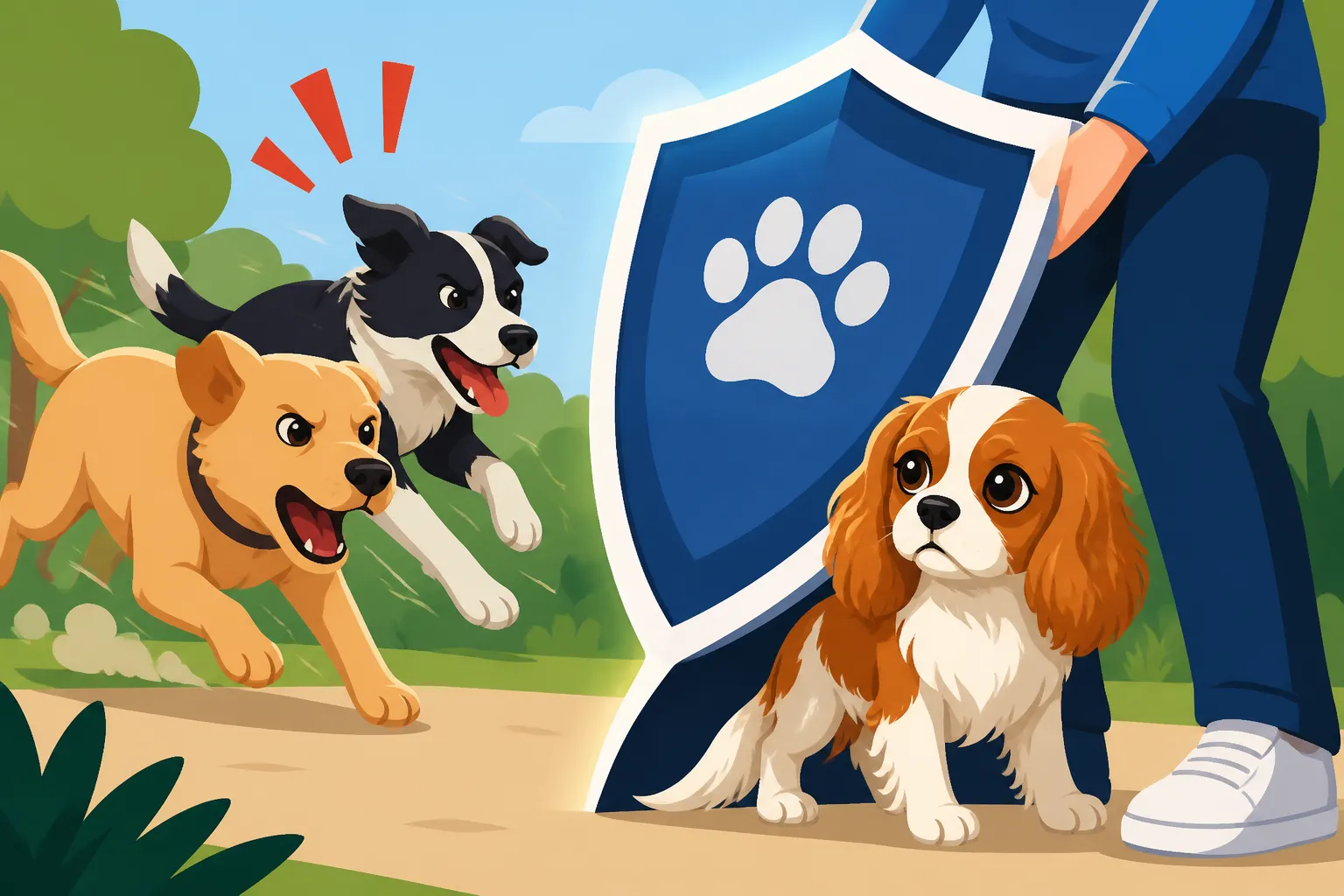
The first step is to quickly assess the approaching dog's body language. Is it relaxed and wagging its tail loosely, or is it stiff, focused, and growling? Even a "friendly" dog can be dangerous due to size or boisterous play. Your immediate priority is to create distance between your Cavalier and the other dog.
- Pick up your Cavalier: If the dog is small enough and the threat seems imminent, scoop your Cavalier up. Hold them close to your chest, facing away from the approaching dog. This elevates them and sends a clear signal that they are not accessible. However, be aware that some dogs may jump, potentially knocking you or your Cavalier down.
- Turn your back and walk away: If possible and safe, slowly turn your back to the approaching dog and walk calmly but briskly away. Avoid running, as this can trigger a chase instinct. Keep your Cavalier on a short leash, close to your side, or in your arms.
- Step behind a barrier: Look for anything that can serve as a temporary barrier – a parked car, a lamppost, a bush. Use it to put something between your Cavalier and the other dog.
Using Verbal and Physical Deterrents
Your voice is a powerful tool. A firm, loud "NO!" or "GO HOME!" can sometimes startle an approaching dog enough to make it hesitate. Project confidence, even if you're terrified. Avoid screaming, as this can sound like prey and further excite some dogs. If the dog continues to approach, use one of your chosen deterrents, like the air horn or citronella spray, as a last resort to create space. Direct it towards the ground near the dog first, then towards its chest if necessary, aiming to startle and disorient, not to harm.
If the owner of the off-leash dog appears, loudly and clearly instruct them to call their dog. "Please leash your dog!" or "Control your dog!" can sometimes spur them into action. Many owners are genuinely oblivious or overconfident in their dog's "friendliness" and need a sharp wake-up call.
When Physical Intervention is a Last Resort
This is the scariest scenario, and ideally, one you never encounter. If an actual attack occurs, and your Cavalier is being bitten or shaken, you might have to intervene physically. This is extremely dangerous and carries a high risk of injury to you. Only do so if your Cavalier's life is directly threatened and no other option is available.
- Avoid putting your hands directly into a dog fight. Dogs can redirect bites, and you could suffer severe injury.
- Look for non-direct methods: Can you grab the aggressor's back legs and lift them like a wheelbarrow, momentarily unbalancing them and breaking their focus? Can you throw a jacket or blanket over the aggressor's head to disorient it?
- Make noise and seek help: Yell for help as loudly as you can. Attracting attention from others can sometimes scare off an attacking dog or bring assistance.
- Pepper spray/dog deterrent spray: If legal and safe in your area, and you carry it, this might be a last-ditch option to break up a serious fight. Always check local laws regarding self-defense sprays. You can find options for personal safety devices, including pepper sprays for defense against animals, on platforms like Amazon.
After any such incident, even if no physical contact was made, it's wise to consider whether Whether Pet Insurance Is Worth It for a Cavalier could help with potential vet bills or behavioral therapy for your traumatized dog.
Aftermath and Reporting: Taking Necessary Steps
A scary encounter doesn't end when the other dog leaves. There are important steps to take afterwards, both for your Cavalier's well-being and to prevent future incidents.
Checking for Injuries and Seeking Veterinary Care
Immediately after any close call or physical altercation, thoroughly check your Cavalier for injuries, even if they seem fine. Small puncture wounds from bites can be hidden under their beautiful feathering, and internal injuries aren't always immediately obvious. Even if there's no visible blood, look for limping, tenderness, guarding a specific area, or changes in behavior. If you notice anything unusual, contact your veterinarian right away. It's always better to be safe than sorry. A quick trip to the vet can rule out hidden trauma or address minor injuries before they become serious. They might recommend Pre-Surgery Testing for an Older Cavalier if your dog needs stitches or more extensive care.
Beyond physical injuries, watch for behavioral changes in your Cavalier. They might become more anxious on walks, start showing signs of A Cavalier That Refuses Stairs due to pain, or even develop A Cavalier That Yelps When Picked Up if they have an unseen injury. Keep a close eye on them over the next few days and weeks.
Documenting the Incident and Contacting Authorities
If an off-leash dog caused injury to your Cavalier or presented a significant threat, it's crucial to document the incident.
- Gather information: If possible, get the other dog owner's name, contact information, and details about their dog (breed, color). Take photos or videos of the dog and owner, and the location of the incident. Note the time and date.
- Seek witnesses: If anyone else saw the incident, ask for their contact information.
- Report to animal control: Contact your local animal control or police department to report the incident. Provide all the details you've gathered. This creates an official record and can help prevent the same dog from harming others in the future. Many localities have leash laws, and enforcement depends on people reporting violations.
- Veterinary records: Ensure your vet thoroughly documents any injuries and the cause of those injuries, as this will be crucial if you need to pursue compensation for vet bills or further action.
Reporting isn't just about punishment; it's about public safety. An uncontrolled dog is a danger to everyone, especially small pets and children. By reporting, you contribute to a safer community for all.
Building Resilience and Moving Forward
A traumatic experience can shake your confidence as a dog owner and understandably make you wary of walks. It's okay to feel that way. Focus on rebuilding trust and confidence for both you and your Cavalier. Start with very short, positive walks in the safest possible environments, perhaps just around your yard or a very quiet street. Gradually reintroduce new sights and sounds, always being vigilant.
If your Cavalier has become fearful, consider working with a professional dog behaviorist who uses positive reinforcement methods. They can help your Cavalier overcome their anxiety and relearn to enjoy walks. For you, the owner, remember that you did your best in a difficult situation. Don't let one negative experience steal the joy of walking your wonderful Cavalier. Continue to be vigilant, proactive, and informed, because your Cavalier depends on you. Remember, having a strong bond and reliable training, perhaps fostered through programs like BAXTER & Bella, will always be your greatest asset.
Disclaimer
This article is for general informational purposes only and does not constitute professional advice. Laws, prices and regulations vary by location and change over time. Consult a qualified professional for guidance on your specific situation.