Sounds a Cavalier Puppy Should Meet Early
Bringing home a Cavalier puppy is such an exciting time, full of cuddles and boundless joy. But let's be real, it can also come with a tiny knot of worry about raising a well-adjusted, confident dog, especially when you hear stories of pups who are terrified of thunderstorms or even the vacuum cleaner. Your Cavalier deserves to navigate the world with ease and happiness, and this comprehensive guide is all about giving them the best possible start by carefully introducing them to a symphony of sounds early on.
Why Early Sound Socialization is a Game Changer for Your Cavalier
The world is a noisy place, and for a tiny Cavalier puppy, it can be overwhelming if they haven't been gently introduced to its myriad sounds. The period from birth up to about 16 weeks is known as the critical socialization window, and it's a golden opportunity to shape your puppy's perception of the world around them. Miss this window, and you might find yourself with a dog who is perpetually anxious or reactive to everyday noises, which is no fun for anyone. This early exposure isn't just about preventing fear; it's about building resilience and confidence.
The Cavalier's Sensitive Nature and Sound
Cavalier King Charles Spaniels are renowned for their sweet, gentle, and affectionate nature. They thrive on companionship and are incredibly attuned to their human families. While this makes them wonderful cuddle buddies, it also means they can be particularly sensitive to changes in their environment, including sounds. A sudden, loud noise that another breed might shrug off could send a sensitive Cavalier scurrying under the sofa. Their history as pampered lapdogs means they weren't necessarily bred for toughness in a noisy, chaotic world.
Imagine your little Cavalier, nestled comfortably on your lap, when suddenly the doorbell rings, startling them. If this is their first encounter with such a sharp, unexpected sound, it can easily create a negative association. This sensitivity can be compounded by their close bond with you; if you tense up or react with alarm to a noise, your Cavalier will pick up on that and think there's truly something to fear. It's not uncommon for Cavaliers to develop anxieties related to noise, whether it's the roar of a passing motorcycle or the distant pop of fireworks. Understanding this inherent sensitivity helps us approach sound socialization with the empathy and care our Cavaliers deserve.
Avoiding Future Fear and Phobias
Without proper early exposure to a variety of sounds, a Cavalier puppy is much more likely to develop sound phobias or generalized anxiety as they grow. This isn't just about loud, scary noises like fireworks; it can extend to common household appliances, children playing, or even the sound of specific vehicles. A dog with a sound phobia can experience significant distress, panting, trembling, pacing, hiding, or even destructive behaviors when exposed to their triggers. It’s truly heartbreaking to watch a dog suffer through a thunderstorm, cowering and shaking, simply because they weren't prepared for the sound.
Think about the quality of life you want for your Cavalier. A dog that is constantly on edge, stressed by everyday occurrences, is not a happy dog. Proactive sound socialization helps prevent these issues before they take root, creating a dog that can calmly coexist with the hustle and bustle of daily life. It means less stress for them, and honestly, less stress for you. Taking the time during those crucial puppy months to build positive associations with sounds is an investment in a lifetime of peace and confidence for your furry friend. This foundational work also prepares them for a lifetime of various experiences, like Cavalier Dental Disease in a Crowded Jaw or Anesthesia Risk in a Cavalier With a Murmur, which might involve new sounds at the vet's office.
What Sounds to Introduce to Your Cavalier Puppy
The goal isn't to blast your puppy with every noise imaginable, but rather to gently and systematically expose them to the common sounds they will encounter throughout their lives. Variety is key, but always remember to prioritize safety and positive experiences. Don't forget, these are small dogs, and their ears are sensitive.
Common Household Noises
Your home is likely filled with a symphony of sounds that you barely notice anymore, but for a puppy, each one is a brand new experience. Introducing these sounds gradually within the safe confines of your home helps your Cavalier view them as normal background noise rather than threats.
Consider the following:
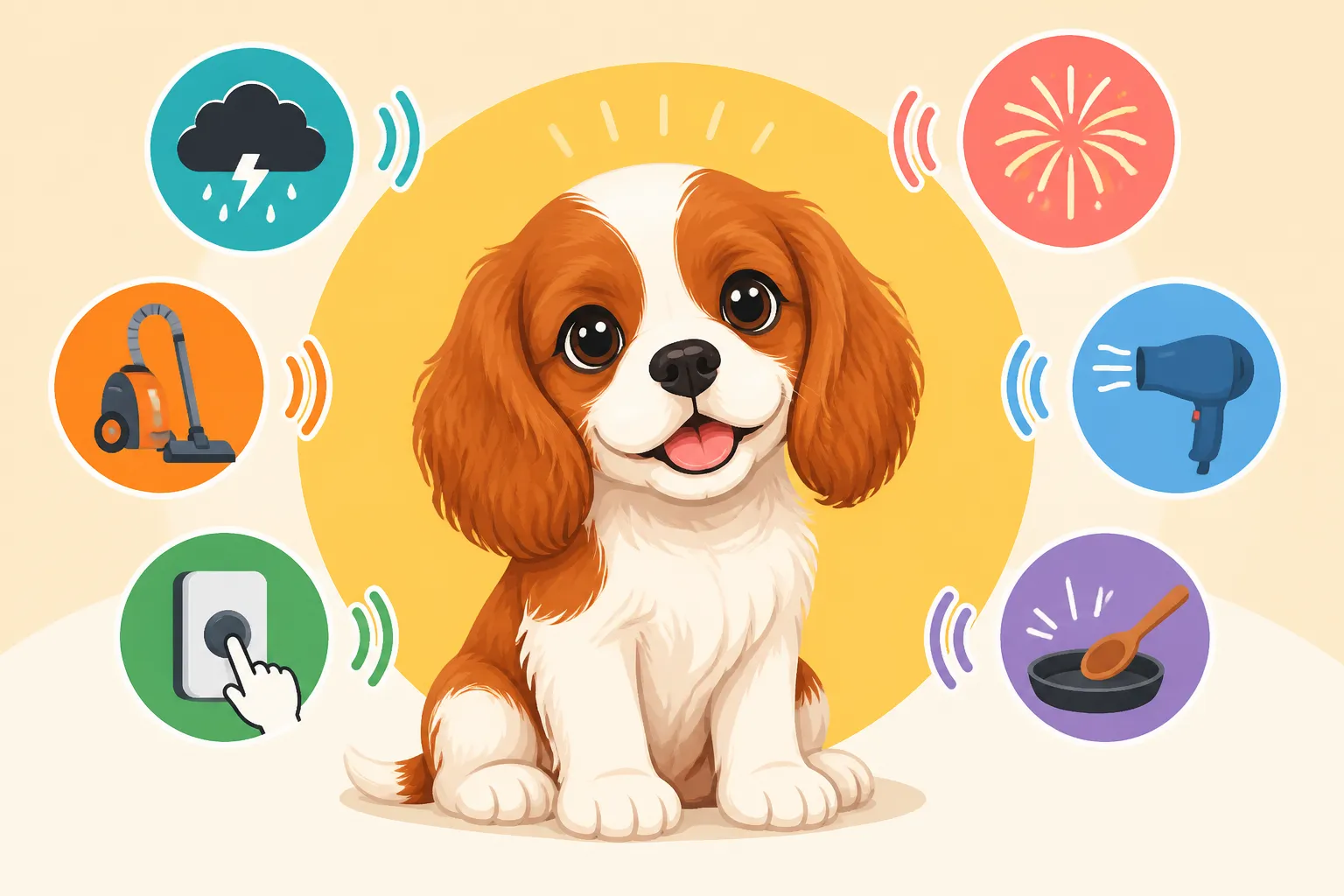
- Kitchen Sounds: The whir of a blender or food processor, the clatter of pots and pans, the dishwasher running, the microwave beeping, the coffee maker brewing. Start these with low volume or from a distance, rewarding your puppy for calm behavior.
- Cleaning Appliances: The vacuum cleaner, washing machine, and dryer can be particularly intimidating due to their loud and sometimes vibrating nature. Introduce the vacuum cleaner by having it turned on in another room while your puppy eats or plays, slowly bringing it closer over days or weeks.
- Electronics: The television, radio, or even video game sounds. Vary the types of shows or music played to expose them to different human voices, music genres, and sound effects.
- Door Sounds: The doorbell, knocking, doors opening and closing, and even the jingle of keys. These are sounds often associated with arrivals and departures, which can trigger excitement or anxiety. Practicing calm responses to these can be very beneficial.
Outdoor and Environmental Sounds
The world outside your door is a vibrant, often loud, place. Preparing your Cavalier for these external sounds will make walks, trips to the park, and even just hanging out in the yard much more enjoyable for both of you.
- Traffic and City Noises: Cars driving by, truck air brakes, sirens, construction sounds, buses, and general city bustle. Start by taking your puppy to a quiet street and gradually move to busier areas as they gain confidence. Short, positive experiences are better than long, overwhelming ones.
- Weather Sounds: Rain, wind, and distant thunder. You can find recordings of these online or on services like Amazon and play them softly at home. This way, when real weather hits, it's not a complete shock.
- Animal Sounds: Other dogs barking, birds chirping, squirrels chattering. While you can't control wild animals, you can play recordings of dog barks at a low volume. For actual interactions with other dogs, focus on positive, supervised meetings.
- Children Playing: Kids laughing, shouting, running, and even crying can be startling. If you don't have children, expose your puppy to these sounds via recordings or carefully supervised, brief encounters with calm children.
Human Voices and Social Interactions
Cavaliers are people-oriented, but not all human interactions and vocalizations are the same. Exposure to a range of voices and social situations helps them generalize their comfort with people.
- Different Voices: Men, women, children, and varying vocal tones (loud, soft, excited, calm). Have friends and family visit, ensuring they interact gently and positively with your puppy.
- Laughter and Crying: These are common human expressions that can sometimes sound strange or alarming to a young puppy. Gentle exposure through recordings or in real-life, controlled situations is helpful.
- Crowds and Gatherings: The general din of multiple people talking, walking, and moving about. This can be replicated with recordings or by taking your puppy to quiet spots in public places (like a park bench) where they can observe from a distance without being overwhelmed. Remember to keep experiences short and positive.
Novel and Unexpected Sounds
Life throws unexpected sounds at us all the time. While you can't prepare for everything, you can help your Cavalier develop a "go with the flow" attitude towards sudden noises by introducing some controlled, novel sounds.
- Dropped Objects: A dropped spoon, a book falling, keys hitting the floor. Start with small, lightweight items from a low height, paired immediately with a treat or toy. The goal is to create an immediate positive association.
- Sudden Bangs (Controlled): A gentle tap on a metal bowl, a clap of hands. Again, low intensity and immediately followed by something wonderful (treats! praise! a favorite toy!). The idea is not to scare them, but to teach them that sudden noises can predict good things, or at least aren't dangerous. A brave Cavalier is a happier Cavalier. Learning to manage these sounds well can greatly reduce stress when facing things like A Cavalier That Stiffens and Falls After Excitement or A Cavalier That Yelps When Picked Up, where sudden movements or noises could exacerbate discomfort.
| Sound Category | Examples | Introduction Tips |
|---|---|---|
| Household Noises | Vacuum cleaner, blender, doorbell, washing machine, TV, phone rings | Start in another room, low volume, pair with meals or play, gradually increase proximity. |
| Outdoor & Environ. | Traffic, sirens, construction, children playing, weather (rain, thunder) | Play recordings softly, observe from a distance, short exposure, reward calm behavior. |
| Human Voices/Social | Different voices (men, women, kids), laughter, crying, crowd chatter | Have varied guests, play recordings, positive interactions, never force. |
| Novel/Unexpected | Dropped keys, gentle clap, small bang (controlled) | Low intensity, immediate treat/play, teach "noise = good things." |
How to Introduce Sounds Positively and Safely
The how of sound socialization is just as important, if not more important, than the what. A poorly executed introduction can do more harm than good, reinforcing fear rather than building confidence. The key is to make every experience positive, gradual, and on your puppy's terms.
Starting Low and Going Slow
This is the golden rule of sound socialization. Never overwhelm your Cavalier puppy. Think of it like a dimmer switch, not an on/off button. Begin with sounds at such a low volume or far distance that your puppy barely notices them, or if they do, they show no signs of fear. Perhaps you play a recording of traffic sounds at a whisper while your puppy is eating their breakfast, or you vacuum in a far-off room while they're engrossed in a chew toy.
The moment you see any sign of discomfort – flattened ears, tail tucked, yawning, lip licking, freezing, or attempting to hide – you've gone too far, too fast. Immediately reduce the volume or distance, or stop the sound entirely. The goal is always to keep your puppy feeling safe and happy. Gradually, over days or weeks, you can increase the volume or bring the sound source a little closer, always watching your puppy's body language for cues. Short, positive sessions are much more effective than long, stressful ones.
Pairing Sounds with Positive Experiences
This is where the magic happens! To ensure your Cavalier associates new sounds with good feelings, always pair the sound with something wonderful. This could be:
- High-Value Treats: Every time a new sound plays, immediately offer a super yummy treat. Think tiny pieces of cooked chicken, cheese, or specialized training treats.
- Favorite Toys and Play: Engage your puppy in a fun game of tug or fetch the moment the sound starts.
- Praise and Affection: Your happy, calm voice and gentle petting can also be powerful positive reinforcements.
For example, if you're introducing the sound of a blender, have someone blend something for just a second in another room while you feed your puppy a steady stream of treats. Stop the treats when the blender stops. Repeat this process, gradually increasing the duration or bringing the blender closer, always making sure the treats flow freely when the sound is present. You can find dedicated sound desensitization tracks online, easily accessible on platforms like Amazon, which are designed for this purpose and allow you to control the volume precisely. These tracks often include a wide array of sounds, from city noises to thunderstorms, giving you a structured way to expose your pup.
Observing Your Puppy's Body Language
Your Cavalier puppy communicates constantly through their body language, and it's your job to become fluent in their signals. Learning to read these cues is critical to successful socialization. Look for:
- Signs of Comfort: Loose, relaxed body, soft eyes, wagging tail, engaging in play, taking treats readily. These mean you're on the right track!
- Subtle Signs of Stress/Fear: Yawning, lip-licking, averting gaze, sniffing the ground excessively, "whale eye" (white of the eye visible), ears flattened, a slight shift in posture. These are early warnings that your puppy is becoming uncomfortable.
- Obvious Signs of Fear: Trembling, panting, tucked tail, hiding, trying to escape, barking or growling at the sound. If you see these, stop immediately and give your puppy space and comfort.
Never force your puppy into a situation where they are clearly fearful. That will only make things worse. Instead, back off, regroup, and try again later with a lower intensity or a different approach. Your puppy trusts you to keep them safe, and honoring that trust is paramount.
Making Training Fun with Structured Programs
Sometimes, knowing what to do is one thing, but having a clear, step-by-step guide can make all the difference. Structured puppy training programs often include elements of socialization that can be incredibly helpful. Resources like BAXTER & Bella offer comprehensive online puppy training programs that cover everything from basic obedience to socialization, helping you integrate sound exposure into a broader, positive reinforcement framework. These programs can provide guidance on timing, techniques, and troubleshooting common puppy challenges, making the whole process feel less daunting.
Engaging in these kinds of programs ensures that your Cavalier puppy is not just exposed to sounds, but also learns confidence, focus, and a general understanding that learning can be a fun and rewarding experience. A well-rounded training approach is the best way to foster a resilient and happy Cavalier.
Long-Term Benefits of Early Sound Exposure
The effort you put into carefully introducing your Cavalier puppy to sounds in their formative weeks and months will pay dividends for years to come. It’s not just about preventing problems; it’s about nurturing a confident, adaptable companion.
A Confident and Resilient Adult Cavalier
Imagine a Cavalier who greets the mail carrier's truck with curiosity rather than terror, or who can nap peacefully during a distant thunderstorm. This is the reality you create through early sound socialization. A Cavalier who has learned that novel or loud sounds are nothing to fear, especially when paired with positive experiences, will develop a more confident and resilient personality. They will be less prone to anxiety and stress in new situations because they have a solid foundation of understanding that the world, even when noisy, is generally a safe and good place.
This confidence extends beyond just sound. When a dog learns to cope with one type of environmental stressor, it often translates into better coping mechanisms for other new experiences, too. You'll have a dog who is more eager to explore, more relaxed in unfamiliar places, and generally more joyful because they're not constantly on edge. This resilience is a precious gift you can give your Cavalier. It's a key part of ensuring they grow into a well-adjusted adult, comfortable in various situations, whether it's Socializing a Cavalier Puppy Gently or understanding their own Cavalier Temperament and the Sporting Spaniel Beneath It.
Easier Integration into Daily Life
A well-socialized Cavalier, particularly one comfortable with a range of sounds, will integrate seamlessly into your daily life and beyond. Think about all the common scenarios where sound sensitivity can be a hindrance:
- Vet Visits: The sounds of other animals, clippers, and medical equipment can be scary. A confident Cavalier will handle these with less stress.
- Grooming Appointments: Hair dryers, clippers, and the general hubbub of a grooming salon can be overwhelming. Sound-exposed pups are more likely to tolerate these without fear. Regular grooming is important, as covered in Brushing a Cavalier's Feathering Three Times a Week.
- Travel: Car rides with traffic noise, airplane sounds if you fly with them, or even just staying in a new hotel or house with unfamiliar sounds. A resilient Cavalier will adapt much more easily.
- Home Life: You won't have to tiptoe around your house, fearing the blender or the dropped pan. Your Cavalier will be a calm presence, rather than a reactive one. This makes every day easier and more pleasant.
- Public Outings: Whether it's a bustling park, a pet-friendly cafe, or a friend's noisy backyard BBQ, your Cavalier will be able to enjoy these experiences by your side without being overwhelmed by the auditory input. This early work means you don't have to worry about issues like A Cavalier That Refuses Stairs or A Cavalier That Yelps When Picked Up being exacerbated by sudden noises.
By investing in early sound exposure, you are paving the way for a relaxed, happy, and well-adjusted Cavalier who can truly be a part of every aspect of your life, making memories without being held back by unnecessary fears.
Disclaimer
This article is for general informational purposes only and does not constitute professional advice. Laws, prices and regulations vary by location and change over time. Consult a qualified professional for guidance on your specific situation.