Whether an Adult Cavalier Can Learn Recall Late
It's a common frustration for many Cavalier King Charles Spaniel owners: you love their gentle nature and affectionate cuddles at home, but the moment you step outside, their recall seems to vanish into thin air. You might feel like it's too late to teach an old dog new tricks, especially if your adult Cavalier has developed some less-than-ideal habits. This guide is here to tell you that it's absolutely not too late. With patience, understanding, and the right approach, an adult Cavalier can indeed learn reliable recall, making your walks more enjoyable and stress-free for both of you.
Understanding the Cavalier's Recall Challenges
Before we dive into training techniques, it's important to understand why recall might be a struggle for your Cavalier in the first place. It's rarely about them being "stubborn" or deliberately disobedient; usually, it stems from a combination of their innate traits and our human mistakes.
Why Recall Might Be Lacking in an Adult Cavalier
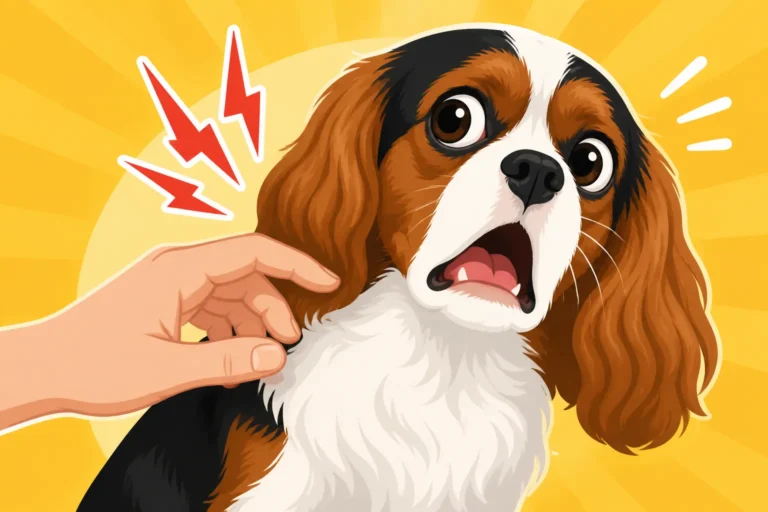
Many Cavaliers, especially those adopted as adults or who haven't had consistent recall training from puppyhood, simply haven't learned that coming back to you is the best thing ever. They might have been allowed to wander, explore, or chase interesting smells without a strong incentive to return. Perhaps they only hear "come!" when something bad is about to happen – like being grabbed for an ear cleaning they dislike, or leaving the dog park. This creates a negative association with the word, making them less likely to respond when truly needed.
Another factor can be the sheer joy and sensory overload of the outdoors. A Cavalier's world is full of fascinating scents, sounds, and sights. A rustling bush, a distant bird, or even an interesting patch of grass can become infinitely more rewarding than returning to their human, especially if the return doesn't offer a superior reward. If your adult Cavalier didn't have early, consistent, and fun recall practice, these outdoor distractions become ingrained habits that are hard to break.
The Independent Spaniel Streak
While Cavaliers are often described as "velcro dogs" indoors, fiercely devoted to their people, they still possess that deep-seated spaniel instinct. Their ancestors were bred to flush birds and follow scents, and that drive to explore, to follow their nose, and to investigate is still very much alive in them. When they get a whiff of something enticing – perhaps a squirrel that just scampered up a tree, or the lingering scent of another dog – that spaniel brain kicks in. They might not be as intensely driven as a working gundog, but it's enough to make them temporarily "forget" you exist. This isn't malice; it's simply instinct taking over.
Understanding this instinct is crucial. It means we can't expect them to completely ignore the world around them. Instead, we need to make us – and the rewards we offer – more compelling than any distraction. This is especially true for an adult Cavalier who has spent years gratifying these instincts without much counter-conditioning. Acknowledging their natural tendencies helps us tailor our training approach to work with their breed traits, rather than against them. You might find it helpful to read about The Spaniel Instincts Left in a Cavalier to truly appreciate this aspect of their personality.
Common Mistakes That Sabotage Recall
It’s easy to inadvertently undermine our own efforts when it comes to recall. One of the biggest mistakes is only calling your Cavalier when you need to end something fun. If "come" always means the end of playtime at the park, or going back inside, it quickly loses its appeal. Instead, your Cavalier learns that coming to you means the fun stops, so why would they rush over?
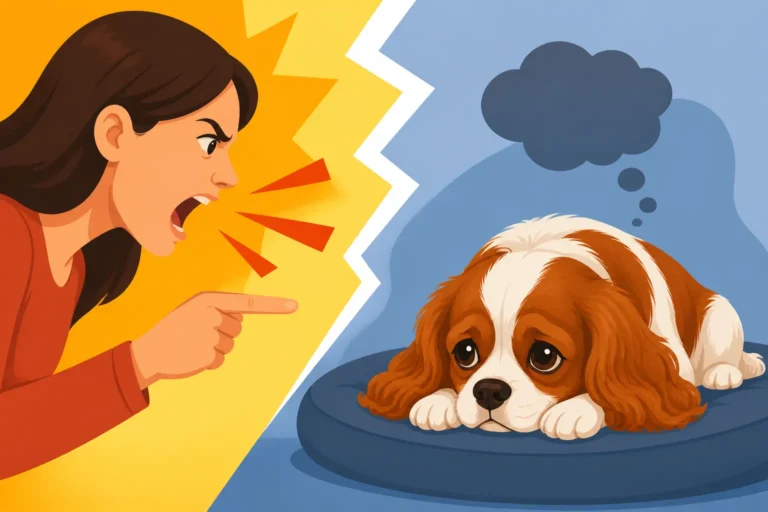
Another common pitfall is repeating the command multiple times. If you say "Fido, come! Fido, come here! Fido, please come!" and your dog eventually ambles over on the fifth request, they learn that they don't have to respond to the first or second call. They learn to ignore you until it's absolutely necessary, or until you sound desperate enough. This habit is hard to break but essential for developing a reliable recall in an adult dog. Furthermore, getting angry or frustrated when they don't come can be very damaging. A Cavalier is sensitive; if they associate coming to you with an angry tone or a reprimand, they'll become even less likely to return in the future. We must make coming back a positive, joyful, and consequence-free experience every single time.
Laying the Foundation for Late-Stage Recall Training
Training an adult Cavalier requires a solid foundation, even more so if previous attempts at recall have been inconsistent or negative. It’s all about building trust, clear communication, and making coming back to you the absolute best choice.
Building a Stronger Bond and Motivation
For an adult Cavalier, especially one who might have a history of inconsistent training, strengthening your bond is paramount. Spend quality time together that isn't just about walks or feeding. Engage in interactive play, offer gentle grooming sessions, or simply enjoy quiet cuddles on the sofa. The more your Cavalier sees you as the source of all good things, the more motivated they'll be to engage with you, even when there are distractions.
When it comes to motivation, you need to find what your Cavalier truly values. Is it a specific high-value treat like boiled chicken, cheese, or hot dogs? Is it a favorite squeaky toy or a vigorous game of tug? For some Cavaliers, even a happy, enthusiastic vocal praise and a quick scratch behind the ears is enough. Whatever it is, identify their ultimate reward and reserve it only for recall practice. This makes coming to you a truly exceptional experience. You might want to experiment to find Treats a Cavalier Will Trade Anything For.
Creating a Consistent Recall Cue
Choose a single, distinct word or phrase for your recall command, and stick to it. "Come," "Here," or even a specific whistle can work wonders. The key is consistency. Everyone in the household needs to use the exact same cue, in the same cheerful, inviting tone, every single time. Avoid using your recall word for anything else. If you use "come" when they’re already walking towards you for dinner, it dilutes the meaning.
For an adult Cavalier, you might even consider using a new recall word if their old one has negative associations or has been overused without success. This gives you a fresh start. Once you've chosen your cue, say it clearly and enthusiastically, and immediately follow it with the highest value reward you can offer. Think of it as marketing – you're selling them the idea that coming to you is always the best deal. Reading The Recall Word a Cavalier Learns Fastest might offer some good ideas for a fresh start.
Starting in a Controlled Environment
Never start recall training in a distracting outdoor environment. Begin indoors, in a quiet room with no distractions. Call your Cavalier, and the instant they turn their head or take a step towards you, mark the behavior with a cheerful "Yes!" or a clicker, and immediately reward them with that high-value treat and praise. Repeat this many, many times in short, fun sessions. The goal is to build a positive association: cue = immediate reward.
Once they're reliably coming to you in a quiet room, gradually increase the challenge. Move to a larger, still-secure area like a fenced yard. Continue with the same positive, rewarding process. If they hesitate, make it easier again. The idea is to set them up for success at every step. This controlled environment builds confidence in both you and your Cavalier before you even think about public spaces. Five-Minute Training Sessions With a Cavalier outlines how short, frequent practices are far more effective than long, drawn-out ones.
Step-by-Step Training for Reliable Adult Cavalier Recall
Now that we've laid the groundwork, it's time to put those foundations into practice with structured training that gradually increases the challenge.
The "Come" Game and Positive Reinforcement
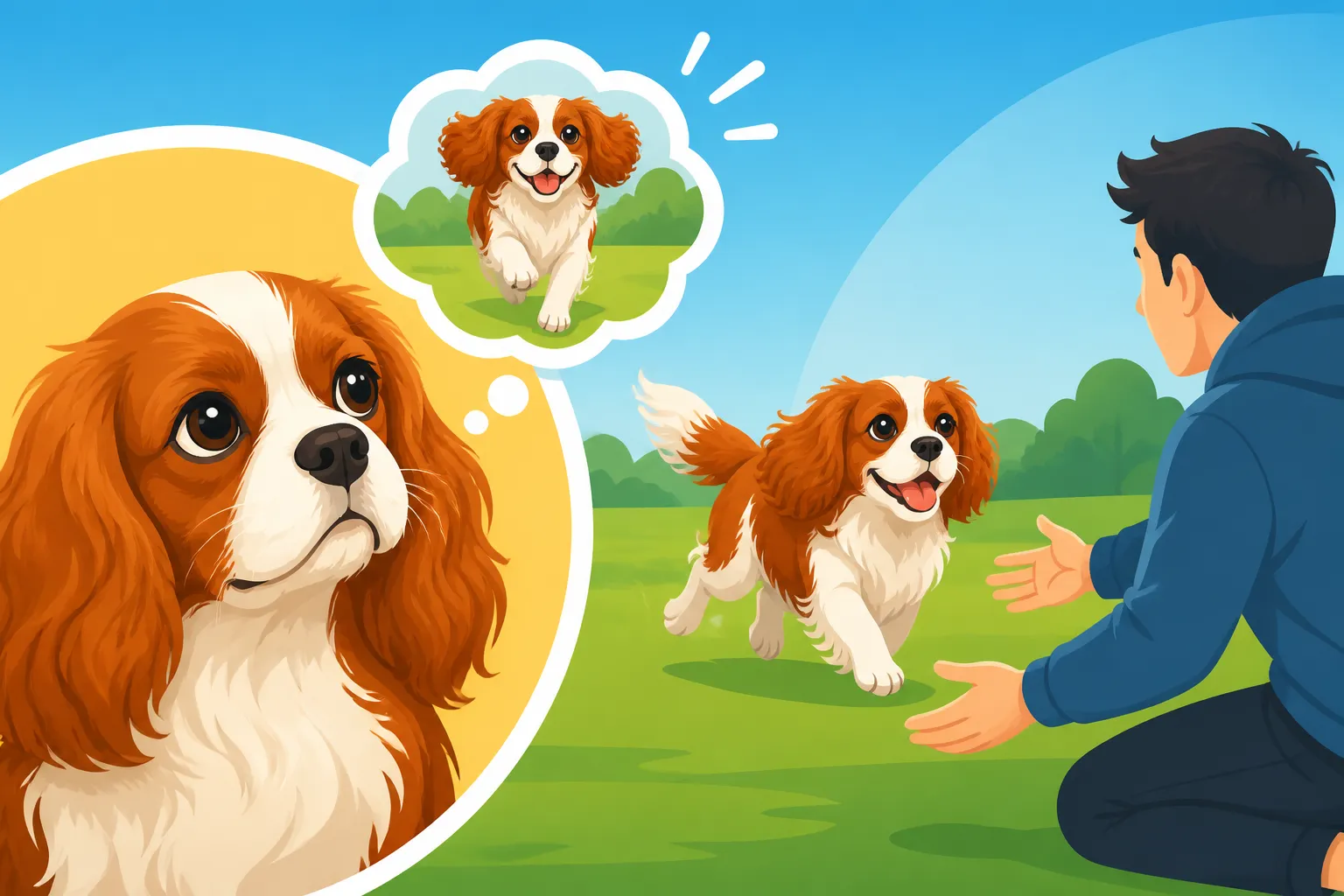
Transform recall into a fun game! Stand a short distance from your Cavalier in your controlled environment, say your recall cue with excitement, and when they come, shower them with treats, praise, and perhaps a quick, happy play session with a favorite toy. Make it a party every single time they return. Then, without any fuss, release them to go sniff around again. The key is that coming to you doesn't mean the end of fun; it means a burst of even better fun, followed by the opportunity to go back to what they were doing.
Vary your location within the house or yard. Have family members help out, calling the Cavalier back and forth. Each successful return earns a jackpot reward. Remember, we’re aiming for enthusiasm. If your Cavalier trots back casually, that’s okay, but really reward them for speed and eagerness. The more excited you are, the more excited they'll be to join in the "game." Training a Cavalier With Praise Rather Than Pressure emphasizes how positive reinforcement is crucial for this sensitive breed.
Gradually Introducing Distractions
Once your Cavalier has near-perfect recall in a distraction-free, fenced yard, it's time to slowly add in distractions. Start small:
- Have a family member sit quietly nearby.
- Introduce a favorite, but not too exciting, toy on the ground.
- Practice during a slightly busier time of day in the yard.
- Move to a very quiet park or open field at an off-peak hour, but keep your Cavalier on a long line.
The crucial part here is gradual. If your Cavalier fails to come, you've introduced too much distraction too soon. Go back a step. Success is built on a long string of small victories, not one big leap. Each time they respond to your cue despite a minor distraction, you're reinforcing the idea that you are still the most rewarding part of their environment. This is where high-value treats (like those small, soft, meaty ones you can find on Amazon or at your local pet store) really come into their own; they need to be more enticing than whatever fleeting distraction catches your Cavalier's eye.
Practicing with a Long Line for Safety
A long line is your absolute best friend when teaching an adult Cavalier recall in an uncontrolled environment. This is a lightweight leash, often 15 to 30 feet long, that allows your dog to explore a bit further while still giving you a safety net. It's a fantastic tool for Long Line Practice for a Cavalier. The moment you give your recall cue and they don't respond, you can gently reel them in, rather than chasing them (which often turns into a fun game of chase for the dog!).
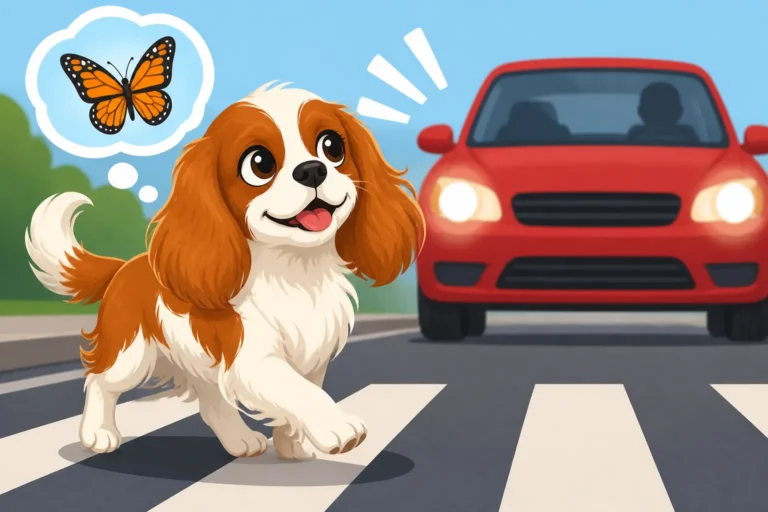
Attach the long line to a comfortable, secure harness (never just a collar, as a sudden pull could injure their neck). Allow your Cavalier to wander to the end of the line. Then, enthusiastically call them. If they come, reward heavily. If they don't, give a gentle, consistent tug on the line while repeating your cue. The moment they start moving towards you, release the pressure and praise. This teaches them that resisting the cue means a slight inconvenience, but responding means immediate reward. Over time, they'll anticipate the reward and come without the need for the gentle tug. This also helps you avoid the terrifying scenario of Losing a Cavalier to Traffic and How It Happens by ensuring they're never truly off-leash until reliable.
Maintaining and Generalizing Recall in Real-World Settings
Achieving reliable recall isn't a "one and done" deal, especially with an adult Cavalier. It requires ongoing reinforcement and practice in various situations to ensure it holds up in the face of all life's distractions.
Everyday Opportunities to Reinforce Recall
Don't save your recall practice only for dedicated training sessions. Look for opportunities throughout your day to reinforce the behavior. Call your Cavalier to you when they're in another room, or when they're engrossed in sniffing something in the yard. Always make it a positive experience – a small treat, a cheerful "good dog!" and then let them go back to what they were doing. This keeps the recall cue fresh and strengthens the association that coming to you is always worthwhile.
Even when they are already close by, randomly call them, reward them, and release them. This prevents them from thinking that "come" only happens when they are far away. Making recall a routine, casual, and frequent part of your daily interactions, rather than a rare command issued only in emergencies, will dramatically improve their response.
Troubleshooting Common Recall Hurdles
Even with the best training, you might encounter hurdles. If your Cavalier is ignoring you, stop and assess the situation. Are there too many distractions? Is your reward high-value enough? Are you making it fun? If your Cavalier tends to bolt after specific things, like birds or squirrels, work on desensitization. Practice recall when these distractions are present but at a distance they can still handle, slowly decreasing the distance over time. For instance, if your Cavalier tends to bolt after pigeons, read up on A Cavalier That Bolts After Pigeons for more specific advice.
Remember, every "failure" is a learning opportunity for you. It means you asked too much too soon. Revert to a simpler environment or reduce the level of distraction. Never punish your Cavalier for not coming; this will only make them wary of approaching you. Instead, calmly go get them, and try again later in an easier setting. The online training platform BAXTER & Bella often emphasizes breaking down behaviors into tiny, achievable steps, which is perfect for troubleshooting.
When to Seek Professional Help
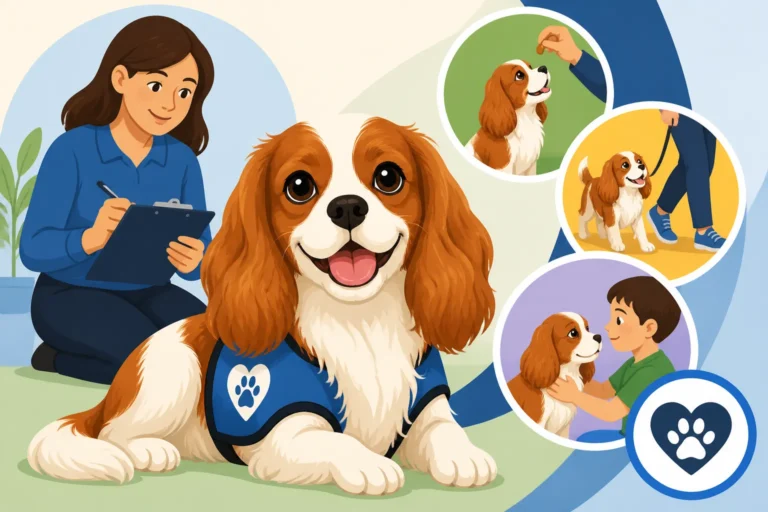
If you've been diligently working on recall and still find yourself struggling, or if your Cavalier's behavior is particularly challenging (e.g., they actively run away from you, show fear or aggression when caught), it might be time to enlist the help of a professional dog trainer or a certified behaviorist. They can observe your interactions, identify subtle cues you might be missing, and offer tailored strategies for your specific Cavalier and situation.
A good professional will use positive reinforcement methods and help you build a stronger, more effective communication system with your dog. Sometimes, an outside perspective is all it takes to break through a plateau. They can also help if you're concerned about Whether a Cavalier Can Ever Be Off Leash and want to ensure their safety and your peace of mind.
Here's a quick look at common recall training mistakes and how to fix them:
| Mistake | Why it's a problem | Solution |
|---|---|---|
| Only calling when fun ends | Dog associates "come" with negative outcome | Call often for no reason, reward, then release to play |
| Repeating the command | Dog learns they don't have to respond immediately | Say cue once. If no response, gently guide or go get them, try again |
| Getting angry/frustrated | Dog becomes fearful of approaching you | Remain calm and positive. If frustrated, end session and try later |
| Not using high-value rewards | Distractions are more enticing than your reward | Use irresistible treats (chicken, cheese) or favorite toys for recall |
| Training in distracting areas | Dog gets overwhelmed, fails to respond, reinforces ignoring you | Start in quiet, controlled environments, gradually add distractions |
| Chasing your dog | Turns recall into a fun game of chase for the dog | Use a long line to gently guide them in, then reward |
Learning reliable recall as an adult is absolutely achievable for a Cavalier. It takes consistent effort, huge amounts of patience, and a deep understanding of what motivates your sweet, sometimes-distracted companion. By making "come" the best thing that can happen, you'll build a stronger bond and ensure a safer, happier life for your Cavalier King Charles Spaniel.
Disclaimer
This article is for general informational purposes only and does not constitute professional advice. Laws, prices and regulations vary by location and change over time. Consult a qualified professional for guidance on your specific situation.