Teaching a Cavalier to Greet Guests Calmly
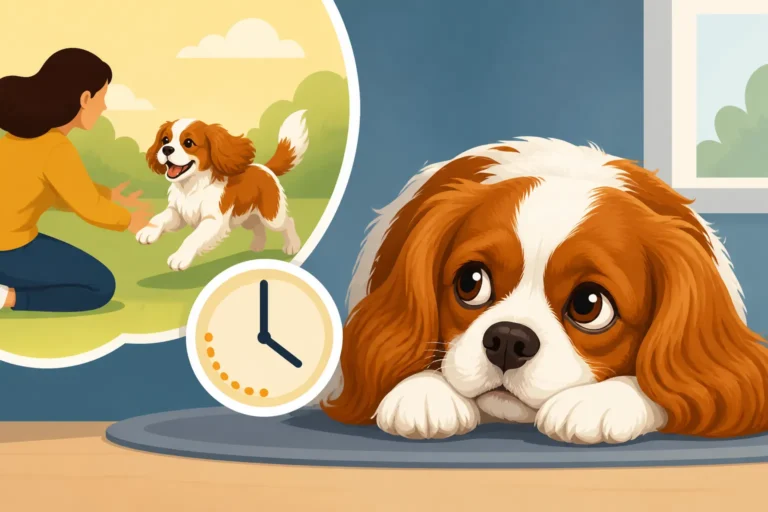
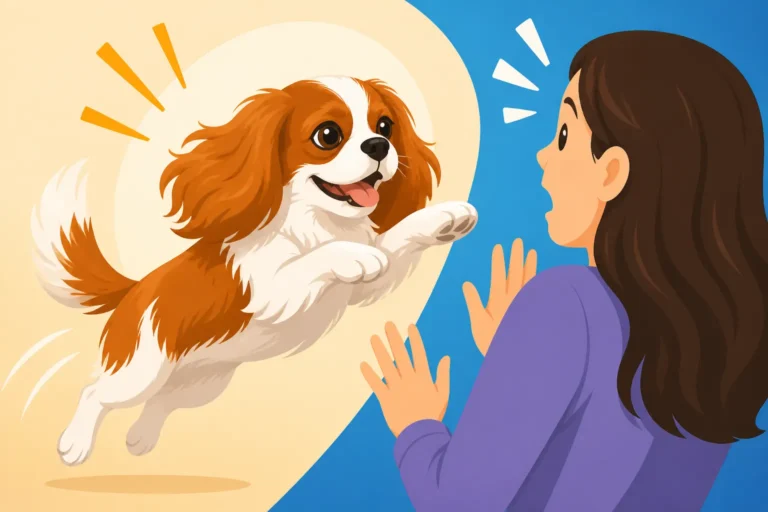
There’s nothing quite like the boundless joy of a Cavalier King Charles Spaniel when someone new, or even just a familiar face, walks through your door. Their little bodies wiggle, their tails become blurs, and often, they launch themselves into a full-body greeting that can be overwhelming for guests, or even lead to accidental tumbles. It's a common struggle for Cavalier owners, dealing with that incredible, over-the-top enthusiasm. This guide will help you understand why your sweet Cavalier acts this way and provide actionable, empathetic strategies to teach them a calmer, more polite way to say hello.
Understanding the Cavalier's Enthusiastic Greeting Style
Cavaliers are, by nature, deeply affectionate and social dogs. They thrive on companionship and human interaction, often earning them the nickname "Velcro dogs" because they stick so close to their people. This strong desire for connection is at the root of their excited greetings, but it can quickly escalate into jumping, nipping, or barking. It’s not that they’re being naughty; they're simply expressing their immense happiness in the most natural way they know how.
The Instinct for Connection and Attention
Imagine being utterly thrilled to see someone you adore, and your first instinct is to get as close as possible, maybe even jump up for a hug. That's essentially what's happening with your Cavalier. They crave attention, and for many dogs, jumping up or barking loudly has, at some point, gotten them exactly what they want: eyes on them, hands reaching out (even if to push them down), and verbal responses.
Their ancestors were bred to be companions, often sitting on laps or at the feet of royalty. This history has cemented a deep-seated need to be close to their human family. When a new person enters their space, it represents a fresh opportunity for connection, a potential new lap, or just another source of ear scratches. This isn't just about being spoiled; it's a fundamental part of their charming Cavalier personality. However, it’s our job to channel that enthusiasm into appropriate behaviors. You might have noticed your Cavalier follows you room to room, which is another manifestation of this strong bond and desire to be near you.
Why Jumping and Barking Become Habits
The problem is that even negative attention is still attention. When your Cavalier jumps, and you push them down, or say "no" loudly, they've still achieved their goal: your focus. If they bark, and you shush them, they've also gotten a response. Over time, these behaviors become self-reinforcing. They learn that jumping and barking are effective strategies to get acknowledged.
Think about it from their perspective: a new person arrives, bringing with them a flurry of new smells, sounds, and an overall exciting vibe. Your Cavalier feels this rush of energy and responds in kind. If the guest inadvertently rewards the jumping (by making eye contact, speaking to the dog, or reaching out), it further solidifies the behavior. It’s a vicious cycle that can be tough to break, especially when guests aren't always consistent in their reactions. Many owners also find their Cavaliers are incredibly sensitive to sounds and sudden movements, which can amplify their reactions to new people.
Preparing for Guests: Setting the Stage for Success
Teaching a calm greeting starts long before your guests even ring the doorbell. It involves proactive measures to manage your Cavalier's environment and energy levels, setting them up for success rather than expecting them to magically behave when excitement levels are high.
Managing Energy Before Arrival
A tired Cavalier is often a calmer Cavalier. Before guests are due to arrive, make sure your dog has had ample opportunity to burn off some energy. This doesn't mean just a quick trip around the block. Engage them in a good, sniffy walk, a stimulating play session, or even some mentally tiring puzzle toys. A vigorous game of fetch in the yard or a long walk where they can explore all the interesting smells in the neighborhood can make a significant difference.
If your Cavalier is wired and bouncing off the walls from pent-up energy, asking them to remain calm during a stimulating event like a guest arrival is like asking a child who just ate a candy bar to sit still for an hour. It's an unfair expectation. Plan for at least 30 minutes to an hour of focused activity right before your guests are scheduled to appear. For Cavaliers who love mental challenges, a sniff hunt for treats hidden around the house can be surprisingly effective at tiring them out.
Creating a Designated "Calm Zone"
Having a special place where your Cavalier can retreat and feel safe and calm is crucial. This could be their crate, a comfy bed in a quiet room, or a mat in a corner away from the main entrance. The key is that this zone is associated with positive, quiet experiences, not punishment. Practice sending your Cavalier to their mat or bed regularly throughout the day, rewarding them for settling there. This builds a strong association with calm behavior. Teaching a Cavalier to Lie on a Mat Nearby is an excellent skill to develop for this very purpose.
When guests arrive, your Cavalier can go to their calm zone with a high-value chew toy or a stuffed KONG. This gives them something engaging to do, diverting their attention from the excitement at the door. You can purchase durable KONG toys and other enrichment items easily on platforms like Amazon. This technique helps manage the initial surge of excitement and gives your dog a job to do that isn't jumping or barking.
Communication with Guests
Educating your guests about how to interact with your Cavalier is incredibly important. Before they even step inside, give them clear instructions. Explain that you are working on polite greetings and ask them to completely ignore your dog until your Cavalier is calm. This means no eye contact, no talking to the dog, and absolutely no petting or acknowledging them when they are jumping or barking.
It can feel a little awkward to ask friends and family to ignore your beloved pet, but it's essential for consistent training. Explain that the goal is for your Cavalier to learn that calm behavior earns attention, while excited, unruly behavior does not. If your guests are willing participants, they become part of your training team, reinforcing the lessons you're teaching. This also includes instructing them on what to do if your Cavalier does jump—simply turn their back and walk away without a word.
Training Techniques for Calm Greetings
Now let's dive into the actual training. These techniques are rooted in positive reinforcement and consistency, which are vital for a sensitive breed like the Cavalier. Remember, patience is key, and every small step towards a calmer greeting is a victory.
"Four on the Floor" Rule
This is a foundational concept: all four paws must be on the floor before your Cavalier receives any attention. No jumping, no pawing, no leaping. This rule needs to be applied by everyone who interacts with your dog, including family members, delivery drivers, and, of course, guests.
Start practicing this rule in low-distraction environments first. Approach your Cavalier, and if they start to lift a paw or jump, immediately turn your back and step away. Wait until all four paws are on the floor, even for a split second, then turn back and offer calm praise and a treat. Repeat this many times. You'll find that using Reward-Based Training With a Cavalier is incredibly effective, as they are often very food-motivated. Gradually increase the excitement level—maybe walk faster, or have someone else approach. The moment they stay "four on the floor," reward lavishly.
| Behavior Observed | Owner/Guest Response | Desired Outcome |
|---|---|---|
| Cavalier jumps/paws | Turn back, step away, ignore | Cavalier learns jumping doesn't get attention |
| Cavalier barks/whines loudly | Remain silent, avoid eye contact | Cavalier learns barking doesn't get attention |
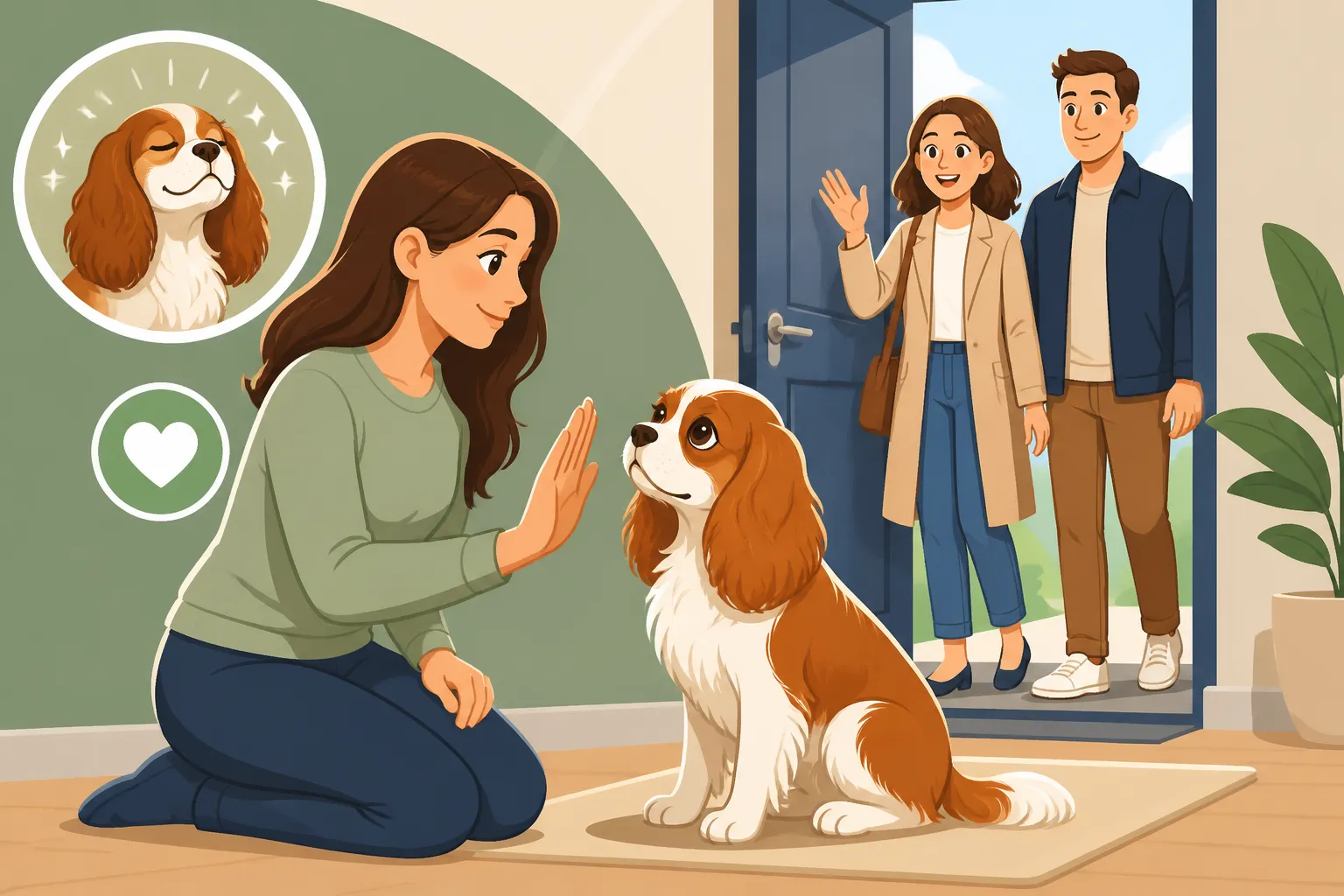
| Cavalier has all four paws on floor | Calmly praise, offer a treat, gentle pet | Cavalier learns calm equals rewards and attention |
| Cavalier sits/lies down | Enthusiastic praise, longer petting, treat | Reinforces desired calm behavior |
Practicing the "Doorbell Drill"
The doorbell can be a huge trigger for many Cavaliers, signaling the impending arrival of exciting visitors. You need to desensitize them to this sound. Have a helper ring the doorbell (or use a recording of a doorbell sound) while you and your Cavalier are calm inside. The moment the doorbell rings, if your Cavalier remains quiet, immediately reward them. If they bark or rush to the door, don't say anything, just wait for them to quiet down, then reward.
Gradually increase the challenge. Have the helper ring the doorbell and then open the door slightly, then close it. Again, reward for calm behavior. The goal is for your Cavalier to associate the doorbell with "stay calm, good things happen," rather than "GUESTS! EXCITEMENT!" Many online training programs, like those offered by BAXTER & Bella, include modules that can help you with specific drills like this, providing structured lessons. These sessions should be short, maybe Five-Minute Training Sessions With a Cavalier, to keep your Cavalier engaged and prevent them from getting overstimulated.
Teaching a "Place" or "Mat" Command
A "place" or "mat" command is invaluable for managing greetings. This teaches your Cavalier to go to a specific spot and stay there until released. This provides a clear expectation for them when guests arrive.
Start by luring your Cavalier onto their mat with a treat. As they step onto it, say "Place" or "Mat" and reward them. Practice this repeatedly. Once they understand going to the mat, start working on duration. Reward them for staying on the mat for increasing periods. Then, add distractions. Have someone walk past, or make a small noise. If they stay on the mat, reward! When guests are coming, you can send your Cavalier to their place with a long-lasting chew or puzzle toy, keeping them occupied and away from the door.
Managing Real-World Guest Arrivals
Even with all the training in the world, real-life scenarios can be challenging. The key is consistency, managing the environment, and being prepared to intervene calmly and effectively.
The Initial Greeting: Setting the Tone
When a guest arrives, have a plan. If you've trained a "place" command, send your Cavalier to their mat before you open the door. Give them their special chew. If you haven't, consider having them on a leash, even indoors, when guests are expected. This gives you direct control over their movement and prevents them from rushing the door. A comfortable harness is ideal for this, as it won't put pressure on their delicate neck. Harnesses Suited to a Cavalier's Neck are a good option to consider.
Open the door calmly. If your Cavalier is jumping or barking, have your guest completely ignore them, as discussed. Wait for a moment of quiet and four paws on the floor. It might feel like an eternity, but it's crucial. Only when your Cavalier is calm should the guest offer a quick, calm pet under the chin (avoiding exciting head pats) and a soft "hello." If your Cavalier then gets too excited, the guest should immediately withdraw attention. This teaches your Cavalier that calm behavior earns positive interaction.
Structured Introductions and Interaction
Once the initial excitement has died down, you can facilitate more structured interactions. Keep your Cavalier on a leash or have them on their mat. Allow your guests to give calm attention and treats, but only when your Cavalier is exhibiting polite behavior. If your Cavalier starts to get overexcited, the attention should stop immediately. This might mean the guest standing up and turning away, or you gently redirecting your dog back to their mat.
Avoid situations that are too stimulating, especially at first. A group of excited people all trying to pet your Cavalier at once is likely to undo your hard work. Introduce guests one at a time if possible, and ask them to interact calmly. Remember that the goal is not to eliminate all excitement, but to teach your Cavalier how to express their joy in an appropriate and manageable way. When your Cavalier is older, you might even consider enrolling them in Cavalier Therapy Work and Temperament Testing if they consistently master calm greetings, as this breed's gentle nature shines through.
What to Do If Things Go Sideways
Let’s be real, sometimes despite your best efforts, things don't go perfectly. Your Cavalier might still jump, bark excessively, or try to run circles around your guests. Don't get frustrated! This is part of the learning process.
If your Cavalier is unmanageable upon arrival, it's okay to temporarily put them in their calm zone (crate or quiet room) with a high-value chew until the initial hubbub settles. This isn't a punishment, but a management strategy to prevent them from practicing unwanted behaviors. Once things are calmer, reintroduce them on a leash and try again, perhaps with fewer guests or a shorter interaction time. Always end on a positive note, even if it's just for a brief moment of calm attention before putting them away. This approach, similar to dealing with A Cavalier That Jumps at Visitors, ensures that you're consistently working towards better behavior without letting the bad habits become ingrained.
Remember, every interaction is a learning opportunity for your Cavalier. With patience, consistency, and clear communication with both your dog and your guests, you can transform those wild greetings into sweet, polite hellos that everyone can enjoy.
Disclaimer
This article is for general informational purposes only and does not constitute professional advice. Laws, prices and regulations vary by location and change over time. Consult a qualified professional for guidance on your specific situation.