Whether Coat Color Affects Cavalier Judging
It’s a natural question to ask when you’re looking at show prospects or simply admiring a beautiful Cavalier King Charles Spaniel: does the coat color really make a difference to judges in the show ring? Many people worry that certain colors are favored, or that their beloved Blenheim might have an "easier" path to ribbons than a stunning Ruby. This guide is here to unravel the truth behind Cavalier coat colors and how they are, or aren't, factored into the judging process.
Understanding the Cavalier King Charles Spaniel Breed Standard
When it comes to showing dogs, everything boils down to the breed standard. This isn't just a suggestion; it's the definitive blueprint for what a perfect specimen of the breed should look like, act like, and even move like. For Cavaliers, the standard is meticulously detailed, covering everything from nose to tail, and yes, coat color is definitely included.
What the Standard Actually Says About Color
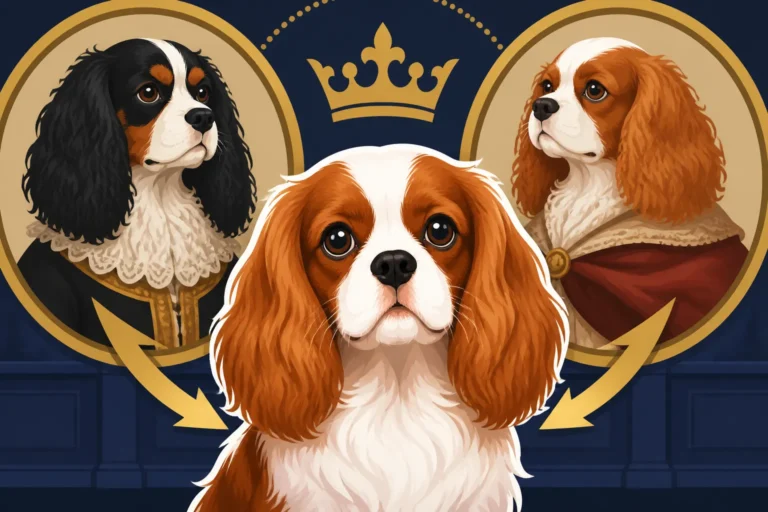
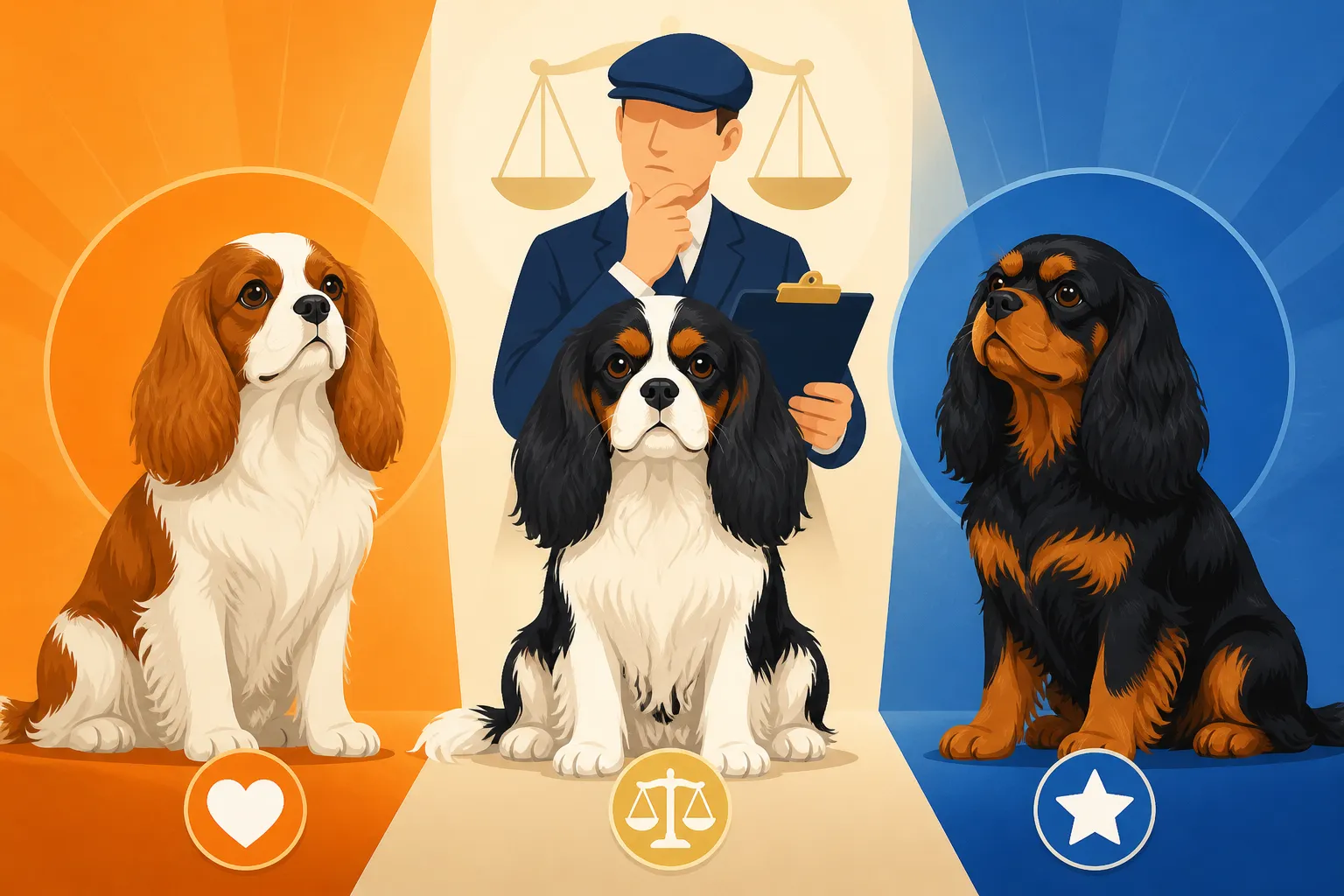
The American Kennel Club (AKC) and other reputable kennel clubs worldwide have a very clear stance on Cavalier coat colors: all four recognized colors are equally acceptable and should be judged without prejudice. These four colors are Blenheim (chestnut markings on a pearl white ground), Tricolor (black and white with tan markings), Ruby (whole-colored rich red), and Black and Tan (black with tan markings). The standard explicitly states that no single color should be preferred over another. This is crucial because it means a judge cannot, in good faith, say a Blenheim is "better" than a Ruby simply because of its color.
What the standard does address are specific markings or faults related to color. For instance, a Blenheim should have clearly broken chestnut markings on a white background, often with a distinctive lozenge or "Blenheim Spot" on the head, which is highly desirable but not mandatory. A Ruby Cavalier, being a whole color, should ideally be a rich red without any white markings. Small white spots on a Ruby or Black and Tan are generally considered faults, as are smudged or undefined markings on a Tricolor or Blenheim. These deviations from the ideal expression of that particular color can be penalized, but it’s the quality of the color and markings, not the color itself, that's being assessed. You can find more specific details in The AKC Standard for the Cavalier King Charles Spaniel.
The Importance of Type, Structure, and Movement
While coat color gets its mention, it is a relatively small part of the overall picture. The vast majority of the breed standard focuses on what we call "type" and "conformation." This encompasses everything about the dog's physical build: the shape of its skull, the size and set of its eyes, the length of its muzzle, the strength of its neck, its topline (the line from the shoulders to the tail), its angulation (how its bones connect at the joints), and the way it moves. These are the fundamental aspects that define a Cavalier King Charles Spaniel as distinct from any other breed.
Imagine two Cavaliers standing side-by-side: one a striking Black and Tan, the other a classic Blenheim. If the Black and Tan has an absolutely correct head, a strong, level topline, perfectly aligned teeth, and moves with effortless grace, while the Blenheim has a slightly rounded skull, a weak topline, and a choppy gait, the Black and Tan will, and should, win every time. The judge is looking for the dog that best embodies the entire standard, not just the one with the "prettiest" color. This holistic approach ensures that judges are always prioritizing the health, function, and overall aesthetic harmony of the dog. Every part of the dog is assessed to ensure it meets the requirements laid out, truly making color a secondary consideration.
Common Misconceptions About Cavalier Coat Colors in the Ring
It’s easy to fall into the trap of believing certain myths about dog showing, especially when it comes to something as visually prominent as coat color. Owners often share anecdotal evidence or personal observations that lead them to believe that some colors are simply luckier or more "judge-pleasing" than others. Let's unpack some of these widely held, but often mistaken, beliefs.
The "Popularity Contest" Myth
One of the most persistent myths is that certain colors, particularly Blenheims, win more frequently because they are more popular or "flashier." It's true that Blenheims are quite common, and their distinct chestnut and white pattern is instantly recognizable and often adored. When you look around a show ring, you might indeed see more Blenheims competing, simply because statistically there might be more of them bred and shown. This can create a false impression that judges favor them. However, experienced judges are rigorously trained to evaluate each dog based solely on the written breed standard, which, as we discussed, explicitly gives equal weight to all four recognized colors. They are tasked with putting aside personal preferences for color and focusing on structural integrity and adherence to the standard's ideals.
The appearance of more champions of a certain color in photos or online might simply reflect a higher number of quality dogs of that color being presented, perhaps from a breeder who specializes in that particular line or simply through sheer coincidence. It's not that the judges are seeking out Blenheims; it's that if more high-quality Blenheims are entered into a competition, it stands to reason that more of them will win. A truly exceptional Ruby or Tricolor, demonstrating superior breed type and conformation, will always triumph over a mediocre Blenheim, even if the Blenheim is visually striking. Many breeders will tell you that the best dog of any color will win, and they commit years to breeding dogs of all colors that can compete at the highest level. You can read more about The Four Cavalier Colors and What They Are Called to understand the nuances of each.
Color as a Distraction vs. a Feature
Another misconception revolves around how a dog's color might either detract from or enhance its presentation. It's not the color itself that is the issue, but rather the quality of the markings or the overall condition of the coat that happens to be a certain color. For instance, a Ruby Cavalier that has a faded, rusty coat rather than a rich, vibrant red, or a Blenheim with very poor, indistinct markings, might indeed be penalized. But the penalty isn't for being a Ruby or Blenheim; it's for not presenting a good example of that color as defined by the standard.
Conversely, a Cavalier with absolutely correct, deep, and well-defined markings for its color—whether it's the clear chestnut of a Blenheim (perhaps with a desirable The Blenheim Cavalier and Its Lozenge), the crisp black, white, and tan of a The Tricolor Cavalier, the solid rich red of a What Makes a Ruby Cavalier a Whole Color, or the defined black and tan points of a The Black and Tan Cavalier—will certainly stand out. In these cases, the color becomes a beautiful feature that complements an already excellent dog, rather than being the sole determinant of its success. A judge isn't looking for a "perfect Blenheim"; they are looking for a perfect Cavalier who happens to be a stunning Blenheim, Tricolor, Ruby, or Black and Tan. The coat's health and presentation, including its cleanliness and condition, are also key; a dull, matted coat of any color will always be a disadvantage.
What Truly Matters in Cavalier Judging Beyond Color
If coat color isn't the primary factor, then what truly sets a winning Cavalier apart in the show ring? The answer lies in a meticulous evaluation of the dog's overall physical form, its movement, and its inherent character, all measured against the exacting details of the breed standard. These elements are far more foundational to the breed's identity and health than superficial coloration.
Conformation and Balance
Conformation refers to the dog's physical structure, the way its bones, muscles, and ligaments are put together. A well-conformed Cavalier exhibits balance and harmony in all its parts. The standard calls for a moderately rounded skull, not domed, with a distinct stop. The eyes should be large, dark, round, and set wide apart, giving that characteristic sweet, melting expression that Cavaliers are so famous for. A too-small or too-light eye can detract. The muzzle length is also critical; the Cavalier's muzzle should be about 1.5 inches long, avoiding the overly short, "pushed-in" look seen in some related breeds. This balance in facial features contributes significantly to the overall breed type. You might notice these details when comparing The Cavalier's Longer Muzzle and Flatter Skull to other breeds.
Beyond the head, a strong, straight topline, a well-sprung rib cage, and moderate angulation in both front and rear legs are essential. These structural elements ensure the dog can move efficiently and gracefully, which directly impacts its health and longevity. A short neck, a roached back, or overly straight hindquarters are all examples of structural faults that a judge will carefully consider. The tail should be carried happily, often slightly above the topline when moving, but never curled over the back. Every single one of these physical attributes is scrutinized because they define the Cavalier's unique silhouette and functional purpose as a companion dog.
Movement, Temperament, and Presentation
Once the judge has assessed the dog’s static appearance, they will ask the handler to move the dog. This is where the dog's conformation truly comes to life. A correct Cavalier gait should be free-flowing, elegant, and effortless. The dog should move with good reach in the front and strong drive from the rear, covering ground smoothly. Any signs of stiffness, crabbing (moving sideways), paddling, or high-stepping would indicate structural flaws that impede efficient movement. A dog might look perfect standing still, but if it falters on the move, it won't earn top honors.
Just as important as movement is temperament. The Cavalier King Charles Spaniel is renowned for its gentle, affectionate, and outgoing nature. A show Cavalier should approach the judge confidently, wag its tail, and tolerate examination without shyness, fear, or aggression. A dog that is overly timid, or worse, shows any sign of aggression, is a serious fault and will be immediately excused from the ring. This sweet disposition is central to Cavalier Temperament and the Sporting Spaniel Beneath It. Finally, presentation plays a huge role. While it’s not about the color itself, a well-groomed coat that is clean, free of mats, and gleaming with health highlights the dog’s best features. The handler's skill in presenting the dog, stack it correctly, and moving it smoothly is also critical. Even the most structurally perfect Cavalier needs to be presented to its best advantage, which often means regular grooming appointments or diligent home care. Many owners consider Cavalier Grooming Costs Every Six to Eight Weeks a necessary investment for a show dog.
The Judge's Perspective and Impartiality
It's easy for us as owners to get caught up in the beauty of our own dog's coat color, or to feel a little superstitious about what a judge might prefer. But the reality of dog judging is far more objective and rooted in extensive training and a commitment to the breed standard. Understanding this perspective can help alleviate any worries about color bias.
Training and Expertise of Judges
Becoming a licensed dog show judge for a specific breed, especially one as popular and complex as the Cavalier, is a rigorous process. Judges undergo years of study, apprenticeship, and examinations to prove their comprehensive understanding of the breed standard. They must be able to identify every nuance of conformation, movement, and temperament that defines the ideal Cavalier. This training explicitly includes learning that all four recognized coat colors are equally desirable, provided they adhere to the specific color descriptions within the standard.
A good judge approaches each dog with a fresh eye, impartially comparing it to the written standard, not to the last dog they judged or to a personal preference for a certain look. Their job is to find the dog that most closely embodies the standard's description, regardless of its coat color. Think of it like a trained sommelier evaluating wine: they don't pick their personal favorite grape; they assess the wine against established criteria for balance, aroma, and finish. Similarly, a judge must put aside any personal affinity for, say, The Blenheim Cavalier and Its Lozenge markings and objectively evaluate a stunning Tricolor or a gleaming Ruby that better fulfills the complete standard.
How to Evaluate Your Own Cavalier Objectively
For us Cavalier owners, it's easy to be completely smitten with our own dogs, and rightly so! However, if you're interested in the world of dog shows, it's helpful to learn how to view your Cavalier with a more critical, objective eye. Start by reading and truly understanding The AKC Standard for the Cavalier King Charles Spaniel yourself. Don't just skim it; dissect it. Compare your dog feature by feature to the descriptions. You can also attend dog shows and observe how judges go about their work, noting which dogs win and trying to understand why they won in terms of their conformation and movement, not just their flashiness.
Seeking honest critiques from experienced breeders or professional handlers can also be incredibly valuable. They can offer insights into your dog's strengths and weaknesses, helping you understand where it excels and where it might fall short of the ideal. Remember, the goal isn't to diminish your love for your dog, but to understand its qualities in the context of the breed standard. Ultimately, whether your Cavalier is a show champion or a beloved couch potato, its health and happiness are paramount. Regardless of show ring aspirations, ensuring your Cavalier receives regular vet check-ups, a balanced diet, and plenty of love will always be the most important part of ownership. For owners interested in the bigger picture of breed health, it’s worth exploring The Health Debate Around Breeding Cavaliers.
Here's a quick overview of how coat color is perceived in judging:
| Aspect of Judging | Relevance of Coat Color | Notes |
|---|---|---|
| Primary Evaluation Criteria | Minimal direct impact | Judges prioritize overall type, conformation, balance, movement, and temperament. |
| Breed Standard Compliance | Direct, but equal for all accepted colors | All four recognized colors (Blenheim, Tricolor, Ruby, Black and Tan) are equally acceptable. |
| Color Quality/Markings | Secondary impact (as a feature/fault) | Poorly defined markings, incorrect white patches on whole colors, or faded coats can be minor faults. Excellent, clear markings enhance presentation but don't override structural faults. |
| Judge's Personal Preference | Supposedly none | Judges are trained to be impartial and adhere strictly to the written standard, putting personal color preferences aside. |
| Overall Presentation | Indirect impact | A vibrant, well-maintained coat of any color contributes to a polished look, but a matted or unhealthy coat detracts. |
Disclaimer
This article is for general informational purposes only and does not constitute professional advice. Laws, prices and regulations vary by location and change over time. Consult a qualified professional for guidance on your specific situation.