The Blenheim Palace Dogs Behind the Cavalier
Many Cavalier King Charles Spaniel enthusiasts adore the breed's rich history, often referring to them as "royal dogs." But for those who cherish the beautiful chestnut and white Blenheim coat, there's a particular story steeped in history that's often misunderstood or only partially known. This guide will delve deep into the fascinating origins of the Blenheim Cavalier, tracing its lineage back to the grand English estate that gave this beloved color pattern its name, and helping you truly appreciate the heritage behind your companion's distinctive markings.
The Regal Lineage: Court Spaniels and Blenheim Palace
When we talk about the Blenheim Cavalier, we're not just talking about a color pattern; we're invoking centuries of history, reaching back to the royal courts of England and particularly to a magnificent estate known as Blenheim Palace. It’s a story that intertwines the breed's development with the lives of nobility and the preferences of powerful figures. Before the Cavalier King Charles Spaniel as we know it today was firmly established, there were various "court spaniels" or "comforter spaniels" that graced the laps of kings and queens. These were the ancestors, the foundational dogs that eventually evolved into our modern Cavaliers.
These early spaniels were cherished for their affectionate nature and their ability to warm laps and lift spirits. They were frequently depicted in paintings alongside their royal owners, evidence of their prized status. While there wasn't a strict breed standard as we understand it now, certain types and colors were favored. Among these, the red and white parti-colored spaniels were particularly popular. They carried a certain elegance and charm that appealed to the aristocratic eye.
It was during the 18th century that these charming spaniels found a dedicated champion in John Churchill, the first Duke of Marlborough, and his formidable wife, Sarah. The Duke, a renowned military commander, resided at Blenheim Palace, a monumental country house in Oxfordshire, England, gifted to him by Queen Anne for his victory at the Battle of Blenheim. Here, he kept a specific strain of these small, red and white spaniels that he brought with him from his campaigns. These dogs were not merely pets; they were integral to the daily life and prestige of the estate.
The Duke was passionate about hunting, and his spaniels, while small, were noted for their ability to keep up with hunting parties on foot and flush out game. This aspect is often overlooked when we consider our modern, primarily companion-focused Cavaliers, but it speaks to the underlying sporting instincts that still reside within the breed. These dogs, carefully bred and maintained at Blenheim Palace, became known for their distinct markings: a pearly white base with rich chestnut patches, a pattern that would forever be associated with their home. This patronage and specific breeding at such a prominent location solidified the "Blenheim" name for this particular color. To understand more about their general origins, you might find The Court Spaniels the Cavalier Descends From an interesting read.
The Duchess's Legend: The Blenheim Spot and Its Enduring Tale
Beyond the strategic breeding for hunting prowess, the Blenheim spaniels at the palace are famously linked to a romantic, albeit apocryphal, legend involving Sarah Churchill, the Duchess of Marlborough. This tale is perhaps one of the most endearing stories in Cavalier lore and helps us understand the special significance placed on a particular marking found on many Blenheim Cavaliers: the "lozenge" or "kissing spot." It speaks to the deep emotional connection between humans and their canine companions, a bond that transcends social status and historical periods.
The legend recounts that during one of her husband, the Duke's, absences at war – specifically during the Battle of Blenheim itself – the Duchess was understandably anxious for his safe return. She spent many hours waiting for news, often with her pregnant spaniel at her side. In her distress, it’s said that she would anxiously press her thumb to the head of the expectant mother dog. When the puppies were eventually born, they were found to have a distinct, chestnut-colored thumbprint-sized spot on the top of their heads, right between their ears. This charming mark was believed to be a physical manifestation of the Duchess’s fervent prayers and worry, passed onto the next generation.
While charming, this story is almost certainly a myth. Canine genetics don't quite work that way, and a physical act of pressing a thumb wouldn't magically create a marking in unborn puppies. However, the endurance of this legend highlights just how much these dogs were cherished and how closely their characteristics were observed and valued by their owners. The "lozenge" or "Duchess's thumbprint" became a highly desirable trait, a sort of seal of authenticity and a nod to the breed's aristocratic past. Even today, responsible breeders and breed enthusiasts cherish this mark. If you're curious about this specific detail, The Duchess Thumb Mark on a Blenheim Cavalier provides more insight.
This story isn't just about a spot; it's about the emotional landscape of the time and the role these dogs played as comforters and confidantes. It underscores the intrinsic value placed on these beautiful animals, far beyond their function in hunting or simply as decorative accessories. The legend cemented the Blenheim pattern as something truly special, elevating it above mere aesthetics into a narrative of loyalty and love. For any owner of a Blenheim Cavalier, knowing this story adds another layer of appreciation for their dog's unique beauty.
From Historic Palaces to Modern Homes: The Evolution of the Blenheim Cavalier
The spaniels from Blenheim Palace were undoubtedly influential, but the breed as we recognize it today, with its specific features and structure, underwent significant changes over the centuries. After the era of the Marlboroughs, societal preferences in dog breeding began to shift. The popularity of "flat-faced" or brachycephalic breeds, such as Pugs and Japanese Chins, influenced breeders to select for shorter muzzles and rounder skulls in the English Toy Spaniel lines. This led to a divergence from the longer-nosed, flatter-skulled spaniels that were common during Charles II's time and at Blenheim.
By the early 20th century, the original type of spaniel, with its slightly longer muzzle and less exaggerated dome, was becoming increasingly rare. It was at this point that an American enthusiast, Roswell Eldridge, stepped in. During a visit to Crufts in 1926, he lamented the change in the breed's appearance. He offered substantial prize money for the "old type" of King Charles Spaniels, specifically those resembling the dogs seen in old paintings, with longer noses and less prominent skulls. His efforts were instrumental in bringing back the type of spaniel that would eventually be recognized as the Cavalier King Charles Spaniel, distinct from the shorter-nosed King Charles Spaniel (or English Toy Spaniel as it's known in the US). If you're interested in the fascinating journey of the breed's revival, How Roswell Eldridge Brought Back the Cavalier tells more of that story.
The Blenheim color pattern was, of course, a crucial part of this revival. Eldridge's vision was to restore the breed to its historical glory, and the dogs from Blenheim Palace represented the ideal of that historical type, particularly with their distinctive red and white coats. Breeders like those at the famous Ttiroh kennel played a significant role in re-establishing the desired characteristics, working diligently to bring back the traits that defined the original court spaniels. They focused on maintaining the elegant structure, soft expression, and the signature Blenheim markings that had been cherished for generations.
Today, the Blenheim Cavalier remains one of the most popular and recognizable color varieties of the breed. When you look at a Blenheim Cavalier curled up on your sofa or playing in the park, you're not just seeing a beautiful dog; you're seeing a living link to English aristocracy, military history, and a charming legend. The careful selection and breeding over time, driven by both aesthetic preference and dedicated revival efforts, ensured that the essence of those Blenheim Palace dogs continues to thrive in our modern companions. These dogs have transitioned seamlessly from accompanying dukes on hunts to becoming cherished family members, always carrying a piece of their grand heritage with them.
Deciphering the Blenheim Coat: Markings and Standards Today
Understanding what constitutes a "correct" Blenheim coat isn't just for show ring enthusiasts; it helps any Cavalier owner appreciate the nuances of their dog's appearance and the historical significance behind it. The Blenheim pattern, at its core, is a beautiful interplay of rich chestnut red and pearly white, a combination that truly stands out. It's a hallmark of the breed's heritage, directly tied to those ancestral dogs at Blenheim Palace.
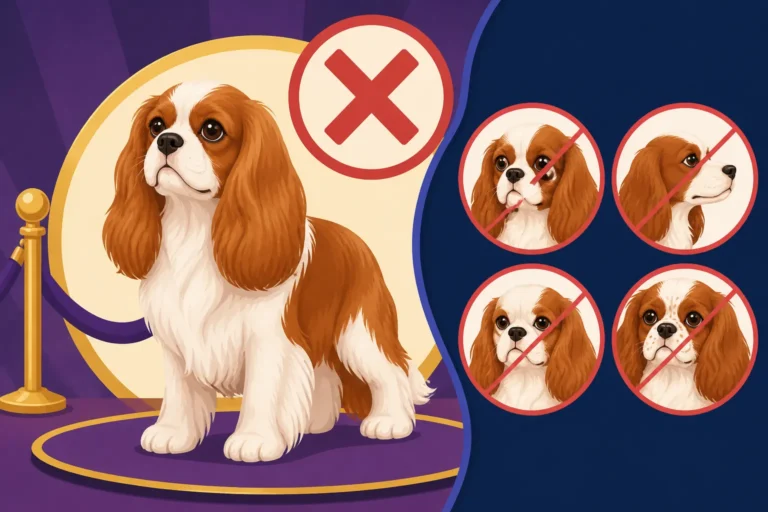
The official breed standard for the Cavalier King Charles Spaniel outlines precise expectations for the Blenheim color. The ground color should be a clean, pearly white. This means no yellowing, no smudges, just a clear, bright white canvas. Over this, you'll find well-defined, rich chestnut markings. These markings should ideally be broken up evenly on the body, resembling patches rather than a solid sheet of color. Crucially, the ears should be chestnut, and the color should frame the eyes, giving the Cavalier that characteristic sweet, melting expression that is so beloved. The tail often has a patch of chestnut at the base as well. For a deeper dive into the specific characteristics recognized by breed standards, What Makes a Blenheim Cavalier Correctly Marked is an excellent resource.
However, the most talked-about feature of the Blenheim is undoubtedly the "lozenge" or "thumbprint" on the head. This is that distinct, roughly oval or diamond-shaped chestnut spot nestled squarely on the top of the head, usually between the ears. While highly desirable and a nod to the famous Duchess's legend, its absence is generally not considered a fault in the show ring, though its presence is certainly celebrated. It’s a delightful extra touch that many owners hope for when they choose a Blenheim puppy. The clarity and distinctness of this spot are what enthusiasts look for, rather than a blurred or indistinct mark.
It’s worth noting that while Chewy offers an extensive range of grooming supplies, keeping a Blenheim coat pristine requires more than just good shampoo. Regular brushing helps to maintain the feathering and ensures the white areas remain clean. A good slicker brush and a metal comb are essential tools. Sometimes, the chestnut markings can vary slightly in shade or distribution, but the essence of the Blenheim remains.
Here's a quick overview of what defines the Blenheim pattern:
| Feature | Description | Ideal Characteristics | Common Variations |
|---|---|---|---|
| Base Color | Ground color of the coat | Pure, pearly white, free from ticking or smudges | Slight creaminess in white areas, especially as the dog ages |
| Marking Color | Color of the patches | Rich, bright chestnut (reddish-brown) | Lighter fawn or darker, almost brown shades of chestnut |
| Marking Pattern | Distribution of colored patches | Well-defined patches, evenly distributed on body, covering ears and eyes | Large, solid patches (less preferred), or sparse, small markings |
| Head Lozenge | Chestnut spot on the crown of the head, between the ears | Clear, distinct, thumbprint-sized, without blending | Absent, faint, or merged with other head markings |
| Facial Markings | Color around the eyes and on the cheeks | Chestnut patches framing the eyes, symmetrical | Asymmetrical patches, or white areas around the eyes |
Breeders work hard to produce Cavaliers that conform to these standards, not just for aesthetics but also to maintain the integrity and health of the breed. When you are looking for a Blenheim Cavalier puppy, reputable breeders will be happy to discuss the markings of their puppies and how they relate to the breed standard and the historical context. They understand the pride and joy that comes from owning a dog with such a distinguished and storied appearance. And for those who simply love their dogs regardless of show potential, the Blenheim markings are a constant reminder of a charming past and a beloved companion. Exploring options on Chewy for everything from training treats to comfortable beds can make your journey with a Blenheim Cavalier even more delightful.
The Enduring Allure of the Blenheim Cavalier
The Blenheim Cavalier King Charles Spaniel holds a special place in the hearts of many dog lovers, and it’s easy to see why. Their striking chestnut and white coats, combined with their famously affectionate and gentle temperaments, make them truly captivating companions. But as we've explored, the appeal of the Blenheim goes far beyond surface-level beauty; it’s deeply rooted in a rich historical tapestry that connects them to the grand estates and royal courts of England.
From the specific breeding programs at Blenheim Palace that refined the red and white spaniels for both companionship and hunting, to the enduring legend of the Duchess of Marlborough and her "thumbprint," every Blenheim Cavalier carries a piece of this fascinating past. These are not just dogs; they are living legacies, embodiments of a time when small spaniels were cherished members of aristocratic households, providing comfort and loyalty amidst the pomp and circumstance of court life. The efforts of early 20th-century enthusiasts like Roswell Eldridge were crucial in ensuring that this historical type, including the beloved Blenheim pattern, was preserved and brought forward into the modern era, preventing it from being lost to changing fads in canine appearance.
Today, whether your Blenheim Cavalier has the coveted lozenge or simply a beautiful, well-balanced pattern of chestnut and white, you're participating in a continuous story. Caring for a Cavalier means providing them with the best possible life, from ensuring they have proper nutrition – which you can easily source from places like Chewy – to maintaining their luxurious coats and, of course, showering them with the love and attention they crave. Their gentle nature and eager-to-please attitude are as much a part of their heritage as their distinctive markings.
Understanding the historical context of the Blenheim color pattern adds a layer of depth to your appreciation of the breed. It transforms a simple color description into a narrative of royalty, devotion, and the dedicated efforts of breeders to maintain a beloved lineage. The Blenheim Cavalier truly is a noble companion, echoing the elegance of its namesake palace and the warmth of the historical bonds it represents.
Disclaimer
This article is for general informational purposes only and does not constitute professional advice. Laws, prices and regulations vary by location and change over time. Consult a qualified professional for guidance on your specific situation.